
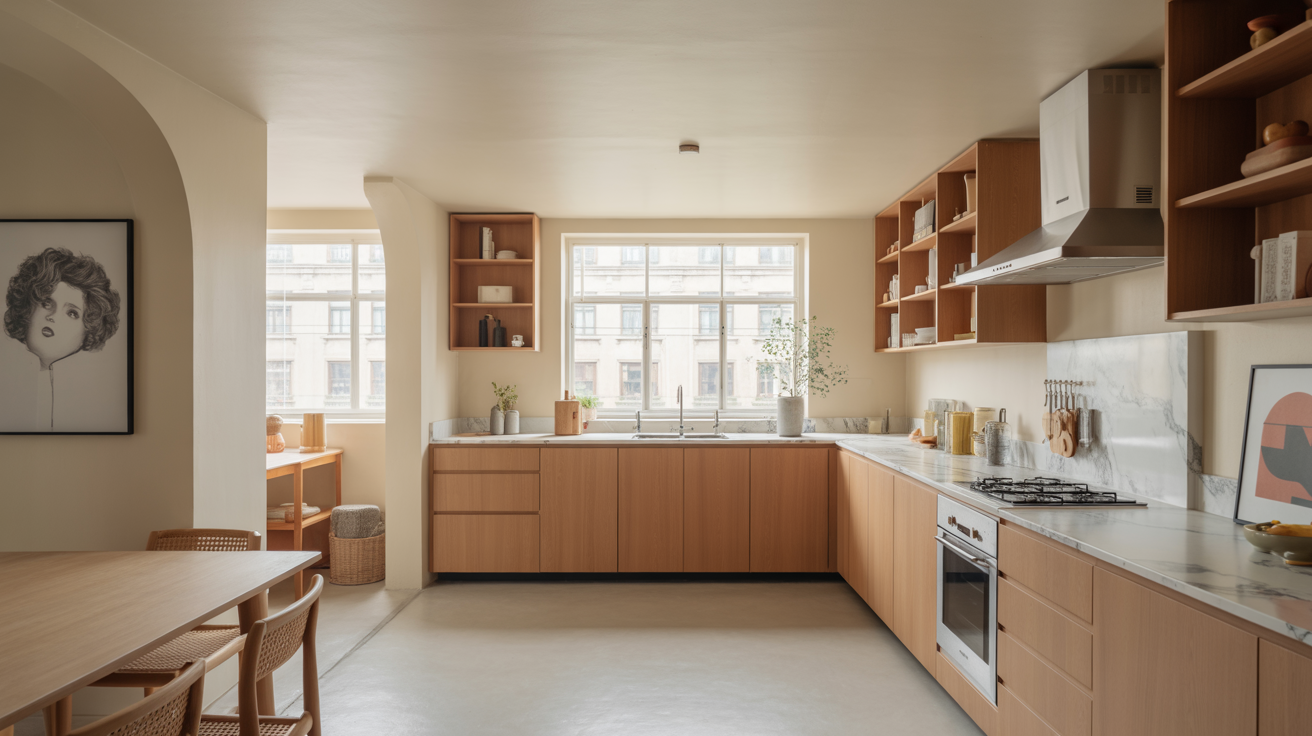
I’ve designed dozens of single-wall kitchens, and I can tell you that 12 feet is the sweet spot.
It’s not so small that you’re bumping into appliances, but it’s not so long that you’re running marathons between your fridge and stove.
A 12 foot one wall kitchen layout gives you just enough room to fit everything you need without wasting space. I’ve seen homeowners struggle with layouts that are too tight or too spread out.
This guide will show you how to make the most of your 12-foot wall with smart design choices, practical storage solutions, and layout strategies that actually work in real life.
You’ll learn exactly where to place each appliance and how to create a kitchen that feels twice its size.
Why 12 Feet Is Perfect for a Single-Wall Kitchen

A 12 foot one wall kitchen layout hits the perfect balance. You get enough room for all your major appliances plus decent counter space.
I’ve worked with shorter walls where everything feels squeezed, and longer ones where you waste energy walking back and forth.
Here’s how the space typically breaks down:
- Refrigerator section: 3 feet
- Sink area with workspace: 3 feet
- Range or cooktop zone: 2.5 feet
- Counter gaps between appliances: 15 to 18 inches each
- Extra prep or storage space: Whatever’s left over
This arrangement keeps you from making rookie mistakes. You won’t have appliances crammed right next to each other, and you won’t be stretching across huge gaps to reach what you need.
The workflow stays efficient because everything sits within easy reach. Your cooking triangle might be more of a straight line, but it works beautifully when planned right.
Smart Design Ideas for Your 12-Foot Kitchen Layout
Let me walk you through the design strategies that make the biggest difference in single-wall kitchens.
1. Add a Kitchen Island for Extra Function

A kitchen island changes everything in a 12 foot one wall kitchen layout. I recommend a 6×3 foot island because it fits perfectly without crowding the space.
You get three major benefits right away. First, you add serious prep space where you can chop vegetables or roll out dough.
Second, you create seating for quick meals or homework time. Third, you gain tons of storage underneath for pots, pans, and small appliances.
Keep 36 to 42 inches of clearance around all sides of your island. This lets two people work comfortably and gives you room to open drawers without blocking pathways.
Think about how you’ll actually use the space.
Do you entertain a lot? Add bar seating. Love to bake? Include extra drawers for baking supplies.
2. Position Your Sink Strategically

Sink placement makes or breaks your kitchen’s functionality. I always put the sink in the center or slightly off-center of the 12-foot wall.
This gives you about 30 inches of counter space on at least one side for prep work. You can rinse vegetables, then immediately slide them over to your cutting board.
The plumbing access is easier when the sink isn’t jammed into a corner.
Your workflow improves dramatically with central sink placement. You naturally move from the fridge to the sink to prep, then over to the stove to cook. Everything flows in a logical order.
3. Maximize Vertical Storage Space

Single-wall kitchens need vertical thinking. I install cabinets that go all the way to the ceiling in every 12 foot one wall kitchen layout I design.
Standard upper cabinets stop at 8 feet, but you can go higher if your ceiling allows it. With 10-foot ceilings, I use double-stacked cabinets that create impressive storage capacity.
Store your holiday dishes, special serving pieces, and rarely-used appliances up top.
You’ll need a small step stool to reach the highest shelves. That’s fine because you’re not accessing these items daily.
The extra storage is worth the occasional climb, and your kitchen looks custom and polished.
4. Create Functional Zones Along Your Wall

Zoning transforms a simple straight line into an organized workspace. I divide the 12-foot wall into three distinct areas that each serve a specific purpose.
Your storage zone sits near the refrigerator. This is where you keep dry goods, spices, and pantry items.
The prep zone centers around your sink with cutting boards and knives within arm’s reach.
The cooking zone clusters around your range with pots, pans, and cooking utensils.
This zoning system cuts down on wasted motion. You’re not walking back and forth constantly because everything you need for each task is right there.
It’s like having three mini workstations along one wall.
5. Install Pull-Out Pantry Solutions

Base cabinets in a 12 foot one wall kitchen layout can hold way more than you think. The secret is pull-out systems that bring everything forward.
I love deep pull-out pantry drawers because you can see everything at once. No more digging through shelves and losing cans in the back.
Toe-kick drawers under your base cabinets are perfect for storing flat items like baking sheets and cutting boards.
Add vertical dividers to organize trays, cookie sheets, and cutting boards. They’ll stand upright instead of stacking in a messy pile.
Pull-outs cost more than regular shelves, but they make every inch count.
6. Choose Space-Saving Appliances

Smart appliance choices free up precious counter and floor space. I always recommend counter-depth refrigerators in single-wall layouts because they don’t stick out as far.
Compact 18-inch dishwashers work perfectly when space is tight. You can still wash a full day’s dishes, but you gain 6 inches for extra storage or counter space.
Combination oven and microwave units stack two appliances in one spot.
Induction cooktops with built-in downdraft vents eliminate the need for a big range hood. This keeps your sightlines open and makes the space feel larger.
Each appliance decision either adds or subtracts from your usable space.
7. Light Your Kitchen Properly

Poor lighting makes any kitchen feel cramped and depressing. I use three layers of light in every 12 foot one wall kitchen layout I work on.
Under-cabinet lighting is non-negotiable. It lights up your countertops for chopping, reading recipes, and food prep.
Pendant lights over your island or eating area add style while providing focused light. Recessed ceiling lights fill in the overall illumination.
Don’t make the mistake of relying only on one overhead fixture. You’ll create shadows exactly where you need to see.
Multiple light sources at different heights make your kitchen feel bigger and more inviting.
8. Consider a Peninsula Instead of an Island

Peninsulas work better than islands in some floor plans. A peninsula connects to your 12-foot wall at one end, creating an L-shape that defines your kitchen space.
You get almost all the benefits of an island with one major advantage. Peninsulas need less clearance because people only walk around three sides instead of four.
This matters in tight open-concept layouts where every inch counts.
Add seating along the outer edge of your peninsula. It creates a natural gathering spot without blocking traffic flow. Your kitchen feels more integrated with the rest of your home.
9. Plan Your Appliance Placement Carefully

The order of your appliances along the wall determines how well your kitchen functions. I always start by placing the refrigerator at one end of the 12 foot one wall kitchen layout.
Leave 15 to 18 inches between your major appliances. This gives you landing space for hot pots and room to set down groceries.
The dishwasher always goes next to the sink for easy loading and direct access to plumbing.
Map out your electrical outlets before finalizing the layout. You need outlets for small appliances between major zones.
Planning this early prevents expensive changes later when you’re ready to install.
Making the Most of Your 12-Foot Layout
A 12 foot one wall kitchen layout gives you more flexibility than you might think. The key is planning everything before you start tearing out cabinets or moving appliances.
Take accurate measurements of your wall. Note where your plumbing and electrical connections currently sit. Think about which features matter most to you.
Do you need tons of storage? Extra counter space? Room for two cooks?
Proper design prevents expensive mistakes that are hard to fix later. You don’t want to realize after installation that your refrigerator door hits the wall or your dishwasher blocks a walkway.
Professional design help can save you thousands in the long run by optimizing every inch.
Conclusion
Your 12 foot one wall kitchen layout offers the perfect canvas for a functional, good-looking space.
The key takeaways are simple: create clear zones for different tasks, use vertical space for storage, and choose appliances that fit your actual needs.
Start by measuring your wall and making a list of your must-haves versus nice-to-haves.
Don’t rush the planning phase because good design decisions pay off for years. You can create a kitchen that works beautifully for your daily life without breaking the bank.
Take these ideas, adapt them to your space, and build a kitchen you’ll love using every single day.
Frequently Asked Questions
How Much Clearance Do I Need Between My Kitchen Wall and Island?
You need at least 36 to 42 inches of clearance between your wall and island. This allows comfortable traffic flow and lets cabinet doors and drawers open fully. Go with 42 inches if multiple people cook together or you have kids running around.
Can I Fit a Dishwasher in a 12-Foot Single-Wall Kitchen?
Yes, you can definitely fit a dishwasher. Place it right next to your sink for easy plumbing connections and convenient loading. If space is super tight, consider an 18-inch compact dishwasher instead of the standard 24-inch model.
What’s the Best Countertop Material for Small Kitchen Spaces?
Light-colored countertops work best because they reflect light and make spaces feel bigger. Quartz and granite are durable and low-maintenance. Butcher block adds warmth. Skip busy patterns that can overwhelm a small space and make it feel cluttered.
Should I Use Open Shelving or Closed Cabinets?
Mix both for the best results. Open shelving makes your kitchen feel more spacious and lets you display pretty dishes. Closed cabinets hide everyday clutter and protect items from dust. Use open shelves for items you use daily and closed cabinets for everything else.
How Do I Prevent My Single-Wall Kitchen From Looking Cramped?
Stick with light paint colors on walls and cabinets. Add glass-front cabinet doors or reflective backsplash tiles to bounce light around. Let in as much natural light as possible. Keep your counters clear by storing small appliances in cabinets when not in use.


