I spotted waves in my carpet one morning and instantly thought the worst. New carpet. Big bill. Not ideal.
But after digging through forums and home improvement groups, I realised most homeowners had fixed the same problem themselves. No replacement needed.
Carpet ripples are more common than you think, and they’re usually not as serious as they look. Many people search how to fix carpet ripples DIY before calling anyone in.
Good news? That instinct is often right.
Let me show you exactly what works.
The Carpet Ripple Problem Many Homeowners Talk About

Scroll through any home improvement forum and you’ll find the same questions coming up.
“Why is my carpet suddenly wavy?” “Can I fix it myself?” “Do I need a professional carpet stretcher?” These questions get asked every day.
Carpet ripples are not just a visual problem. They create raised areas that are easy to trip over, especially for kids and older adults. Left alone, they can also shorten the life of your carpet.
The room just doesn’t look right either. Even a well-furnished space starts to feel unkempt when the floor is uneven. It’s one of those things you can’t unsee once you notice it.
People in all kinds of climates report the same issue.
Discussions around how to fix carpet ripples in UK homes are especially common, since moisture levels shift with the seasons and that movement loosens carpet tension faster than most people expect.
What Usually Causes Carpet Ripples
Ripples don’t just appear randomly. There are a handful of reasons they develop, and knowing the cause helps you fix the right problem.
Poor Initial Carpet Installation
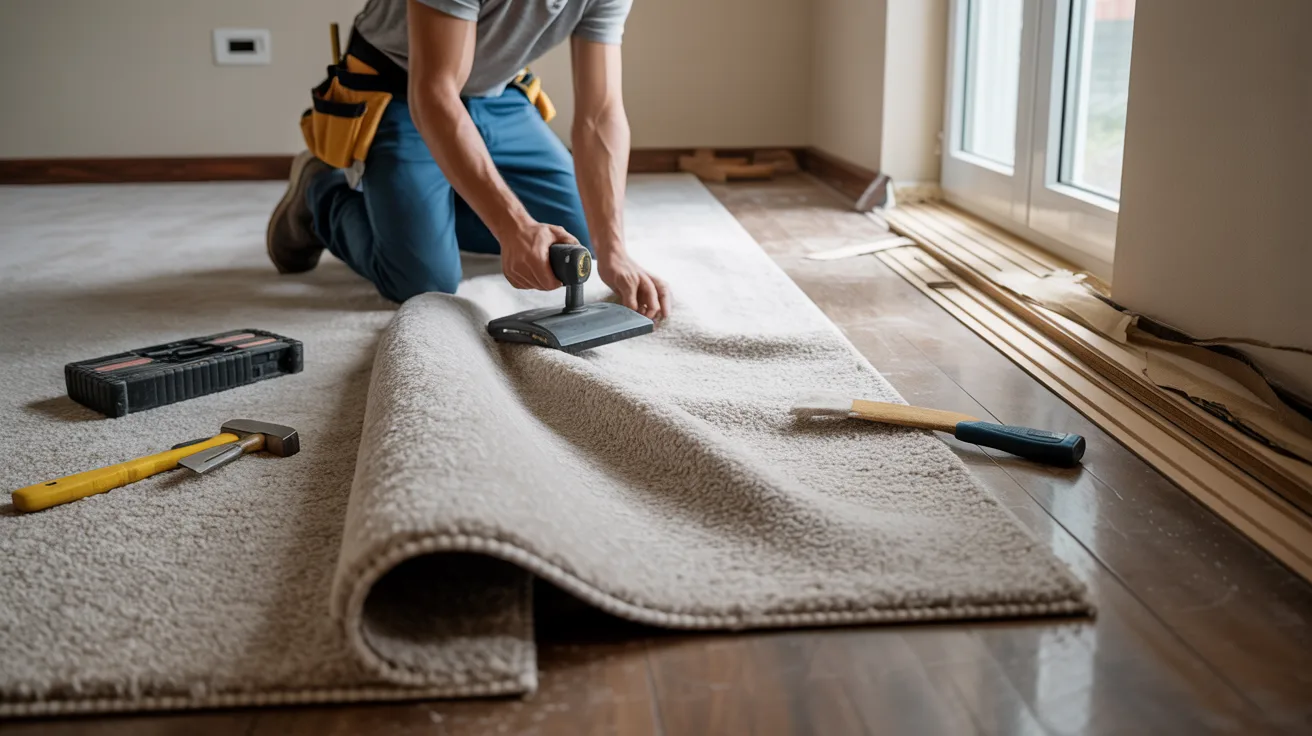
This is one of the most common reasons. If the carpet wasn’t stretched tightly enough during installation, it will loosen over time and start to buckle.
Proper installation requires a power stretcher, not just a knee kicker. Some fitters rush the job or skip this step entirely, and it shows within a year or two.
If your carpet started rippling early after installation, this is probably why. The good news is that re-stretching fixes it cleanly in most cases.
Heavy Furniture Being Dragged
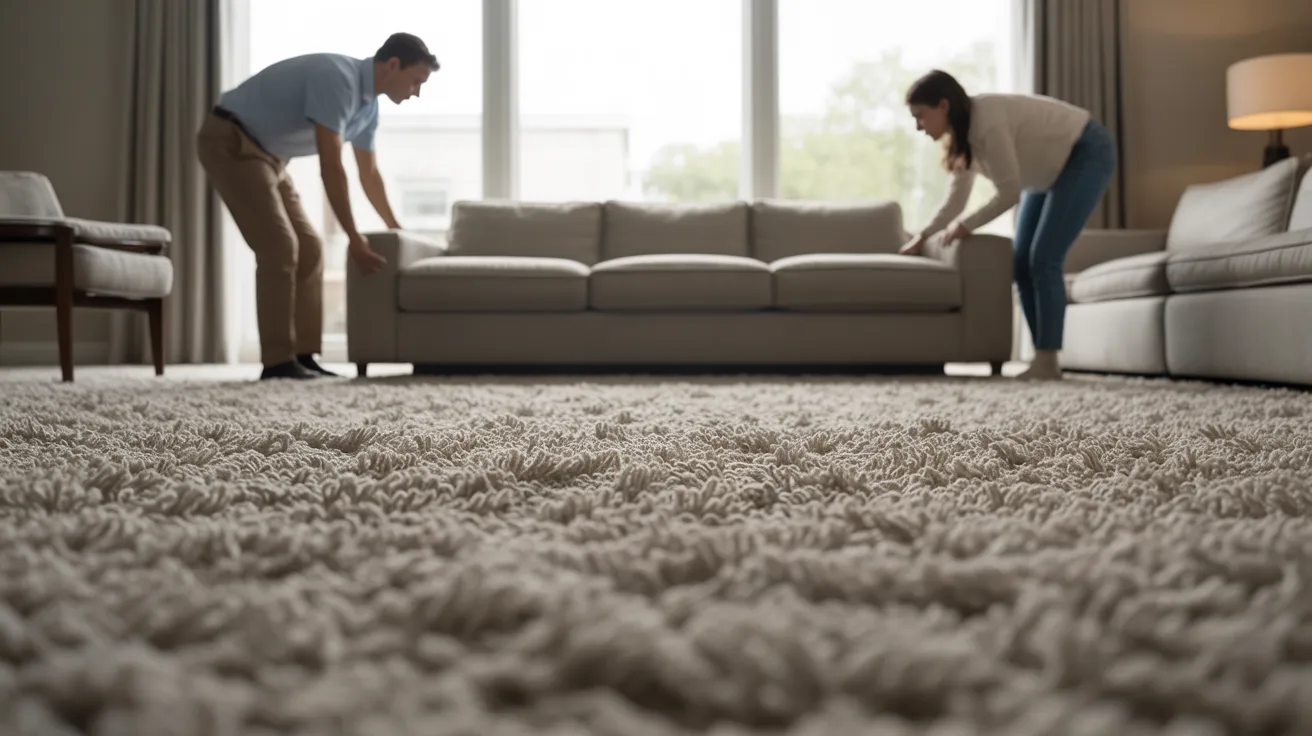
Dragging a heavy sofa or wardrobe across the floor pulls the carpet unevenly. This creates tension in one area while leaving slack in another.
Over time, that uneven pulling causes visible waves to form. It’s not always obvious right away, but the ripples tend to show up weeks later.
Always lift furniture rather than drag it. Furniture sliders can help too. That one habit alone prevents a lot of ripple problems.
Temperature and Humidity Changes
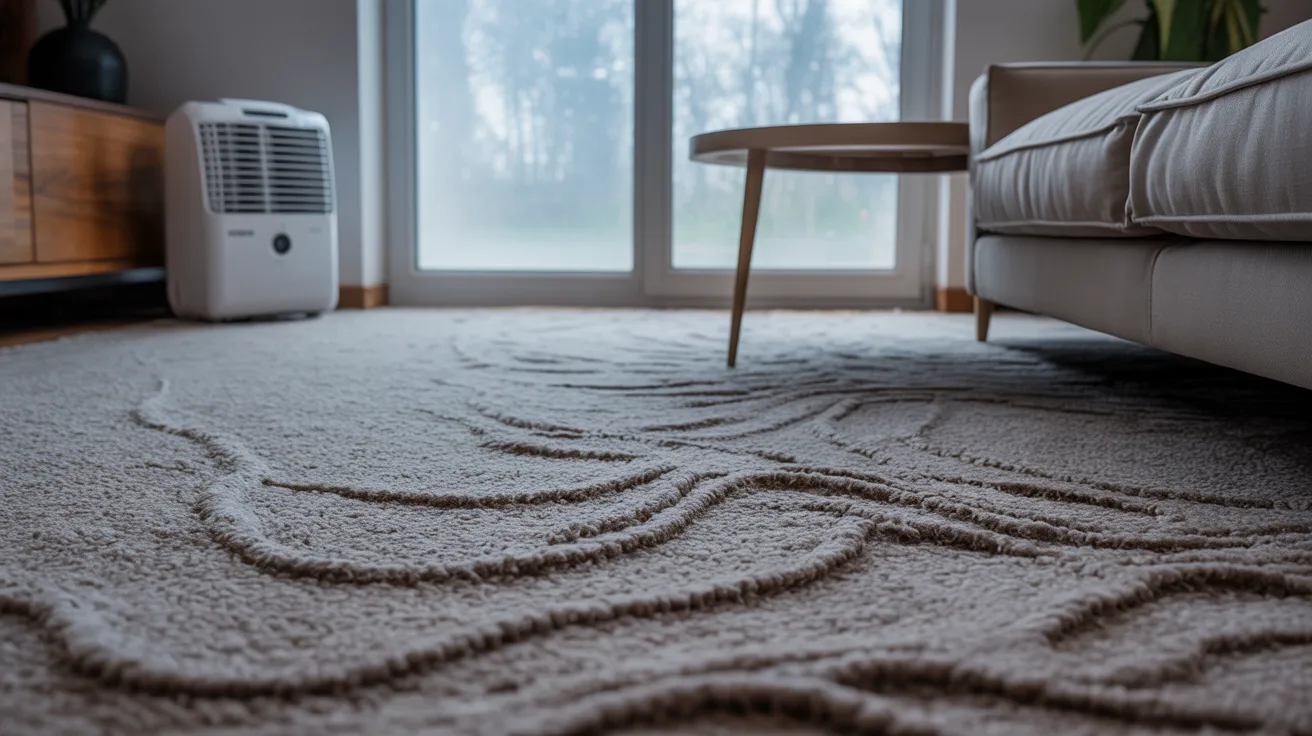
Carpet backing expands when it absorbs moisture and contracts when conditions dry out. That constant movement gradually loosens the tension in the carpet.
This is why ripples are common in basements, rooms near kitchens, and in homes with no humidity control. Seasonal changes make it worse.
Keeping indoor humidity consistent, ideally between 40% and 60%, goes a long way in slowing this down.
Worn or Low-Quality Carpet Padding
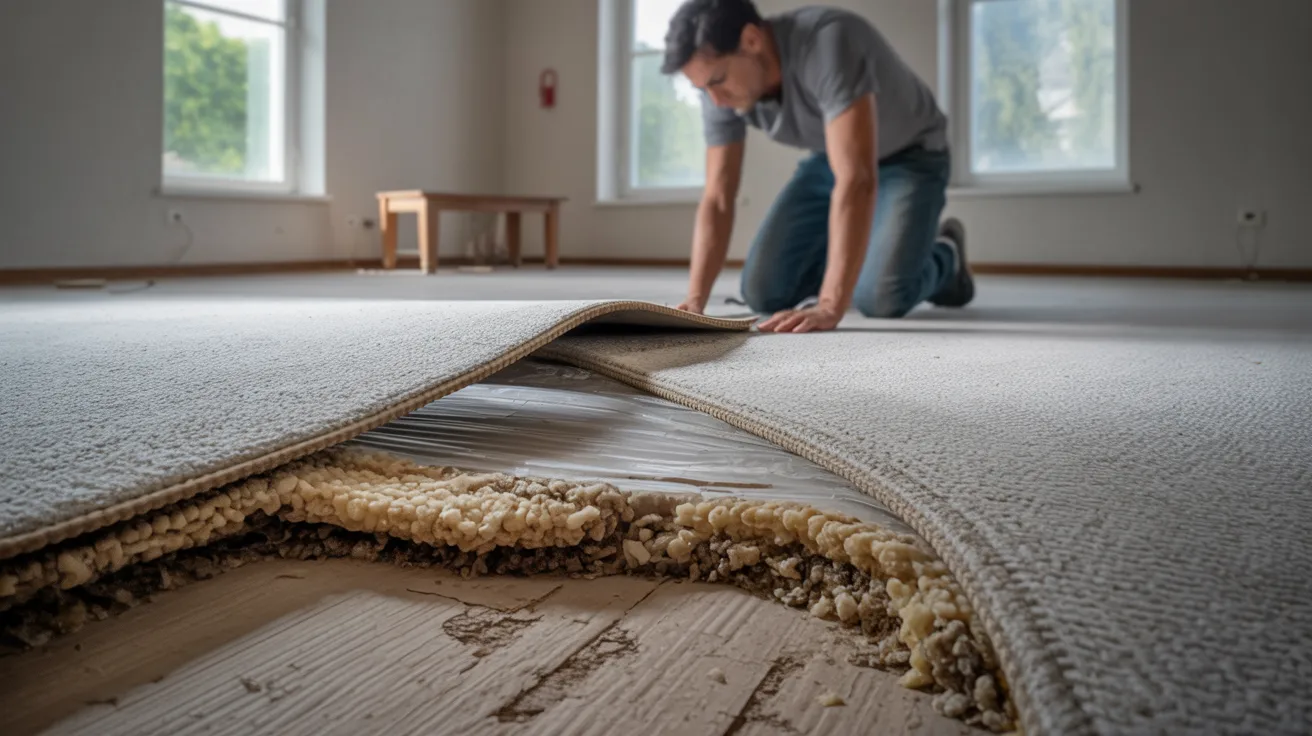
Padding sits between the carpet and the subfloor. When it compresses or breaks down, the carpet above it loses support and starts to shift.
Low-quality padding fails faster. In high-traffic areas like hallways and living rooms, this can happen within a few years.
If you’re replacing your carpet, always invest in decent padding. It makes a bigger difference to carpet longevity than most people realise.
Natural Carpet Aging
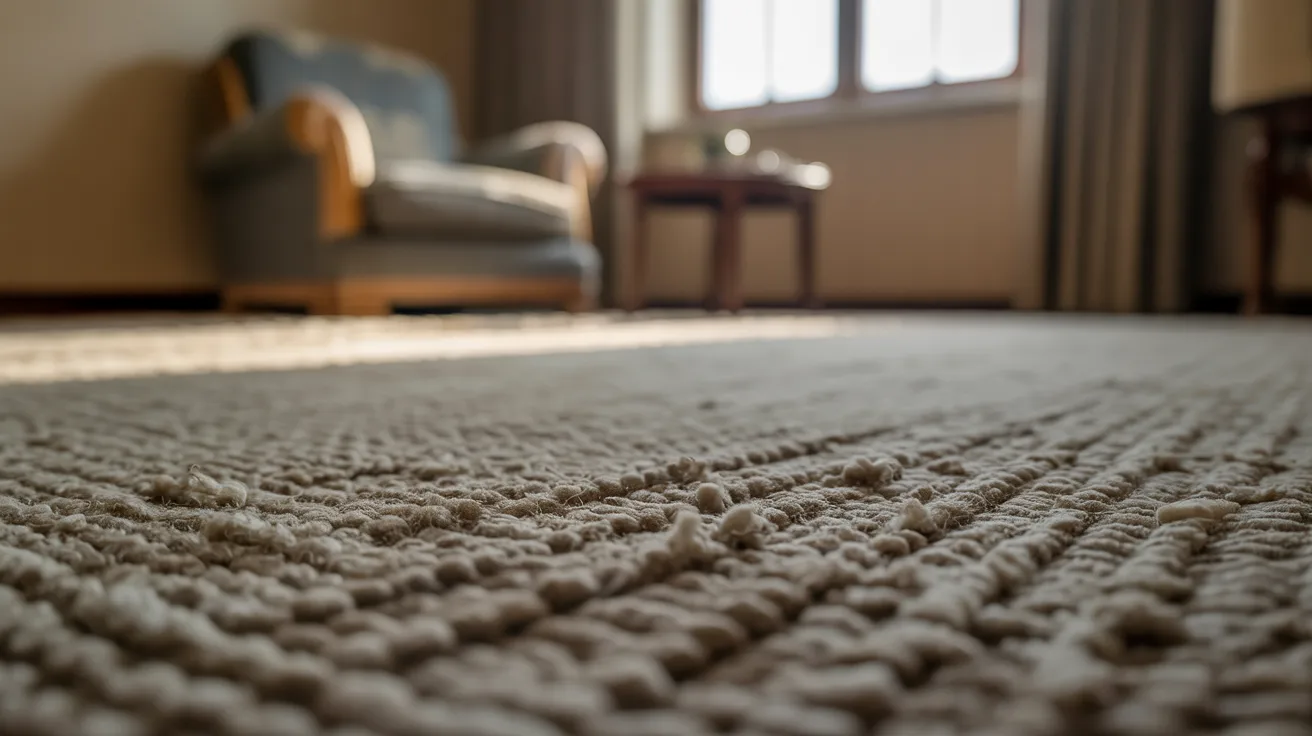
Carpet fibres and backing naturally weaken over time. The older the carpet, the less it holds its shape under normal foot traffic and movement.
Ripples that appear in older carpets without any clear cause are usually just the result of age. The carpet has gradually lost its original tension.
Re-stretching can buy more time, but very old or worn carpet may be past the point where stretching gives a lasting result.
How to Fix Carpet Ripples in 5 Practical Steps
Here’s how to fix carpet ripples yourself, step by step, using the same approach recommended in most home improvement guides and homeowner forums.
Step 1: Identify Where the Ripples Start
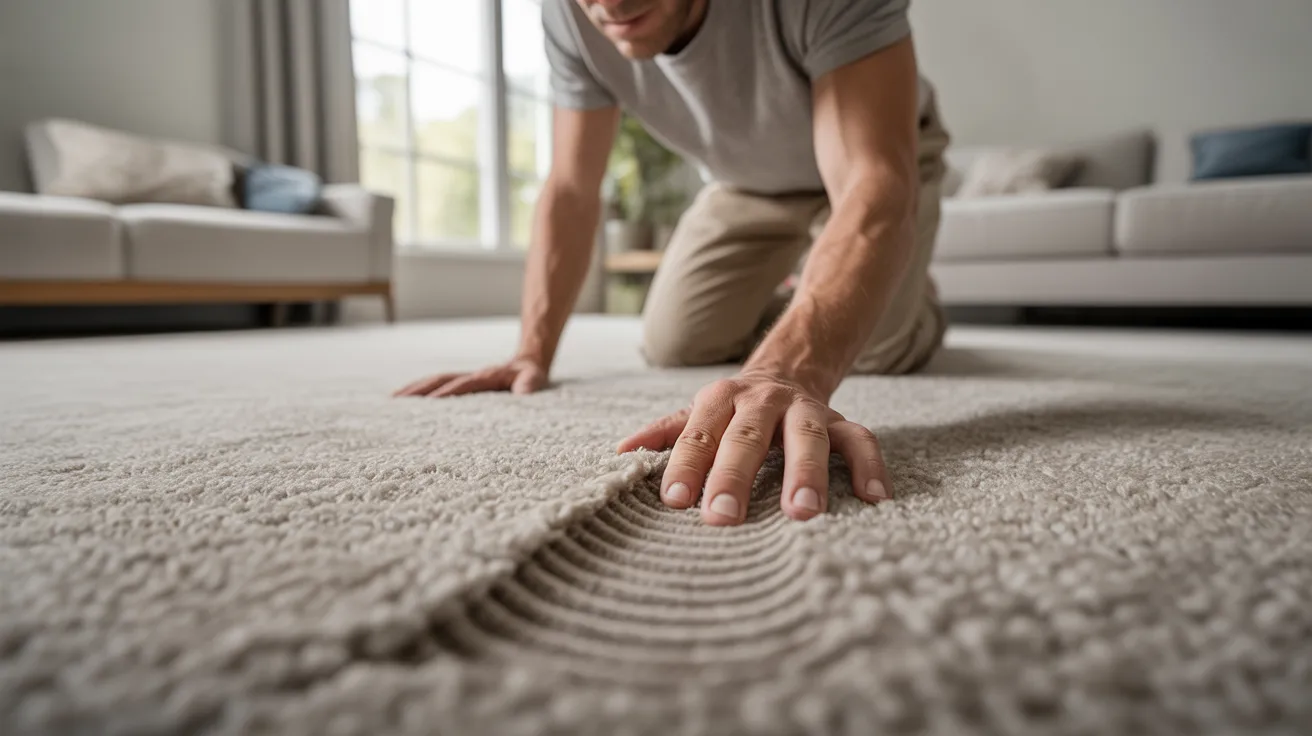
Before you do anything, get on your hands and knees and trace the ripple. Check whether the waves are starting near the walls, in the corners, or somewhere in the middle of the room.
Ripples near the wall usually mean the tack strips have lost grip. Waves in the centre often point to a padding or installation issue.
Knowing where they start tells you where to begin stretching. Don’t skip this step, it saves a lot of guesswork later.
Step 2: Remove Furniture and Clear the Area
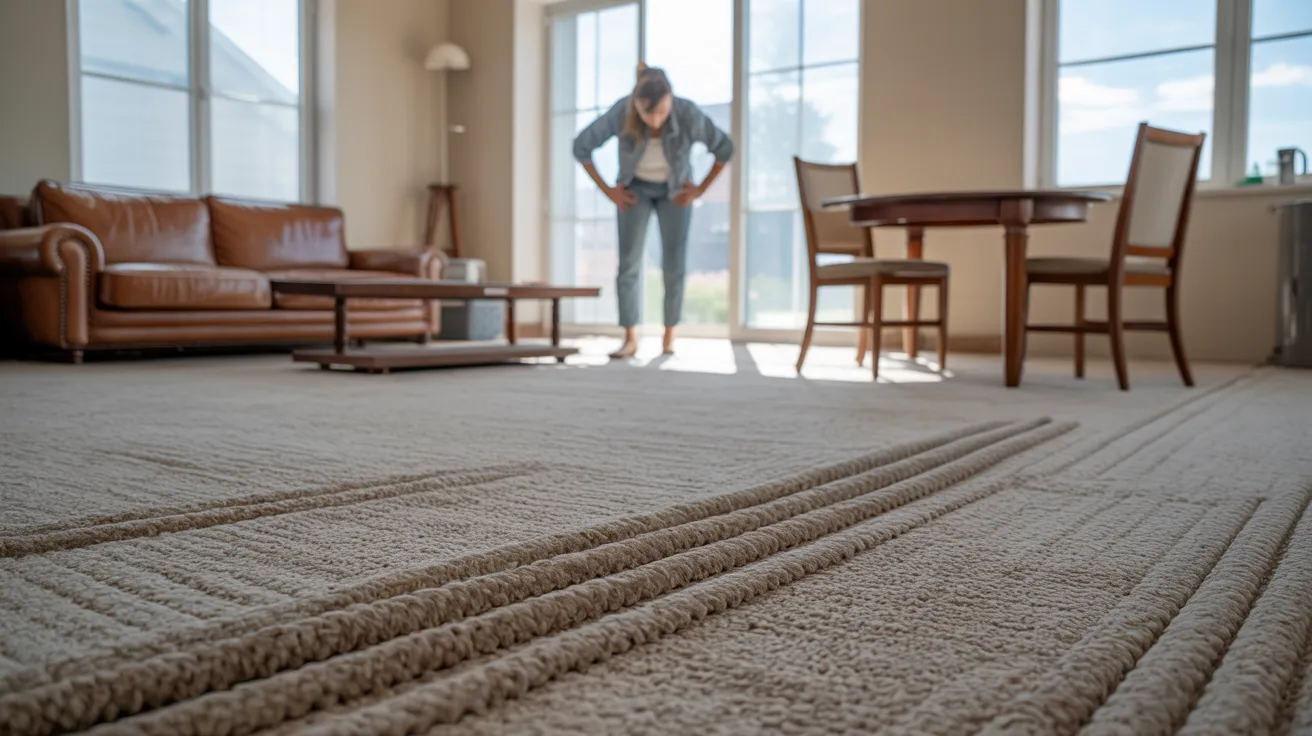
Move everything out of the room or at least off the carpeted area. Many homeowners skip this step, and it leads to uneven results.
You can’t stretch carpet properly if furniture is sitting on it. The weight holds the carpet in place and stops you from pulling it flat.
Clearing the space fully also lets you see the full extent of the ripple, which makes the stretching process much more accurate.
Step 3: Re-Stretch the Carpet Using a Knee Kicker

A knee kicker is a hand tool with teeth on one end. You press the teeth into the carpet and use your knee to push the other end, which drives the carpet forward.
This is the most widely recommended tool when people search for how to fix carpet ripples DIY. You can rent one from most tool hire shops for less than the cost of a professional callout.
Work from the centre of the room outward. Push the carpet toward the walls in sections, keeping the tension even across the whole area.
Step 4: Smooth the Carpet Toward the Wall

As you stretch, use your hands or a carpet tool to push the carpet firmly toward the tack strip along the wall. The goal is to remove all the slack.
Work in sections and keep checking behind you as you go. It’s easy for slack to shift rather than disappear if you rush.
Once the carpet lies flat and feels taut across the whole room, you’re ready for the final step.
Step 5: Secure and Trim Excess Carpet
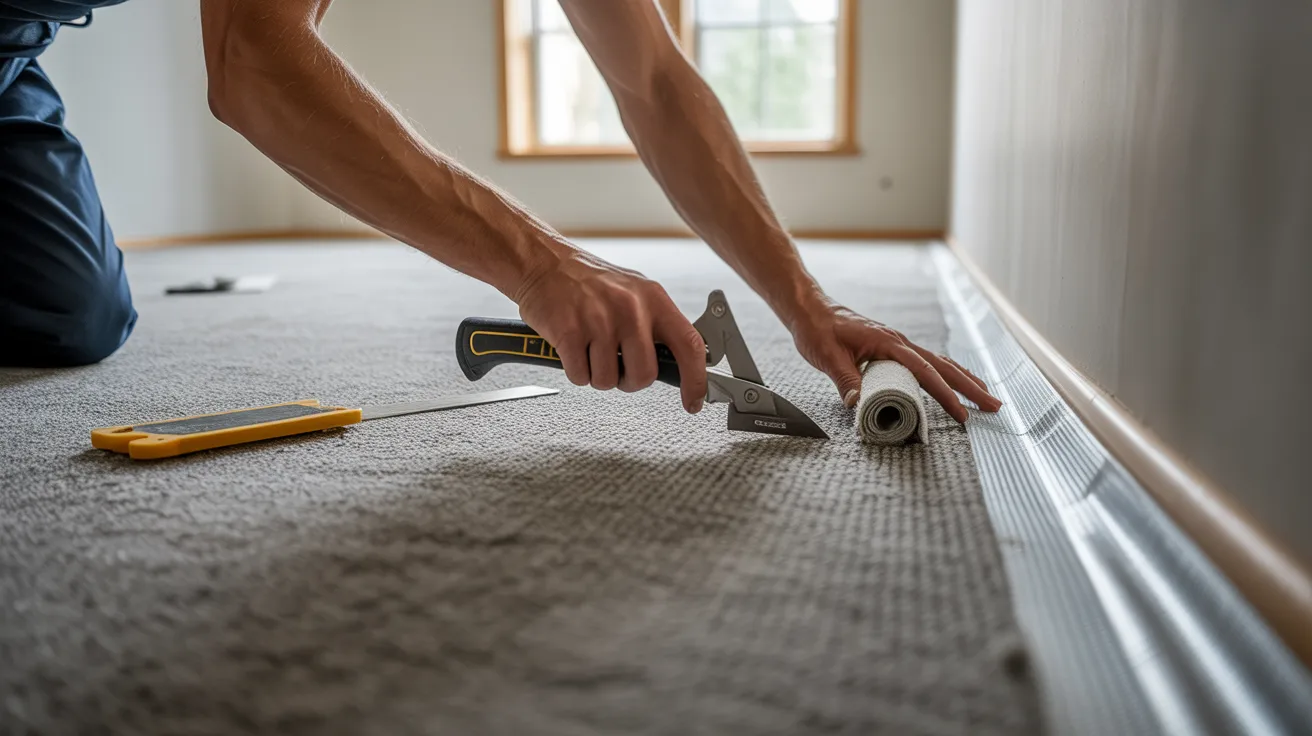
Press the carpet firmly onto the tack strips around the edges of the room. Use a carpet bolster or the edge of a flat tool to push it down so the teeth grip.
If there’s any carpet overhanging the tack strip, trim it carefully with a carpet knife. Keep the cut neat and tuck the edge under the baseboard.
Once secured, walk over the carpet in different directions. It should feel flat, firm, and even throughout the room.
Quick Fixes People Often Suggest in Forums
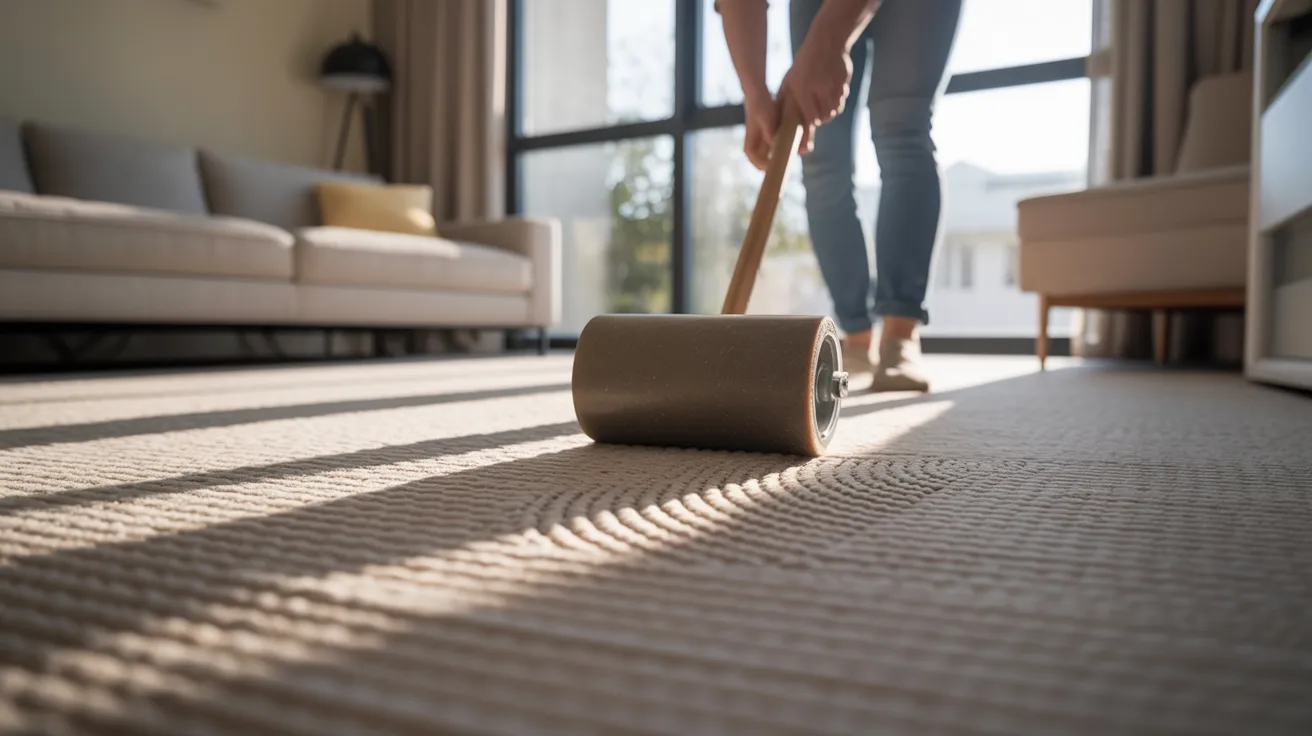
Not every ripple needs a full re-stretch. For small waves, homeowners in online communities often try a few simpler fixes first before calling anyone in.
- Rolling the carpet with a heavy floor roller to press waves flat from above
- Repositioning heavy furniture over small bumps to weigh them down temporarily
- Light steaming over the ripple area to relax carpet fibres before re-stretching
- Pressing edges back onto tack strips to tighten loose perimeter sections
These methods can work well for minor surface ripples. But if the wave goes deep or keeps coming back, stretching is the only fix that actually holds.
How to Fix Carpet Ripples on Stairs
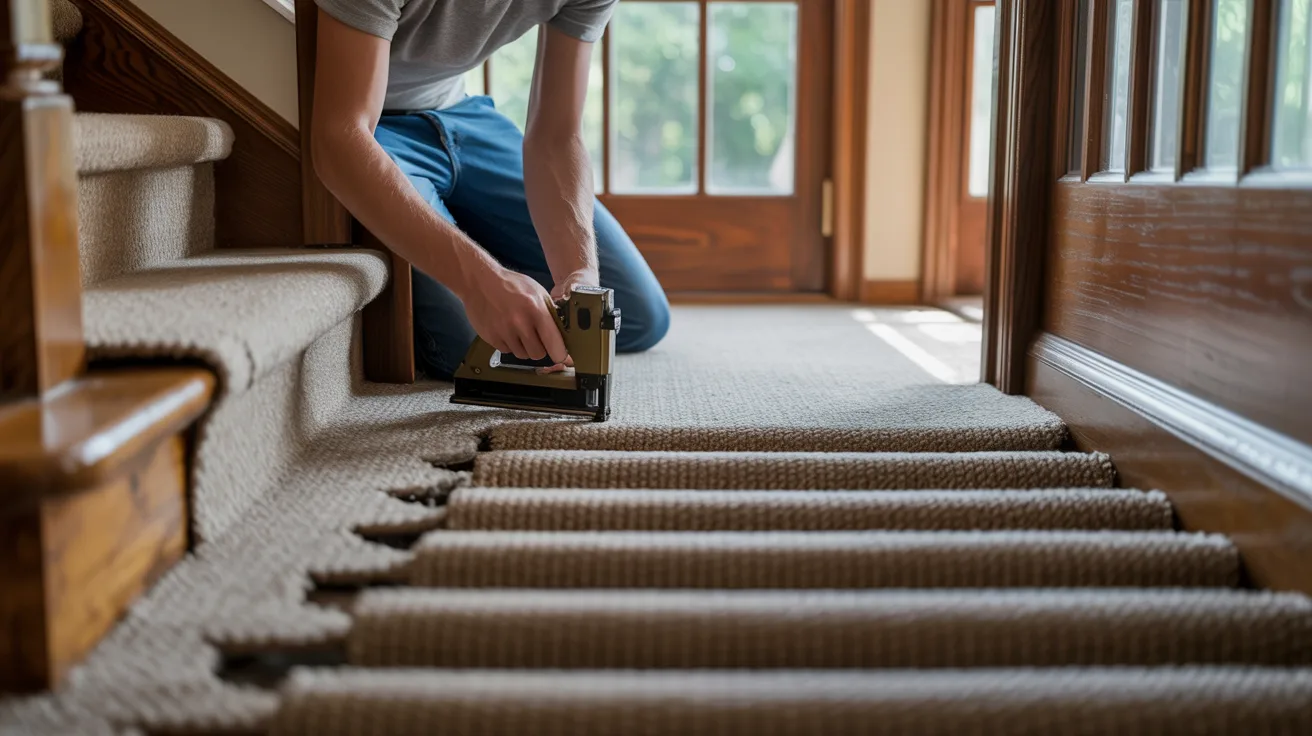
Homeowners frequently ask how to fix carpet ripples on stairs because stair carpets tend to loosen faster than room carpeting.
The reason is simple: stairs take more direct impact with every step.
That constant up-and-down traffic causes the carpet to shift forward over time. You’ll often see it bunching at the base of each step or pulling away from the riser.
The most common fixes include tightening or replacing loose stair rods, re-stapling the carpet underneath each stair lip, and re-stretching the carpet back into position from the top of the stairs downward.
Stair carpet repairs are more fiddly than room repairs. If you’re not confident working on stairs, this is a case where hiring a professional for a few hours makes sense.
Signs You May Need Professional Carpet Stretching
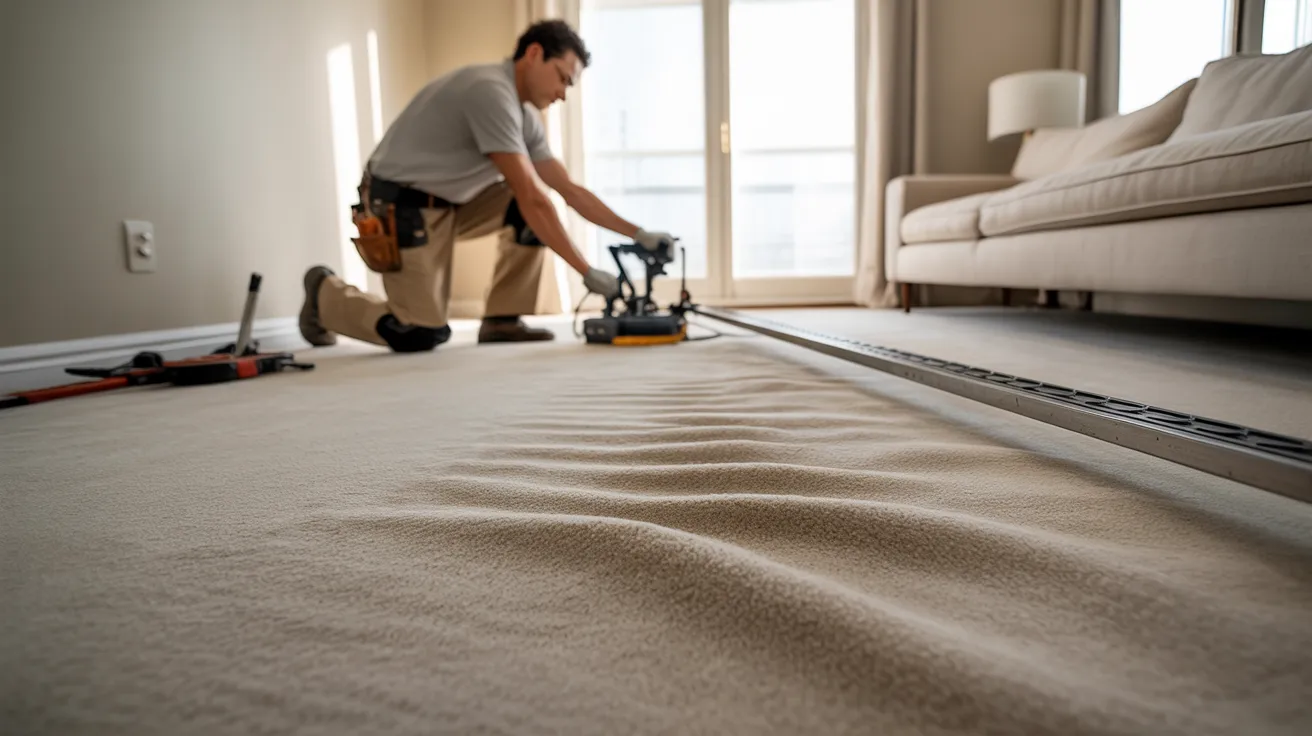
DIY stretching works well for most ripple problems, but some situations genuinely need a professional. Here are the clearest signs it’s time to stop doing it yourself.
- Ripples are running across the entire room, not just one corner or edge
- Waves keep coming back within weeks of a DIY repair
- Carpet edges are pulling away from tack strips in multiple areas
- Carpet padding feels soft, uneven, or has visibly compressed under the carpet
Renting a knee kicker is a smart move for a single ripple in one room. But if you’re dealing with widespread issues or returning waves, a professional with a power stretcher will do a much more thorough job and save you time in the long run.
Tips Homeowners Share to Prevent Carpet Ripples
Prevention is always easier than repair. These are the tips that come up again and again in home improvement communities from people who’ve dealt with ripples before.
- Avoid dragging heavy furniture. Always lift it or use sliders
- Maintain consistent indoor humidity, ideally between 40% and 60%
- Choose good-quality carpet padding when installing new carpet
- Ask your installer to use a power stretcher, not just a knee kicker, during fitting
In areas with seasonal weather shifts, including those searching for advice on how to fix carpet ripples in UK homes, keeping humidity under control year-round is one of the most effective things you can do to stop ripples from forming in the first place.
Final Thoughts
Carpet ripples are fixable. You don’t need to panic or replace everything.
Start small, try the knee kicker, and see how far you get. If the waves keep coming back, bring in a professional. Either way, don’t sit on it.
The longer you wait, the worse it gets.
Have you already tried fixing yours? I’d love to know what worked and what didn’t.
Drop it in the comments below. And if someone in your life is dealing with the same problem, send this their way.
Frequently Asked Questions
Why Does My Carpet Suddenly Develop Ripples?
Carpet ripples usually appear when the carpet loses tension due to installation issues, humidity changes, or worn padding. Any of these can cause the carpet to buckle and form visible waves.
Can I Fix Carpet Ripples Myself?
Yes, small ripples can often be fixed using a knee kicker and basic stretching techniques. Most homeowners handle minor cases without needing professional help.
Do Carpet Ripples Mean the Carpet Is Ruined?
No. In most cases the carpet only needs to be re-stretched. Ripples are a tension problem, not a sign that the carpet itself is worn out.
Why Do Carpet Ripples Appear After Carpet Cleaning?
Steam cleaning can temporarily loosen the carpet backing, causing waves. This usually settles as the carpet dries, but sometimes a light re-stretch is needed.
How Long Does a Carpet Stretching Fix Last?
A proper carpet stretch can last several years if the carpet was installed correctly and humidity levels remain stable. Maintaining good conditions indoors is key to keeping the fix in place.