

No one tells you how much a countertop edge changes the whole look of a kitchen until you are already standing in it.
I learned that firsthand, and I have helped enough homeowners through the same moment to know it catches almost everyone off guard.
It is a small detail that carries real visual weight.
This guide covers 13 quartz countertop edge profiles, what each one looks like up close, and how to match the right one to your space, your style, and your budget.
Read on and find your fit before that fabricator call comes.
What Are Quartz Countertop Edges?
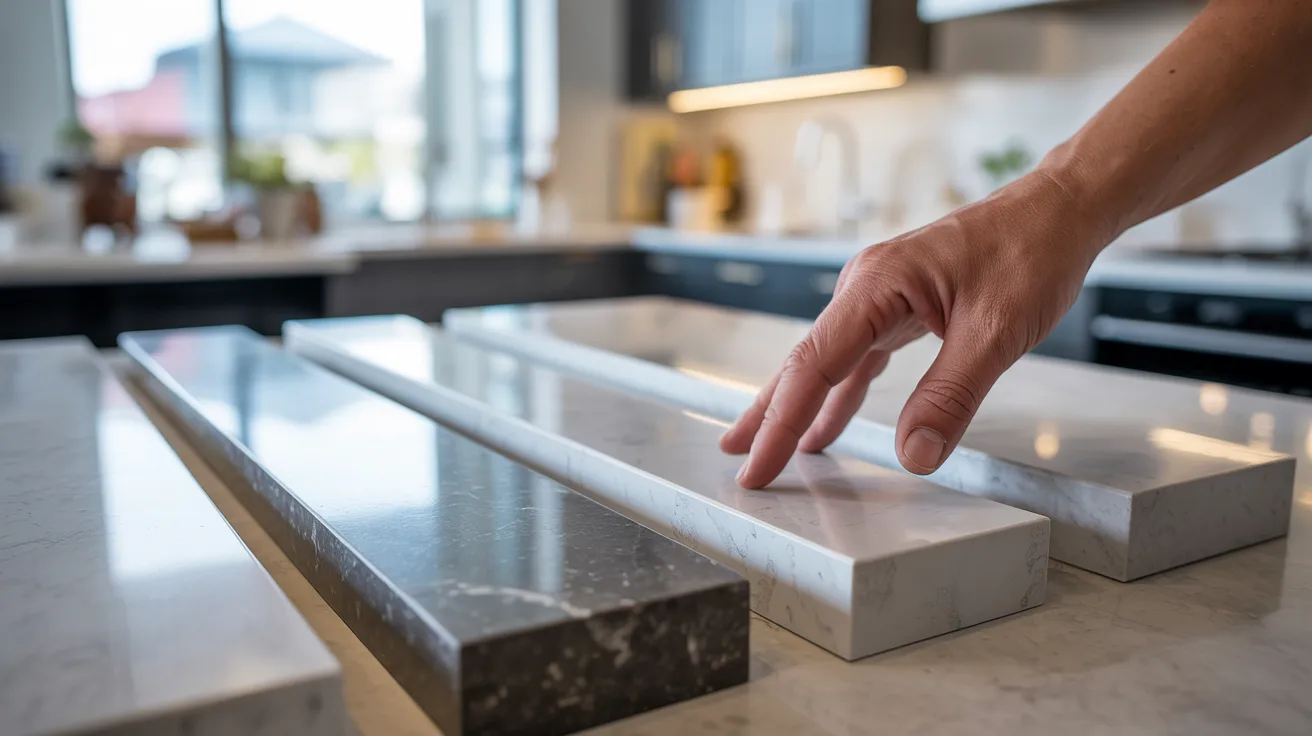
Quartz countertop edges are the shaped profiles along the outer rim of your countertop slab.
They are the part you see and touch every single day. During fabrication, the edge is cut and finished to give the surface a clean, complete look.
Some profiles are sharp and flat. Others are soft and rounded. The style you choose affects how the countertop feels in the room.
It is a small decision that carries a lot of visual weight.
Why Edge Profiles Matter in Kitchen and Bathroom Design
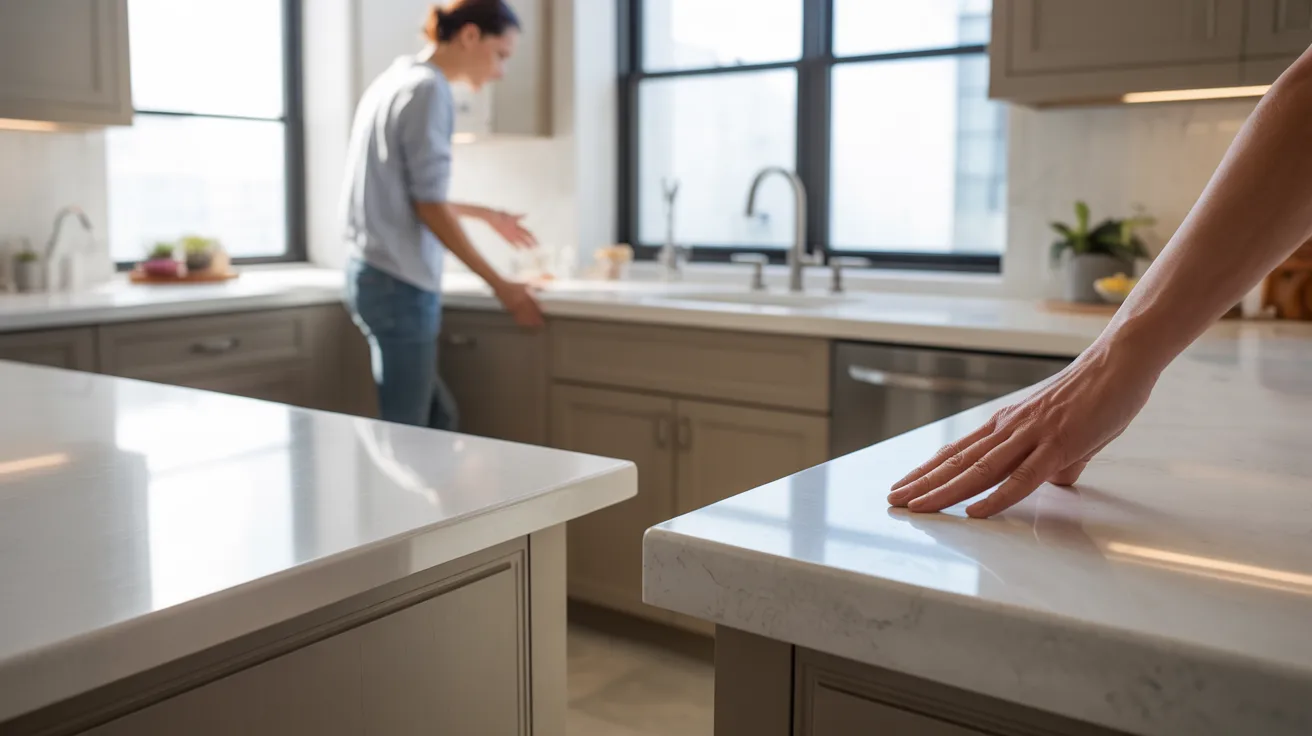
The edge profile is not just a finishing detail. It affects the look, the feel, and even the safety of your countertop.
A sharp profile looks modern but can chip over time. A rounded one is softer and more comfortable for families.
The right profile also ties the surface to the rest of the room. It connects the countertop to the cabinets, the fixtures, and the overall style of the space in a way that feels intentional.
Getting it right makes the whole room feel finished without any extra effort.
List of 13 Most Popular Quartz Countertop Edges
From clean and minimal to layered and detailed, here are the 13 most popular quartz countertop edge profiles worth knowing before you decide.
1. Eased Edge
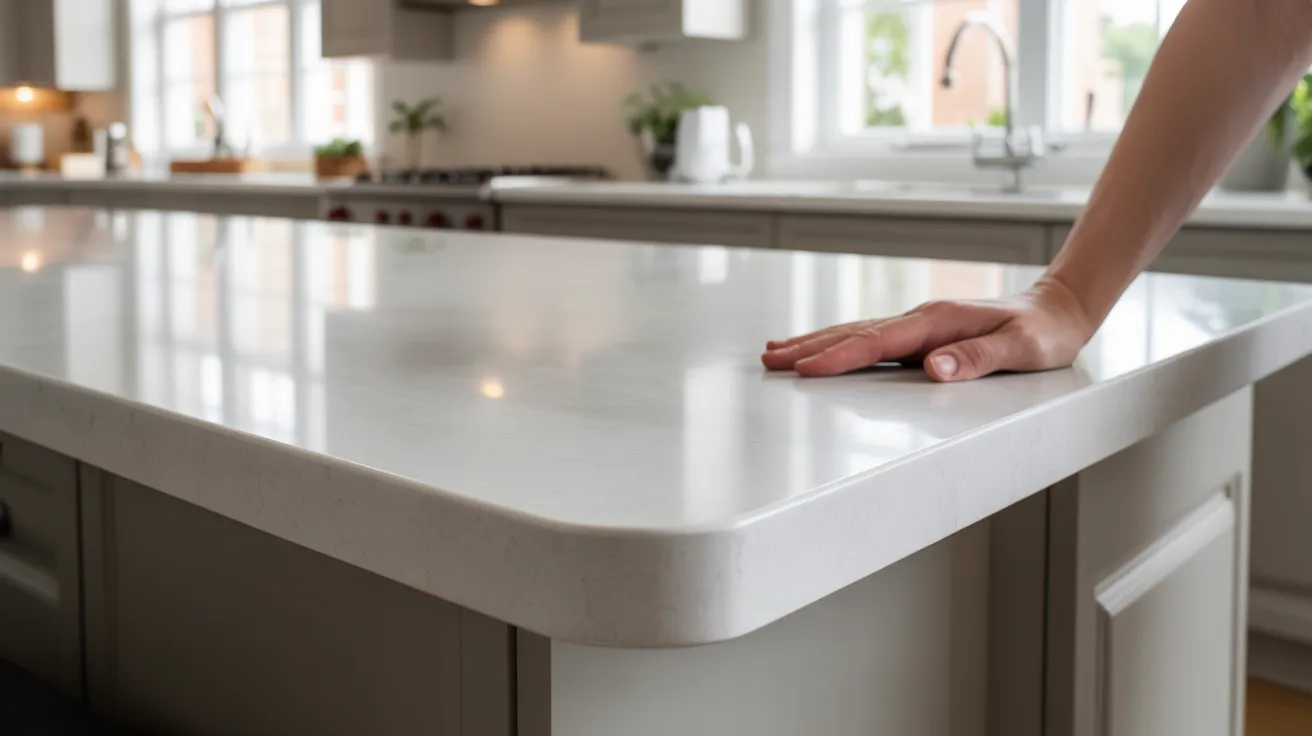
Flat on the front with lightly softened top and bottom corners, this profile looks clean and simple. A solid fit for modern and contemporary spaces.
One of the easiest profiles to fabricate, which keeps the cost low. If you want a no-fuss, low-maintenance edge that still looks intentional, this one delivers every time.
2. Straight Edge
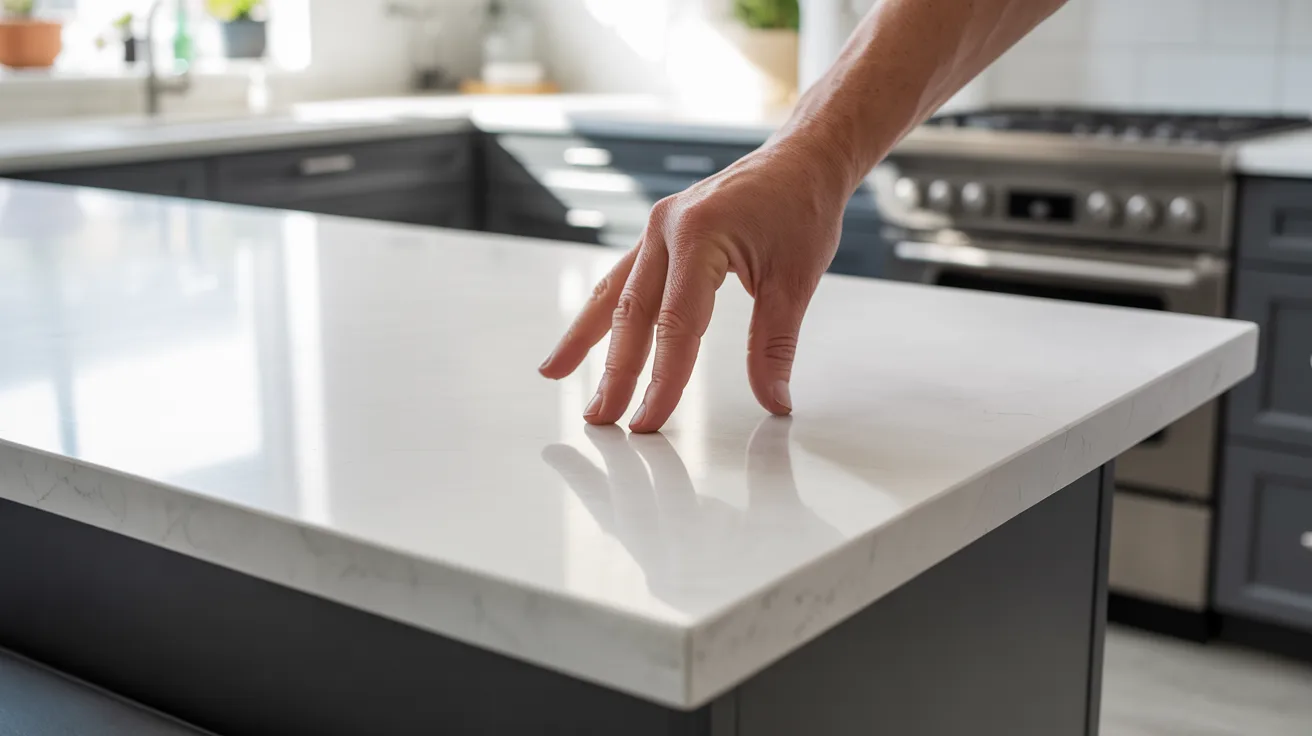
A completely flat, 90-degree profile with no rounding gives the countertop a sharp, precise look. It suits minimalist and industrial-style spaces well.
It shows the full thickness of the slab cleanly. The corners can chip if bumped. It works best in lower-traffic areas or well-planned layouts.
3. Bevel Edge
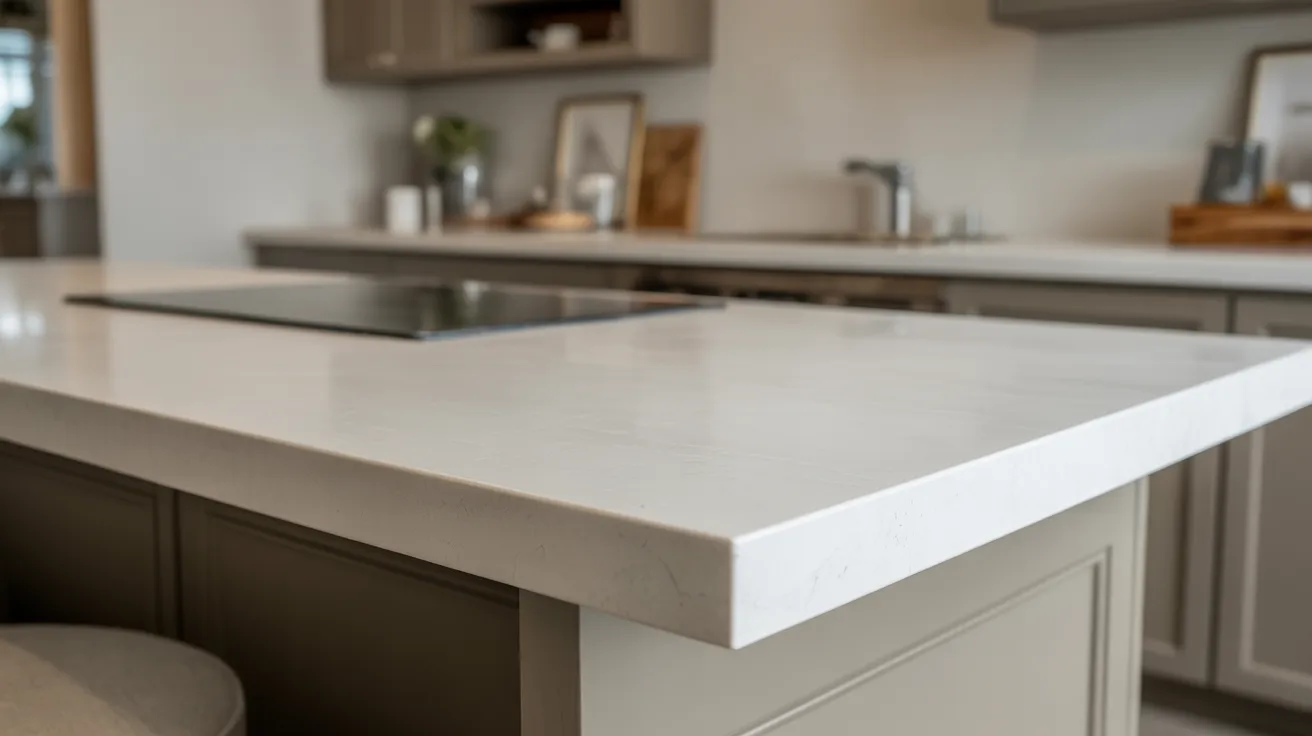
Cut at a 45-degree angle along the top corner, this profile creates a flat, slanted face rather than a rounded or fully straight finish. It adds a touch of visual detail without feeling overdone.
A solid fit for modern and transitional kitchens where you want something slightly more finished than a basic profile.
4. Half Bevel Edge
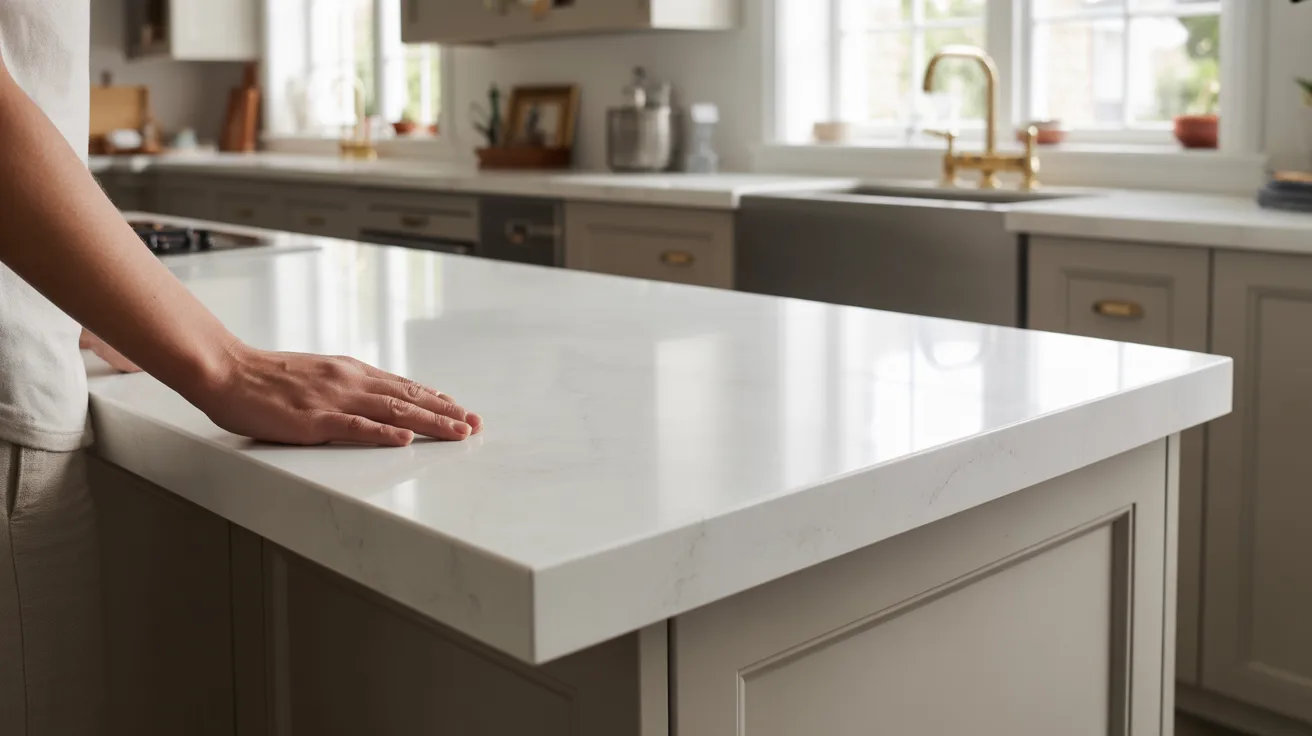
A smaller angled cut at the top corner makes this option more subtle but still adds a bit of detail.
Good for countertops where you want something slightly more finished without going too decorative. A clean, practical choice for transitional spaces.
5. Quarter Round Edge
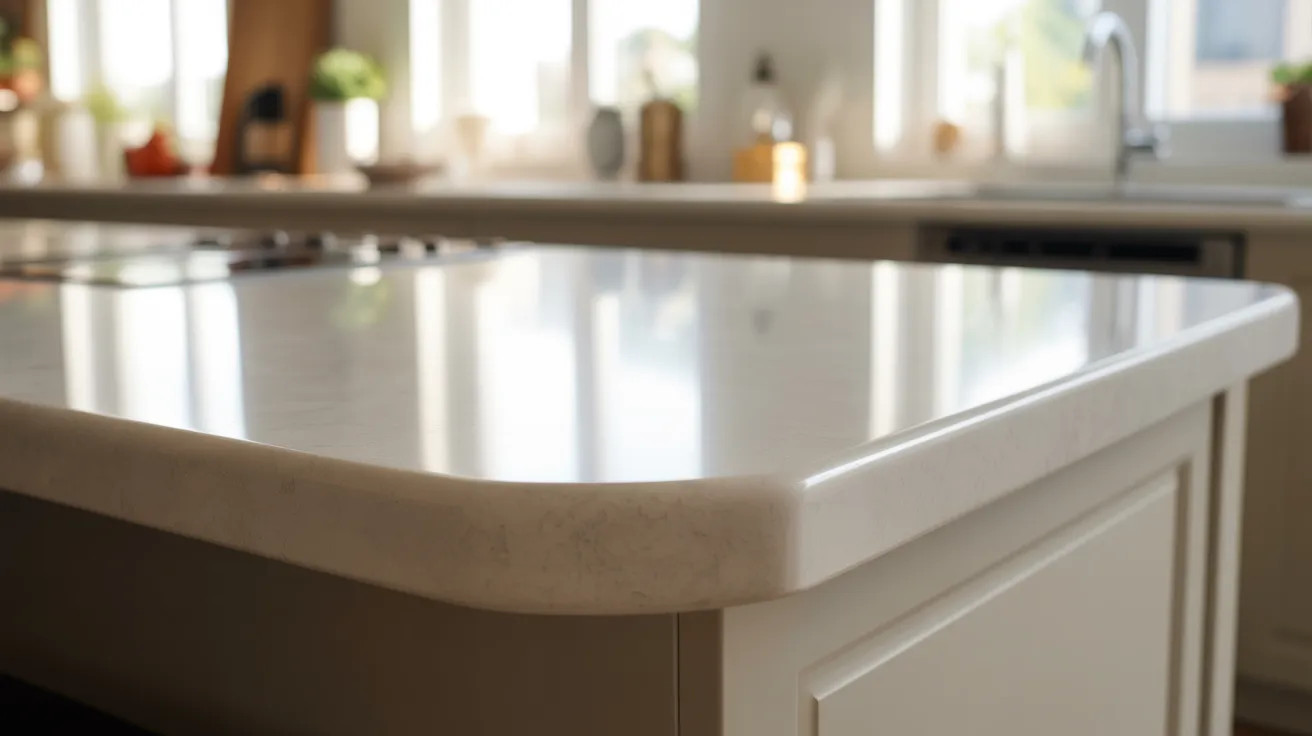
Soft and gently curved at the top corner, this profile is comfortable to lean against and easy to wipe down.
It sits nicely between a straight finish and a fully rounded one, working well in casual and family-friendly kitchens.
6. Half Bullnose Edge
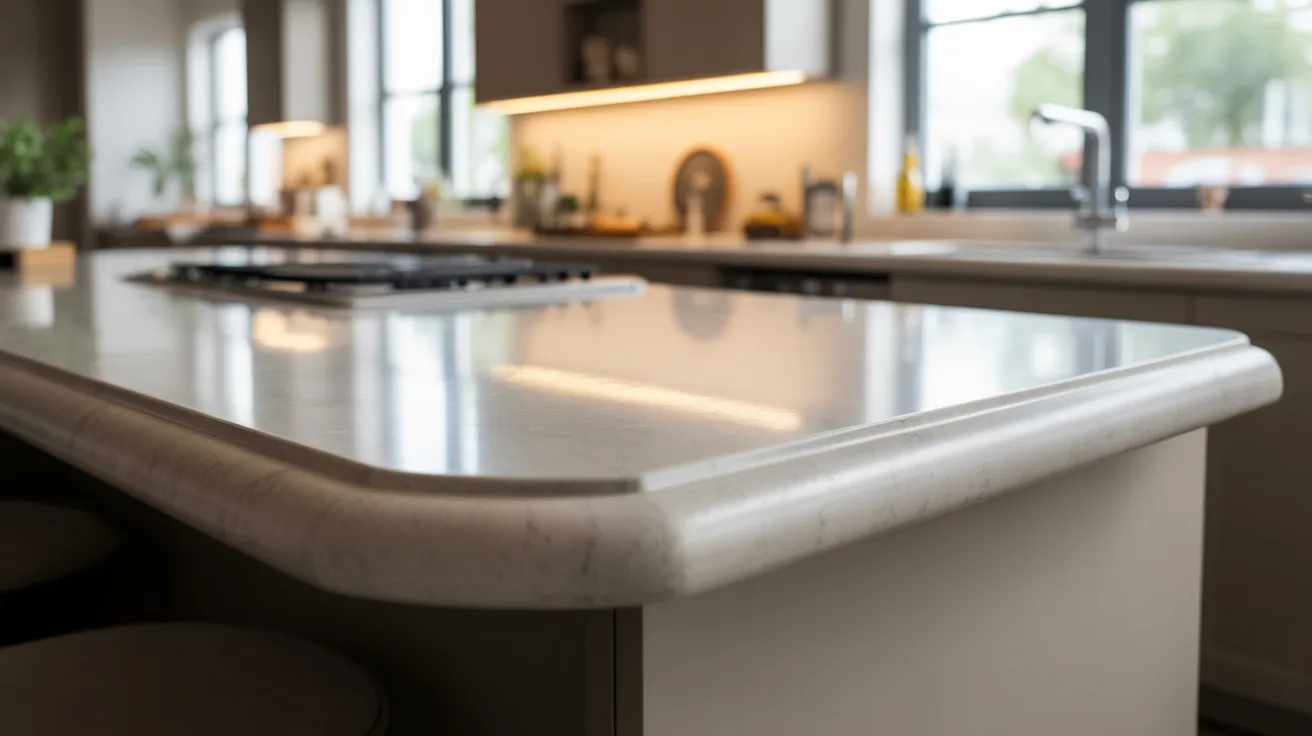
Fully rounded at the top with a flat bottom, this profile gives the countertop a softer, more finished look without a complete curve all around.
Works well in family kitchens where comfort matters. Easy to clean since there are no sharp corners to collect residue or cause injuries.
7. Full Bullnose Edge
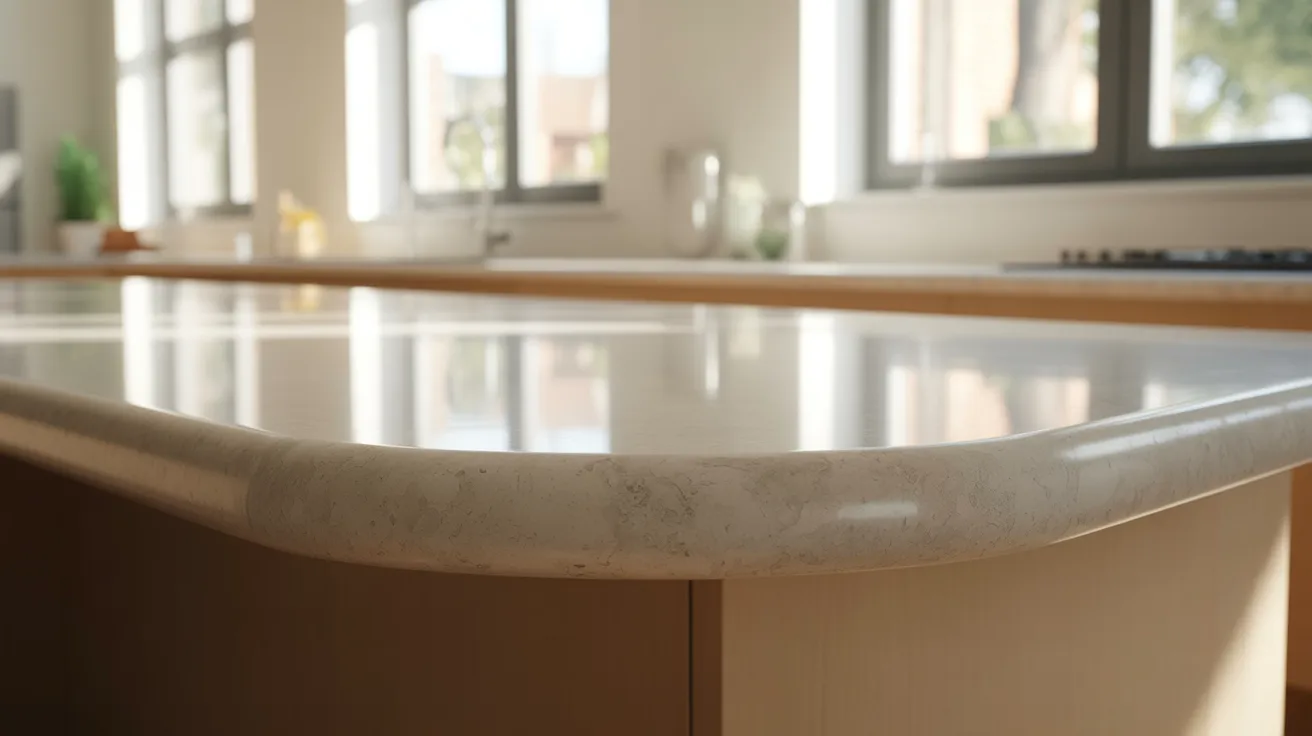
Completely rounded on both the top and bottom, this profile gives the countertop a smooth, curved finish. It has a classic, timeless look that fits traditional and transitional kitchens well.
Comfortable to lean against and safe for homes with young children. Does tend to show fingerprints more than flatter profiles.
8. Ogee Edge
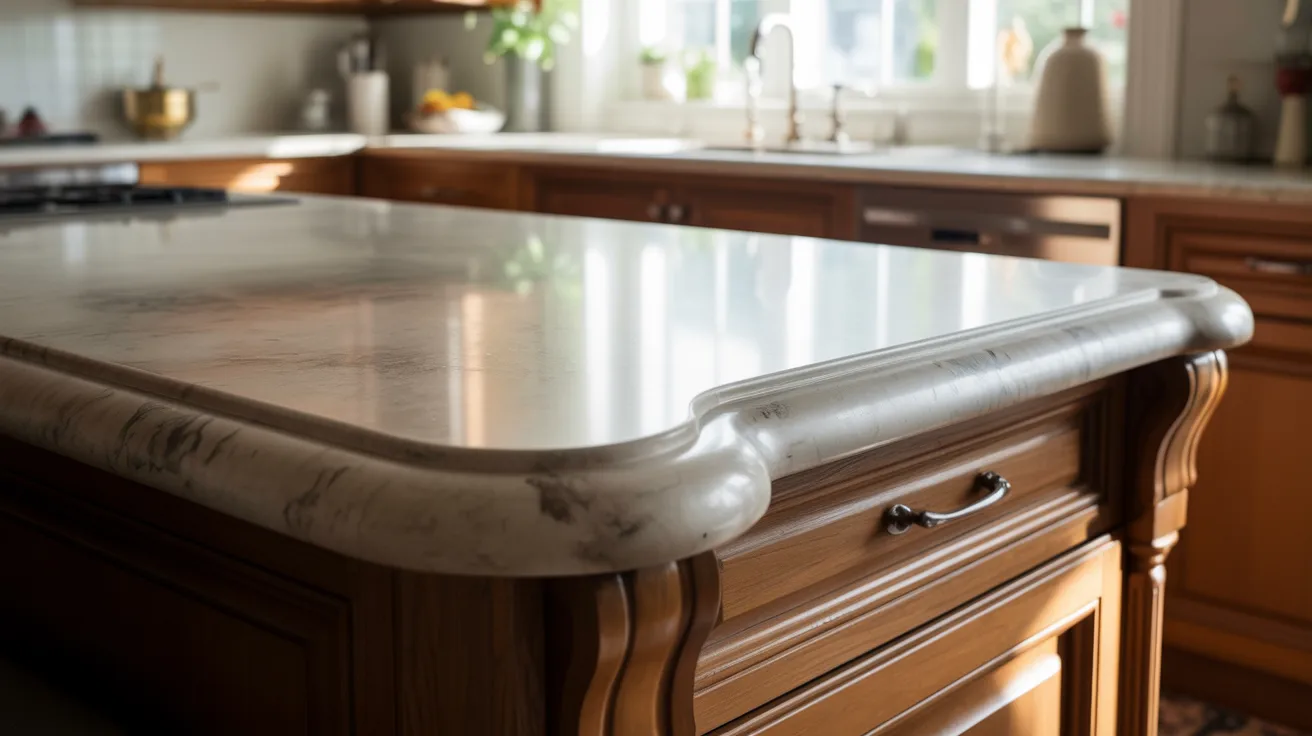
Shaped with an S-curve cut into the front face, this profile is one of the more decorative options available.
It adds a formal, layered look that works best in traditional or classic kitchen styles. Requires more fabrication work, so it typically costs more than simpler options.
9. Dupont Edge
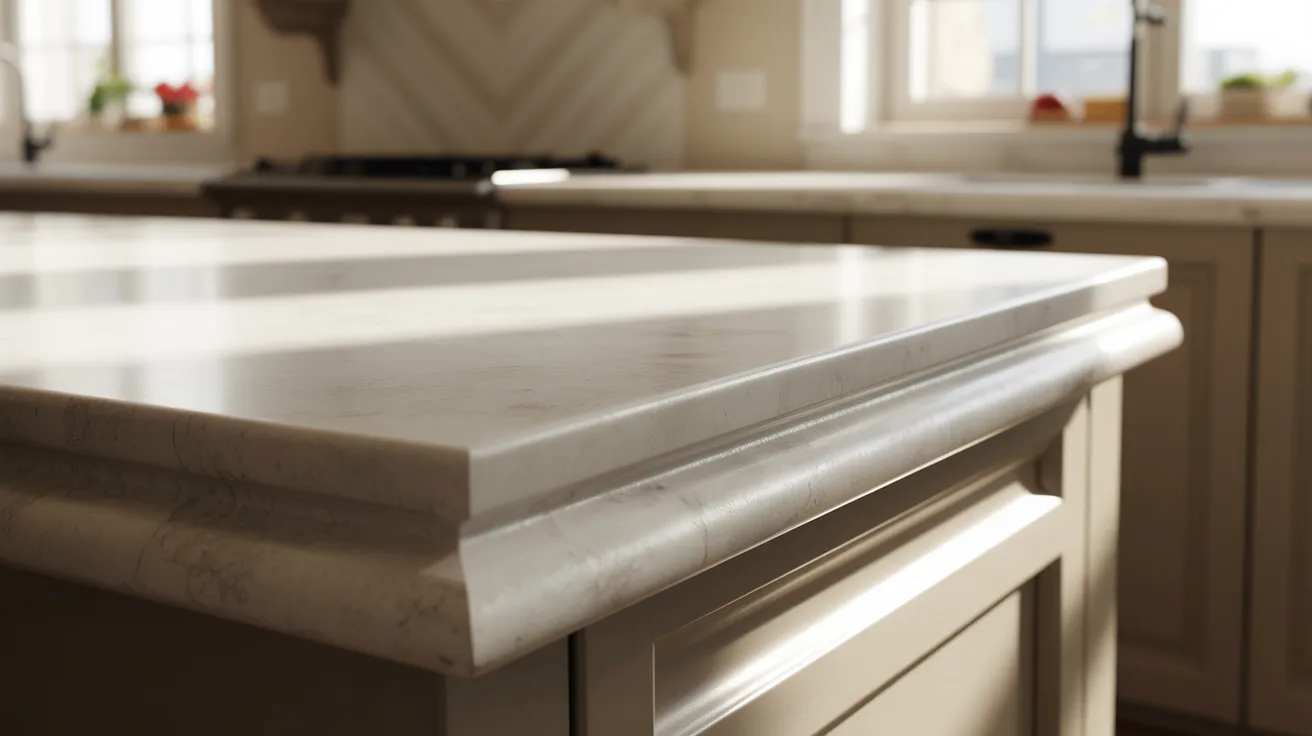
A flat vertical face paired with a quarter-round curve at the top gives this profile a clean but slightly decorative finish.
It has more visual interest than basic options and works well in transitional and traditional spaces where you want a small detail without going fully ornate.
10. Cove Dupont Edge
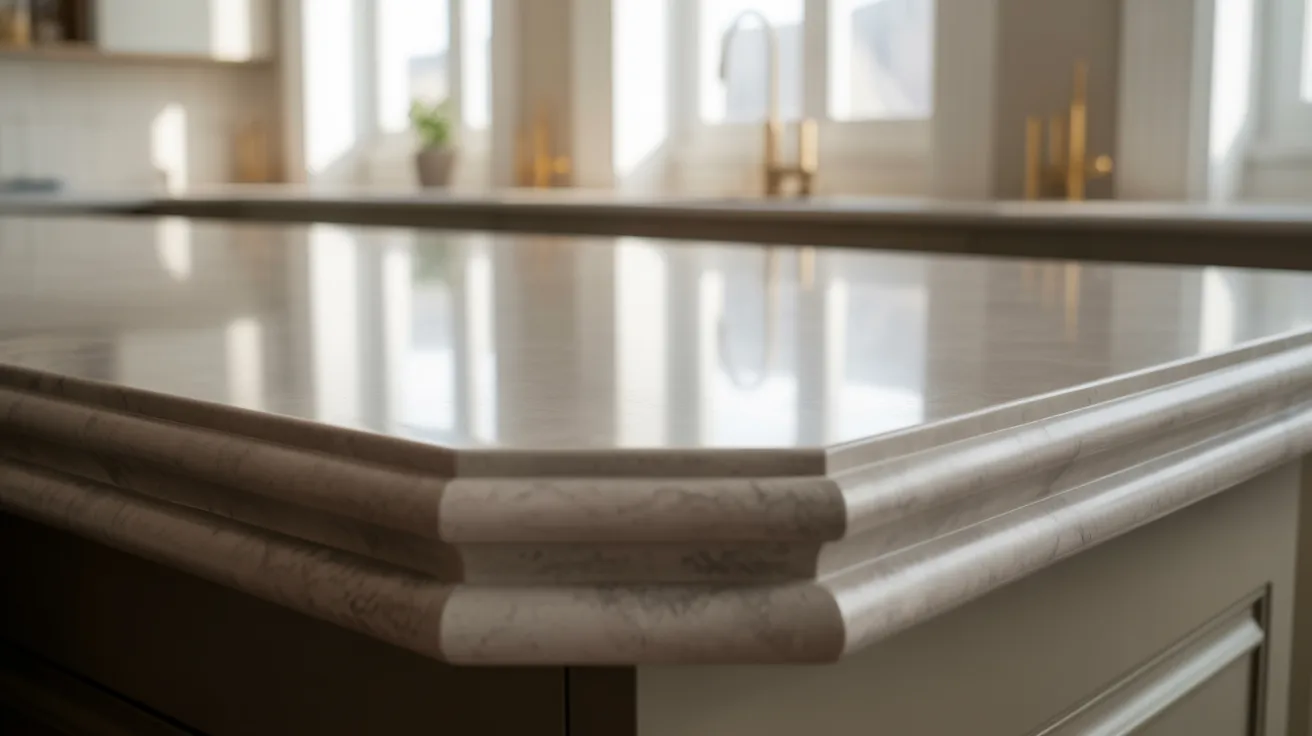
A concave curve below the flat front face creates a layered, two-part profile with more detail than a standard finish.
A popular choice for formal kitchens and bathrooms, it adds depth and visual interest without feeling too heavy or overdone.
11. Mitered Edge
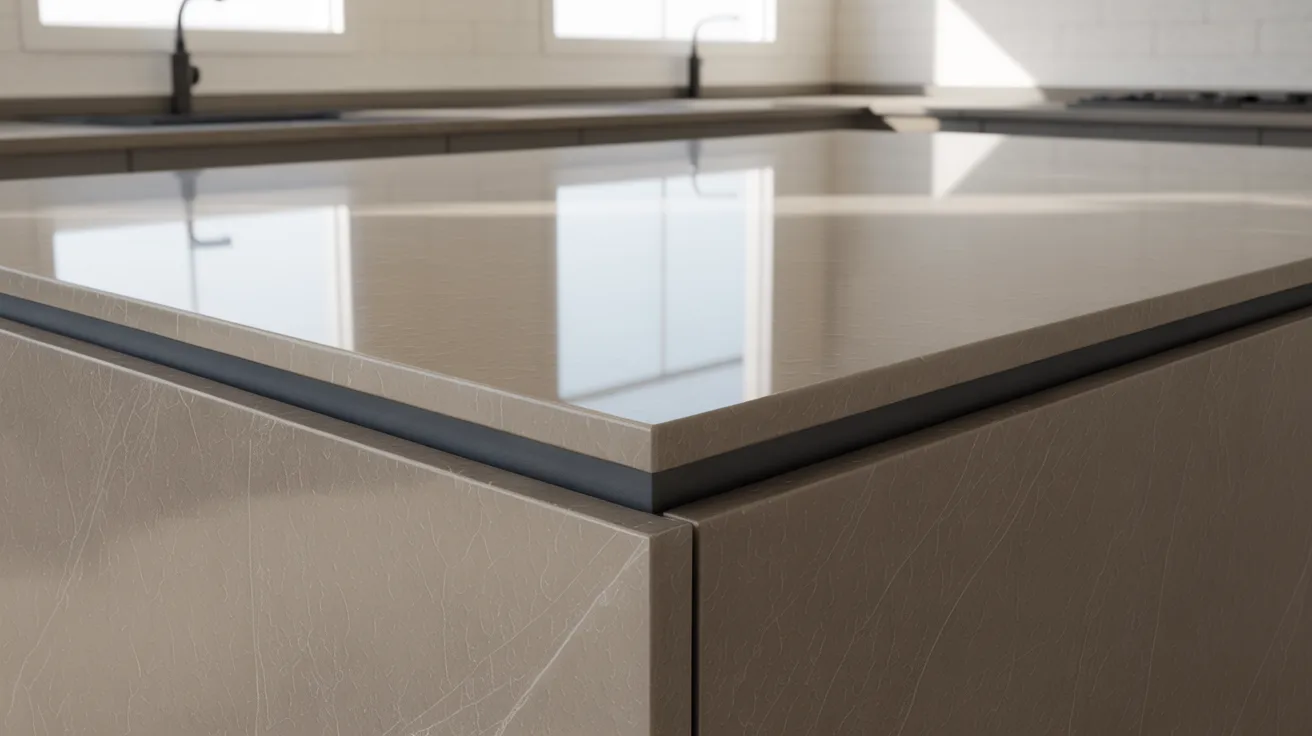
Two pieces of quartz joined at a 45-degree angle create the look of a thicker, more substantial slab.
It gives the countertop a high-end appearance without using extra material. The joint needs clean fabrication, or it can become visible over time.
12. Laminate Bullnose Edge
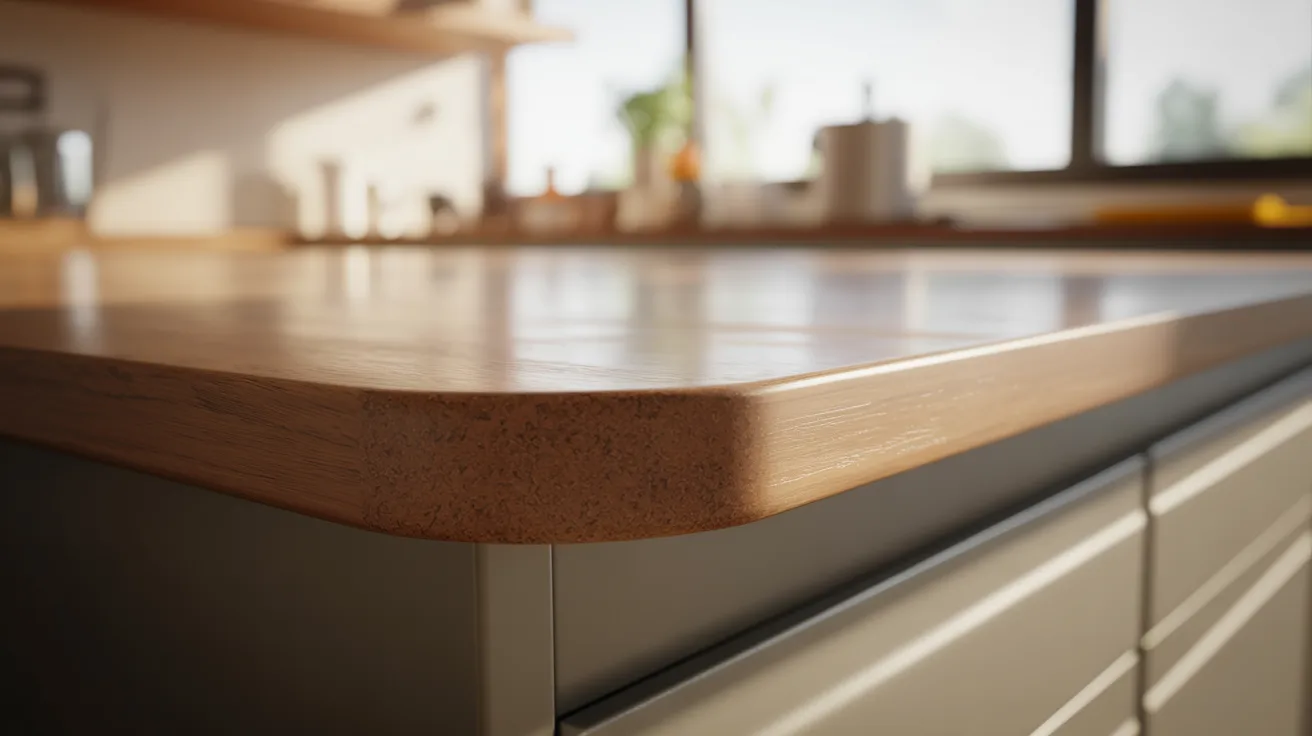
Curving over the top edge and down the front face, this rounded profile is smooth, easy to clean, and comfortable to lean against.
Commonly used in budget-friendly kitchens where a clean, rounded finish is the goal. Gives the surface a complete, polished look without a high fabrication cost.
13. Round Straight Edge
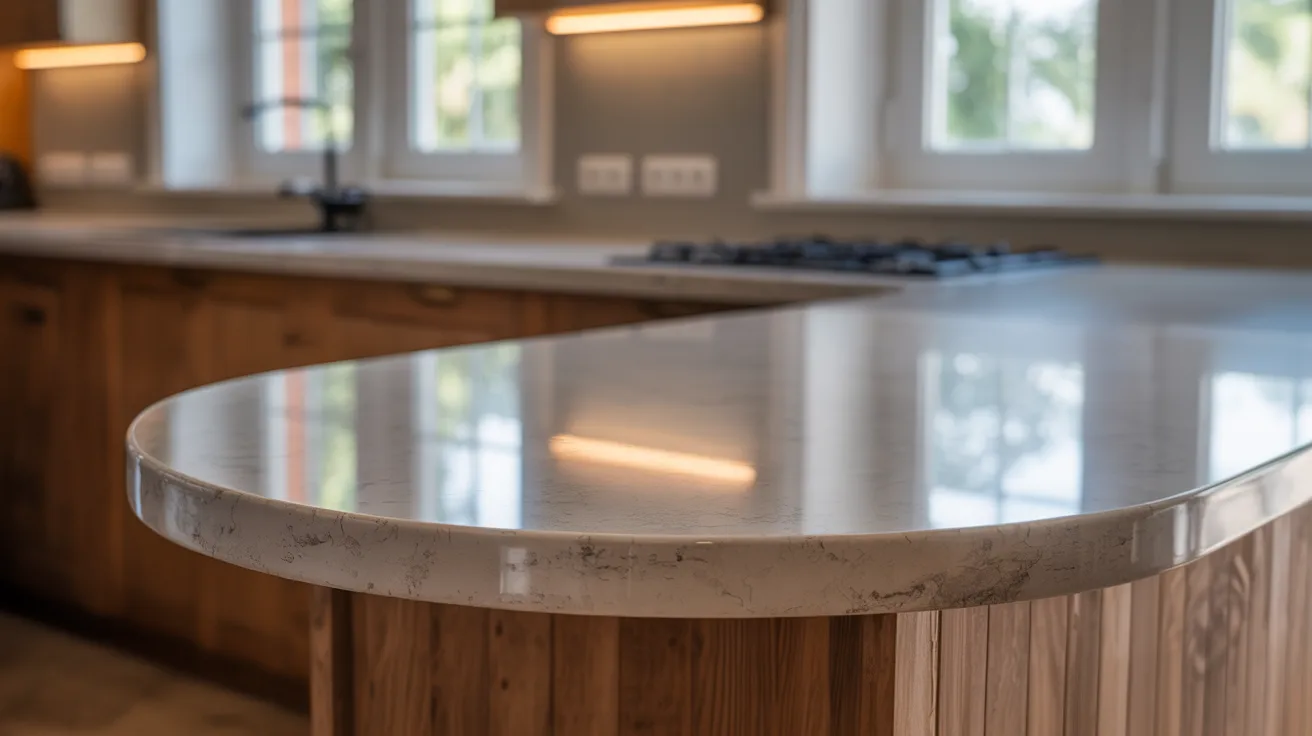
Fully rounded on the front face with a flat back, this profile gives the countertop a smooth, comfortable feel that is easy to touch and maintain.
It works well in casual and family-friendly kitchens. Less likely to chip compared to sharp or heavily angled profiles, making it a practical and long-lasting choice.
Which Quartz Countertop Edge Is the Most Popular?
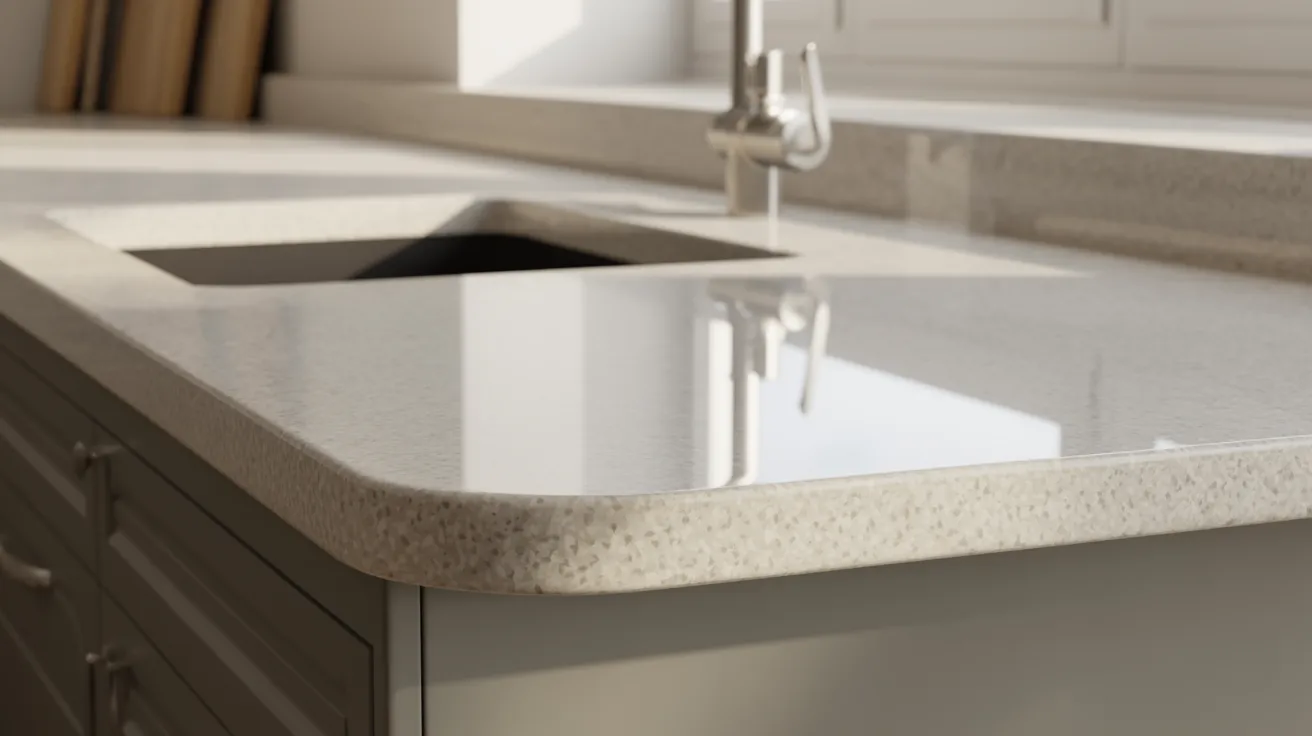
The eased edge is the most popular quartz countertop edge by a wide margin. It is simple, clean, and works in almost any kitchen or bathroom style.
Fabricators like it because it is straightforward to cut, which keeps the cost reasonable. Homeowners like it because it looks intentional without being overdone.
If you are not sure where to start, the eased edge is a safe, good-looking pick that holds up well in daily use.
Tips for Choosing the Right Quartz Countertop Edge
The right edge comes down to your style, your budget, and how you use your space.
- Match the edge to your room’s style before anything else.
- Choose rounded profiles if you have young children at home.
- Flat and rounded edges are the easiest to keep clean.
- Simple profiles cost less to fabricate than decorative ones.
- Always ask your fabricator for a physical sample first.
A small detail like the edge profile can shape the whole feel of the room, so take your time with it before you commit.
Conclusion
When I was picking quartz countertop edges for my own kitchen, I spent far more time on it than I expected.
It feels like a minor choice until you realize you will see and touch that edge every single day. Start with your style and your budget, then go from there.
You do not need the most decorative profile to get a great result.
If this guide helped you narrow it down, leave a comment below and tell me which edge you are going with. I would love to know.
Frequently Asked Questions
What is the most affordable quartz countertop edge?
Eased and straight edges cost the least due to minimal fabrication work.
Which quartz countertop edge is easiest to clean?
Flat and rounded profiles like eased and half bullnose wipe down the easiest.
Are rounded quartz edges safer for families with kids?
Yes. Half bullnose and full bullnose have no sharp corners.
Can I change my quartz countertop edge after installation?
No. The edge is cut during fabrication and changing it later means replacing the slab.
Does the edge profile affect how durable the countertop is?
Yes. Sharp profiles chip more easily. Rounded profiles hold up better over daily use.


