
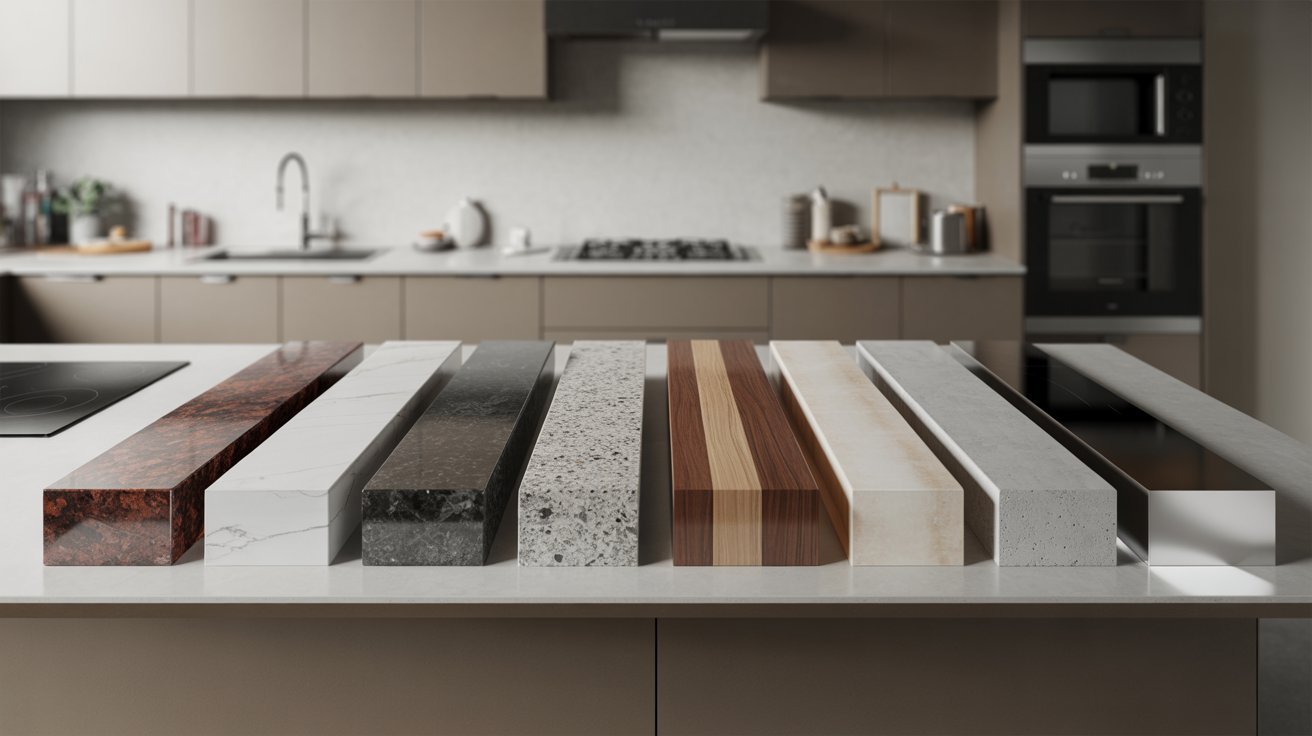
Choosing the right countertop thickness affects way more than just looks. It impacts how long your counters last, what your kitchen costs, and even how easy installation goes.
I’ve helped dozens of homeowners through this exact decision, and thickness always comes up. You’re probably looking at granite, quartz, porcelain, marble, or laminate.
Each material has different thickness options, and picking the wrong one means extra expenses or durability problems later.
The thickness you choose changes everything from cabinet support needs to your final price tag.
Let’s break down each material so you know what actually works for your space.
What Is the Standard Countertop Thickness?
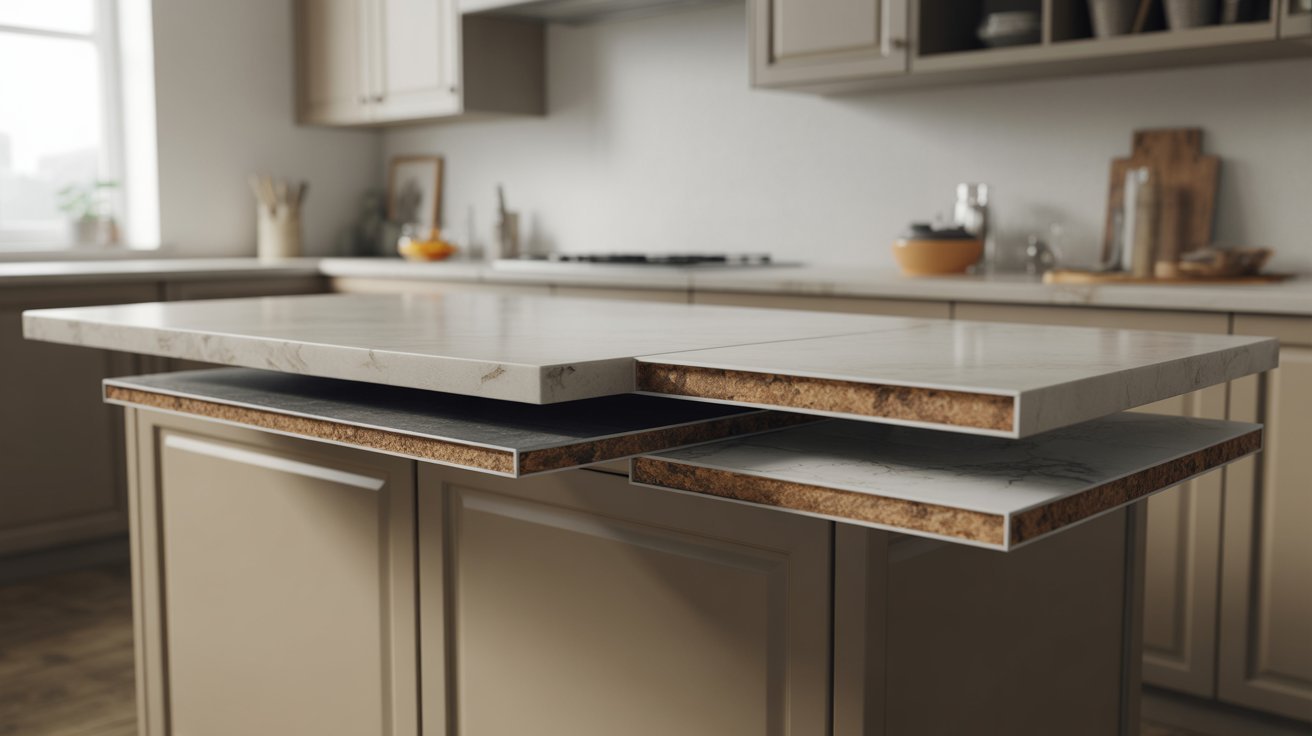
Standard thickness ranges from 2cm to 3cm for most materials, balancing strength, cost, and appearance for typical kitchen installations.
The industry standardized these measurements for structural strength and fabrication efficiency.
Counters need to support weight without cracking, and fabricators stock standard sizes to keep costs down.
Your base cabinets are built to hold specific weights, so standard thickness works with typical construction.
Thickness changes performance and appearance. Thicker slabs resist impacts better and allow detailed edge profiles.
Thinner options chip easier but give a modern look. Installation costs increase with thickness since heavier slabs need more installers and potentially reinforced cabinets.
Standard Countertop Thickness for Granite Countertops
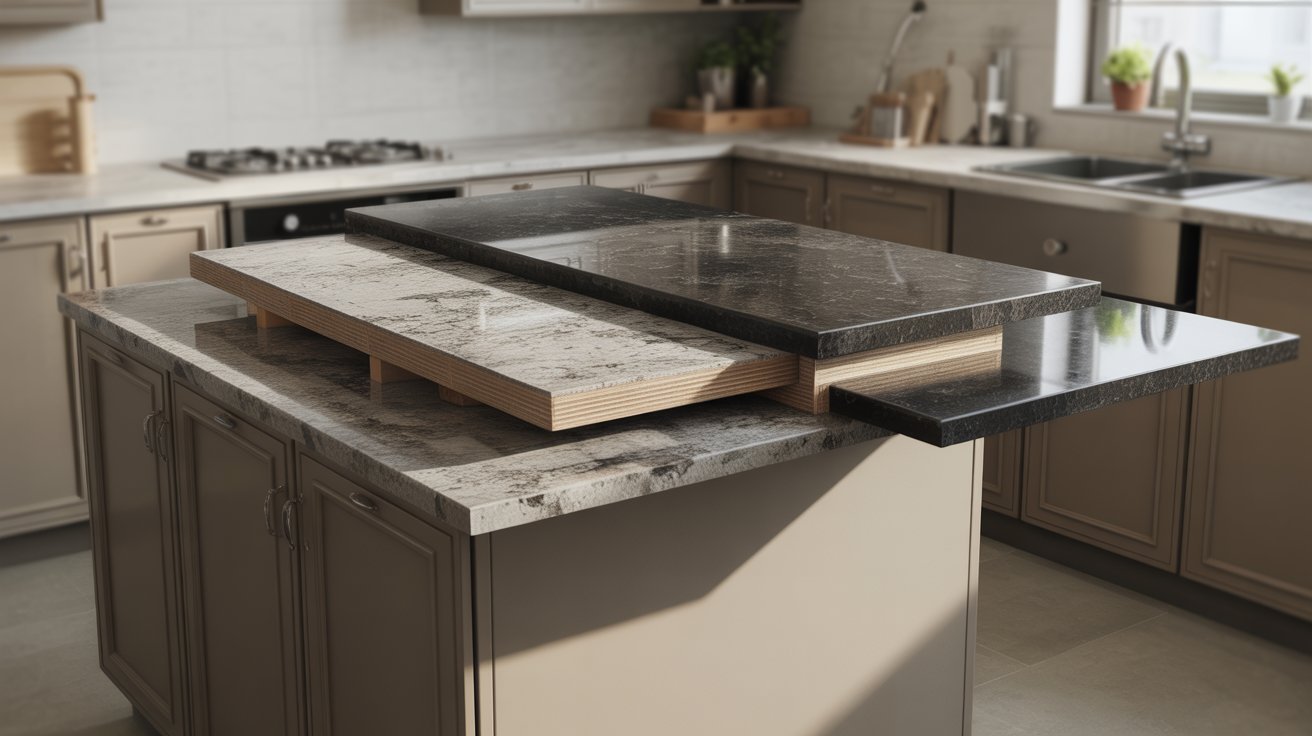
Granite countertops typically come in two thickness options, with 3cm being the most popular choice for residential kitchens and installations.
Most Common Granite Thickness Options
3 cm (1.25 inches) is the industry standard for granite counters. Most fabricators recommend this thickness because it’s strong enough to span cabinets without extra support.
2 cm (0.75 inches) is less common in modern installations. This thinner option needs plywood backing or support rails underneath.
Without reinforcement, 2 cm granite can crack under stress.
When to Choose 2 cm vs 3 cm Granite
Kitchens benefit from 3 cm granite. The extra thickness handles daily use, hot pots, and heavy appliances better.
Bathrooms can work with 2 cm since they get less wear. Vanity tops don’t support as much weight, so the thinner option saves money.
Overhangs and islands require 3 cm granite. Breakfast bars and seating areas need the extra strength. Anything over 10 inches of overhang needs thick material to prevent cracking.
Budget matters too. A 2 cm costs less upfront but may need repairs sooner. 3 cm costs more initially but lasts longer without issues.
Standard Countertop Thickness for Quartz Countertops
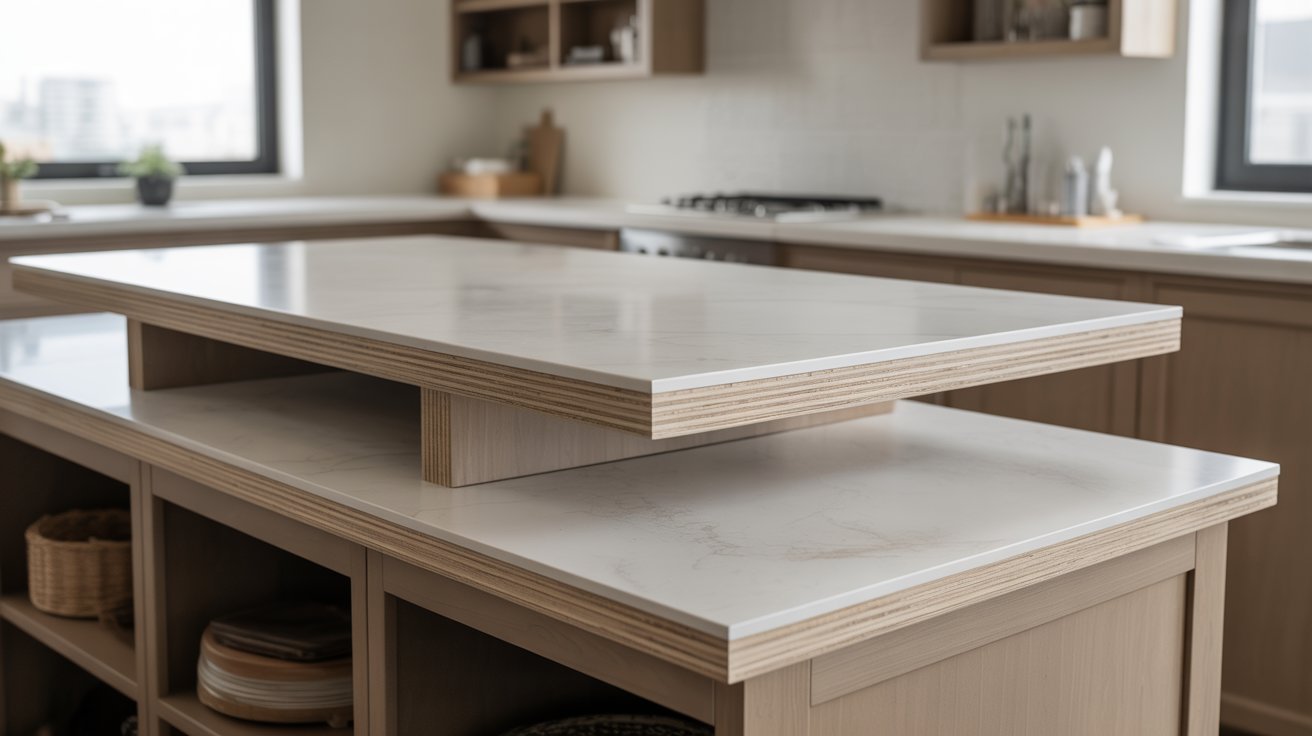
Quartz countertops come in standard 2cm and 3cm thicknesses, with 3cm being the preferred option for most kitchen and bathroom projects.
Standard Quartz Thickness Sizes
2 cm quartz countertops measure about 0.75 inches thick. This option works for low-traffic areas but needs support for overhangs. Many fabricators add plywood backing to prevent cracking.
3 cm quartz countertops measure roughly 1.25 inches thick. This is the standard choice for kitchens. The extra thickness provides better strength without additional support.
Quartz Thickness for Kitchens and Bathrooms
Structural stability improves with 3 cm quartz. Kitchens see heavy use with appliances and hot items. Thicker material handles this stress without cracking.
Seam reduction works better with 3 cm slabs. Thicker material means fewer visible seams in large layouts.
Edge profile flexibility increases with thickness. 3 cm quartz allows for decorative edge treatments like ogee or bullnose profiles. 2 cm limits you to simpler edges.
Bathrooms can use either thickness. 2 cm saves money on vanities, but 3 cm looks more substantial.
Standard Countertop Thickness for Porcelain Countertops
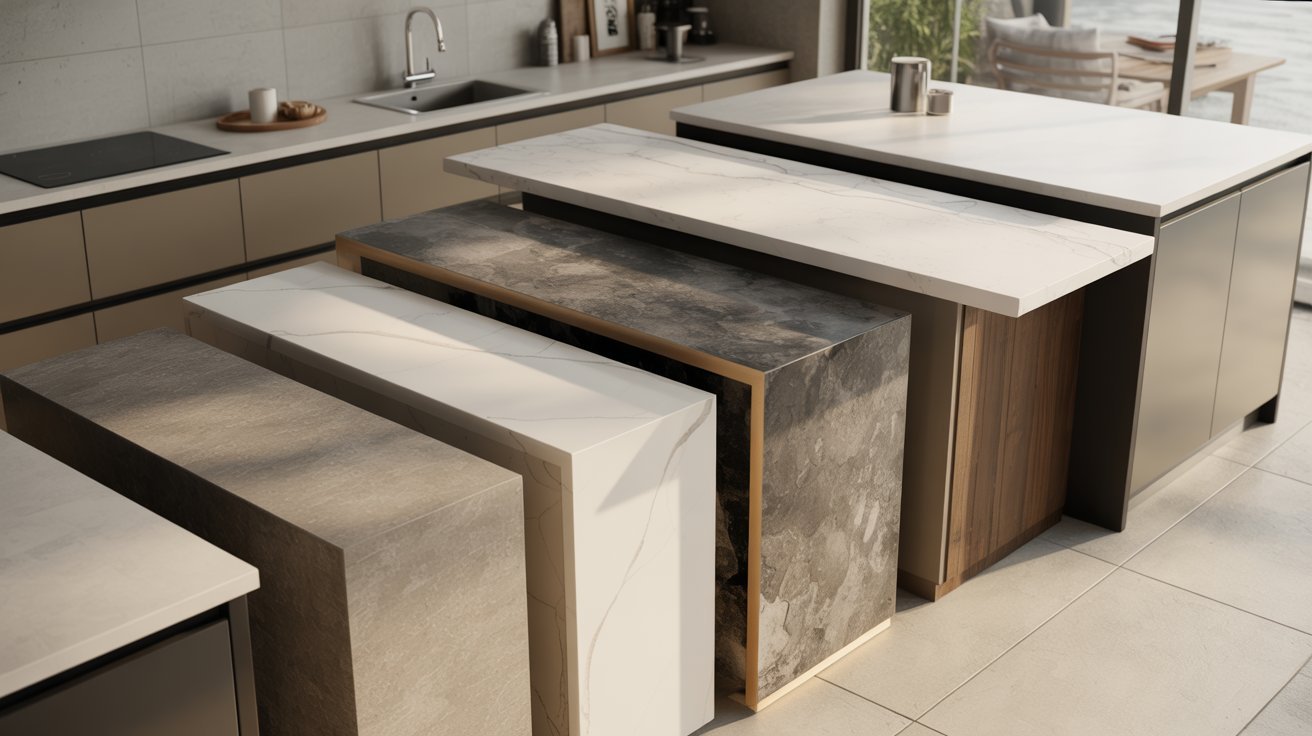
Porcelain countertops offer more thickness variety than stone, ranging from ultra-thin 6mm to standard 2-3cm options for different applications and designs.
Common Porcelain Countertop Thicknesses
6 mm porcelain is the thinnest option available. This ultra-slim profile works for modern designs but needs solid substrate backing.
12 mm is the most common residential choice. This thickness balances weight, durability, and cost for kitchen and bathroom projects.
20 mm and 2-3 cm options provide extra strength. These thicker slabs work like traditional stone and don’t always need substrate reinforcement.
Thin vs Thick Porcelain Countertops
Lightweight modern designs favor thinner porcelain. 6 mm and 12 mm slabs weigh less than granite or quartz, making installation easier.
Substrate needs vary by thickness. Thin porcelain (6-12 mm) requires plywood or cement board backing. Thicker options (20 mm+) can span cabinets like stone.
Outdoor applications need thicker material. Indoor counters work fine with 12 mm and proper support. Outdoor areas need 20 mm or thicker for weather resistance.
Standard Countertop Thickness for Marble Countertops
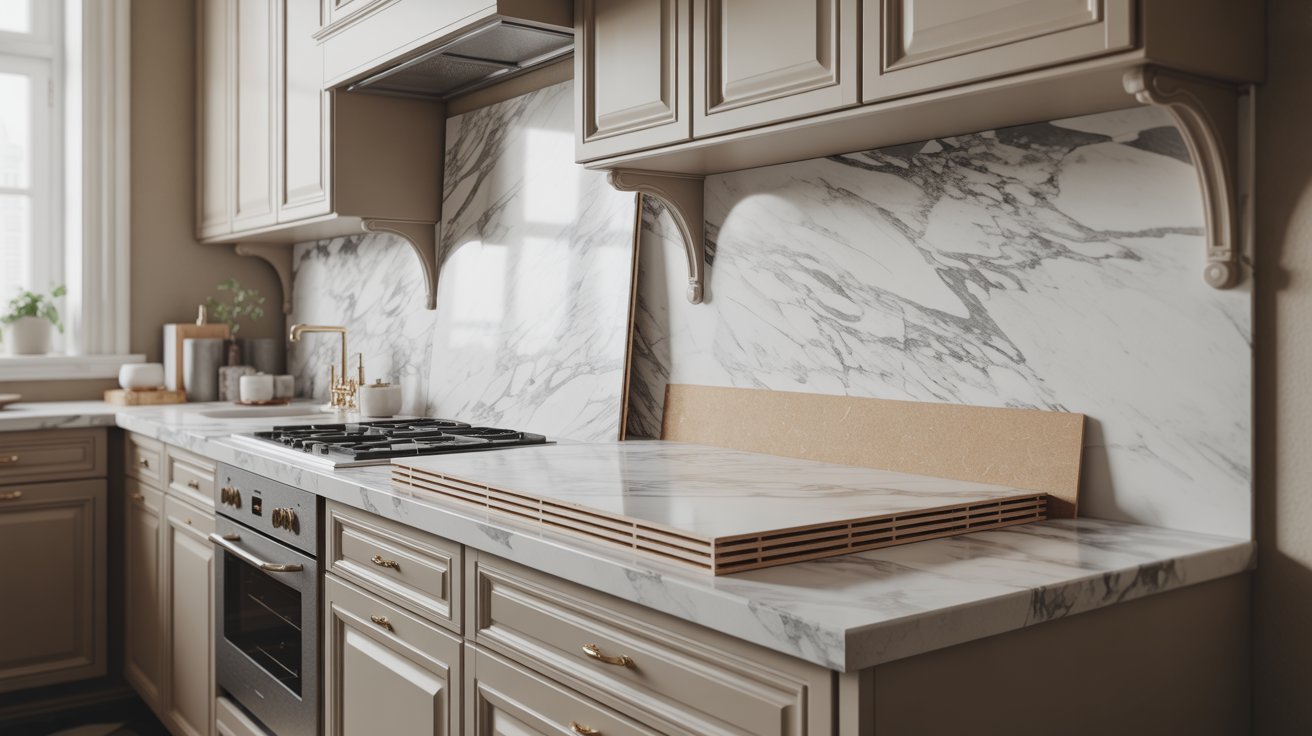
Marble countertops typically follow the same thickness standards as granite, with 3cm being the recommended choice for durability and long-term performance.
Typical Marble Countertop Thickness
3 cm is the preferred standard for marble counters. This thickness provides the strength needed for kitchen use. Marble is softer than granite, so extra thickness helps prevent damage.
2 cm works for vertical or low-use areas. Backsplashes and bathroom vanities can use thinner marble since they don’t bear heavy weight.
Marble Thickness and Structural Considerations
Crack resistance improves with 3 cm marble. The material cracks easier than granite or quartz. Thicker slabs handle impact better, especially around sink cutouts.
Support requirements are stricter for marble. Any overhang over 10 inches requires brackets. 2 cm marble always needs plywood backing for stability.
Luxury design applications often use thicker marble. High-end kitchens may use 4 cm or mitered edges for a substantial look that shows off the stone’s veining.
Standard Countertop Thickness for Other Materials
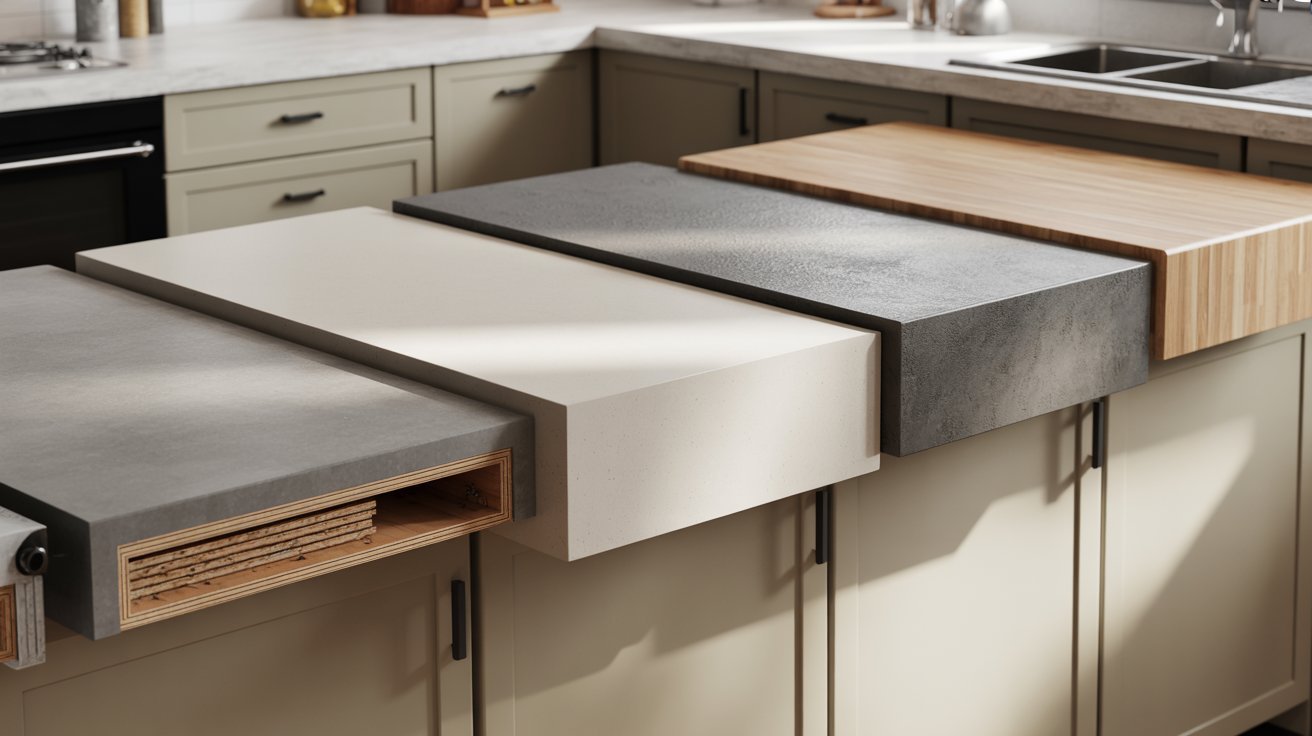
Laminate, solid surface, concrete, and wood countertops each have different thickness standards based on material properties and installation requirements.
Laminate Countertop Thickness
Typical laminate thickness ranges from 0.75 to 1.5 inches. The core is particle board or MDF with laminate on top. Most standard options measure around 1.25 inches thick.
Edge build-ups add visual depth. Fabricators attach extra strips underneath the front edge. This creates a thicker look without adding weight or cost.
Solid Surface Countertops (Corian & Similar)
Standard thickness options are 0.5 inches and 0.75 inches. Half-inch material works for most residential installations. Three-quarter-inch provides extra durability for heavy-use areas.
Seamless appearance works with any thickness. Solid surface can be shaped and joined invisibly. Edge build-ups and custom profiles don’t show seams like stone materials.
Concrete and Wood Countertops
Custom thickness ranges vary widely. Concrete typically goes from 1.5 to 3 inches thick. Wood counters range from 1 to 2.5 inches depending on species and construction.
Structural and weight considerations matter more here. Concrete is extremely heavy and may need reinforced cabinets. Wood expands with humidity, so thickness affects stability.
Standard Countertop Thickness for Overhangs and Islands
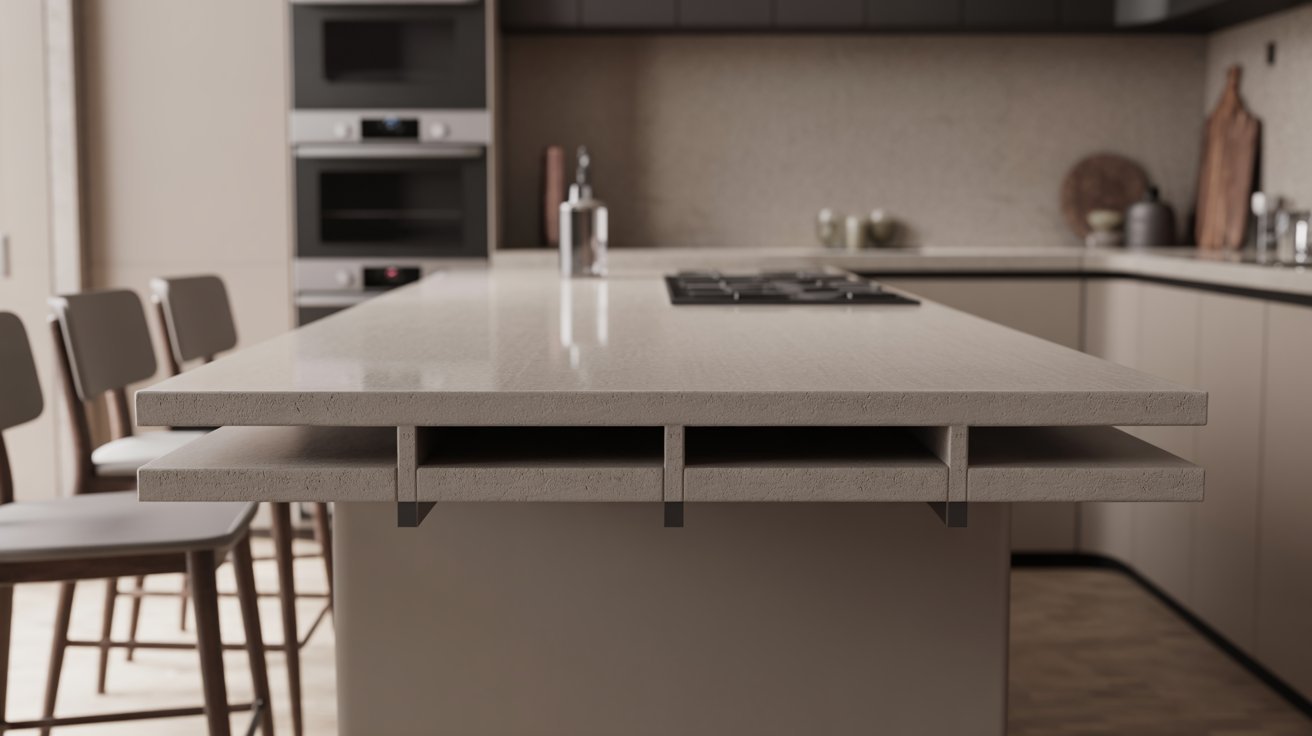
Overhang and island thickness requirements depend on cantilever distance, material weight, and whether the area will support seating or appliances.
Overhang Limits by Thickness
2 cm countertops need support beyond 6 inches. This thickness can’t cantilever far without cracking. Install brackets for breakfast bars and seating areas.
3 cm countertops handle unsupported spans up to 10-12 inches. This works for standard overhangs and light seating. Anything beyond 12 inches needs support brackets.
Bar Seating and Island Design Guidelines
Structural safety requires proper support planning. Bar seating puts concentrated weight on overhangs. Add support based on slab weight plus people leaning or sitting.
Visual balance matters too. Thick counters look substantial. Match the thickness to your island size and kitchen scale for proper proportions.
How to Choose the Right Standard Countertop Thickness
Choosing countertop thickness depends on room type, usage patterns, and budget constraints for your specific installation and design needs.
Kitchens need 3 cm for durability. Bathrooms work with 2 cm since they bear less weight. Outdoor areas require thicker material for weather resistance.
High-impact prep zones benefit from thicker slabs. Decorative surfaces like backsplashes can use thinner material safely.
Thicker counters cost more for material and labor. Thinner options save money upfront but may need extra support brackets.
Conclusion
Standard countertop thickness varies by material for good reasons. Granite and quartz perform best at 3 cm. Porcelain offers flexible options. Marble needs extra thickness for durability.
Match your thickness choice to how you’ll use the space. High-traffic kitchens need sturdier slabs. Bathroom vanities can go thinner.
Talk with a professional fabricator before buying. They’ll assess your cabinets, overhang needs, and budget.
Need help planning your project? Reach out to local fabricators for quotes and samples. Seeing materials in person makes the decision easier.
Frequently Asked Questions
What is the most common countertop thickness?
3 cm (1.25 inches) is the most common thickness for stone countertops like granite, quartz, and marble. This size provides good durability without needing extra support for standard installations.
Can I use 2 cm countertops in my kitchen?
Yes, but 2 cm countertops need plywood backing or support brackets, especially for overhangs. They work better for bathrooms or low-traffic areas where counters don’t bear as much weight.
Does a thicker countertop mean better quality?
Thicker doesn’t always mean better quality, but it does provide more durability and strength. The right thickness depends on your material choice, usage patterns, and how much overhang you need.
How much overhang can I have without support?
2 cm countertops can overhang about 6 inches without support. 3 cm countertops can safely overhang 10-12 inches before needing brackets or corbels underneath.
Are thin porcelain countertops as durable as thick ones?
Thin porcelain (6-12 mm) is durable when properly supported with substrate backing. Thicker porcelain (20 mm+) offers more impact resistance and works better for outdoor or high-traffic areas.


