
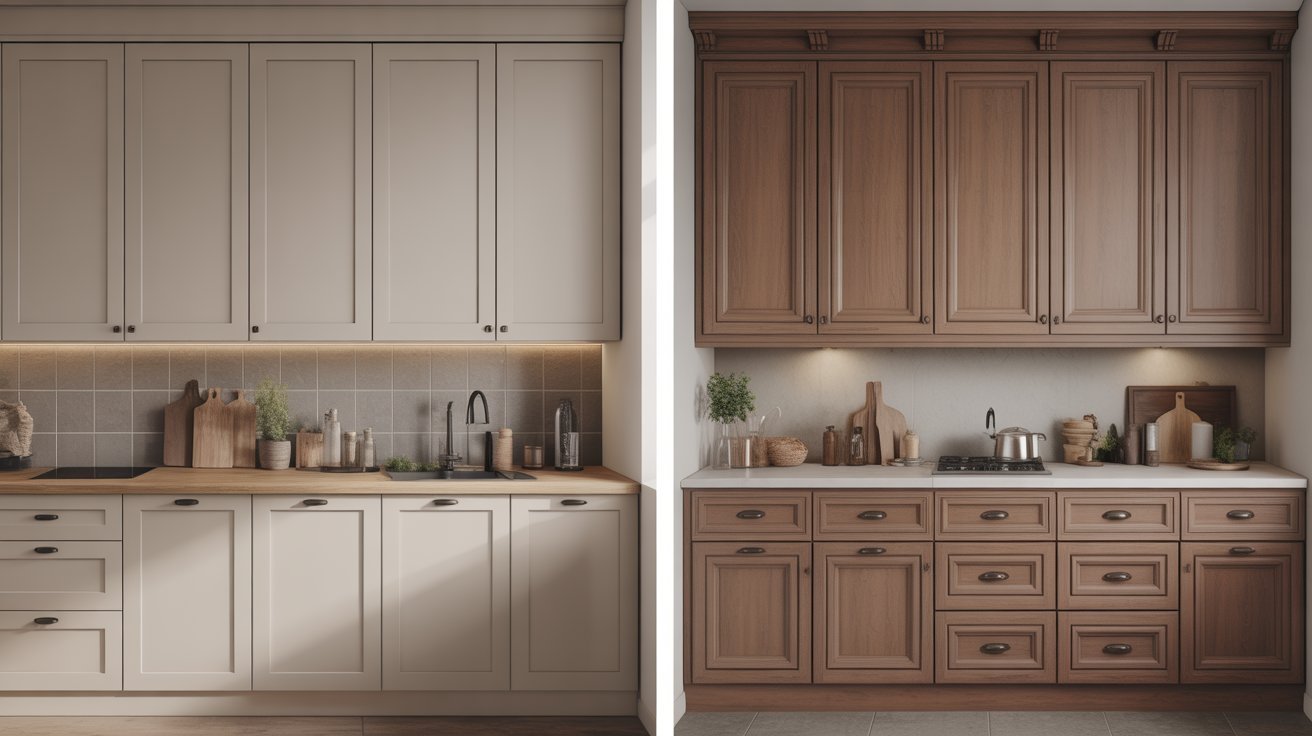
Your kitchen cabinets aren’t just storage. They’re the backbone of your kitchen’s entire look and feel.
I’ve seen homeowners agonize over this choice, and for good reason. Cabinets eat up about 40% of your kitchen budget.
Two styles keep showing up in my conversations with homeowners: Shaker and traditional cabinets. Both have serious staying power, but they create completely different vibes in your space.
Which one belongs in your kitchen? I’ll walk you through the design differences, real costs, honest pros and cons, and practical tips to help you decide.
Let’s break it down together.
Shaker vs Traditional Cabinets: Comparison Table
Here’s a quick reference to compare both cabinet styles at a glance.
Quick Comparison Table
|
Feature |
Shaker Cabinets |
Traditional Cabinets |
|
Design |
Minimal, clean lines, versatile |
Ornate, raised panels, classic |
|
Materials |
Oak, maple, cherry |
Cherry, mahogany, oak, maple |
|
Hardware |
Simple knobs/pulls |
Decorative knobs/handles |
|
Aesthetic |
Timeless, fits modern & rustic styles |
Warm, classic, polished |
|
Cost |
More affordable |
Higher cost due to craftsmanship |
|
Maintenance |
Moderate (dust in recessed panels) |
More effort (detailed carvings) |
|
Installation |
Easier, forgiving of uneven walls |
Precise, more challenging |
|
Durability |
Long-lasting |
Long-lasting |
|
Resale Value |
Widely appealing |
Premium, luxury appeal |
Understanding Shaker Cabinets
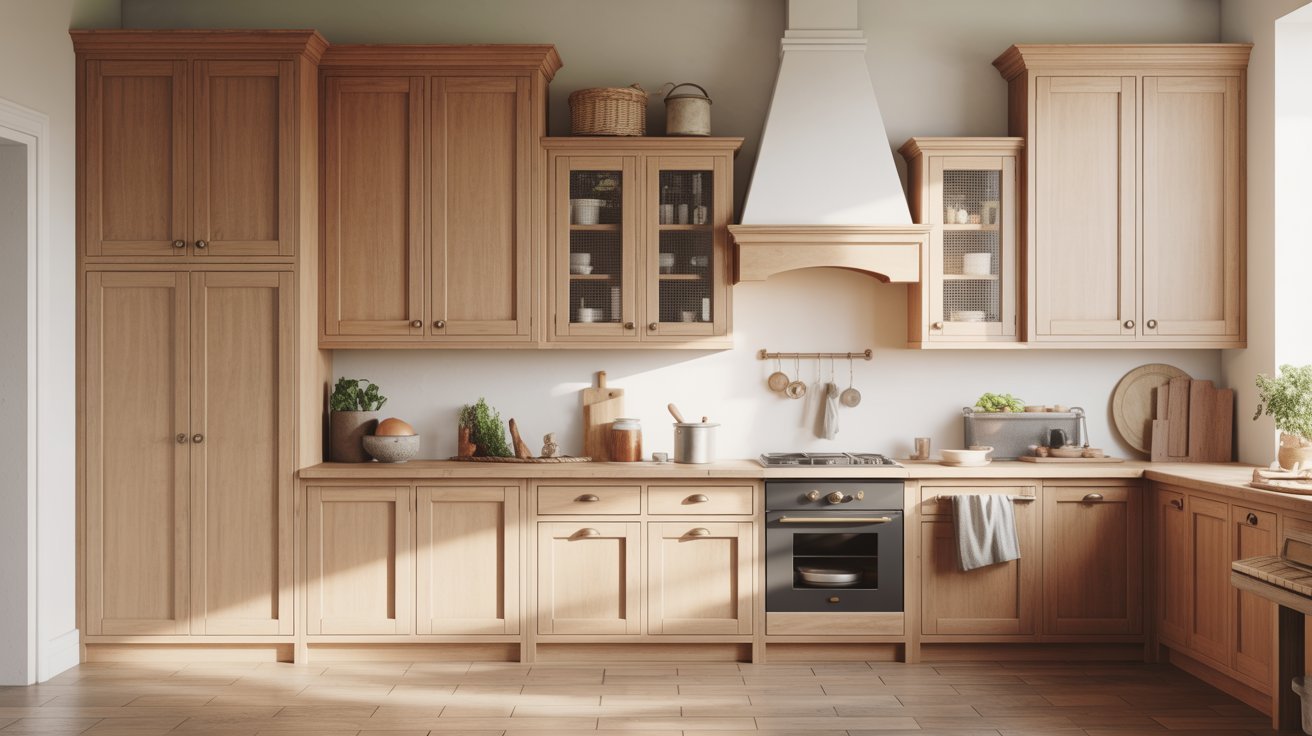
Shaker cabinets bring timeless simplicity to your kitchen. Their clean lines and practical design have made them a go-to choice for centuries.
History and Origin
Shaker cabinets trace back to the Shaker religious community in the 1700s. This group valued simplicity above all else.
They believed in creating furniture that served a purpose without any extra frills. Every piece they made had to be functional and built to last.
That philosophy still shows up in Shaker cabinets today.
Key Features of Shaker Cabinets
- Recessed center panel surrounded by a flat frame
- Clean, straight lines with no curves or decorative details
- Simple hardware like basic knobs or pulls
- Constructed from hardwoods such as oak, maple, or cherry
- Durable materials that hold up well over time
Aesthetic Appeal
Shaker cabinets work in almost any kitchen style. I’ve seen them look great in modern spaces, rustic farmhouses, and everything in between.
The design doesn’t fight with other elements in your room. Most homeowners go with neutral paint colors or natural wood stains.
This keeps the look flexible if you want to change your decor later.
Pros of Shaker Cabinets
- Last for decades when properly maintained
- Match with nearly any countertop, backsplash, or flooring
- Simple construction keeps manufacturing costs down
- Fewer components means less can break or wear out
- Budget-friendly compared to ornate options
Cons of Shaker Cabinets
- Recessed panels create ledges where dust settles
- Require regular wiping to keep clean
- Minimalist style may feel too plain for some
- Lack decorative details and traditional molding
Understanding Traditional Cabinets
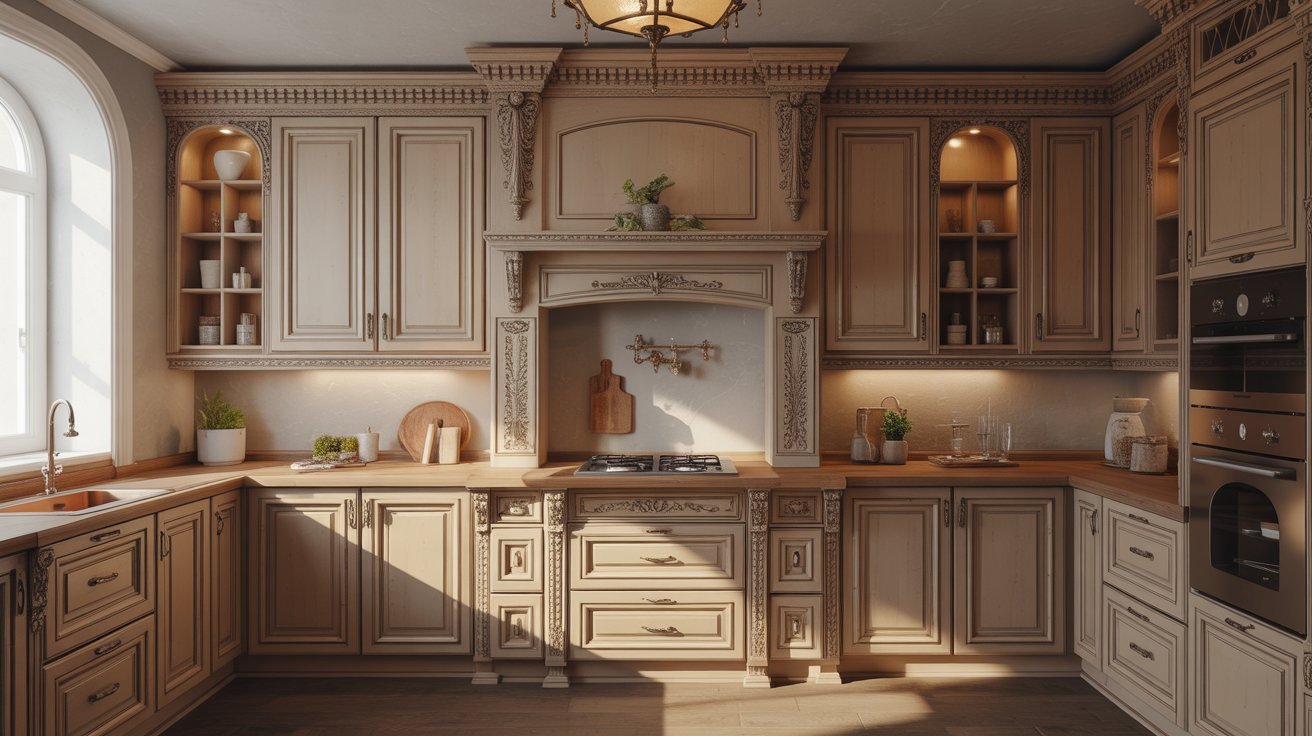
Traditional cabinets offer rich detail and classic style. Their ornate features and premium craftsmanship create a refined look that remains timeless.
History and Inspiration
Traditional cabinets draw from classic European design. Think French country homes and English manor kitchens.
These styles focused on showing off skilled craftsmanship through detailed work.
Every curve, carving, and molding served as a mark of quality. This approach to cabinetry emphasized both function and visual appeal.
Key Features of Traditional Cabinets
- Raised panel doors with intricate carvings and details
- Decorative moldings along edges and corners
- Framed construction for added depth
- Premium woods like cherry, mahogany, oak, or maple
- Ornate hardware such as brass or bronze handles and pulls
Vibing Appeal
Traditional cabinets bring a polished, classic feel to your kitchen. You’ll often see curved or arched elements in the door frames.
The color palette tends toward warm tones like honey, chestnut, or deep cherry. These cabinets shine in classic kitchens, transitional spaces, or luxury homes.
They create a formal atmosphere that feels established and refined.
Pros of Traditional Cabinets
- Timeless appearance that stays stylish across decades
- High-quality materials built for long-term durability
- Adds resale value to your home
- Shows attention to detail and craftsmanship
- Creates a warm, inviting kitchen atmosphere
Cons of Traditional Cabinets
- Ornate detailing collects dust and requires frequent cleaning
- Higher price point due to complex craftsmanship and materials
- May not fit well in ultra-modern or minimalist kitchens
- More components mean more maintenance over time
Shaker vs Traditional Cabinets: Side-by-Side Comparison
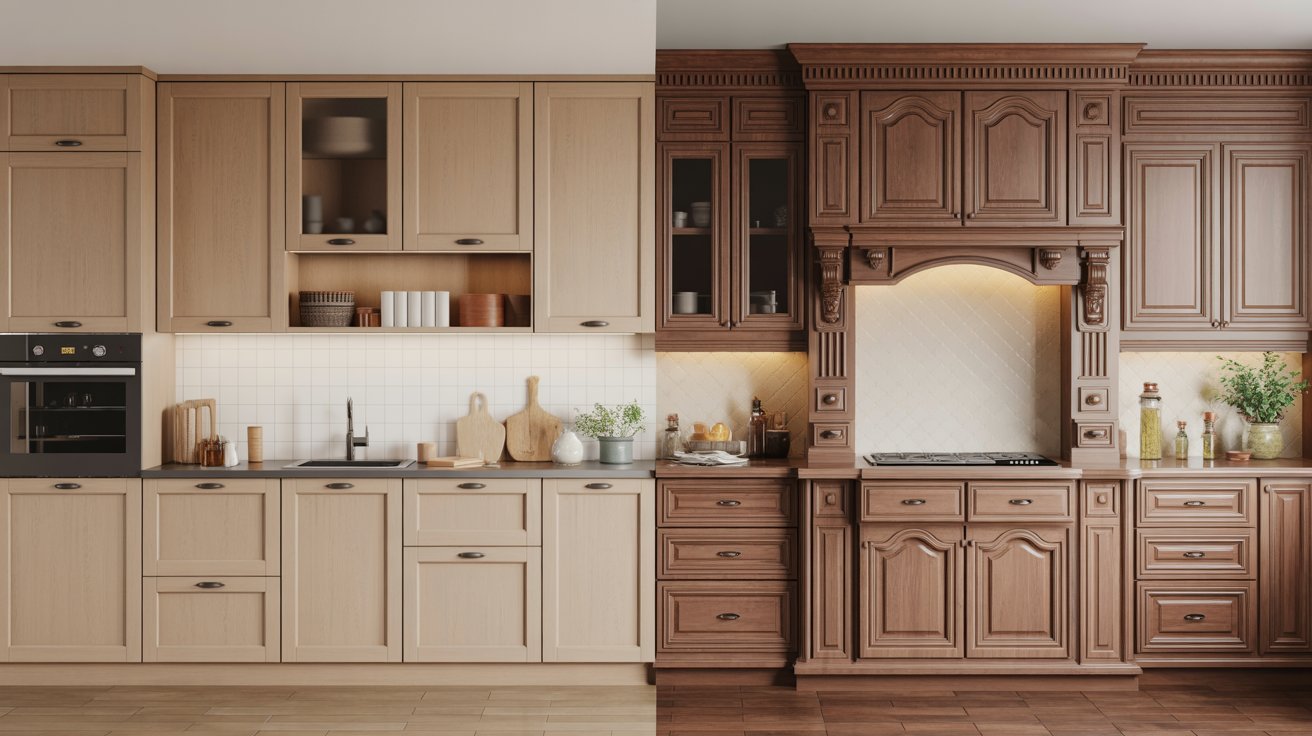
Let’s put these two styles head to head. Here’s how they stack up in the categories that matter most.
1. Design & Style
Shaker cabinets keep things simple with clean lines that fit almost anywhere. They work in modern kitchens, farmhouse spaces, and everything in between.
Traditional cabinets make a statement with ornate details and decorative elements. They shine in homes with established architectural character.
2. Cost Considerations
Shaker cabinets typically cost less thanks to simpler construction. You’ll save money without sacrificing quality.
Traditional cabinets run 20-40% more due to intricate designs and skilled craftsmanship. Premium materials also add to the price.
3. Installation & Maintenance
Shaker cabinets install easily and forgive minor wall imperfections. Cleaning takes just a quick wipe down.
Traditional cabinets need careful installation with perfect alignment. All those curves and carvings collect dust and require regular detailed cleaning.
4. Durability & Longevity
Both styles last decades when built with quality hardwood. Shaker cabinets need minimal upkeep with fewer details to maintain.
Traditional cabinets require more attention as ornate features can chip or wear over time.
5. Resale Value
Traditional cabinets signal luxury and can boost perceived value in upscale markets.
Shaker cabinets appeal to a broader audience with their timeless, flexible design that modern buyers often prefer.
Tips for Choosing Between Shaker and Traditional Cabinets
Here are five practical tips to help you make the right choice for your kitchen.
- Match your kitchen style: Shaker works in modern, farmhouse, or minimalist spaces. Traditional fits classic, luxury, or transitional kitchens.
- Set a realistic budget: Shaker cabinets cost less and suit budget-friendly remodels. Traditional requires a premium investment but adds long-term value.
- Factor in maintenance: Shaker needs simple, regular cleaning. Traditional demands detailed upkeep for all those curves and carvings.
- Consider mixing styles: Combine Shaker lowers with Traditional uppers for contrast. Different finishes create depth in your kitchen.
- Test samples first: Order door samples before buying. Check colors and finishes in your actual kitchen lighting.
Conclusion
Both Shaker and traditional cabinets offer lasting value.
Shaker provides versatility and affordability with easy upkeep. Traditional delivers classic style with premium materials at a higher price.
Your choice depends on your design taste, maintenance preferences, and budget.
Order samples to see how each style looks in your space. Consider working with a kitchen designer for guidance. Take your time.
You’ll live with these cabinets for years.
Frequently Asked Questions
Are Shaker cabinets cheaper than traditional cabinets?
Yes, Shaker cabinets typically cost 20-40% less than traditional options. The simpler construction and fewer decorative details reduce manufacturing and labor costs.
Which cabinet style is easier to clean?
Shaker cabinets require less cleaning effort with their flat surfaces. Traditional cabinets need more attention due to carved details and moldings that collect dust.
Can I mix Shaker and traditional cabinets in one kitchen?
Absolutely. Many homeowners use Shaker lower cabinets with traditional uppers for visual interest. This combination balances simplicity with decorative appeal.
Do traditional cabinets increase home value more than Shaker?
Traditional cabinets can boost perceived luxury value in upscale markets. However, Shaker cabinets appeal to more buyers due to their versatile, timeless design.
Which cabinet style lasts longer?
Both styles last decades when built with quality hardwood. The longevity depends more on material quality and proper maintenance than the cabinet style itself.


