

Basement floor drains serve as essential components in protecting your home’s foundation and preventing costly water damage from flooding, plumbing leaks, and moisture buildup.
These critical drainage systems provide safe pathways for excess water to exit your basement, safeguarding your property investment and maintaining a healthy living environment.
Without proper drainage solutions, basements become vulnerable to standing water, mold growth, structural damage, and ruined belongings.
Understanding the different types of basement floor drains available helps you make informed decisions about water management in your home.
This comprehensive guide covers 11 distinct types of basement floor drains, explaining their specific functions, installation requirements, and ideal applications.
You’ll learn how to evaluate your basement’s unique drainage needs and select the most appropriate drain type for your specific situation, ensuring effective water management and long-term protection.
What Is a Basement Floor Drain?
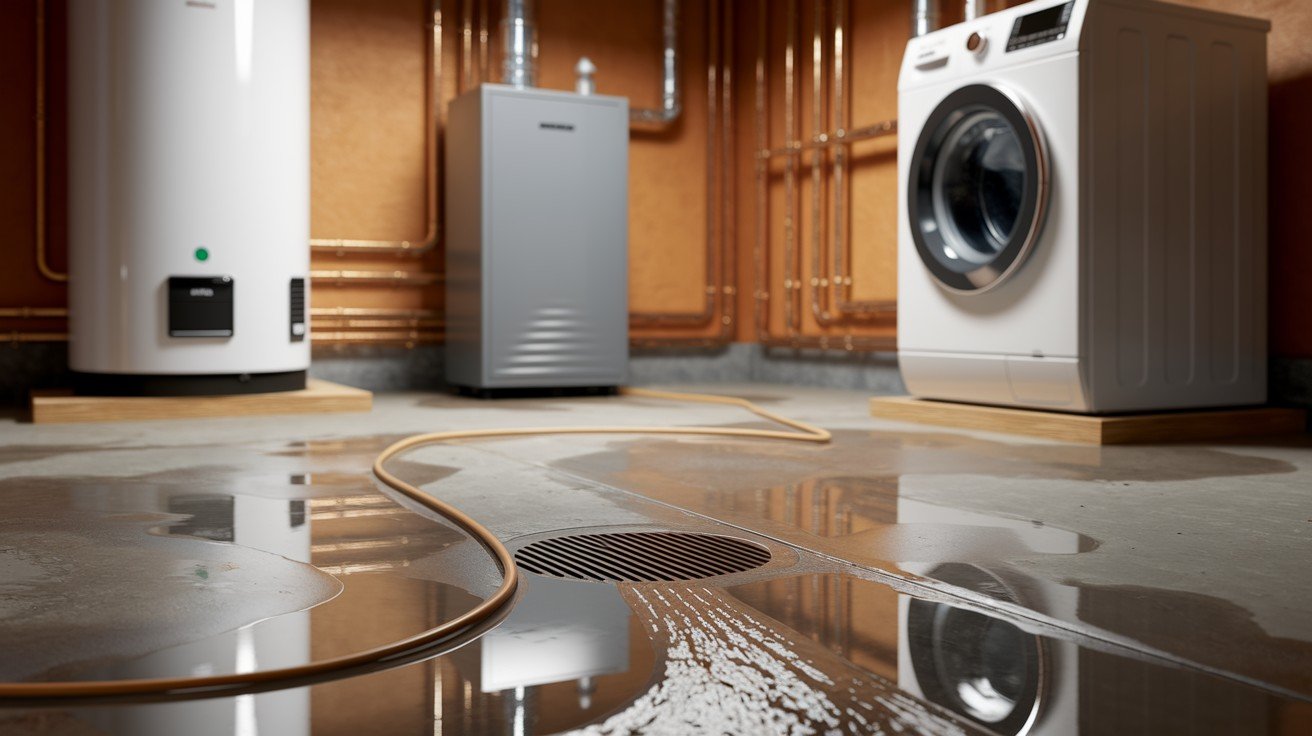
A basement floor drain is a specialized plumbing fixture designed to collect and channel excess water away from your basement floor, preventing water accumulation that could cause damage to your home’s foundation, flooring, and stored belongings.
These drains function by providing a direct pathway for water to flow into your home’s drainage system or storm sewer, effectively managing water from sources like appliance leaks, minor flooding, condensation, or plumbing malfunctions.
Basement floor drains are commonly installed in utility rooms where water heaters, furnaces, and other mechanical equipment are located, as these areas have higher risks of water leaks or condensation.
Laundry areas frequently feature floor drains to handle potential washing machine overflows or leaks from utility sinks.
Even finished basements benefit from strategically placed floor drains, as they provide insurance against unexpected water intrusion from heavy rains, burst pipes, or appliance failures that could otherwise cause extensive damage to carpeting, furniture, and finished surfaces.
Benefits of Installing the Right Floor Drain
- Prevents flooding and water damage – Efficiently channels water away from your basement during heavy rainfall, burst pipes, appliance malfunctions, or groundwater infiltration, preventing costly damage to flooring, walls, furniture, and stored belongings.
- Protects your foundation – Prevents water from pooling around basement walls and floors, which can lead to hydrostatic pressure, foundation cracks, and structural instability that compromise your home’s structural integrity over time.
- Reduces mold and mildew risk – Eliminates standing water and excess moisture that create ideal conditions for harmful microbial growth, protecting both your property value and family health from dangerous mold exposure.
- Helps with HVAC and laundry water disposal – Safely handles condensate from air conditioning units, water heater drainage, washing machine discharge, and utility sink overflow, ensuring essential home systems operate efficiently while preventing water-related damage.
List of 11 Types of Basement Floor Drains
A comprehensive overview of different basement floor drain types, their functions, installation methods, and best applications for water management.
1. Standard Gravity Floor Drain
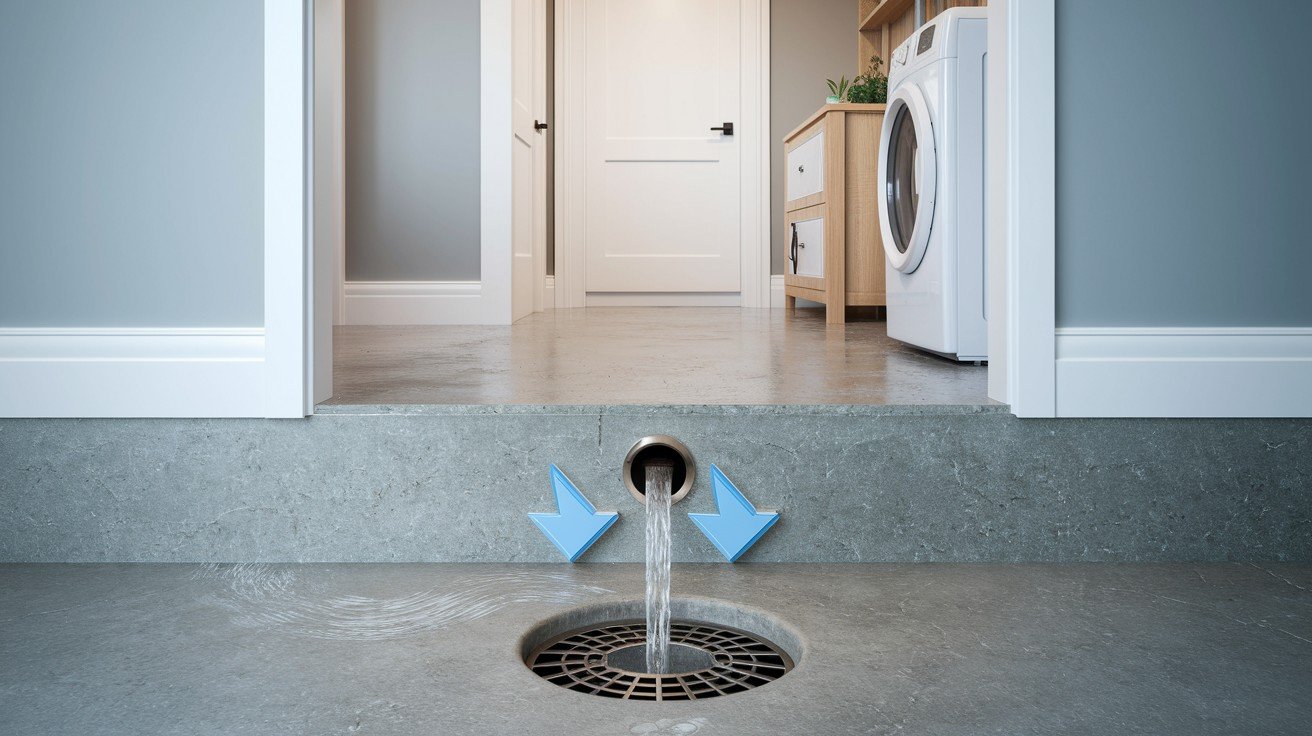
The standard gravity floor drain operates through natural water flow, relying on gravity to move water from the basement floor into the drainage system without requiring mechanical assistance.
This simple yet effective design features a basic drain opening connected directly to your home’s main sewer line or storm drainage system.
Water naturally flows downward through the drain opening, following the slope of your basement floor toward the drain location.
This type of drain works best for gravity-fed drainage systems where your basement floor sits above the main sewer line, allowing natural water flow without pumping requirements.
Standard gravity drains are ideal for handling routine water issues like minor appliance leaks, condensation, or small amounts of water from cleaning activities, making them perfect for most residential basement applications.
2. Trench Drain
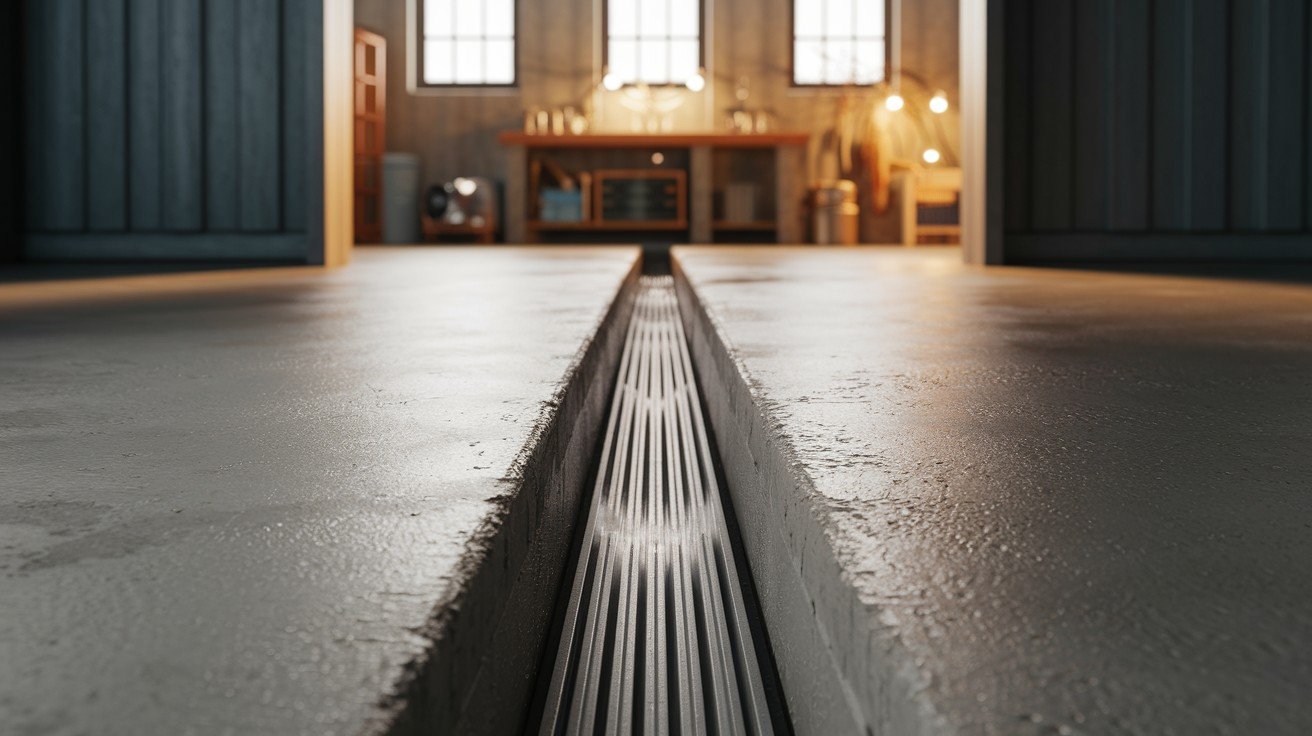
Trench drains feature a long and narrow design that spans across larger areas of your basement floor, creating an efficient water collection system for extensive surface drainage.
These linear drains consist of a channel or trough covered with a grate, allowing water to enter along the entire length of the drain rather than at a single point like traditional round drains.
This design makes trench drains ideal for large surface areas and sloped floors where water tends to flow across wide spaces rather than pooling in specific locations.
They work exceptionally well in basements with concrete floors that have been intentionally sloped toward the drain, garages converted to living spaces, or workshop areas where water management across broad surfaces is essential for maintaining dry, functional spaces.
3. French Drain (Interior Version)
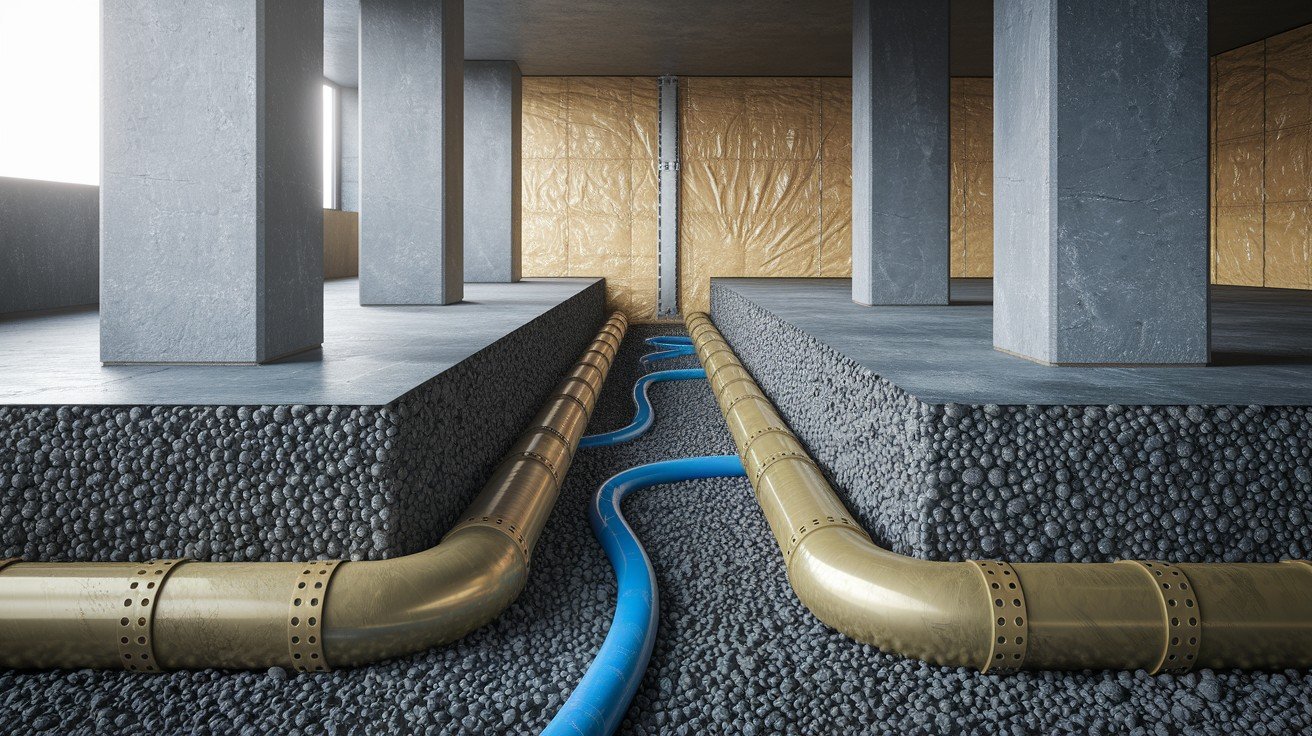
Interior French drains function as sub-surface drain systems that manage groundwater and moisture infiltration from below your basement floor and along foundation walls.
This system consists of perforated pipes surrounded by gravel, installed beneath your basement floor or along the interior perimeter of your foundation walls to collect and redirect water before it enters your living space.
These drains are typically installed along the perimeter of the basement, creating a comprehensive water management system that intercepts groundwater and foundation seepage.
French drains work particularly well in basements with chronic moisture problems, high water tables, or homes built in areas with poor soil drainage, providing long-term solutions for persistent water intrusion issues.
4. Sump Pit with Sump Pump Drain
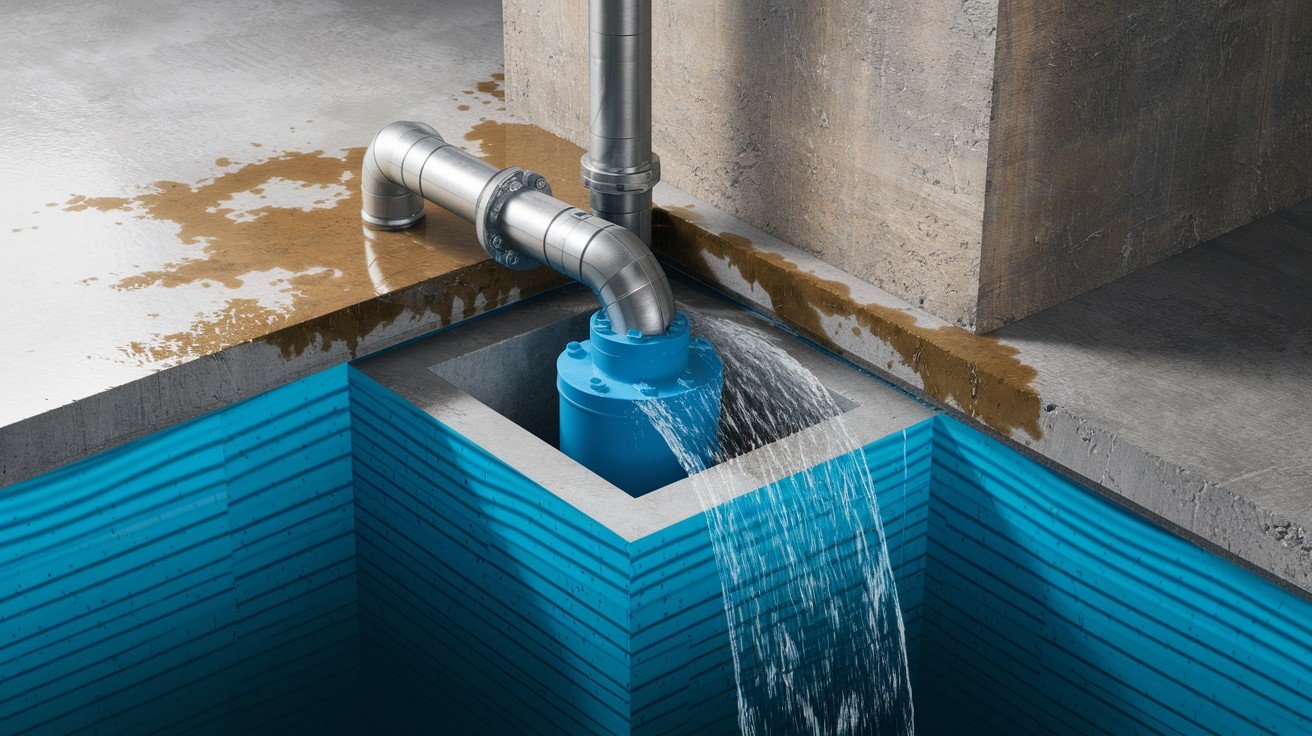
Sump pit systems collect water in a specially designed pit or basin, then use an electric sump pump to mechanically remove the collected water when it reaches a predetermined level.
The sump pit is typically located at the lowest point of your basement floor, where water naturally flows and accumulates during flooding or heavy water intrusion events.
This system is perfect for flood-prone basements, homes with high water tables, or areas where gravity drainage is insufficient due to the basement floor being below the main sewer line level.
The sump pump automatically activates when water levels rise, pumping water up and out through discharge pipes that carry it away from your home’s foundation to safe drainage areas.
5. Backwater Valve Drain
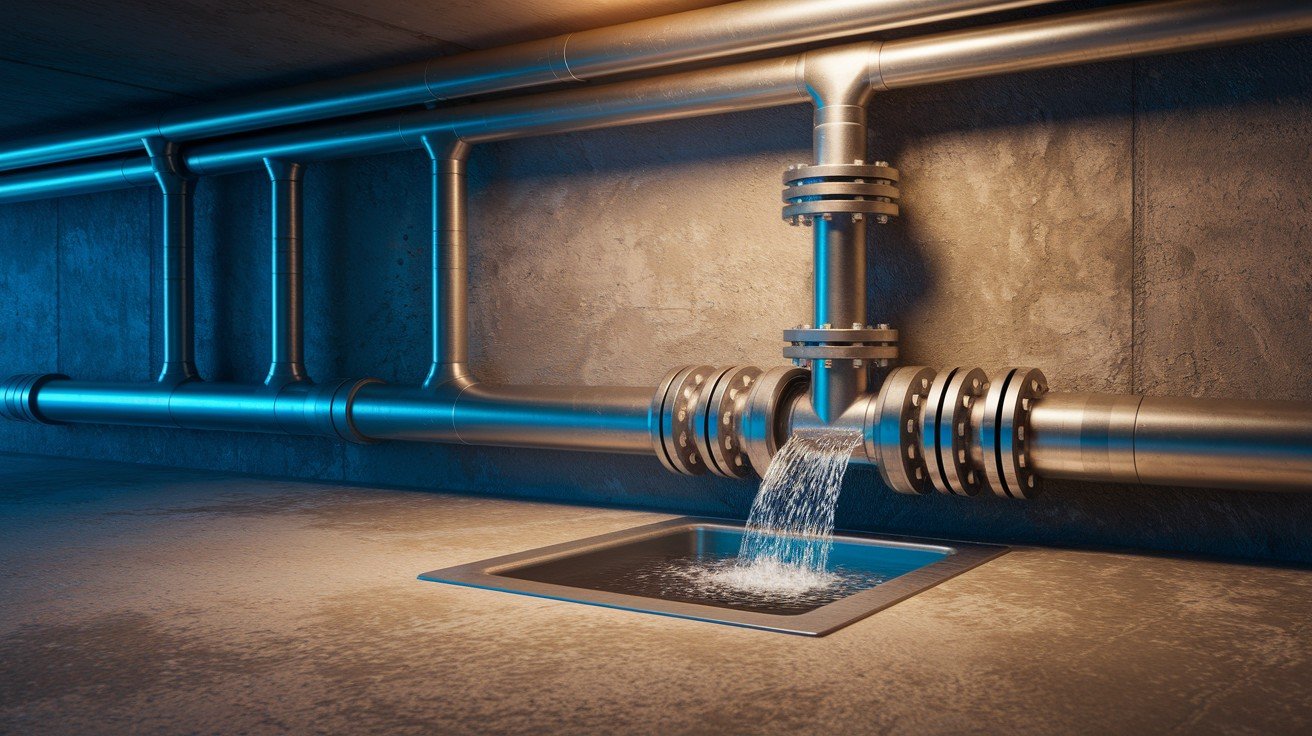
Backwater valve drains include specialized one-way valves that prevent sewage and contaminated water from backing up into your basement through the drainage system.
These valves allow water to flow out of your basement but automatically close when water tries to flow back in from the municipal sewer system during heavy rainfall or sewer system overloads.
These drains are often required by building codes in cities prone to sewer backups or areas with combined storm and sanitary sewer systems.
Backwater valves provide essential protection against costly and unsanitary sewage backups that can cause extensive damage and health hazards, making them crucial safety components in flood-prone areas or older neighborhoods with aging sewer infrastructure.
6. Cleanout Drain
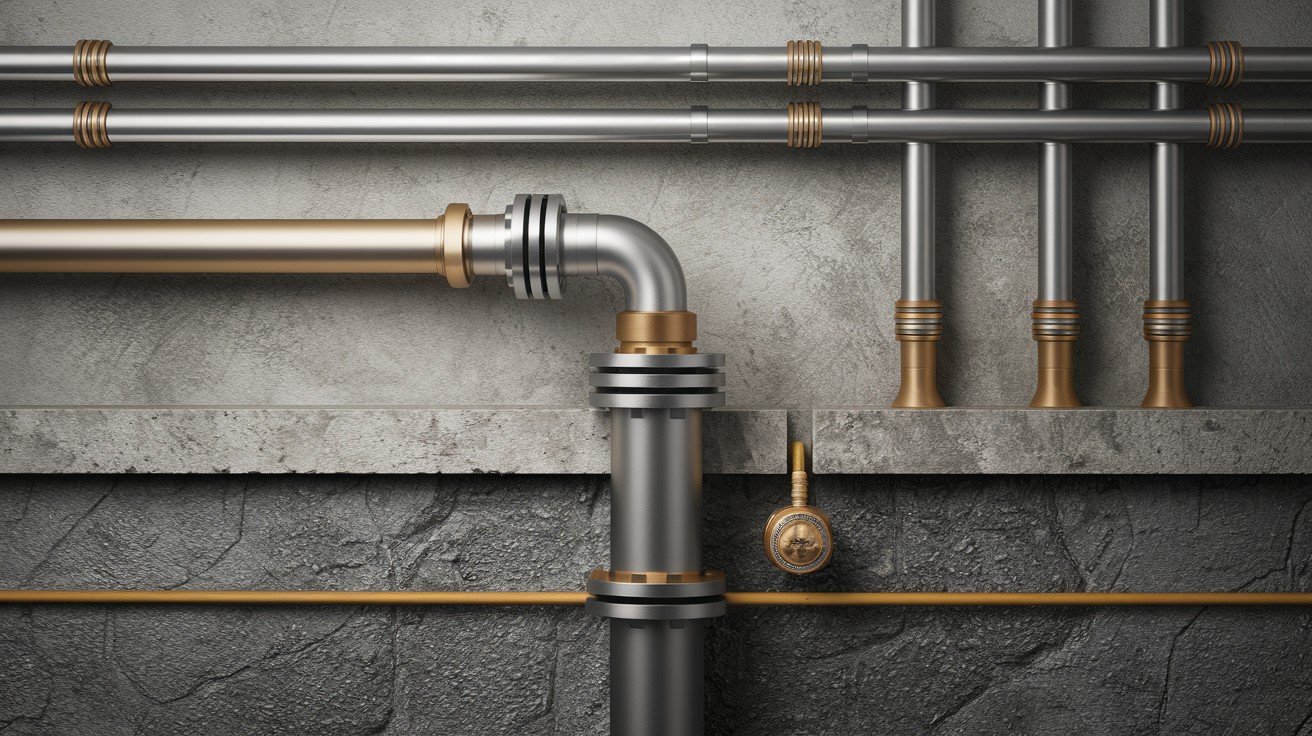
Cleanout drains provide essential access points for sewer line cleaning and maintenance rather than serving as water removal systems.
These specialized access points feature removable caps that allow plumbers and drain cleaning professionals to insert equipment directly into your sewer lines for inspection, cleaning, and repair work.
While cleanout drains are not designed for water removal, they are essential for maintaining your drainage system’s long-term functionality and preventing costly sewer line problems.
Regular access through cleanout drains allows for preventive maintenance, root removal, and blockage clearing that keeps your entire basement drainage system operating effectively and prevents backup issues that could flood your basement.
7. Laundry Tub Drain
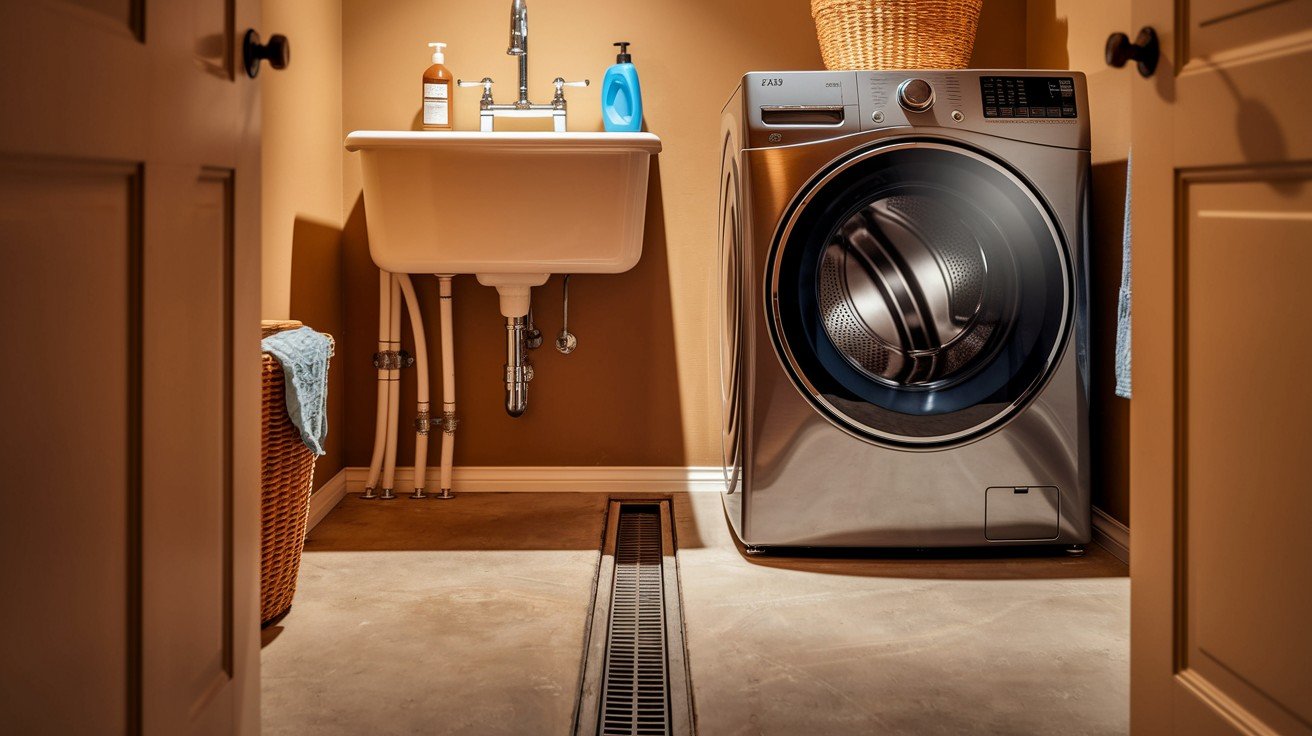
Laundry tub drains are specifically designed and installed near washing machines and utility sinks to handle greywater efficiently from laundry operations.
These drains connect directly to utility sinks or floor areas adjacent to laundry equipment, providing immediate drainage for water overflow, machine discharge, and routine laundry room activities.
This specialized drainage solution prevents water damage from washing machine malfunctions, utility sink overflows, or routine laundry activities that generate substantial amounts of greywater.
Laundry tub drains are essential in basement laundry rooms where water management is crucial for protecting finished flooring, preventing mold growth, and maintaining a functional, dry laundry environment.
8. Standpipe Drain
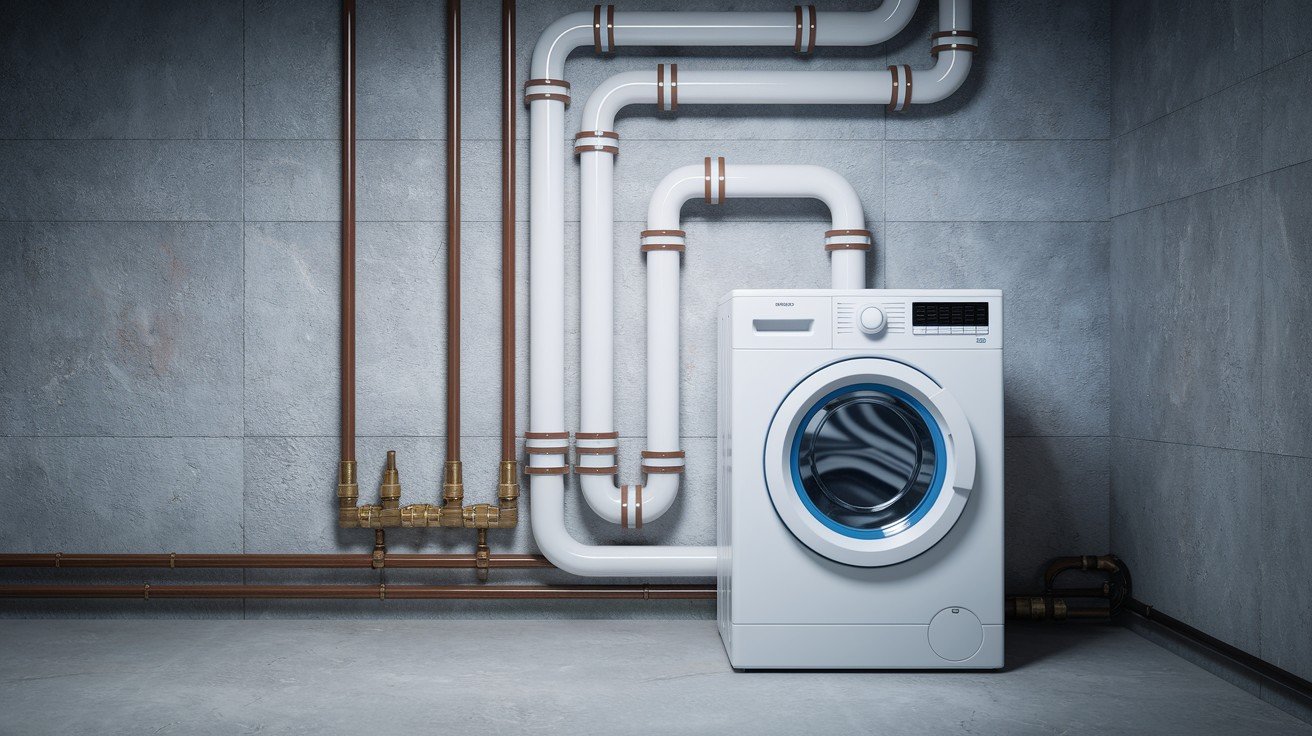
Standpipe drains consist of vertical pipes specifically designed to connect with washing machine discharge hoses, providing a dedicated drainage solution that prevents overflow from washing machines during operation. These vertical drain systems typically extend from floor level to an appropriate height for washing machine connections, ensuring proper water flow and preventing backups.
This design prevents overflow from washing machines by providing adequate capacity and proper venting for the high-volume water discharge that occurs during wash and rinse cycles.
Standpipe drains are essential in basement laundry installations where proper drainage prevents water damage and ensures washing machines operate efficiently without causing flooding or backup issues.
9. Tile Drain (Weeping Tile System)
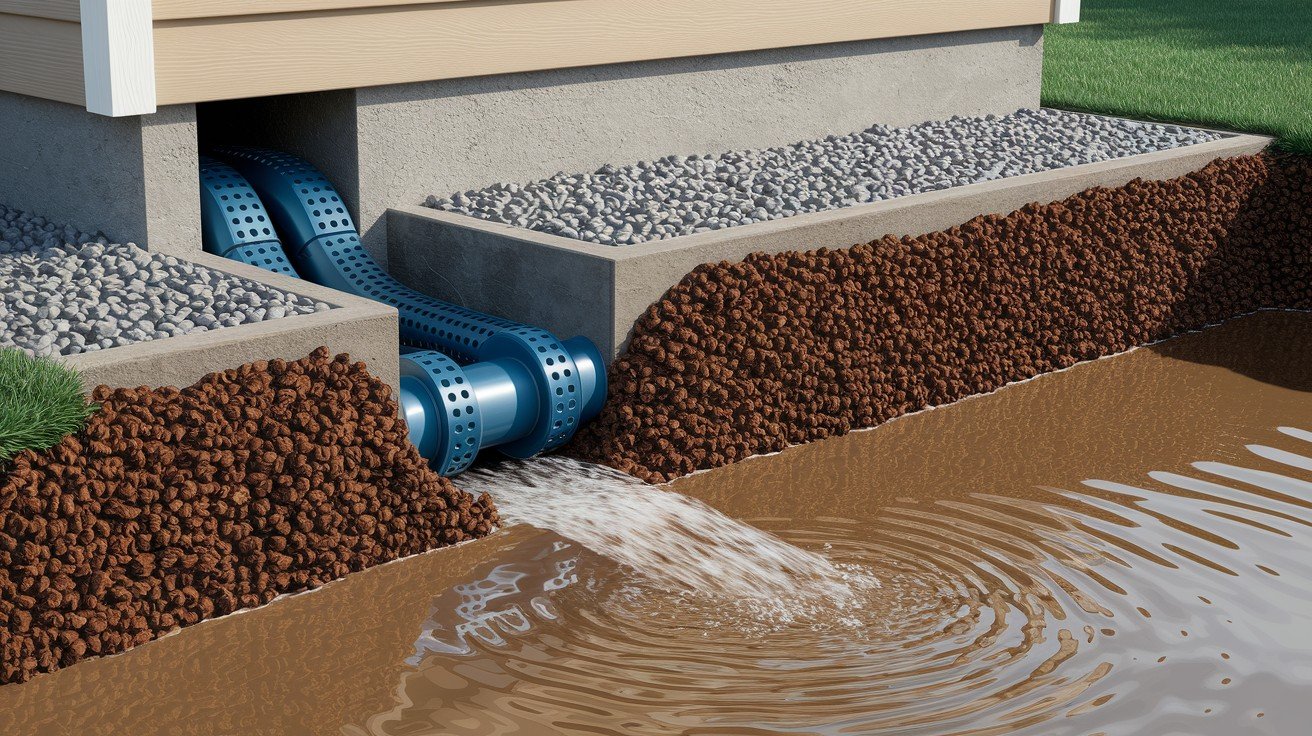
Tile drain systems, also known as weeping tile systems, are installed under or around your home’s foundation to redirect groundwater away from the house before it can enter your basement.
These perforated drainage pipes collect groundwater and foundation seepage, channeling it to appropriate drainage areas or sump systems.
This comprehensive approach redirects groundwater away from the house at the source, preventing water intrusion problems before they affect your basement interior.
Weeping tile systems work continuously to manage groundwater pressure around your foundation, making them essential for homes in areas with high water tables, poor soil drainage, or chronic foundation seepage issues.
10. Trap Drain with Grate Cover
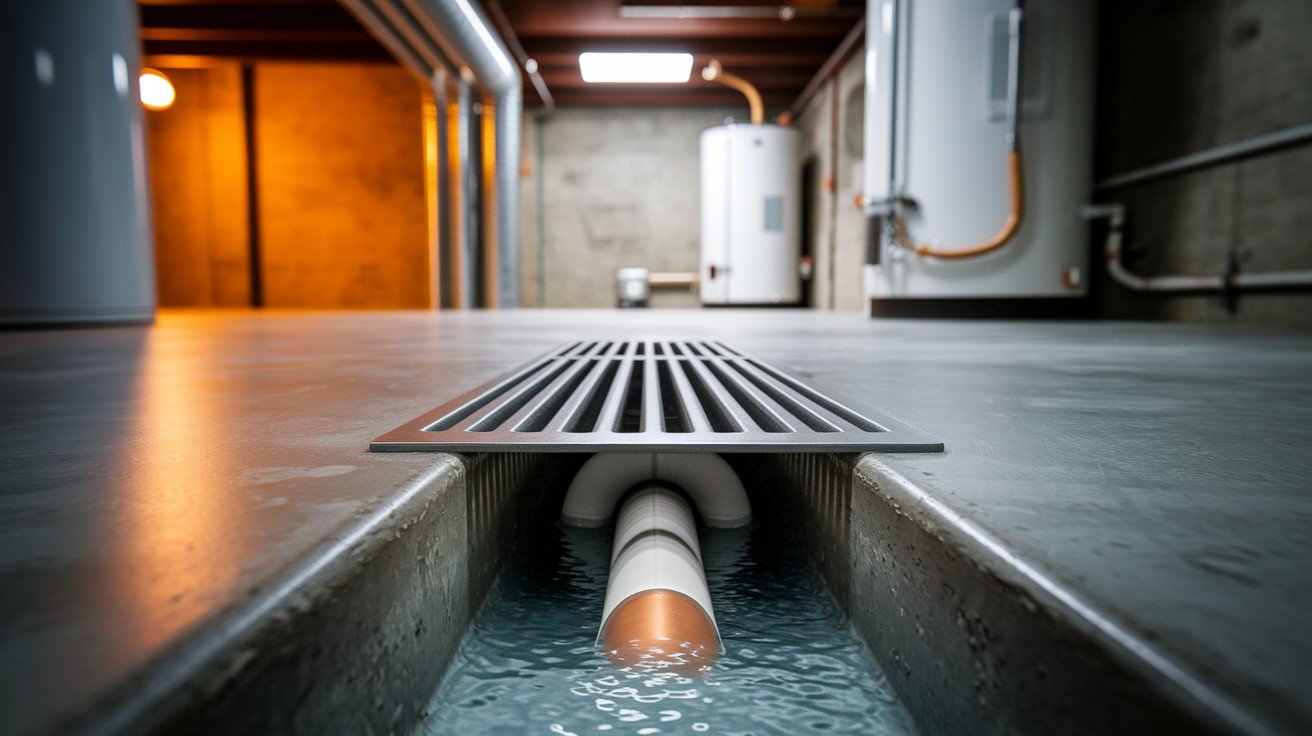
Trap drains with grate covers are commonly installed in utility and furnace rooms where debris prevention and odor control are essential concerns.
The trap component maintains a water seal that prevents sewer gases from entering your basement, while the grate cover keeps debris, lint, and other materials from entering the drainage system.
This design keeps debris out of your drainage system while maintaining an essential air seal that prevents unpleasant and potentially dangerous sewer gases from entering your living space.
These drains are particularly important in utility rooms where furnaces, water heaters, and other equipment generate heat and air circulation that could draw sewer gases into your basement without proper trap seals.
11. Combo Floor Drain with Backflow Prevention
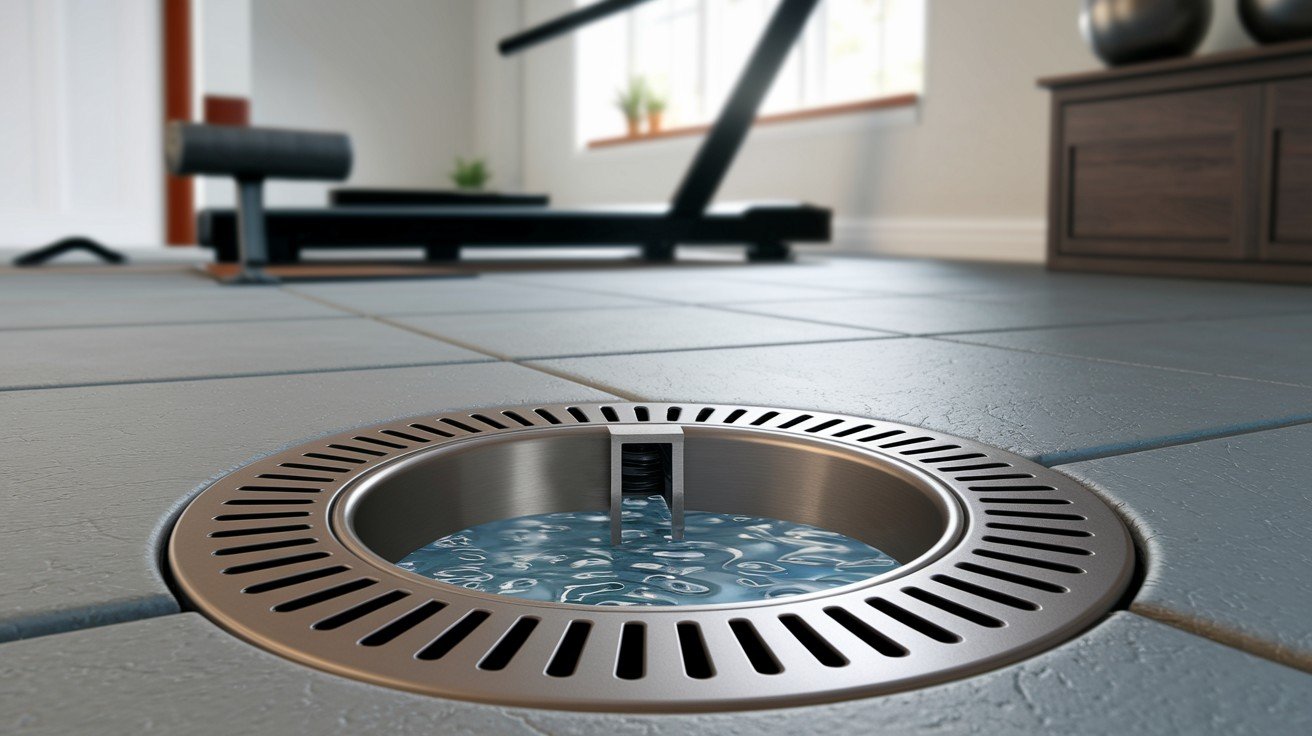
Combination floor drains include both trap seals and backwater valve components, providing comprehensive protection against both sewer gas infiltration and sewage backup issues.
These multi-functional drains combine the benefits of traditional trapped drains with backflow prevention technology in a single, space-efficient unit.
This comprehensive approach makes combo drains best for multi-purpose basement usage where maximum protection is needed against various water-related hazards.
They’re ideal for finished basements, recreational areas, or multi-use spaces where both routine drainage and emergency backup protection are essential for maintaining safe, functional living environments.
Maintenance Tips for Basement Floor Drains
Regularly Remove Debris
- Check monthly for accumulated debris – Inspect drains for hair, lint, soap residue, and small objects that obstruct water flow, especially near laundry and utility areas.
- Manually clear visible blockages – Remove grates and use gloves to clear debris, focusing on lint buildup and dust accumulation.
Flush Drains Seasonally
- Pour clean water through each drain – Perform seasonal flushing to clear minor blockages and maintain proper drainage flow.
- Use mild cleaning solutions quarterly – Apply baking soda and vinegar or mild drain cleaners to break down accumulated residue.
Inspect for Odors or Slow Draining
- Monitor for unusual odors – Watch for smells indicating dry trap seals, blockages, or sewage backup issues requiring immediate attention.
- Check for slow draining – Observe drainage performance and address symptoms promptly to prevent serious water damage.
Use Drain Covers to Prevent Clogs
- Install appropriate drain covers – Choose covers with proper openings that allow water flow while blocking debris and personal items.
- Regularly clean covers – Keep drain covers clean and positioned to ensure effective protection and proper drainage function.
Conclusion
Understanding the 11 types of basement floor drains-from standard gravity drains to combination systems with backflow prevention-provides you with essential knowledge for protecting your home from water damage.
Each drain type serves specific purposes, whether handling routine moisture, preventing sewage backup, or managing groundwater infiltration around your foundation.
Picking the right drain type for your specific needs is crucial for effective water management and long-term basement protection.
Consider factors like your basement’s location relative to sewer lines, local flooding risks, and intended basement use when making your selection.
Take time to assess your basement’s current drainage situation and unique water management challenges.
If you’re unsure which drain type best suits your needs or have concerns about installation requirements, consult a qualified plumber who can evaluate your specific situation and recommend appropriate solutions.
Frequently Asked Questions
What’s the most common type of basement floor drain?
Standard gravity floor drains are the most widely used type in residential basements due to their simple design and reliable performance. They work effectively in most situations where the basement floor is above the main sewer line level.
Do I need a sump pump drain if my basement has never flooded?
Even basements without flooding history can benefit from sump pump drains, especially in areas with changing weather patterns or aging infrastructure. They provide essential insurance against future water problems and are often required by local building codes in flood-prone regions.
How do I know if my basement needs a French drain system?
French drains are necessary if you notice persistent moisture along foundation walls, water stains, or damp conditions even without visible leaks. They’re particularly important for basements with high water tables or homes built in areas with poor soil drainage.
What’s the difference between a cleanout drain and a regular floor drain?
Cleanout drains provide access for maintenance and sewer line cleaning rather than removing water from your basement floor. Regular floor drains handle water removal, while cleanouts are essential access points that help maintain your entire drainage system.
Can I install a basement floor drain myself?
Simple drain installations may be possible for experienced DIYers, but most basement floor drain projects require professional plumbing expertise. Complex installations involving sump pumps, backwater valves, or sub-floor work should always be handled by licensed plumbers to ensure proper function and code compliance.


