
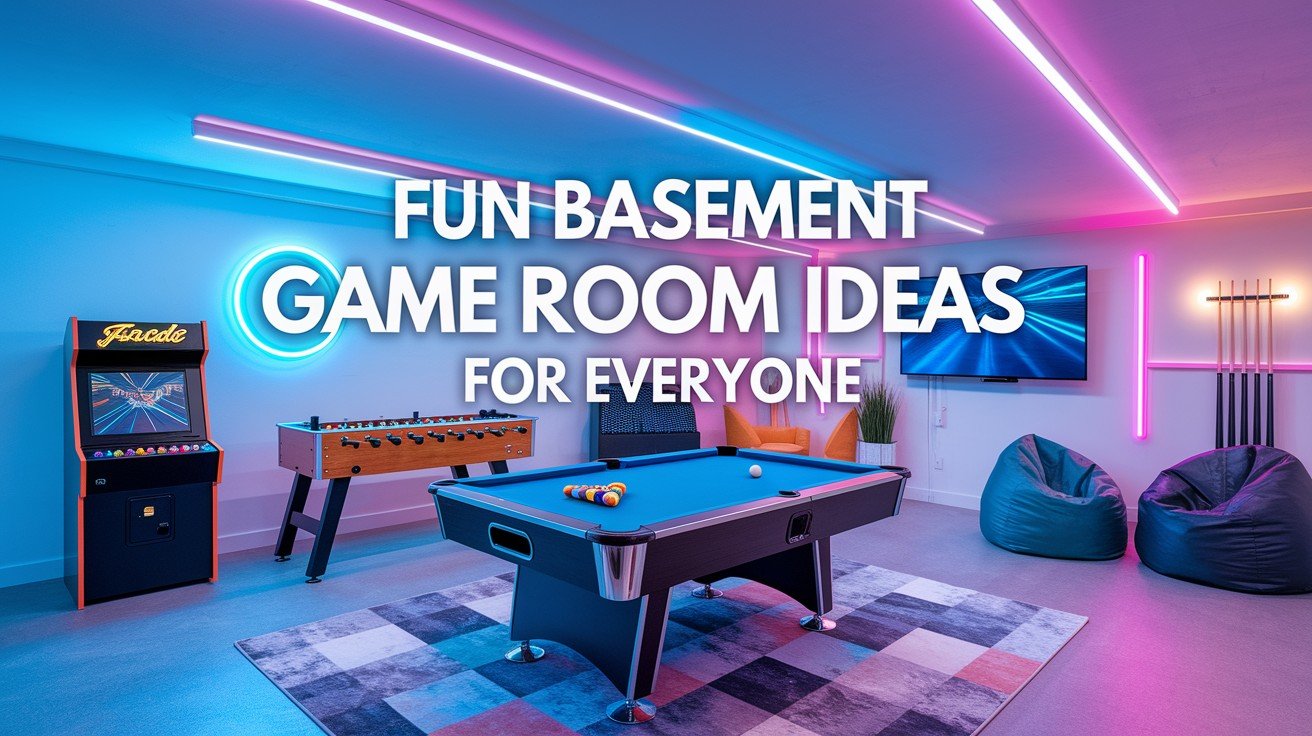
Basement game rooms have become increasingly popular as homeowners seek to maximize their living space and create dedicated entertainment areas.
These versatile spaces offer countless benefits including year-round entertainment for family and friends, opportunities for quality family bonding time, and significant added value to your home.
A well-designed basement entertainment room serves as the perfect retreat from daily stress while providing a central gathering place for memorable moments.
Whether you’re working with a small basement or a spacious lower level, the right fun game room setup can accommodate everyone’s interests and ages.
This guide presents 11 creative basement game room ideas that are both inclusive and exciting, helping you create an entertainment space that brings people together.
From classic arcade games to modern gaming setups, these ideas will inspire you to create the ultimate basement entertainment room.
List of 11 Fun Basement Game Room Ideas
A comprehensive collection of creative and entertaining basement game room concepts designed to maximize fun and functionality for all ages.
1. Classic Arcade Corner
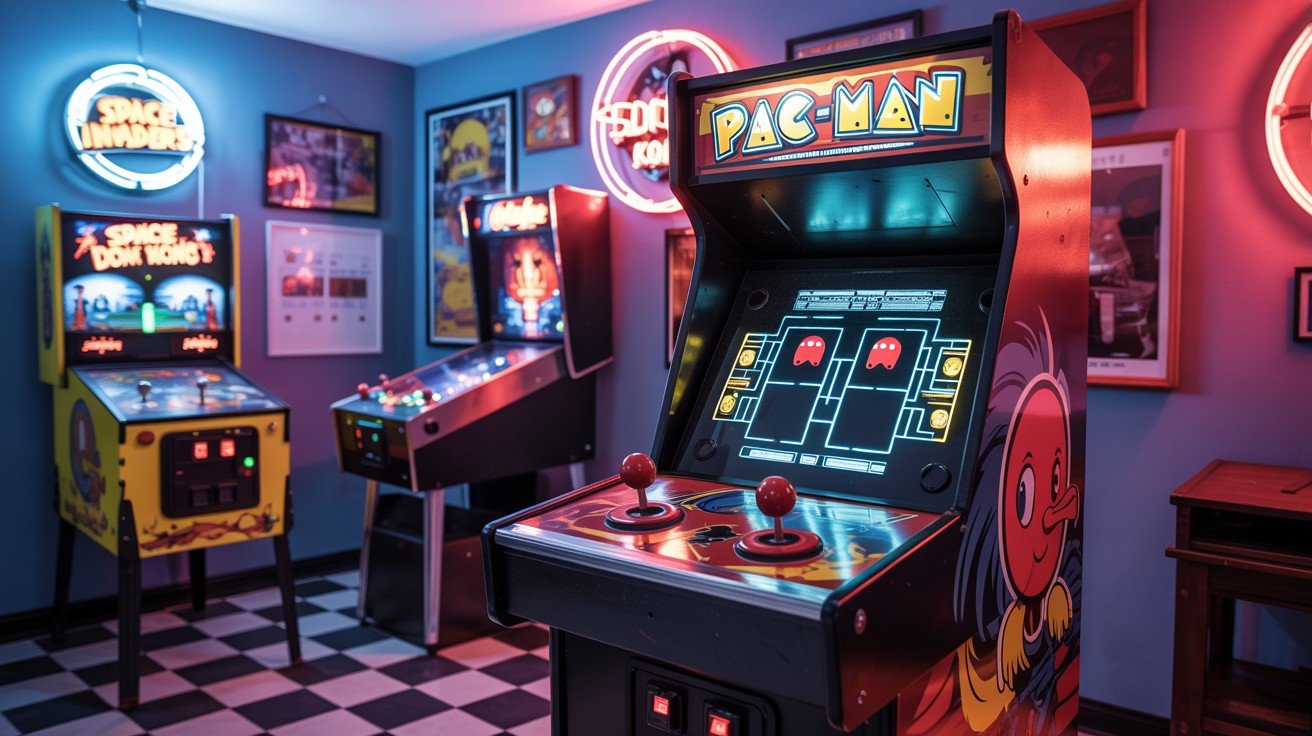
Create an authentic retro gaming experience by adding vintage arcade machines like Pac-Man, Galaga, or classic pinball tables that appeal to all generations.
Enhance the nostalgic atmosphere with LED neon signs featuring classic arcade logos and game characters that glow against dark walls.
Complete the 80s vibe with checkered flooring, retro color schemes of bright blues and pinks, vintage posters, change machines, and high score boards for an authentic arcade experience.
2. Pool Table and Bar Combo
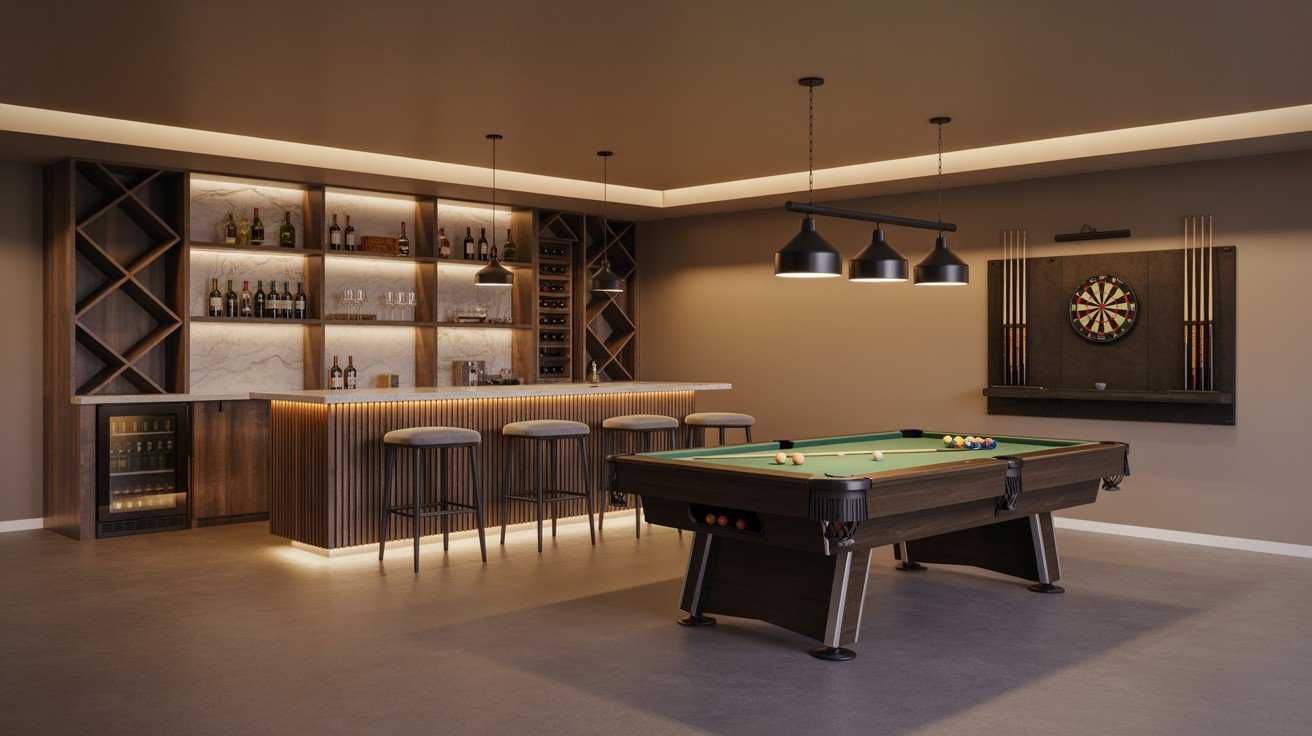
When placing pool tables in compact basements, ensure adequate space around all sides for comfortable cueing-typically requiring at least 5 feet of clearance.
Add a stylish bar area with comfortable stools, wine storage, and mini refrigerator to create the perfect entertainment hub.
Install dartboards on adjacent walls and incorporate LED strip lighting under counters and around room perimeter for ambient mood lighting that enhances social atmosphere.
3. Multi-Game Table Zone
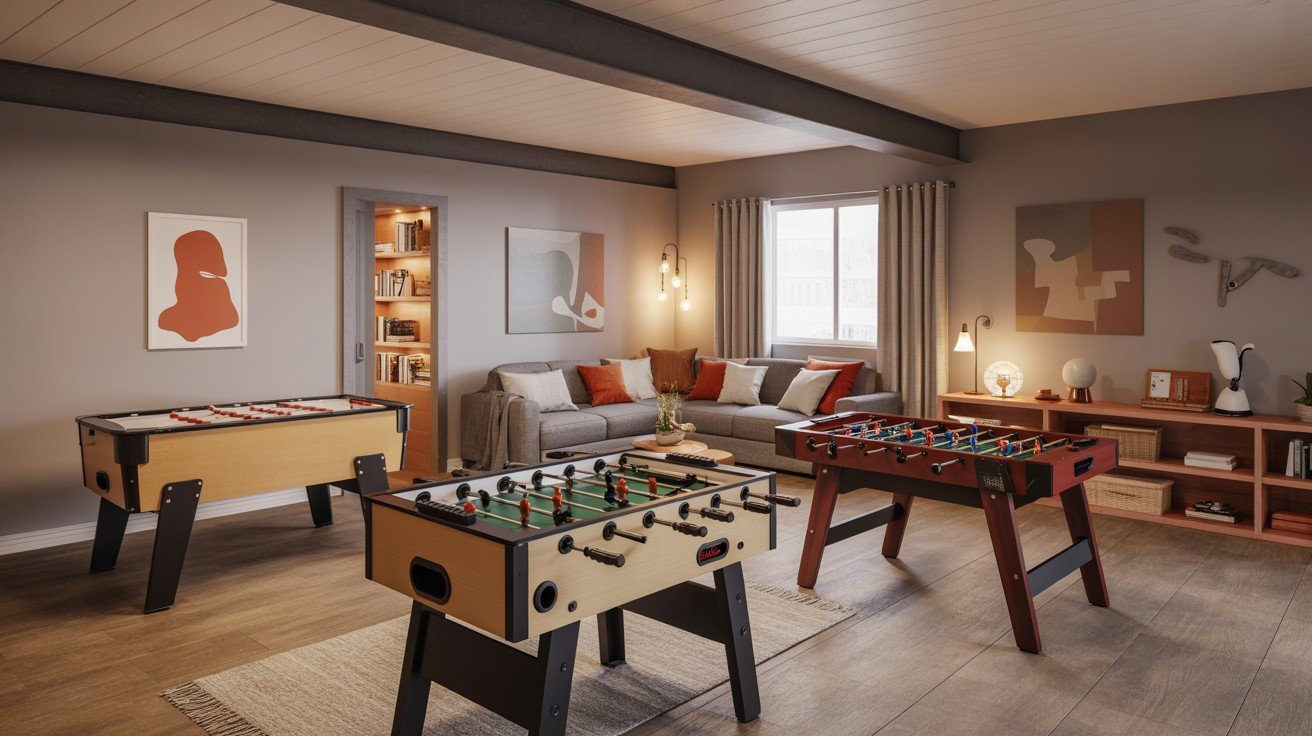
Maximize variety in small spaces by incorporating multiple game tables like air hockey, foosball, and table tennis that cater to different preferences and skill levels.
This setup works perfectly for families with mixed game interests, allowing everyone to find something they enjoy.
Consider convertible tables that serve multiple functions or stackable options that can be stored when not in use, making efficient use of limited basement square footage.
4. Video Gaming Lounge
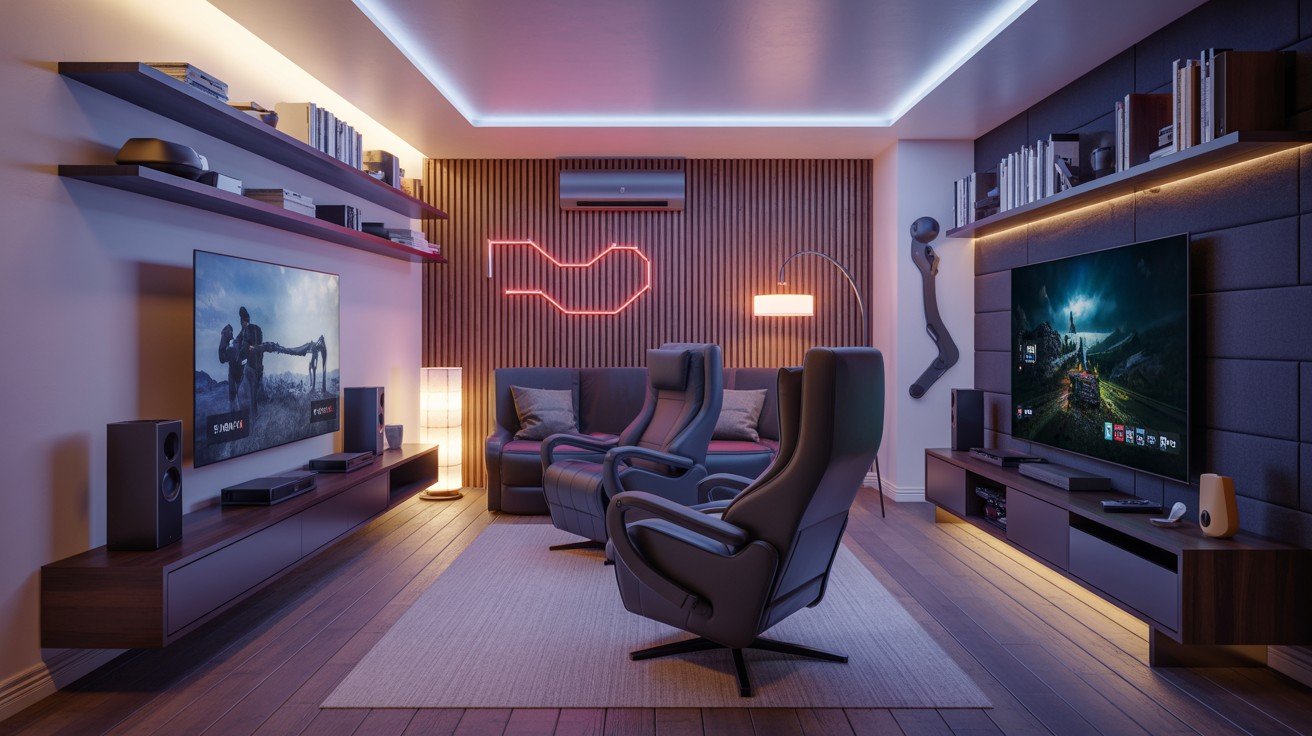
Create the ultimate console gaming setup with wall-mounted large-screen TVs, comfortable gaming recliners, and organized storage for controllers and headsets.
Install proper ventilation and consider soundproofing materials to prevent noise from traveling upstairs while creating immersive gameplay experiences.
Add charging stations for controllers, cable management systems to keep wires organized, and adequate lighting that reduces eye strain during extended gaming sessions for optimal comfort and functionality.
5. Home Theater & Gaming Hybrid
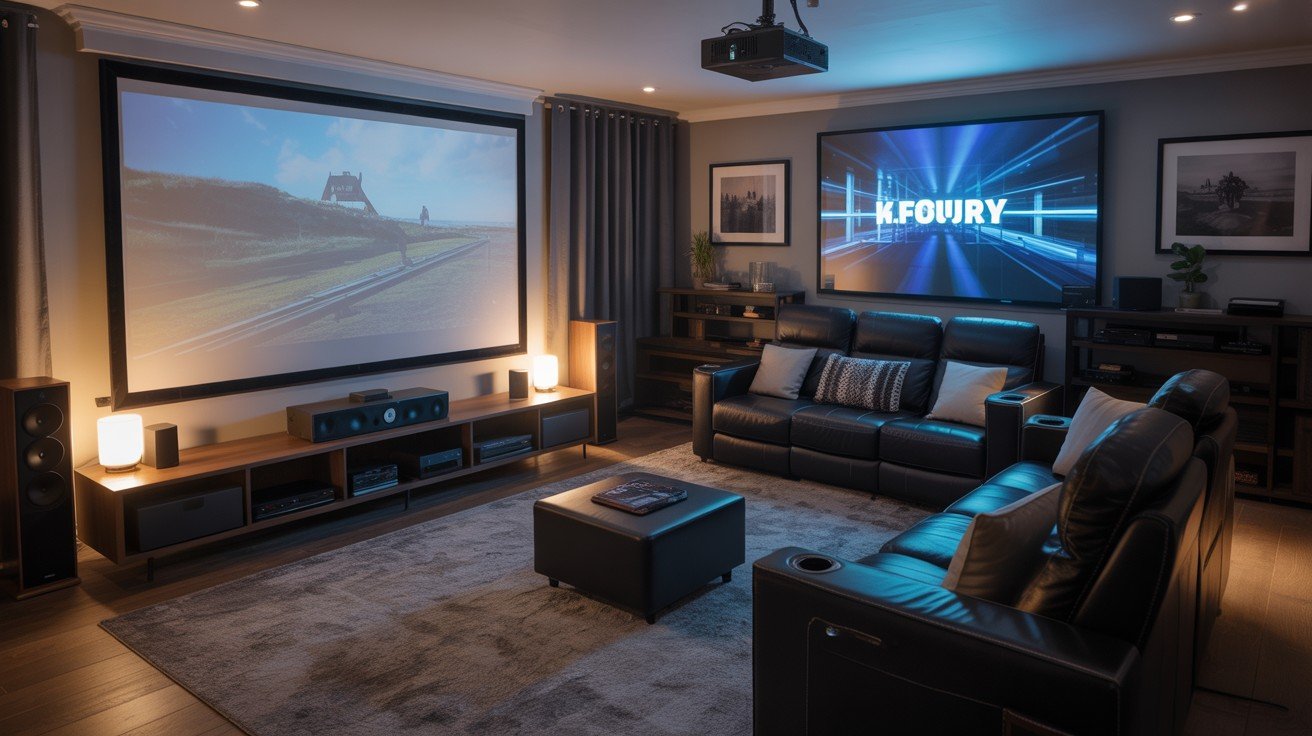
Combine entertainment options by installing a projector or large screen that works for both movie watching and gaming console use.
Add blackout curtains to control lighting conditions and install quality soundbar systems for immersive audio experiences.
Include comfortable seating that works for both activities, such as recliners or sectional sofas, and consider tiered seating options to accommodate multiple viewers while maintaining optimal viewing angles for everyone.
6. Board Game & Card Table Zone
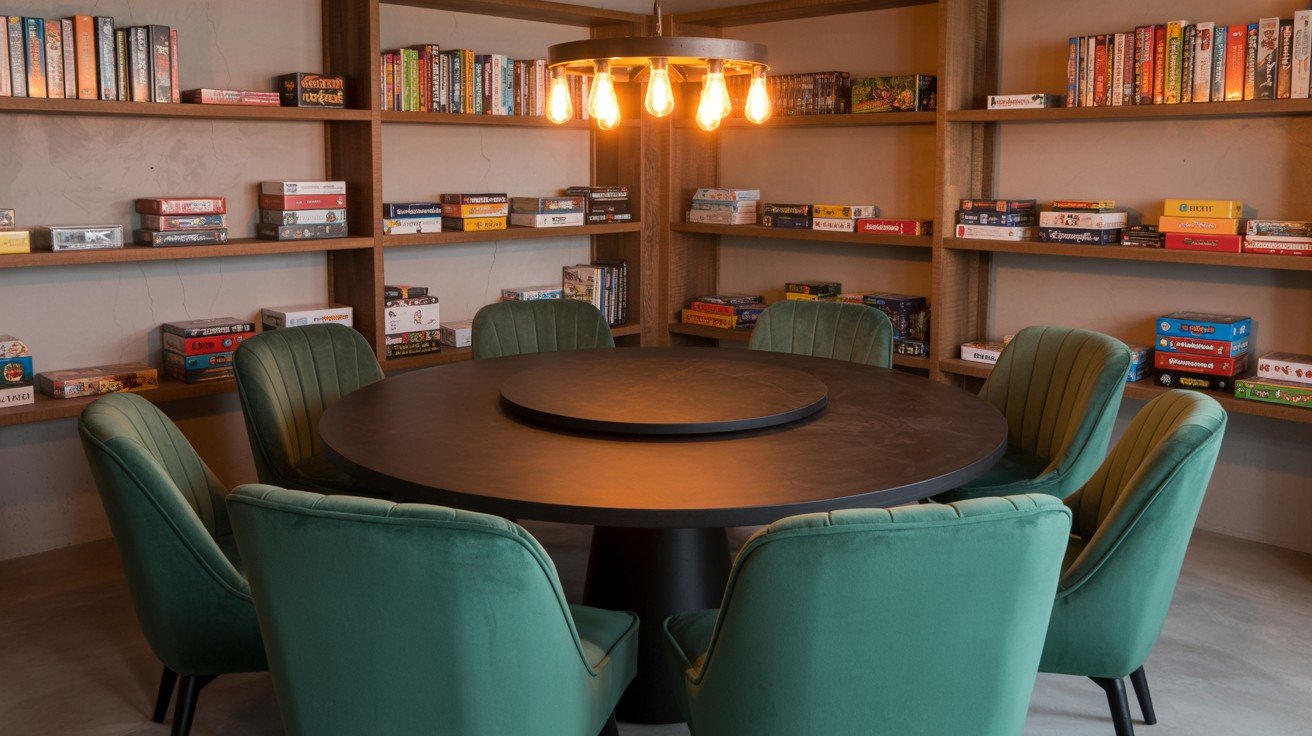
Design a cozy spot dedicated to traditional gaming with built-in shelving for storing board games, card collections, and gaming accessories.
Include comfortable seating options like padded chairs or benches that support long gaming sessions during Monopoly marathons or poker nights.
Ensure adequate task lighting over the table surface and consider a round table design that promotes better interaction and conversation among players during extended game sessions.
7. Kids’ Play + Gaming Area
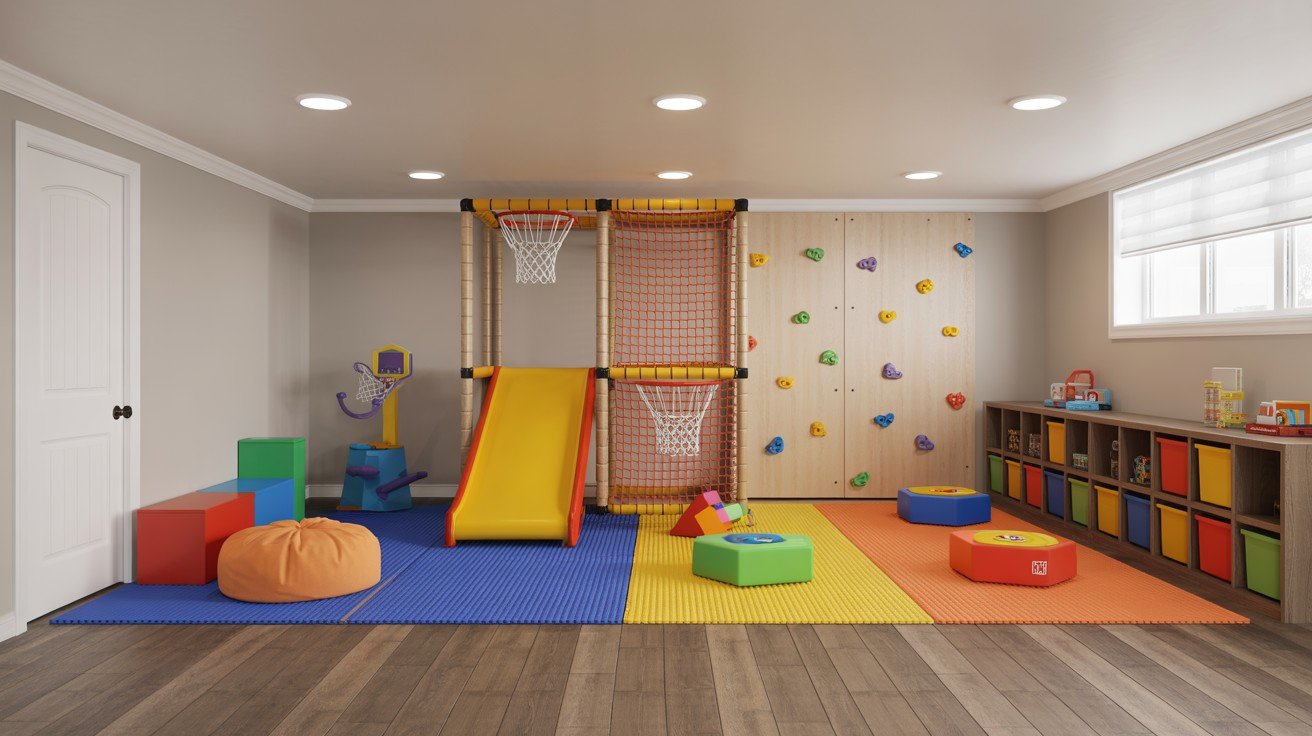
Create a safe and engaging space for children with interactive games like mini basketball hoops, climbing walls, or soft play equipment.
Install durable, easy-to-clean flooring materials like rubber mats or vinyl that can withstand active play and frequent cleaning.
Include soft seating options, proper lighting, and age-appropriate storage solutions that encourage children to clean up after themselves while maintaining a fun, colorful environment.
8. Sports Fan Zone
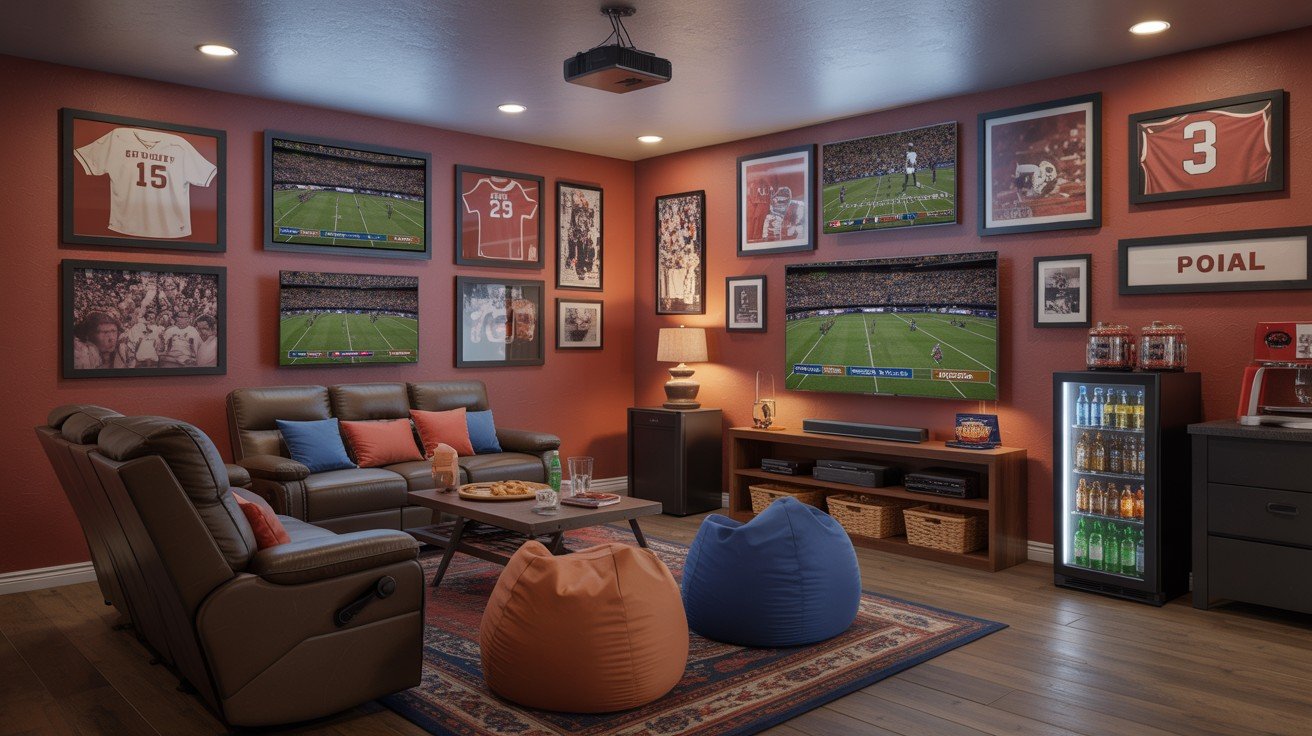
Design the ultimate viewing experience with multiple wall-mounted TVs for watching live games and sporting events.
Decorate with sports memorabilia, team colors, and signed photographs that showcase your favorite teams and players.
Add practical elements like mini refrigerators for cold beverages, comfortable bean bags or recliners for extended viewing, and storage for snacks and game day essentials that enhance the authentic sports bar atmosphere.
9. VR and Motion Gaming Area
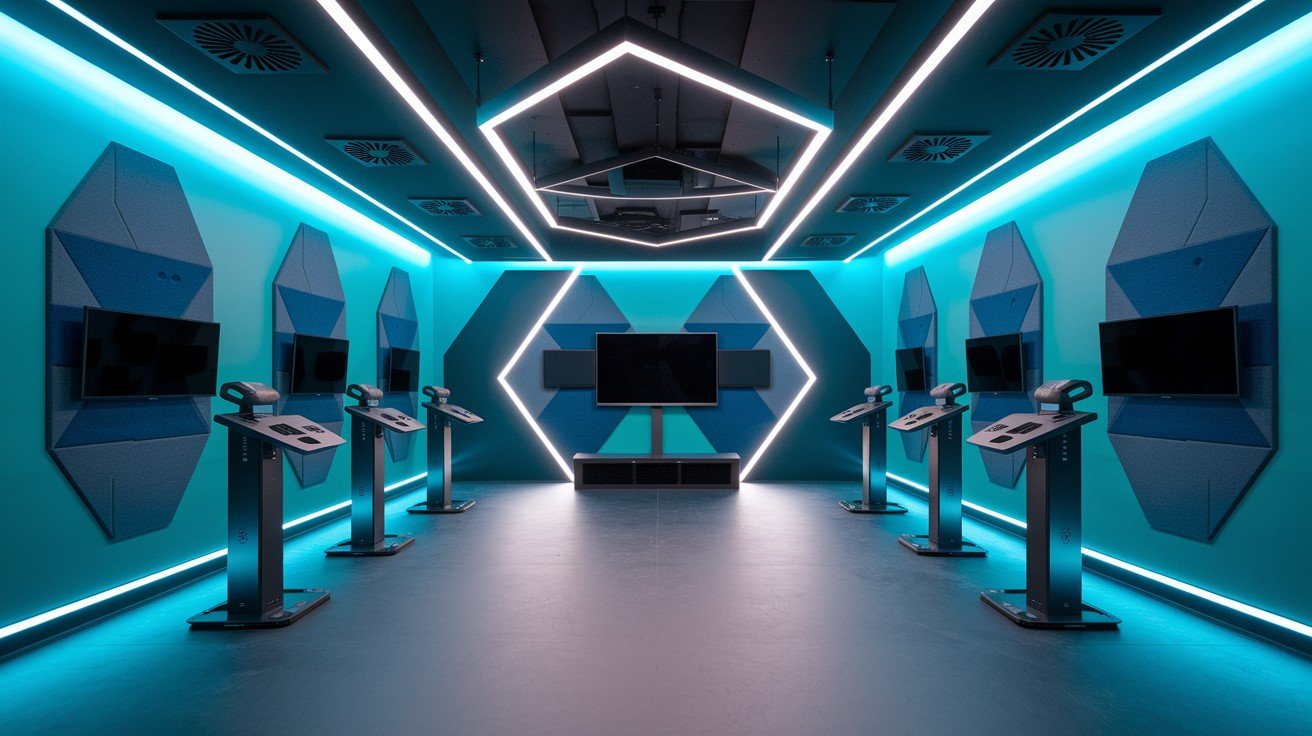
Create adequate open space for virtual reality headsets, motion sensors, and active gaming that requires physical movement.
Install safety padding on walls and floors to prevent injuries during enthusiastic gameplay sessions.
Implement proper cable management systems to prevent tripping hazards and ensure equipment stays organized.
Consider ceiling-mounted systems for VR equipment and adequate ventilation since motion gaming can be physically demanding and generate heat.
10. Gaming Bunker for Teens
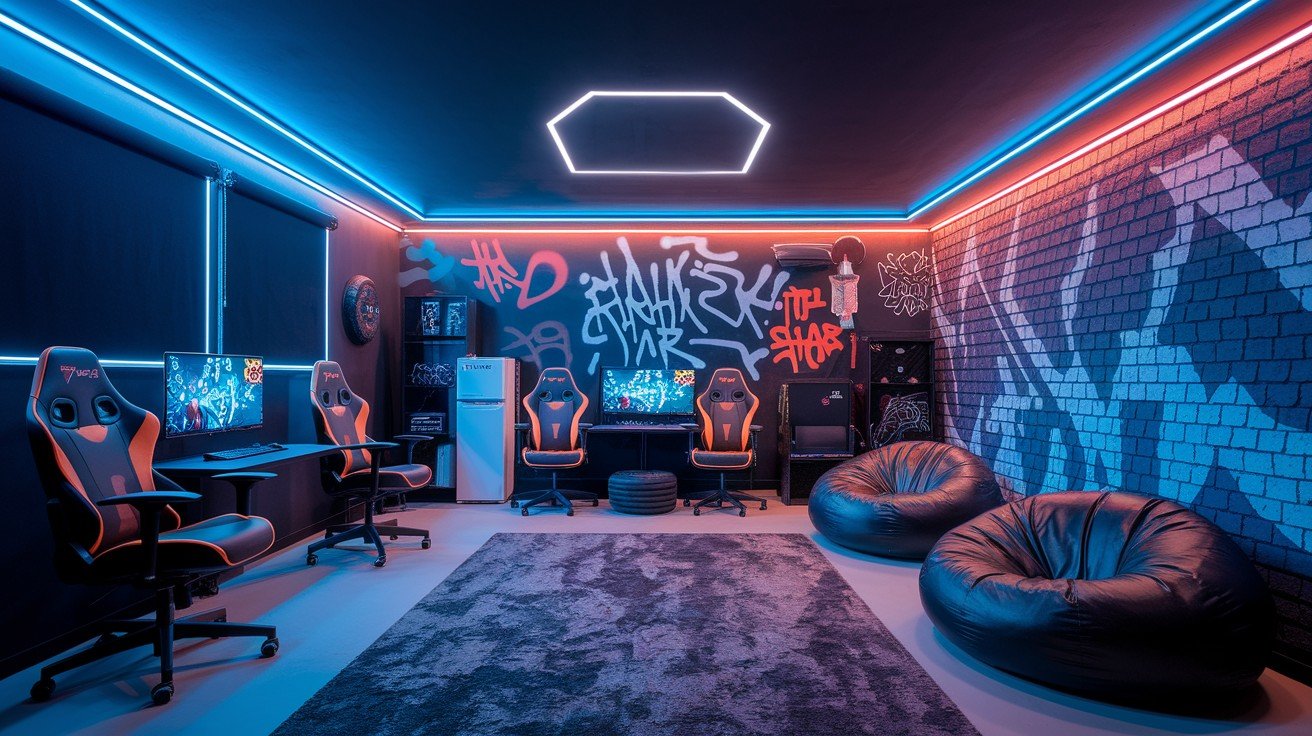
Design an edgy, private space with LED strip lights, wall graphics or graffiti art, and multiple charging docks for devices.
Include essential teen amenities like mini refrigerators for snacks and drinks, Wi-Fi boosters for optimal internet connectivity, and mood lighting that creates the perfect gaming atmosphere.
Add comfortable seating options like gaming chairs or bean bags and consider blackout capabilities for optimal screen visibility during gaming sessions.
11. Zen + Gaming Retreat
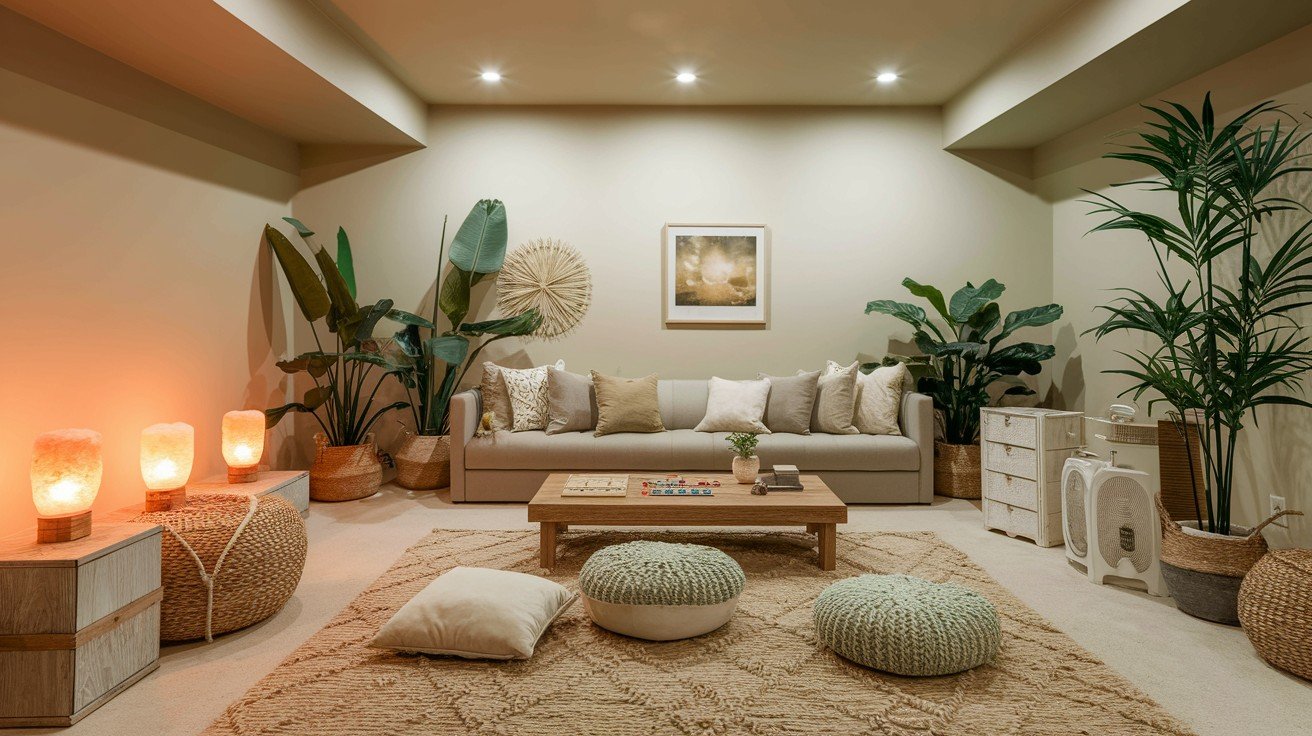
Combine relaxation with recreation by creating a space that includes both a yoga corner or meditation area alongside casual gaming options.
Use earthy tones, calming lighting, and soft textures throughout the space to promote relaxation and stress relief.
Include games that complement the peaceful atmosphere, such as puzzle games or quiet card games, and ensure the space promotes both mental wellness and gentle entertainment for a balanced lifestyle approach.
Tips for Designing the Perfect Basement Game Room
- Optimize lighting (layered: ambient + task) – Combine overhead ambient lighting with focused task lighting for specific game areas, using dimmable options to adjust mood and brightness levels for different activities and times of day.
- Add proper insulation and soundproofing – Install quality insulation and soundproofing materials to prevent noise transfer to upper floors while maintaining comfortable temperatures and reducing energy costs throughout the year.
- Use multi-functional furniture – Choose furniture that serves multiple purposes, such as storage ottomans, convertible tables, or seating with built-in storage to maximize functionality while minimizing clutter in your basement space.
- Ensure good ventilation and climate control – Install proper HVAC systems, dehumidifiers, and ventilation fans to maintain comfortable humidity levels and air quality, preventing moisture problems and creating a pleasant environment year-round.
- Maximize storage with built-ins or wall units – Incorporate custom built-in shelving, wall-mounted storage systems, and organized solutions for games, equipment, and accessories to keep your space tidy and functional while maintaining easy access to everything.
Conclusion
Creating the perfect basement game room requires thoughtful planning and creative vision.
These 11 ideas provide a solid foundation for building an entertainment space that serves your family’s unique needs and interests.
From classic arcade setups to modern VR experiences, each concept offers opportunities to bring people together and create lasting memories.
Success lies in understanding your available space, budget constraints, and the activities your family enjoys most.
Consider factors like lighting requirements, ventilation needs, and storage solutions during the planning phase.
The key is selecting elements that work well together while maintaining functionality and safety.
Your basement can become the heart of family entertainment with the right approach.
Start small, build gradually, and focus on creating a space that everyone will want to use and enjoy for years to come.
Frequently Asked Questions
How much space do I need for a basement game room?
A minimum of 200 square feet works well for basic setups, though 400+ square feet allows for multiple activity zones. The key is planning your layout carefully to ensure adequate movement space around each gaming area.
What’s the average cost to convert a basement into a game room?
Basic conversions typically range from $5,000 to $15,000, while high-end setups can reach $30,000 or more. Your final cost depends on existing conditions, chosen features, and whether you hire professionals or complete work yourself.
How do I prevent moisture issues in my basement game room?
Install a quality dehumidifier and ensure proper ventilation to maintain humidity levels between 30-50%. Waterproof walls and floors before finishing, and consider moisture-resistant materials for flooring and furniture.
What type of flooring works best for basement game rooms?
Luxury vinyl plank, epoxy-coated concrete, or rubber tiles offer durability and moisture resistance. These materials handle heavy foot traffic well while providing comfort underfoot and easy maintenance for active play areas.
Can I add a basement game room to any home?
Most basements can accommodate game rooms with proper planning and preparation. Check ceiling height requirements, address any structural issues, and ensure adequate electrical capacity before beginning your renovation project.


