

I made the wrong backsplash call in my first bathroom renovation. Too short. Water got behind the vanity, the wall darkened, and I had to fix it within a year.
That one mistake taught me how much bathroom backsplash height actually matters.
Most people pick a height without really thinking about it. But the difference between 4 inches and 8 inches isn’t just visual. It changes how your bathroom holds up over years of daily use.
So what’s the right height for your bathroom? The answer might not be what you expect.
Why Backsplash Height Is Worth Getting Right
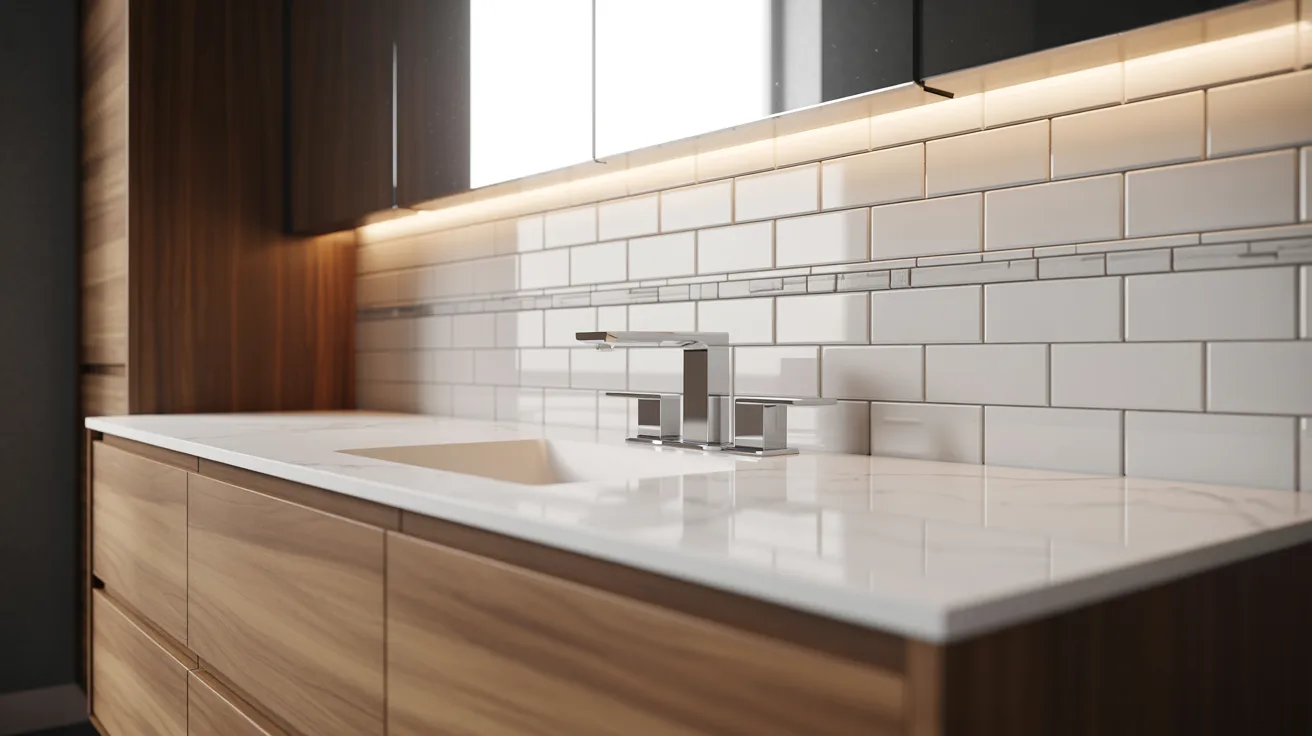
Most people treat backsplash height as an afterthought. They pick a number, order the tile, and move on.
But height is one of the few decisions that affects both how your bathroom looks and how long it holds up.
Too short and water finds the wall. Over time, that means mould, swollen drywall, and a repair bill that dwarfs what a taller backsplash would have cost.
Go too tall without thinking it through and the proportions feel off. The whole vanity wall looks heavy or unfinished.
The right height protects the areas that actually get wet, works with your fixtures, and fits the scale of the room.
That combination is what makes a bathroom feel considered rather than cobbled together.
What Is Bathroom Backsplash Height?
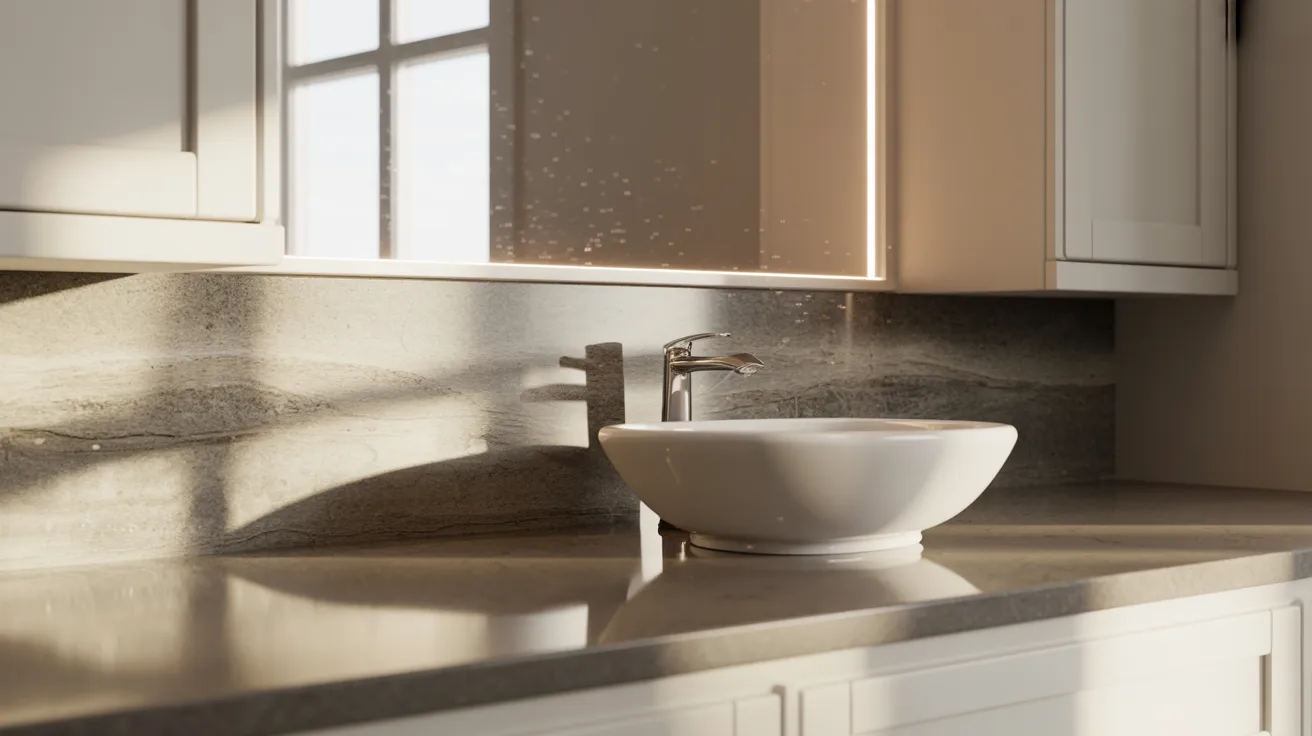
Backsplash height is how tall the protective material runs up your wall behind the sink or vanity. Getting it right affects both how your bathroom holds up over time and how it looks.
Definition of Bathroom Backsplash
A bathroom backsplash is the material installed on the wall directly behind your sink or vanity. It acts as a barrier against daily splashes of water, soap, and toothpaste.
Without one, walls absorb moisture over time. That leads to mould, peeling paint, and damage that costs far more to fix than a proper backsplash ever would.
Common materials include ceramic tile, porcelain, glass, and stone. Each brings a different look and level of protection.
Why Backsplash Height Matters
The taller your backsplash, the more wall it protects. A short one covers the basics. A taller one handles heavier water exposure and gives the space a more finished look.
Height also affects how easy the area is to clean. A backsplash wipes down in seconds. An unprotected painted wall stains and deteriorates with regular moisture exposure.
From a design standpoint, height changes proportion. A taller backsplash draws the eye upward and makes a vanity wall feel more complete.
Areas Where Height Is Most Important
The wall directly behind the sink basin gets the most water contact. This is where getting the height right matters most.
Around the vanity sides and corners, even a few extra inches can prevent moisture from working into the drywall over time.
If a mirror or cabinet sits just above the vanity, the backsplash height needs to work visually with those elements too, not just functionally.
Standard Bathroom Backsplash Height (Quick Answer)
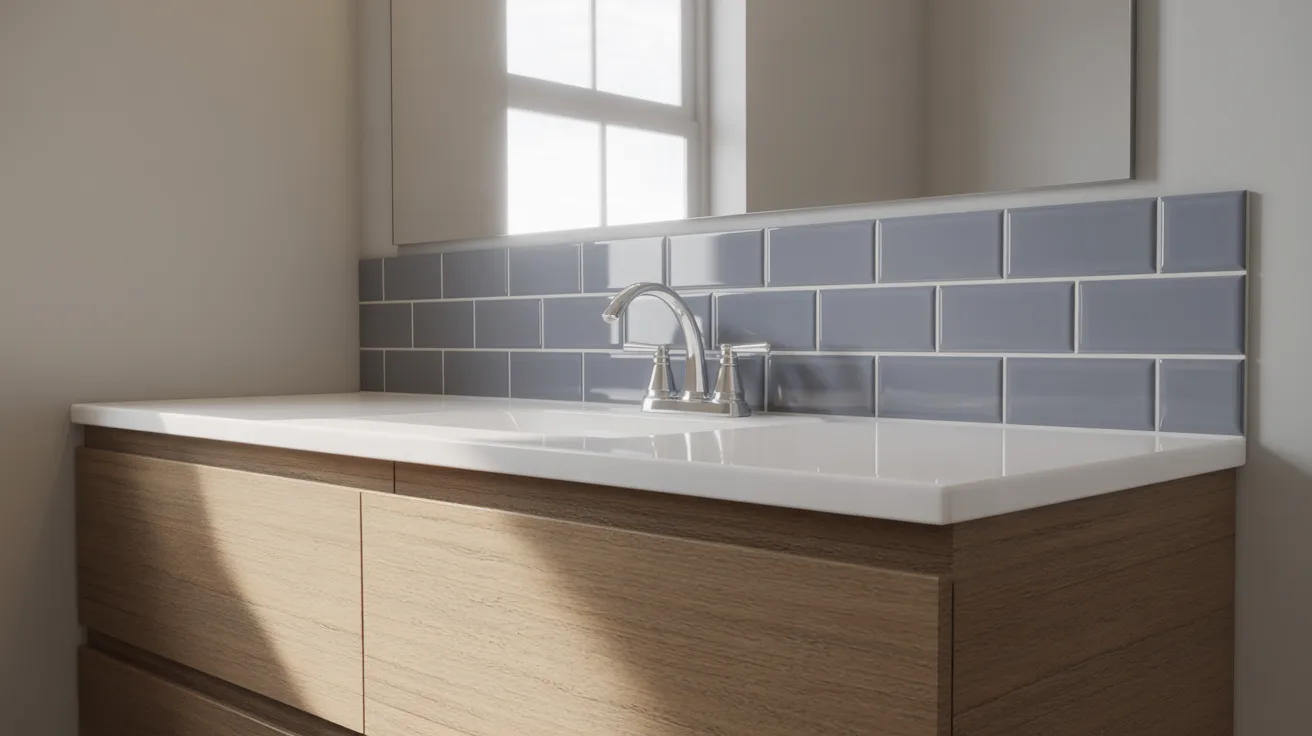
The standard bathroom backsplash height is 4 inches. Most prefabricated vanities come with this already built in.
Custom bathrooms often go higher, from 6 to 8 inches or full wall height depending on the design.
Why 4 Inches Became the Standard
Four inches covers the area most likely to get wet during normal sink use. It gets the job done without requiring extra materials or labour, keeping costs down.
It also works neatly with most prefab vanity units. Manufacturers built around this measurement because it suits the majority of standard bathroom setups.
When the Standard Height Works Best
A 4-inch backsplash suits small bathrooms where a taller option might feel heavy or out of scale.
Powder rooms, which see lighter use, rarely need anything taller. For budget renovations, sticking with 4 inches keeps material and labour costs manageable.
Typical Bathroom Backsplash Height Options
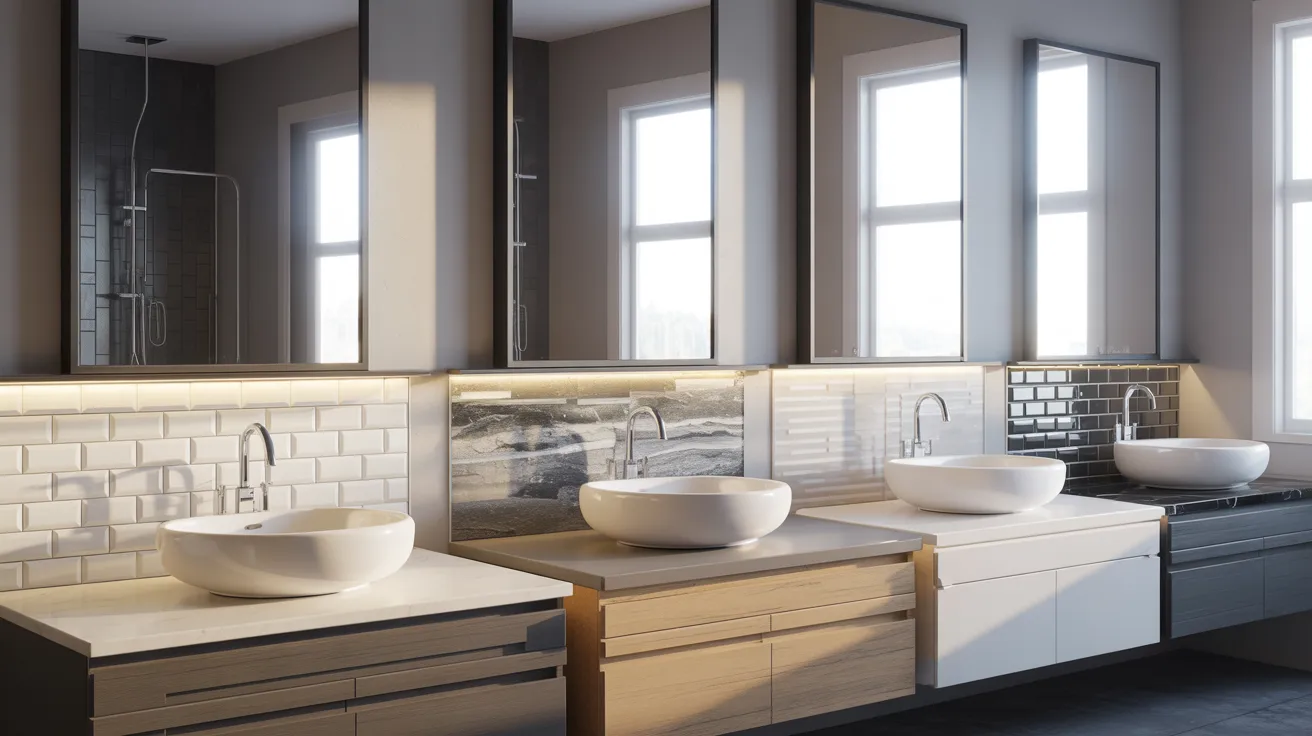
The typical bathroom backsplash height isn’t one fixed number. Homeowners choose from several common ranges depending on size, style, and how much protection they need.
4-Inch Backsplash
The most common choice. Often included with prefabricated vanity countertops so there’s no extra decision to make.
It provides clean, minimalist protection for everyday sink use. A solid choice for simple, neutral bathroom designs.
6-Inch Backsplash
Gives more coverage and starts to become a visible design feature rather than just a functional strip.
Works well in family bathrooms where kids use the sink and water travels further than expected. A natural step up from basic without going all in.
8-Inch Backsplash
At 8 inches, the backsplash becomes a prominent part of the vanity wall with stronger visual presence.
Water protection is noticeably better, especially with vessel sinks or taps positioned higher than usual. Pairs well with bold tile patterns or natural stone.
Full Height Backsplash
Runs from the countertop all the way to the mirror, cabinet, or ceiling. Creates a seamless, built-in look.
Most popular in luxury and custom bathrooms where the backsplash is meant to be a centrepiece. The typical bathroom backsplash height in high-end renovations has shifted strongly toward this treatment.
Modern Bathroom Backsplash Height Trends
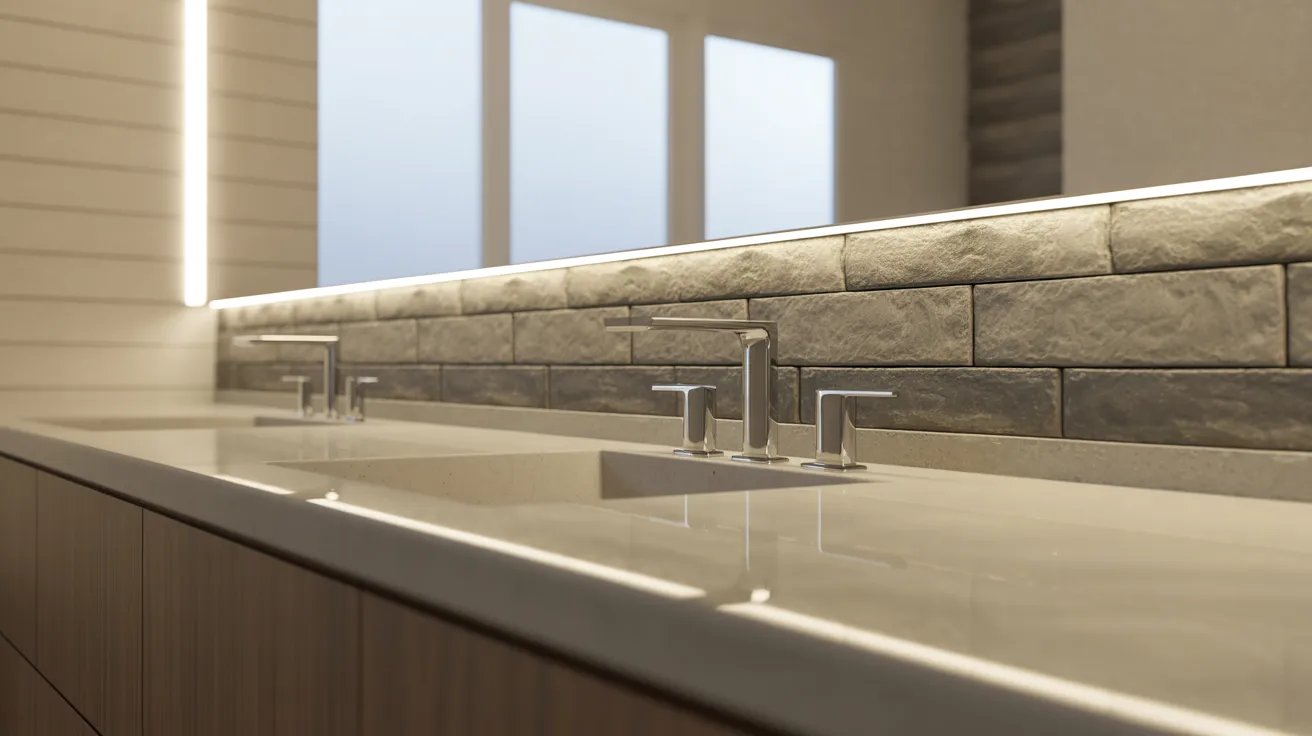
Design tastes have shifted. Homeowners and designers are moving away from the standard 4-inch strip and toward backsplash treatments that make a stronger visual statement.
Full Slab Backsplashes
A full stone slab running from the countertop to the mirror or ceiling is one of the most popular looks in contemporary bathroom design.
It creates a seamless surface that feels premium and is easy to maintain. No grout lines means fewer places for moisture to collect. Natural marble, quartz, and sintered stone are the top choices.
Tile Feature Backsplashes
Mosaic, zellige, and vertically stacked rectangular tiles are showing up frequently in modern renovations.
These designs treat the backsplash as a focal point rather than a background element. They work especially well in smaller bathrooms where one strong detail elevates the whole space.
Floating Vanity Designs
Floating vanities are increasingly paired with taller backsplash panels to maintain visual balance.
Because the vanity doesn’t touch the floor, the eye travels freely up the wall. Modern bathroom backsplash height choices in these setups typically start at 8 inches and often go full height.
How to Choose the Right Bathroom Backsplash Height
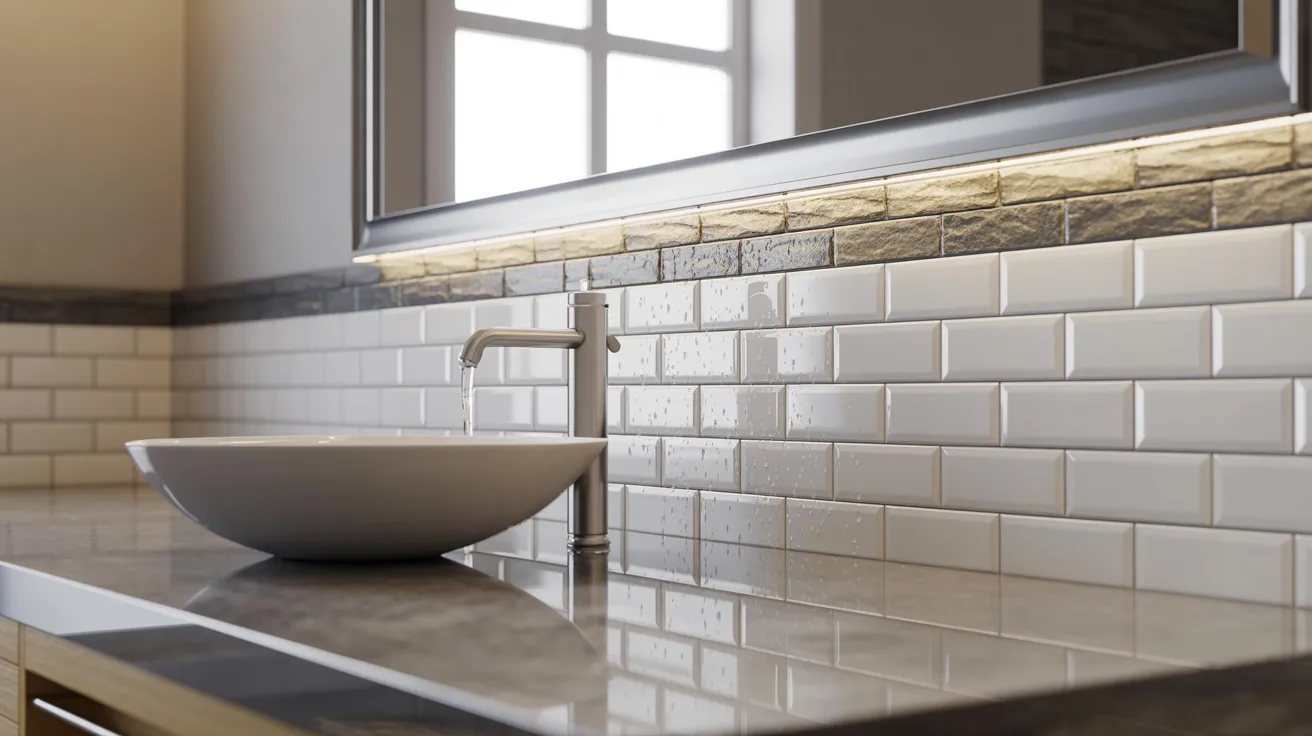
Start with how the sink is used. A guest bathroom needs far less coverage than a main family bathroom seeing heavy daily use.
Think about your fixtures. Vessel sinks and tall taps throw water higher up the wall. Both call for more height than the standard 4 inches.
Match the height to other vertical elements in the room. If your mirror sits close to the counter, a very tall backsplash may feel cramped. More wall space means going higher looks proportionate and intentional.
Factor in budget. Taller backsplashes need more material and installation time. Going from 4 inches to full height is a real cost difference, especially with premium tile or stone.
Materials That Affect Backsplash Height Choices
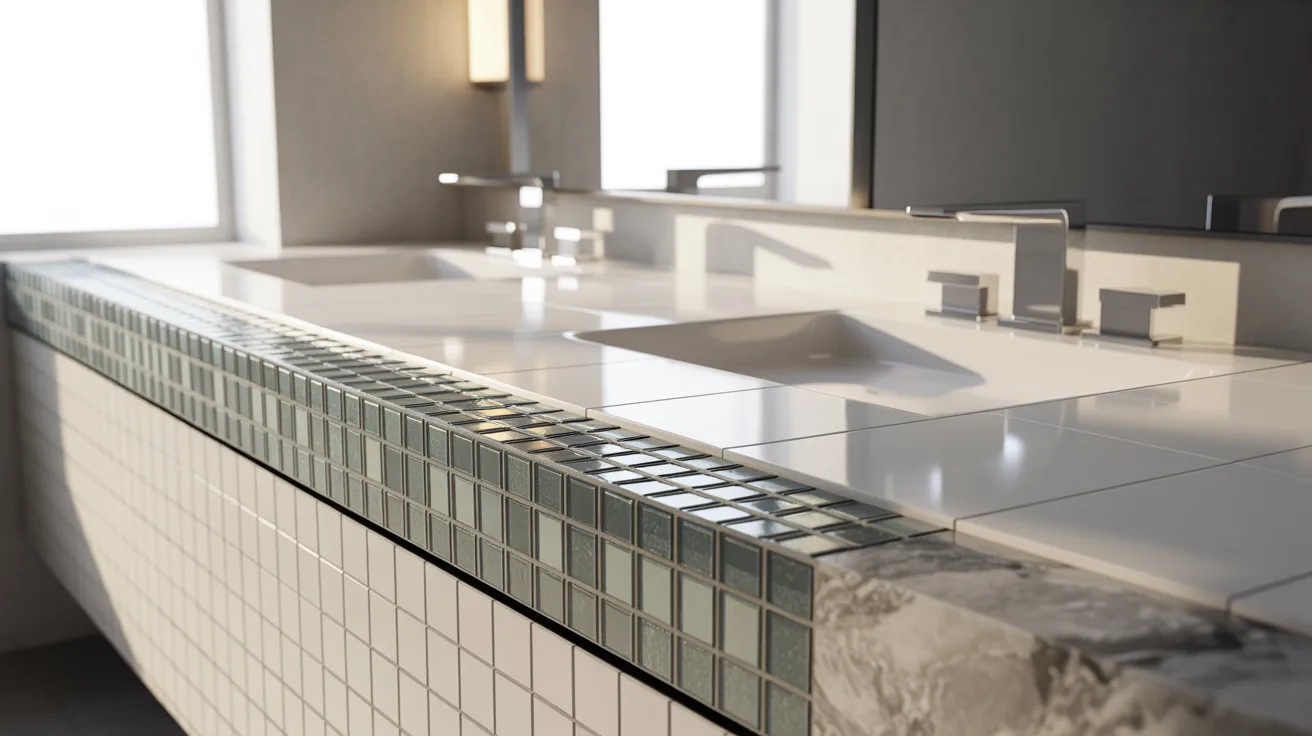
The material you choose directly affects how high your backsplash should go. Some materials suit taller installations far better than others, both practically and visually.
- Ceramic tile is affordable and versatile, most commonly used for standard 4 to 6-inch applications
- Porcelain tile is more durable and water-resistant, a strong choice for taller backsplashes in high-use bathrooms
- Natural stone like marble or travertine looks best with more wall space, suiting 8-inch or full height treatments
- Glass tile works well in the 6 to 8-inch range where it catches light without overwhelming the space
- Stone slab works almost exclusively as a full height treatment since its appeal comes from the uninterrupted surface
The heavier or more textured the material, the more it benefits from additional height. Confining a beautiful stone to a 4-inch strip rarely does it justice.
Bathroom Backsplash Height Design Tips
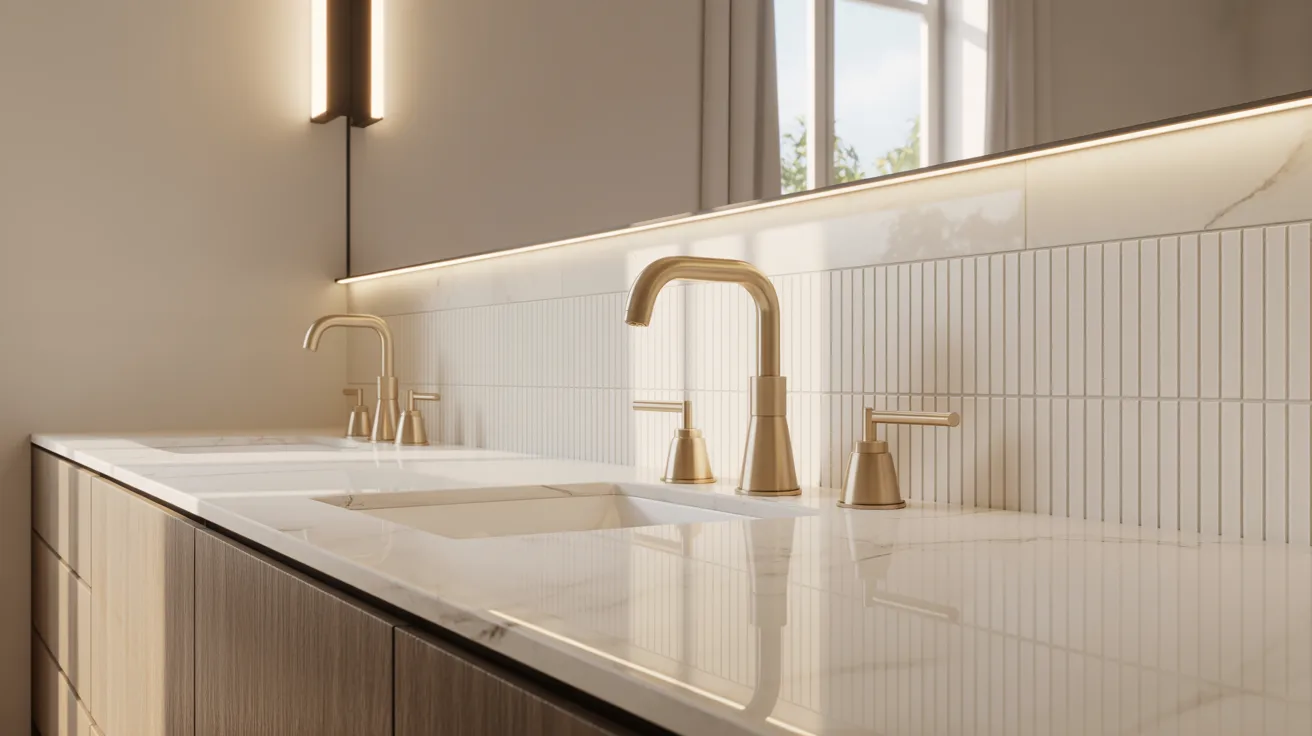
Small planning decisions make a big difference to how the finished space looks and functions. These tips help you get it right the first time.
- Match backsplash height to your mirror or cabinet bottom edge for a clean, deliberate finish
- Use larger format tiles for taller backsplashes to reduce grout lines and keep the look uncluttered
- Keep grout colour close to tile colour in full height designs for a seamless appearance
- Extend the backsplash slightly past the vanity edges for better side wall protection
- In narrow bathrooms, a tall backsplash in a light colour makes the space feel bigger and taller
- Always seal natural stone and grout thoroughly, especially at the counter join where water pools most
Make backsplash decisions alongside your mirror, lighting, and cabinet choices, not after them. Getting all four working together is what separates a good bathroom from a great one.
Bathroom Backsplash Height vs Kitchen Backsplash Height
Both protect walls from water and splatter, but typical height ranges differ because each space is used differently.
|
Feature |
Bathroom Backsplash |
Kitchen Backsplash |
|
Standard height |
4 inches |
15 to 18 inches |
|
Typical range |
4 to 8 inches |
15 inches to full wall |
|
Full height option |
To mirror or ceiling |
To upper cabinets or ceiling |
|
Primary purpose |
Water splash protection |
Cooking splatter and moisture |
|
Common material |
Ceramic, porcelain, stone |
Ceramic, glass, subway tile |
|
Design trend |
Full slab or feature tile |
Full wall tile or grout-free slab |
Kitchen backsplashes are taller by default because cooking creates more mess across a wider area.
Bathroom backsplashes are more contained but are increasingly being given the same design attention.
Final Thoughts
Get this decision right and you won’t think about your backsplash again for decades.
Get it wrong and you’ll be dealing with water damage, mould, and a renovation you didn’t plan for.
The height you choose sets the tone for the entire vanity wall. So don’t just default to whatever comes with the vanity.
Pick what suits your bathroom. Then make it look intentional.
What’s your backsplash situation right now? Planning a new one or fixing an old mistake? Tell me in the comments.
And share this with anyone mid-renovation right now.
Frequently Asked Questions
What Is the Standard Bathroom Backsplash Height?
The standard bathroom backsplash height is 4 inches, especially in prefabricated vanity countertops. It covers the area most likely to get wet during everyday sink use.
What Is the Typical Bathroom Backsplash Height in Modern Homes?
The typical bathroom backsplash height ranges from 4 to 8 inches, though modern designs often extend all the way to the mirror or ceiling.
Can Bathroom Backsplash Be Taller Than 4 Inches?
Yes. Many homeowners choose 6 to 8 inches or full height for better water protection and a stronger design impact behind the vanity.
What Is the Best Backsplash Height for a Modern Bathroom?
A modern bathroom backsplash height often extends 6 inches to full wall height, particularly with large format tile or continuous stone slab designs.
Do All Bathroom Vanities Need a Backsplash?
No, but most benefit from one. Without it, walls are exposed to regular moisture that leads to mould, damage, and paint deterioration over time.


