
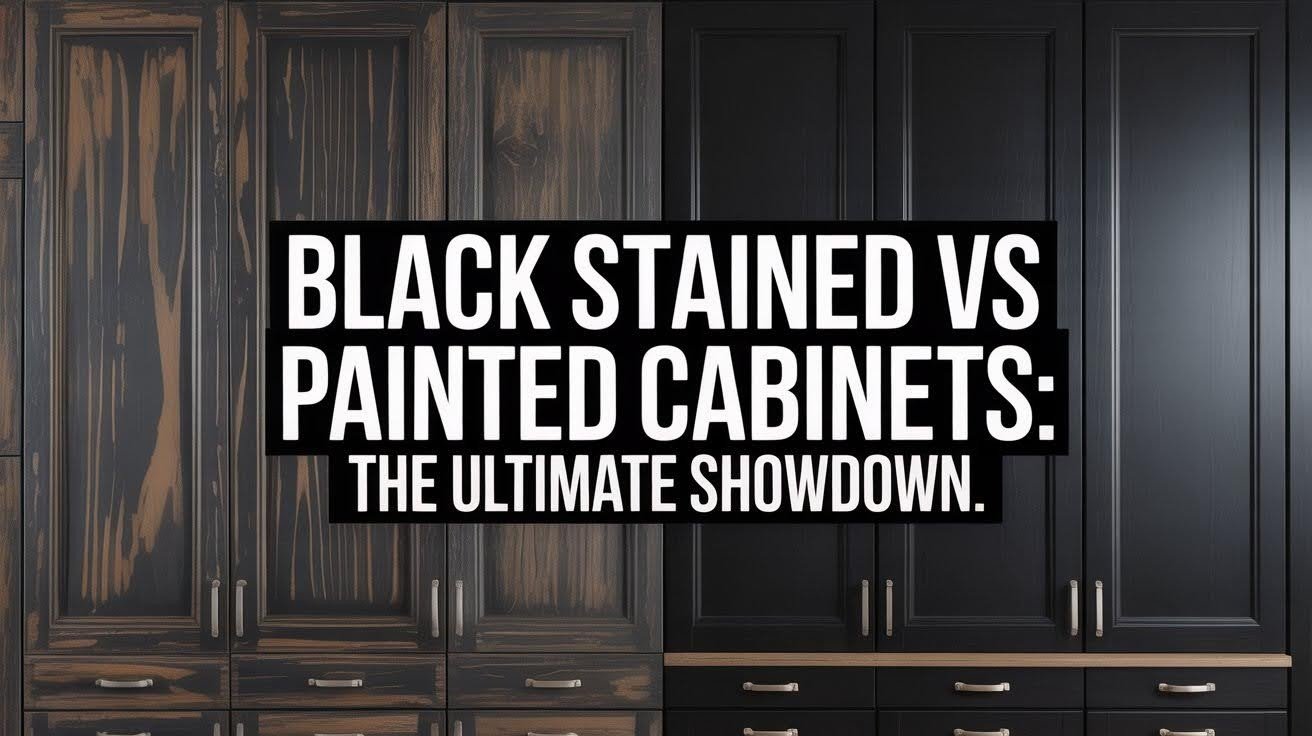
Black cabinets have become increasingly popular in modern kitchen design, offering a bold and sophisticated aesthetic that complements both contemporary and traditional styles.
However, achieving the perfect black finish involves a crucial decision: choosing between black stain and black paint.
This choice significantly impacts not only the visual appeal of your kitchen but also the durability, maintenance requirements, and overall character of your cabinetry.
In this comprehensive guide, we’ll examine the key differences between these two finishing options.
You’ll learn about the advantages and disadvantages of each approach, compare their visual and practical qualities, understand maintenance requirements, and gain valuable insights to help you make an informed decision for your kitchen renovation project.
|
Feature |
Black Stained Cabinets |
Black Painted Cabinets |
|
Finish Type |
Translucent, shows wood grain |
Opaque, hides wood grain |
|
Material Used |
Solid wood (oak, maple, walnut) |
MDF, birch, maple |
|
Cost |
~10–15% less than paint |
Typically higher due to labor |
|
Look |
Warm, organic, textured |
Sleek, uniform, dramatic |
|
Durability |
Hides wear better; grain conceals flaws |
More prone to visible chips and cracks |
|
Maintenance |
Easy to maintain, hides dust |
Shows fingerprints and smudges easily |
|
Best For |
Traditional or rustic designs |
Modern, minimalist, statement kitchens |
Understanding the Difference Between Black Stained and Painted Cabinets
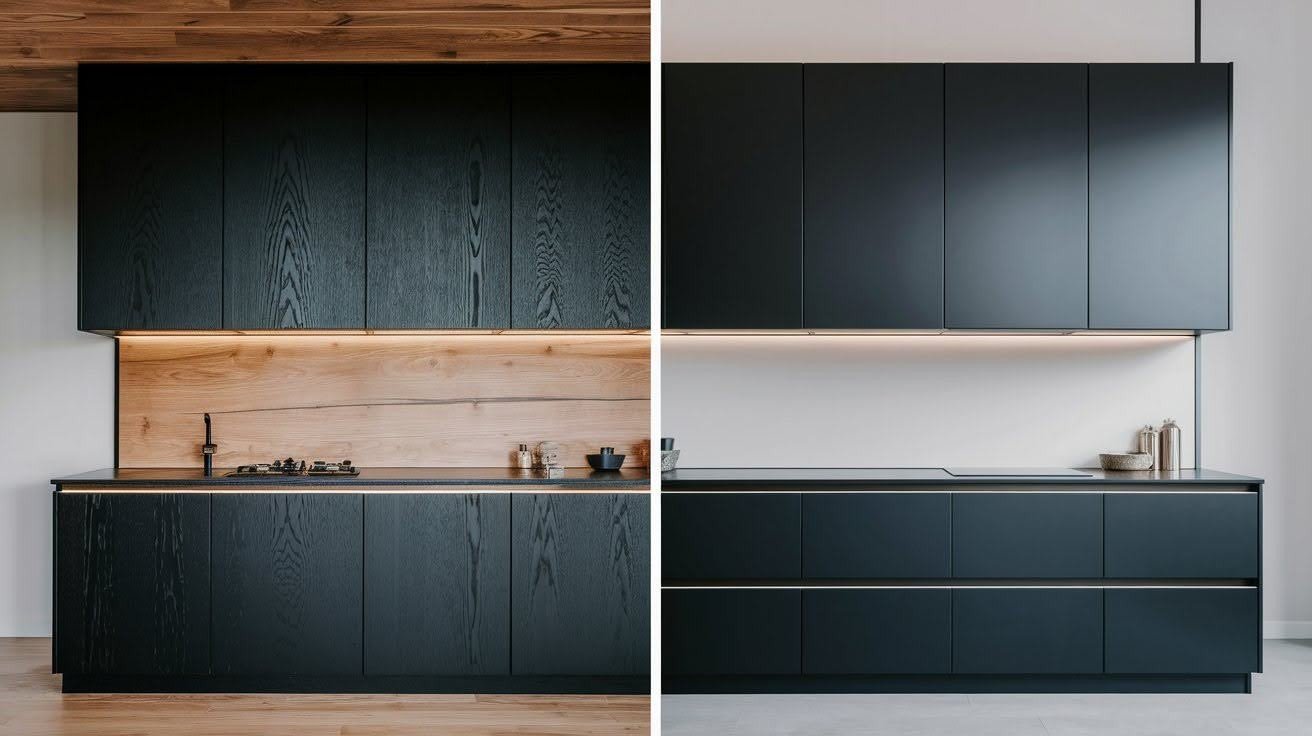
Black stained cabinets show wood grain for natural depth, while painted cabinets provide smooth, uniform coverage for modern aesthetics.
Black Stained Cabinets: Organic Depth and Texture
Black stained cabinets preserve the natural character of wood while adding dramatic color.
The staining process penetrates the wood fibers, allowing the grain patterns and texture to remain visible beneath the dark finish.
This creates a rich, dimensional appearance that feels authentic and warm. The final result varies slightly depending on the wood species used, oak will show pronounced grain lines, while maple offers a subtler texture.
This variation adds visual interest and prevents the monotonous look that can sometimes occur with solid colors.
Black Painted Cabinets: Bold, Sleek, and Uniform
Black painted cabinets provide a completely different aesthetic approach. The paint creates a solid, opaque layer that fully covers the wood grain, resulting in a smooth, uniform surface.
This finish offers consistent color throughout all cabinet surfaces, making it perfect for contemporary, minimalist, or glam kitchen designs.
The clean lines and uninterrupted surfaces create a sleek, modern appearance that works particularly well in spaces where you want the focus on form rather than natural materials.
Visual Appeal and Design Flexibility
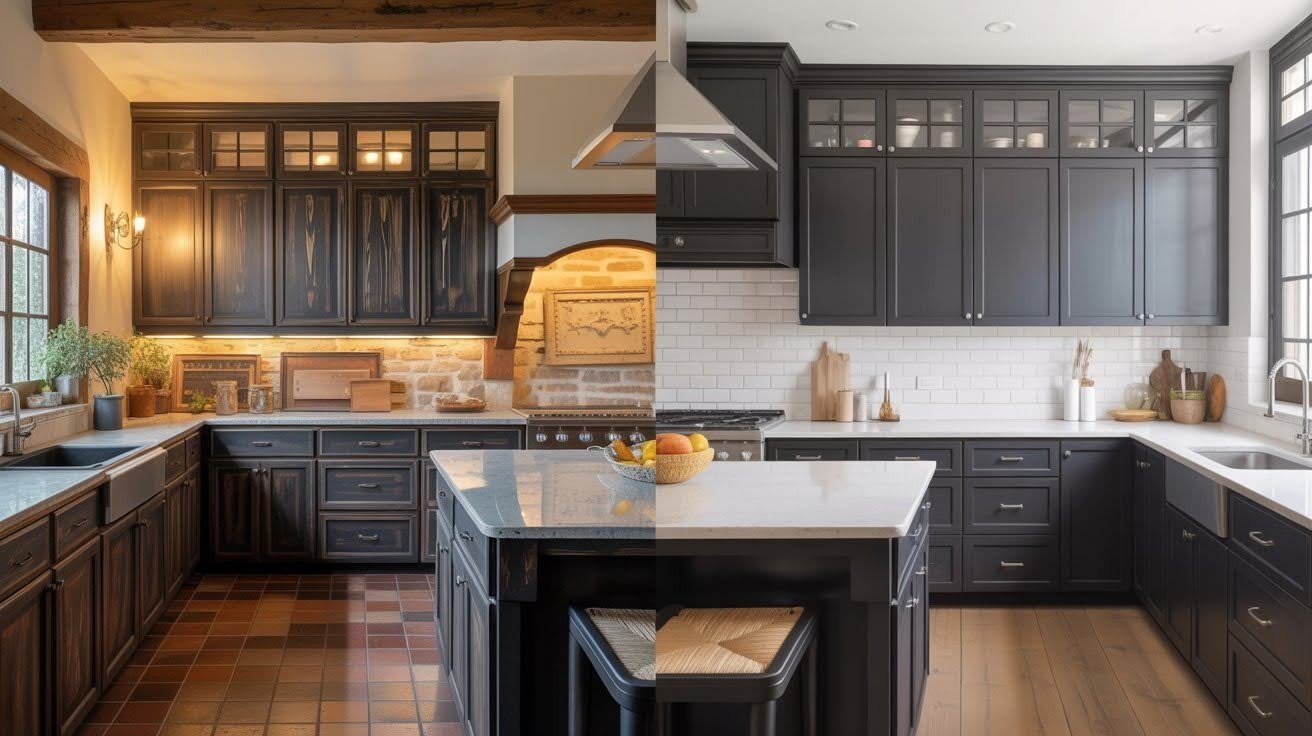
Black stained cabinets offer rustic, natural appeal while painted versions provide bold, modern aesthetics for different kitchen design styles.
Aesthetic Vibe
The visual impact of black stained versus painted cabinets creates distinctly different atmospheres in your kitchen.
Stained cabinets bring a rustic, natural, and earthy feel to the space. The visible wood grain adds warmth and creates a connection to organic materials that feels inviting and comfortable.
This finish maintains the authenticity of real wood while providing the dramatic effect of dark color.
In contrast, painted cabinets offer a bold, modern, and high-contrast appearance.
The solid black surface creates striking visual statements and works particularly well in spaces where you want clean lines and contemporary appeal.
The uniform finish provides a sophisticated backdrop that can make other design elements stand out more prominently.
Matching Your Kitchen Style
Black stained cabinets work exceptionally well with transitional, farmhouse, or Scandinavian design themes.
The natural wood texture complements these styles’ emphasis on authentic materials and comfortable living spaces.
The organic quality of stained wood fits seamlessly with exposed beams, natural stone countertops, and other rustic elements.
Black painted cabinets excel in contemporary, minimalist, or luxe kitchen designs. The smooth, consistent surface aligns perfectly with modern aesthetics that prioritize clean geometry and uncluttered spaces.
This finish pairs beautifully with sleek hardware, quartz countertops, and stainless steel appliances.
Which One Lasts Longer Over Time?
Fading and Color Change
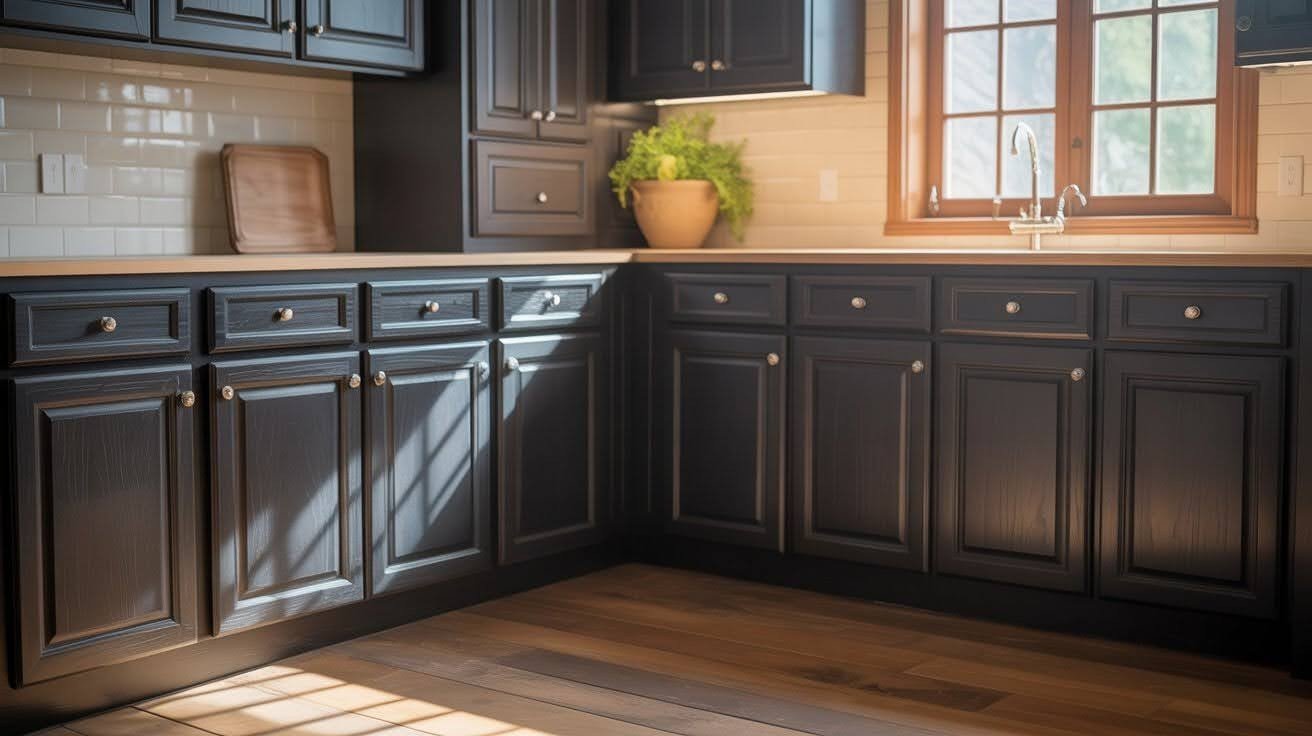
Both black stained and painted cabinets face challenges from prolonged exposure to sunlight and UV rays.
Over time, direct sunlight can cause gradual fading in both finishes, though the effects manifest differently.
Stained cabinets may experience subtle shifts in their underlying wood tones, but the natural grain patterns help mask these changes, making them less noticeable to the casual observer.
Painted surfaces tend to show dulling more noticeably as they age. The uniform black finish lacks the natural variation that helps camouflage color changes, making any fading or loss of luster more apparent.
This is particularly true for cabinets positioned near windows or in areas with significant natural light exposure throughout the day.
Touch-Up and Repairs
When it comes to maintenance and repair work, stained cabinets offer distinct advantages.
The natural wood grain and varied tones make it easier to blend touch-up stain into the existing finish.
Small repairs often become virtually invisible once the stain penetrates and settles into the wood.
Painted cabinets present more challenges for touch-up work. Achieving an exact shade match can be difficult unless you have the original paint or a professional touch-up kit.
Even with matching paint, the repaired area may appear slightly different due to variations in application technique, sheen level, or the age of the surrounding finish.
Which One Should You Choose?
Compare your priorities: choose black stain for natural warmth and low maintenance, or black paint for bold, modern aesthetics.
Choose Black Stain If You Want…
- Natural texture and warmth in your kitchen design
- Authentic wood character with dramatic dark color impact
- Visual interest and depth from visible grain patterns
- Low maintenance finish that conceals everyday wear
- Cabinets that age gracefully with subtle, lived-in quality
- Perfect fit for traditional or casual kitchen settings
Choose Black Paint If You Want…
- Sleek, bold aesthetics with striking visual impact
- Smooth, consistent surface for contemporary appeal
- Clean, uniform finish that serves as a statement feature
- Strong contrast against lighter countertops and backsplashes
- Cabinetry that acts as a dramatic focal point
- Modern kitchen design with clean lines and uniform appearance
Style Tip: Mix Both with Two-Tone Cabinet Designs
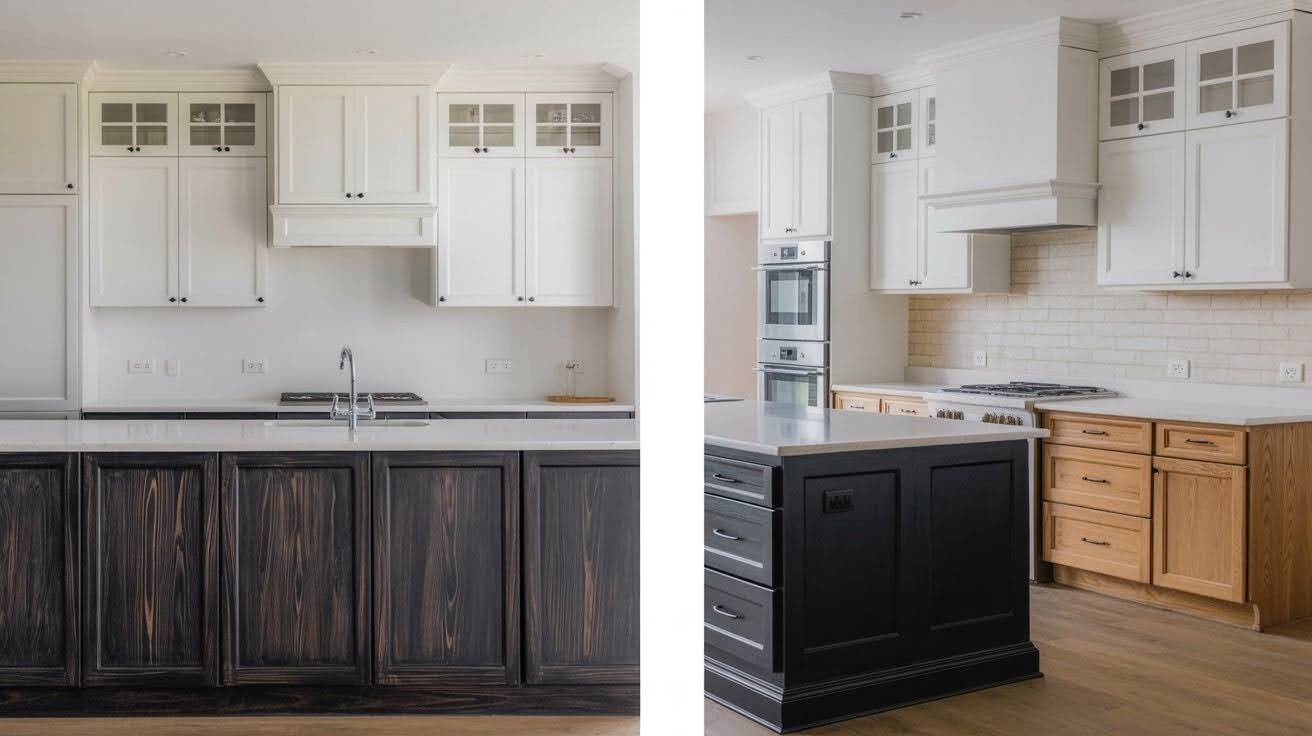
Creative Combos to Try
Two-tone cabinet designs offer an innovative way to incorporate both black stained and painted finishes in your kitchen.
This approach allows you to enjoy the benefits of each finish type while creating visual interest and depth throughout the space.
Consider these effective combinations:
- Black stained lower cabinets with painted white uppers create a grounded, sophisticated look. The natural wood texture on the base cabinets adds warmth at eye level, while the crisp white painted uppers keep the space feeling open and bright. This combination works particularly well in kitchens with high ceilings or abundant natural light.
- Black painted island with natural oak base cabinets offers another striking option. The bold, uniform black island serves as a dramatic centerpiece, while the natural oak perimeter cabinets provide warmth and texture. This combination allows the island to function as both a workspace and a statement piece, creating clear visual zones within the kitchen layout.
- These two-tone approaches let you experiment with different textures and finishes while maintaining a cohesive overall design that feels intentional and well-planned.
Conclusion
There’s no universal winner in the black stained versus painted cabinet debate, each option serves different style and lifestyle preferences.
Your decision should align with what matters most to you: the desired look, budget considerations, upkeep requirements, and overall vibe you want to create in your kitchen.
Black stained cabinets offer natural warmth, easier maintenance, and timeless appeal, while painted options provide bold, contemporary aesthetics with clean lines.
Consider your daily habits, design preferences, and long-term goals when making this choice.
Before finalizing your decision, consult with a kitchen designer who can help you visualize both finishes in your specific space.
They can provide samples, lighting considerations, and professional insights that ensure your choice complements your home’s architecture and your personal style perfectly.
Frequently Asked Questions
Which is more affordable – black stained or painted cabinets?
Black stained cabinets typically cost 10-15% less than painted options due to simpler application processes. However, painted cabinets may require higher-quality materials and more labor-intensive preparation work.
Do black stained cabinets show scratches and wear more than painted ones?
Black stained cabinets actually hide scratches and wear better because the natural wood grain helps camouflage imperfections. Painted cabinets show chips and scratches more prominently, especially on edges and high-contact areas.
Can I change my mind and switch from stained to painted cabinets later?
Yes, you can paint over stained cabinets, but it requires proper preparation including sanding and priming. Converting painted cabinets back to stained requires complete paint removal, which is more labor-intensive and costly.
Which finish works better in small kitchens?
Both finishes work well in small spaces, but painted cabinets may feel more cohesive due to their uniform appearance. Stained cabinets can add warmth and prevent the space from feeling too stark or cold.
How do I maintain black cabinets to keep them looking their best?
Clean both finishes with mild soap and water, avoiding harsh chemicals that can damage the surface. Stained cabinets need occasional conditioning, while painted cabinets may require touch-ups for chips and scratches.


