

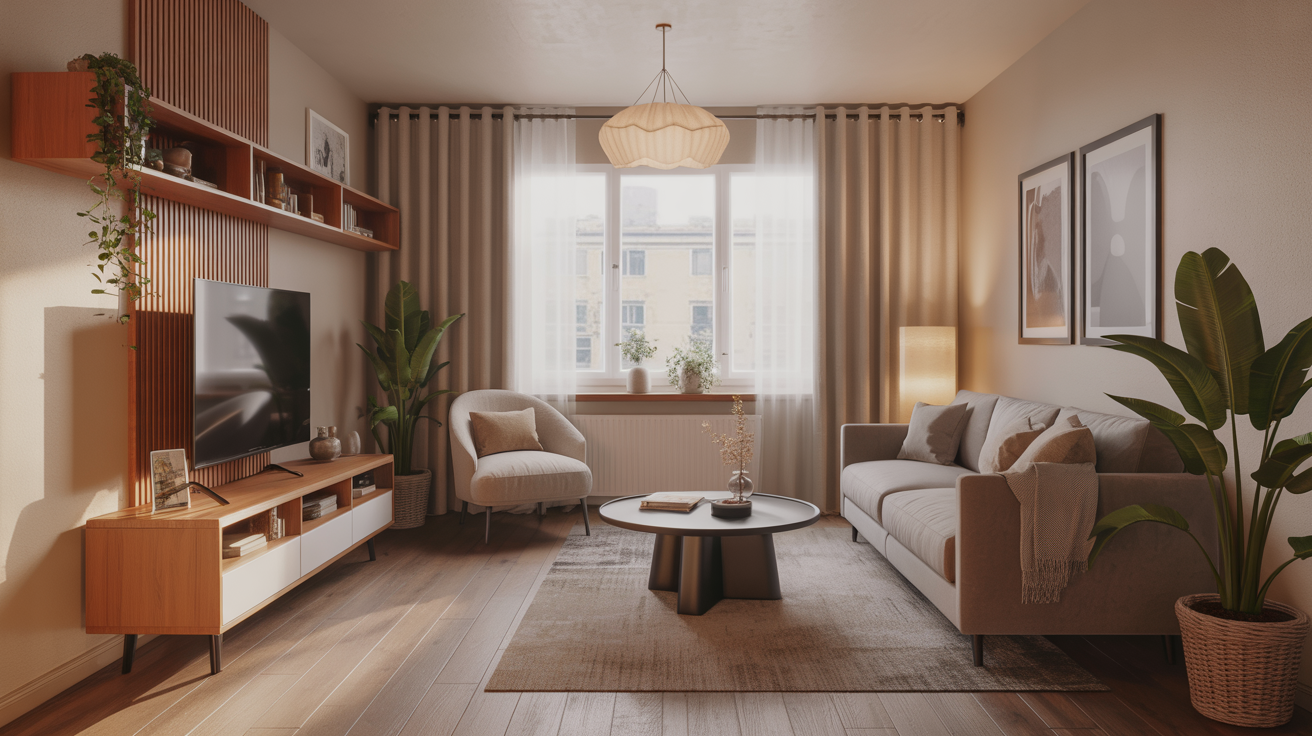
I used to think corner TV placement was just a last resort for awkward rooms. Boy, was I wrong. After rearranging my own living room three times, I finally tried putting the TV in the corner.
The difference was huge. Suddenly, I had more wall space, better traffic flow, and everyone could actually see the screen without craning their necks.
If you’re struggling with furniture arrangement or working with a tricky room shape, corner placement might be exactly what you need.
I’ll show you practical layouts that work in real homes, plus tips to make your space feel bigger and more functional.
Why Corner TV Placement Works in Living Rooms
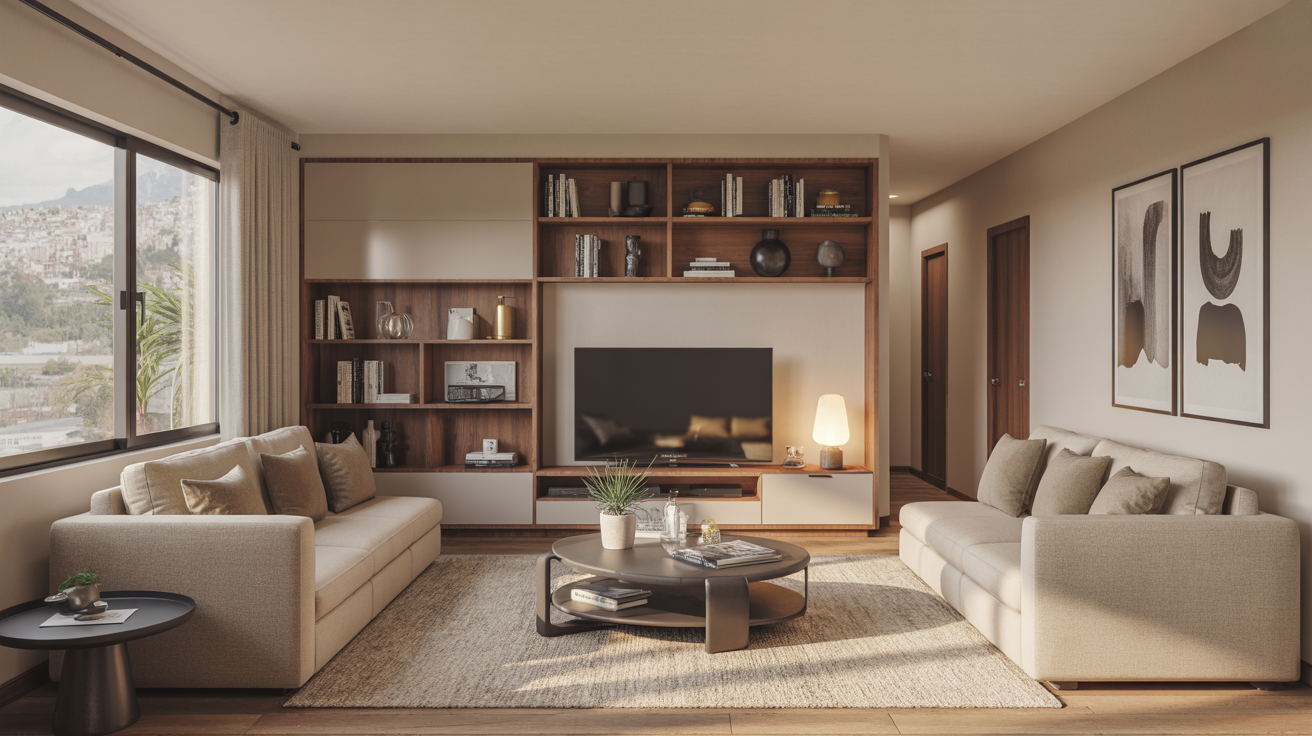
I’ve tested this in several rooms now, and the benefits keep surprising me. When you free up those long walls, you can actually arrange furniture in ways that make sense.
Here’s what makes corner placement so practical:
- You get more usable wall space for bookshelves, art, or other furniture
- Multiple seats face the screen without anyone getting stuck with a side view
- The room’s center stays open so you’re not constantly navigating around furniture
- Small or narrow rooms feel larger when the TV isn’t hogging a full wall
- You avoid the giant black rectangle dominating your main wall
- Traffic flow improves because you’re not blocking natural walkways
The setup creates a focal point without taking over the entire room. And honestly, it just makes more sense in most layouts I’ve tried.
Corner TV Living Room Layout Ideas
Let me walk you through nine setups I’ve seen work really well. Some suit small spaces, others work better in larger rooms. Pick what fits your situation.
Angled Sectional with Corner TV
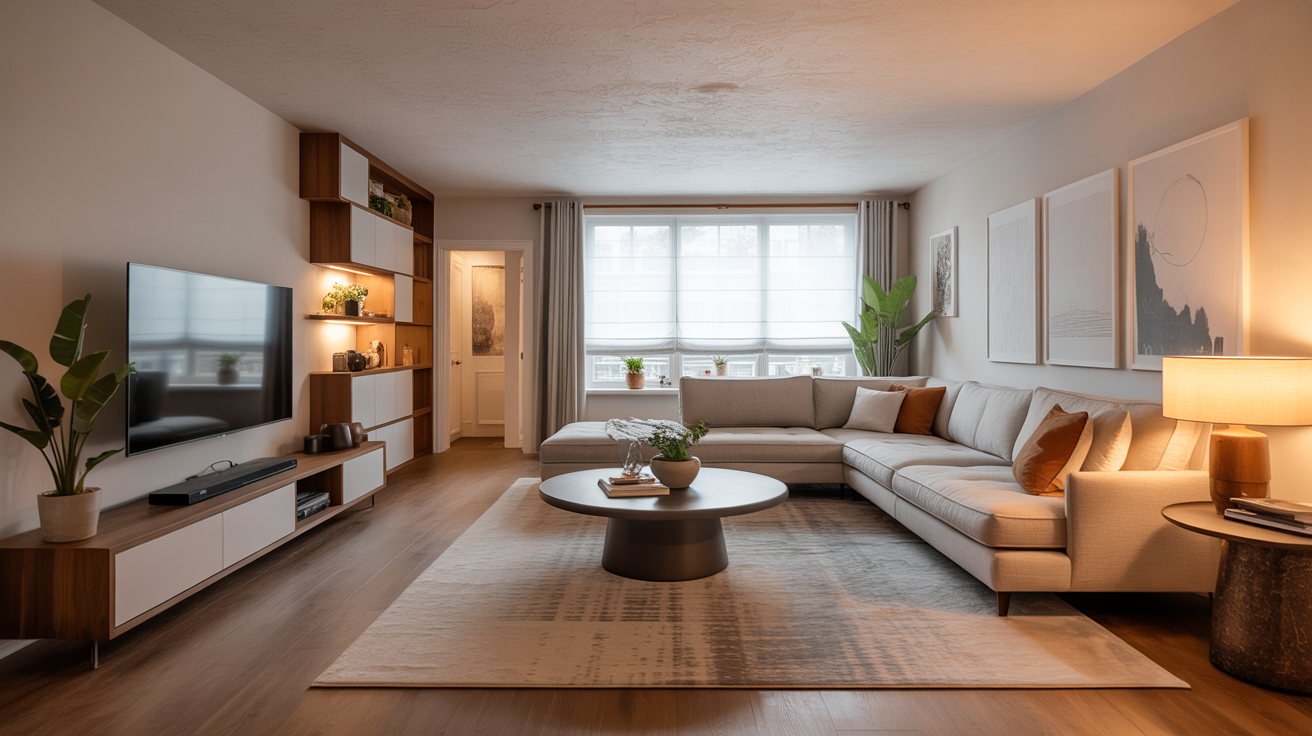
This is my favorite corner TV living room layout for square-ish rooms. Position your sectional so it curves toward the corner where your TV sits.
Everyone gets a good view, and the seating feels wrapped and cozy.
The beauty here is how much floor space you keep in the middle. No one trips over the coffee table trying to reach the couch.
Plus, the angle naturally directs attention to the screen without forcing an awkward neck position.
I’ve found this works best when your sectional is about 7 to 9 feet from the TV. Any closer feels cramped. Any farther, and you’re squinting at the screen.
Floating Furniture Layout
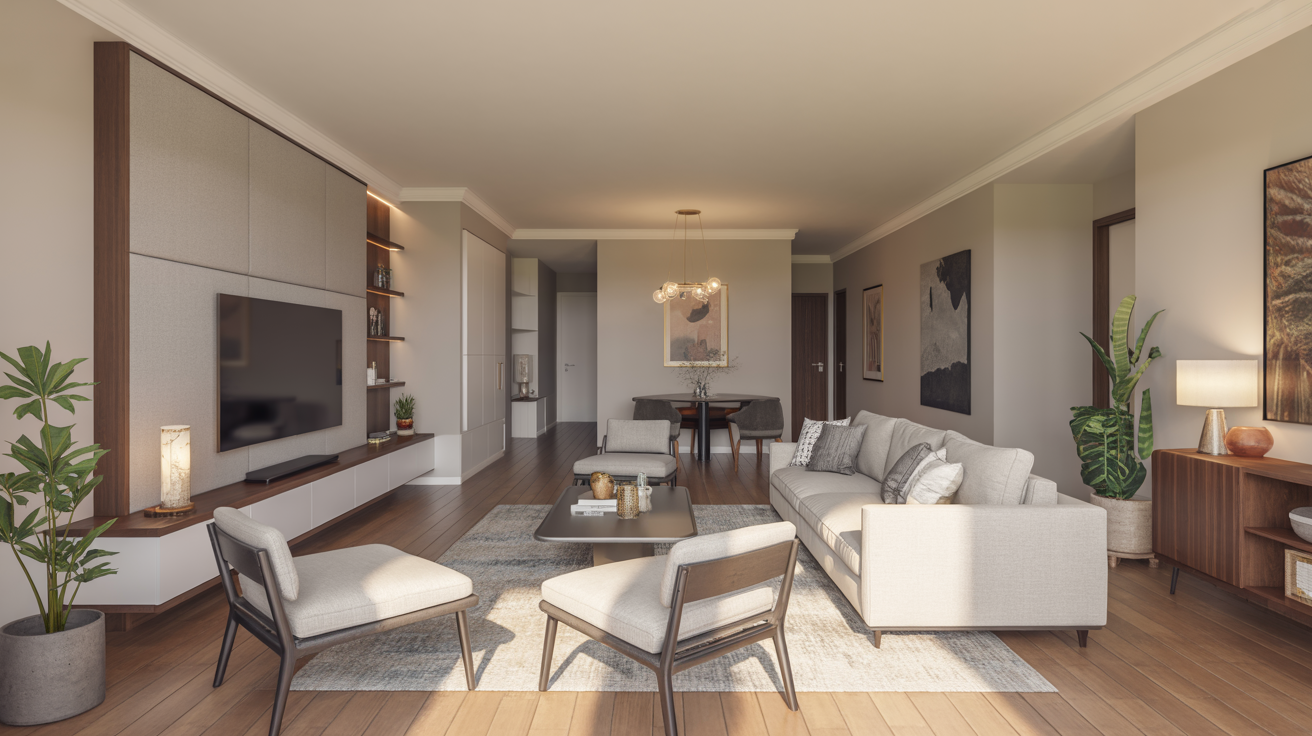
Pull your sofa away from the walls and float it facing the corner TV.
Add a couple chairs perpendicular to the sofa, and suddenly you’ve got a defined living zone that doesn’t block the room’s perimeter.
This corner TV living room layout is perfect when you have multiple doorways. The walkways around the edges stay clear, so people aren’t climbing over furniture to get through.
I use this setup in my own open-concept space, and guests always comment on how easy it is to move around.
The key is leaving at least two feet between furniture pieces and walls. That breathing room makes everything feel more spacious.
Small Space Studio Setup
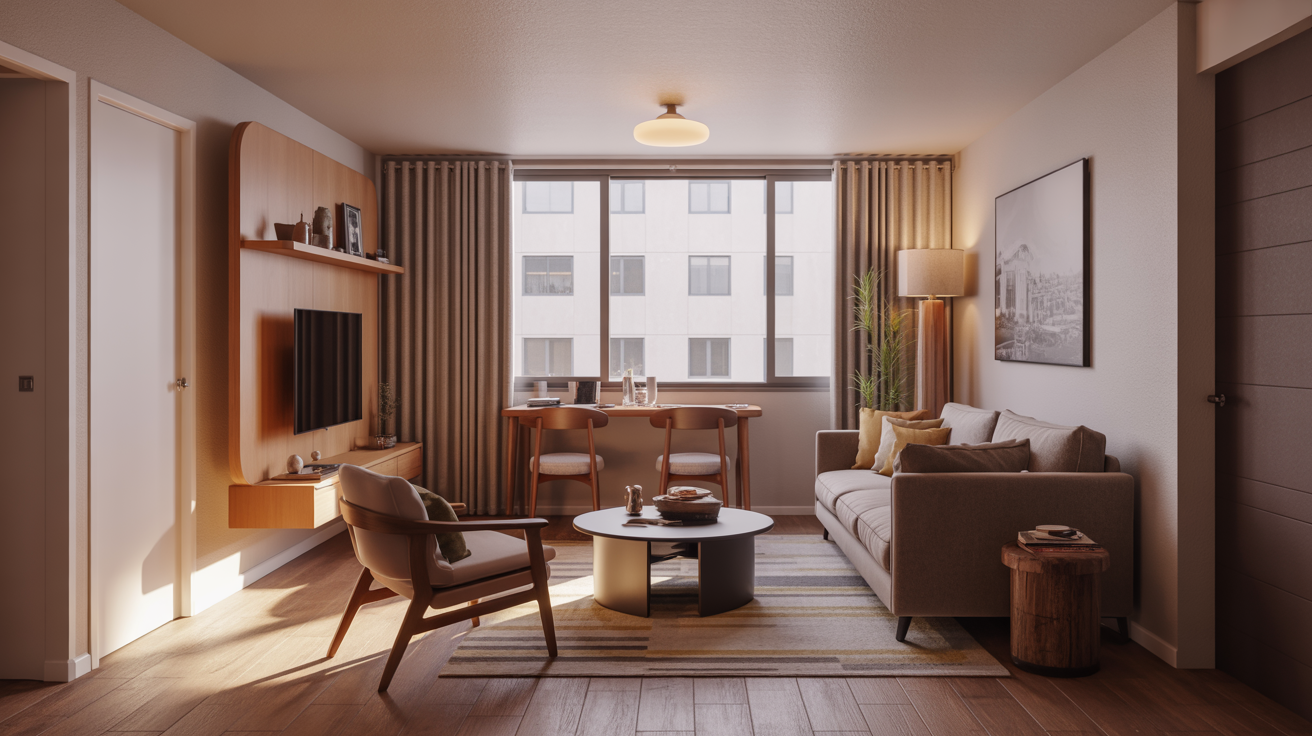
Got a tiny apartment? A compact sofa facing a corner TV can save you. Add one accent chair angled toward the screen, and you’ve got seating for three without cluttering the whole room.
I recommend a round coffee table here. Sharp corners become ankle bruisers in small spaces. And definitely mount that TV on the wall.
Every inch of floor space counts when you’re working with limited square footage.
This setup proves you don’t need a huge room to make corner placement work. I’ve helped friends arrange studios this way, and it always opens up more living area than they expected.
L-Shaped Seating Arrangement
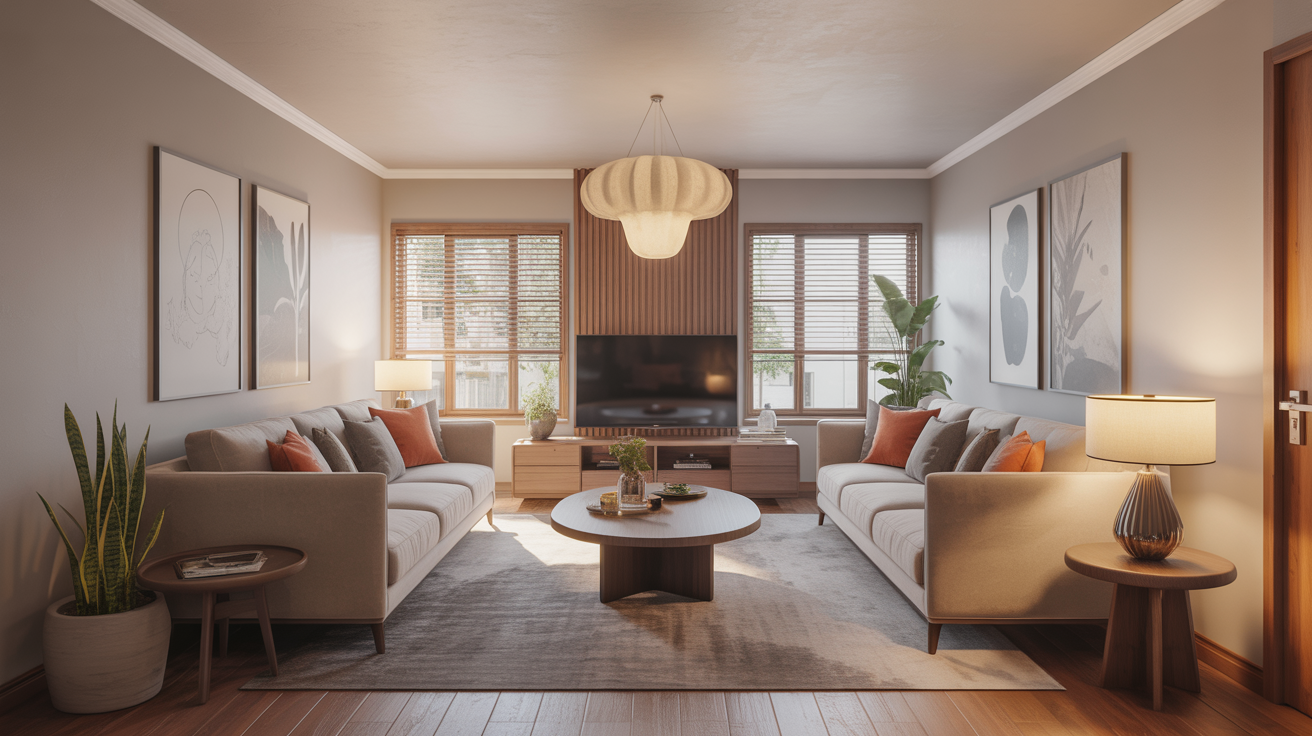
Put a loveseat and sofa forming an L-shape toward your corner TV. This corner TV living room layout handles both TV watching and conversation really well.
When you’re not watching something, the seating naturally faces inward for chatting.
The coffee table sits right in the center where everyone can reach it. I’ve found this arrangement works great in rectangular rooms where you want flexibility.
Some nights you’re binge-watching shows, other nights you’re hosting friends.
Position the longer sofa piece on your room’s longer wall. That balance just looks better and functions more smoothly.
Corner TV with Fireplace
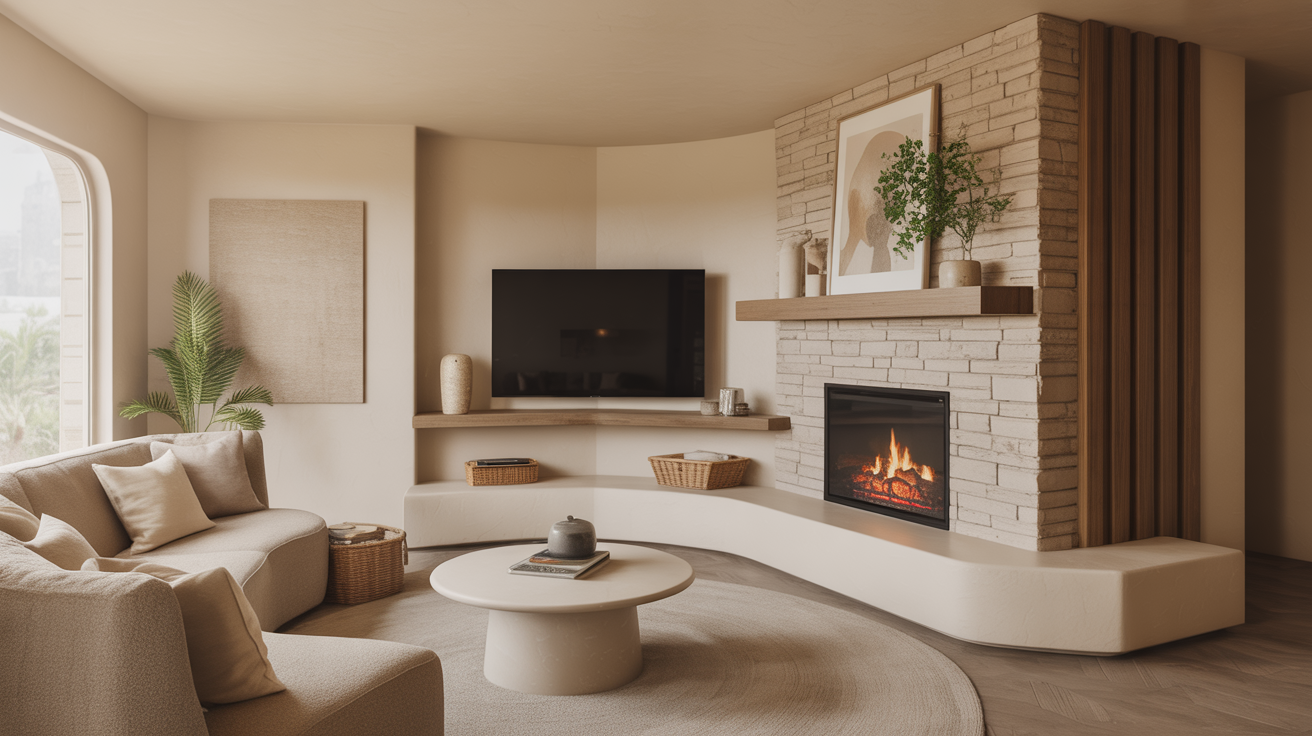
Balancing a corner TV with a fireplace takes some thought, but it’s doable.
If your fireplace sits on an adjacent wall, angle your seating so you can enjoy both features without constantly turning your head.
I usually place the TV and fireplace on walls that meet in the corner. Then arrange furniture in a slight curve so everything feels connected.
A floating shelf under the TV adds visual weight and helps it hold its own against the fireplace.
Just check your sight lines before committing. You want to see both features comfortably from your main seating spot.
Open Concept Corner Setup
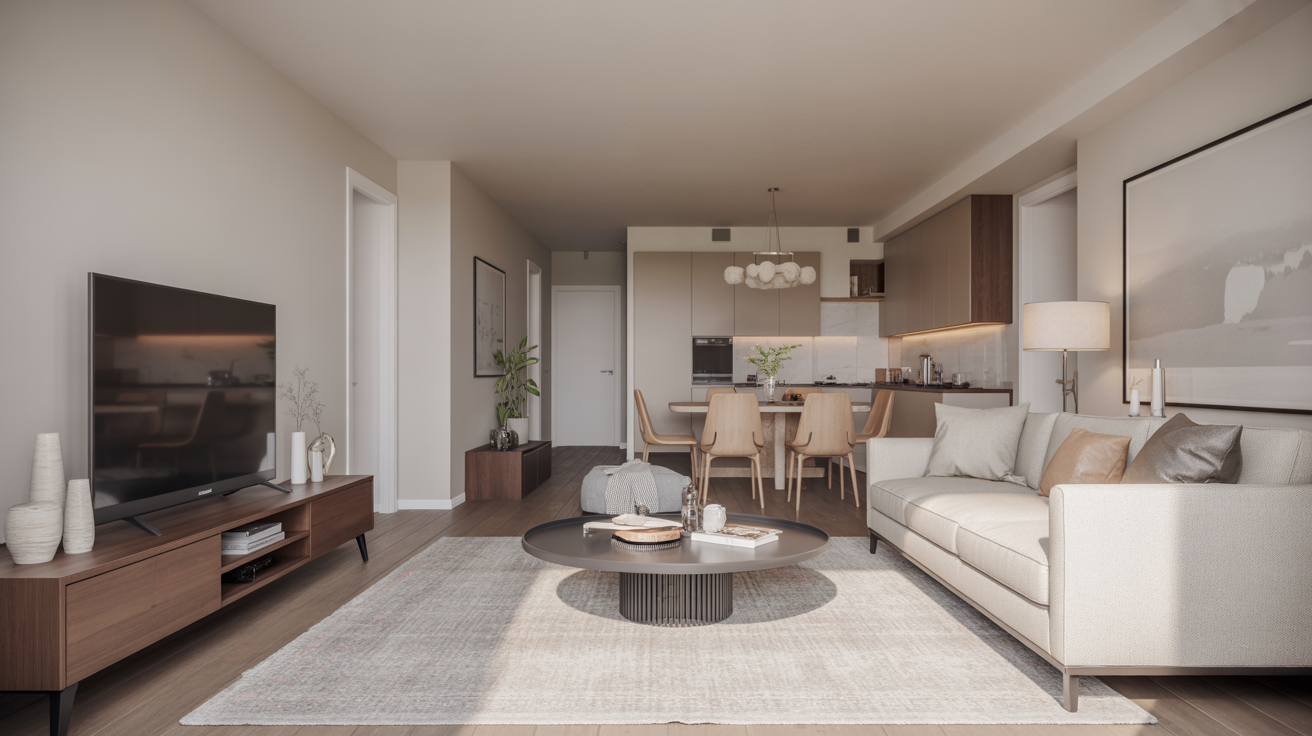
Use an area rug to define your living zone in an open floor plan. Position your sofa to separate the living space from your dining or kitchen area, with the corner TV facing into the living side.
This creates natural room division without walls. I’ve seen this corner TV living room layout work wonders in loft-style apartments where everything runs together.
The TV placement actually helps establish boundaries between different activity zones.
Make sure your rug extends at least a foot beyond your furniture on all sides. That anchors everything properly.
Symmetrical Corner Layout
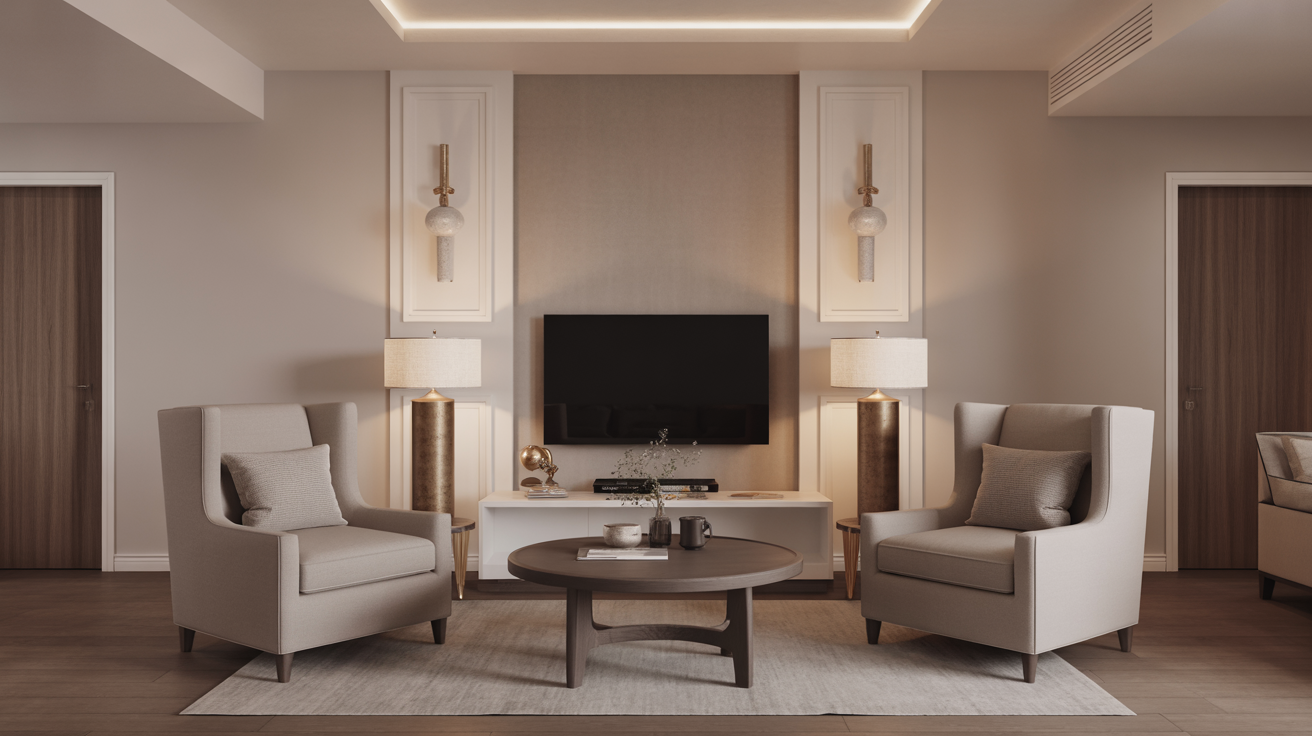
For a more formal look, try two identical chairs flanking your corner TV. Add a small sofa directly opposite, and put a round coffee table in the middle. The symmetry creates a traditional, put-together feeling.
This setup works when you want your living room to feel a bit more sophisticated. I’ve used this in smaller formal sitting rooms where balance matters more than casual comfort.
The round table softens all those angular lines from the furniture and corner placement.
Just keep your furniture scale consistent. Matching chair heights and similar visual weight across pieces makes the symmetry work.
Multi-Functional Corner Space
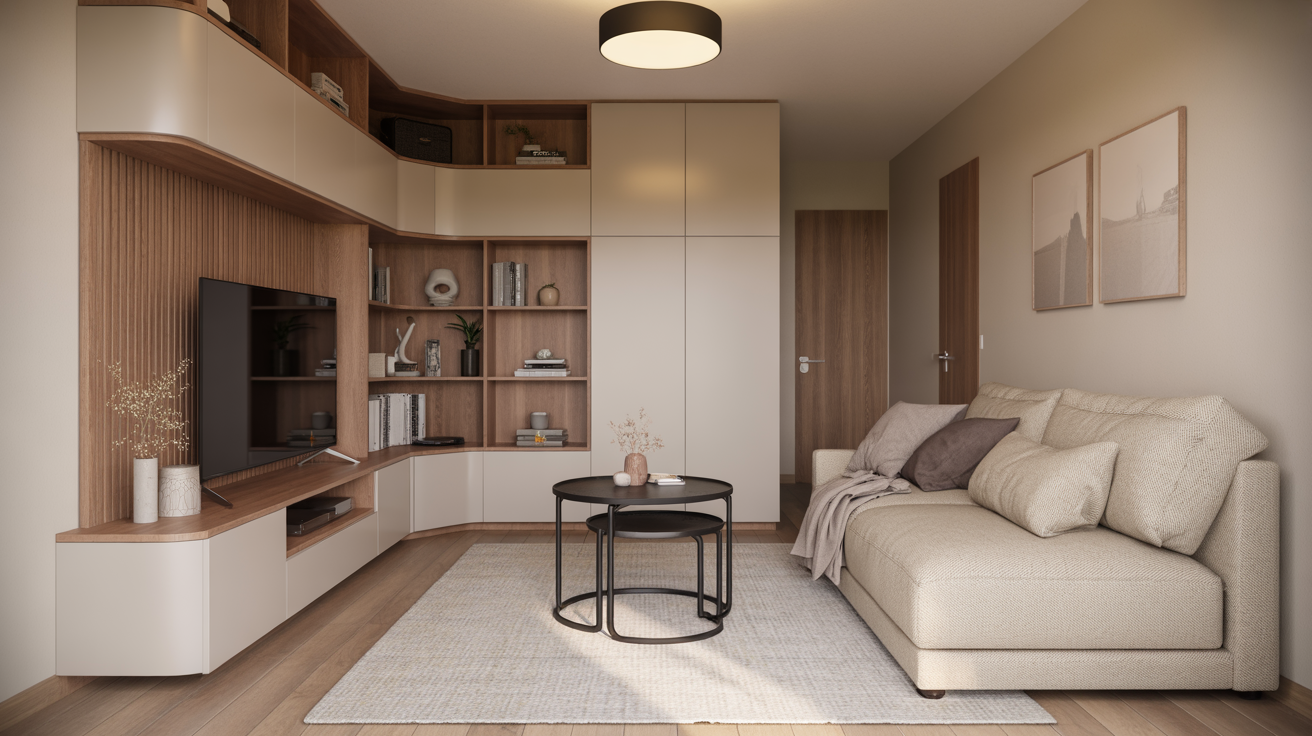
A corner TV unit with built-in storage handles double duty. Add a sofa with a sleeper function and some nesting tables, and you’ve got a guest room that doesn’t feel like a guest room.
I recommend this corner TV living room layout for small apartments or bonus rooms that need to serve multiple purposes.
During the day, it’s your normal living space. At night, pull out that sleeper sofa and you’re set.
The storage in your TV unit holds guest bedding, keeping everything tidy and accessible.
Cozy Reading Nook with Corner TV
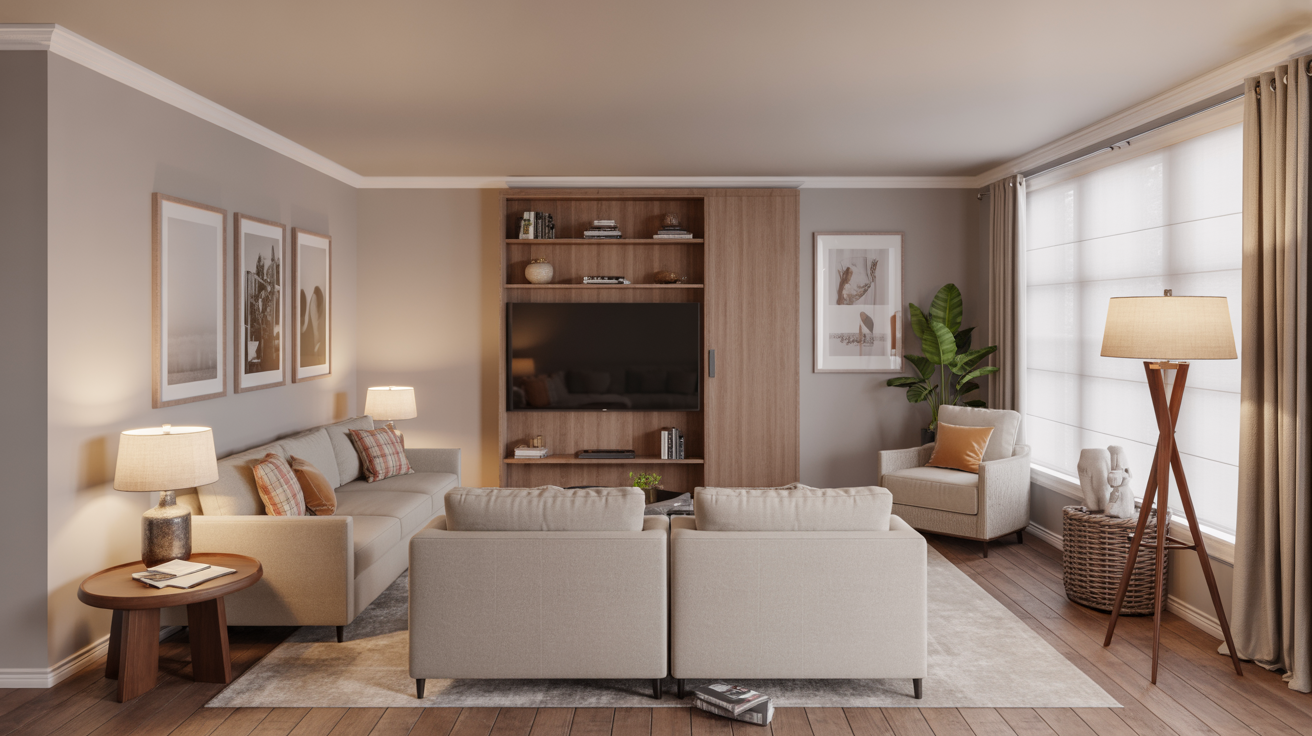
Your main seating faces the corner TV, but add a reading chair in the opposite corner with a good floor lamp. Now your room serves two purposes without feeling cluttered.
Some nights you want to watch TV. Other nights you want to curl up with a book. This layout lets you do both in the same space.
I’ve set up my own room this way, and I love having options depending on my mood.
The reading chair doesn’t need to face the TV at all. Point it toward a window or just angle it slightly away.
Tips for Arranging Furniture Around a Corner TV
After trying dozens of arrangements, I’ve learned a few things that make any corner TV living room layout work better. These aren’t rules, just helpful guidelines from real experience.
Keep these practical tips in mind:
- Leave at least 2 feet between furniture pieces for easy movement
- Choose rounded edges on tables and ottomans near walkways (trust me on this one)
- Pick the right rug size to anchor your space (6×8 feet for smaller rooms, 8×10 feet for larger ones)
- Sit 7 to 10 feet from your TV for comfortable viewing (measure from the corner)
- Never block windows or doorways with your furniture arrangement
- Use glass or transparent pieces like acrylic tables to keep sightlines open
- Mount your TV on the wall to free up floor space and improve viewing angles
- Add floating shelves under your TV for visual balance and extra storage
- Hide those cords with cable management systems or in-wall solutions
- Test every seat before finalizing your layout (seriously, sit in each spot and watch for a bit)
The distance rule matters more than you might think. Too close, and you’ll strain your eyes. Too far, and you miss details on screen.
Conclusion
A corner TV living room layout solves way more problems than I ever expected.
You get better furniture options, improved traffic flow, and a room that actually works with your life instead of against it.
Think about how people move through your space before you commit to a specific arrangement.
Small changes make a bigger difference than you’d think. Moving a sofa six inches or angling a chair differently can completely change how comfortable your room feels.
Try different setups before you decide. Your living room should work for you, not the other way around.
Frequently Asked Questions
What Size TV Works Best in a Corner Setup?
Match your TV size to your room dimensions and viewing distance. For most corner TV living room layouts, a 55 to 65 inch screen works well. Sit 7 to 10 feet away depending on screen size. Smaller rooms need smaller screens to avoid overwhelming the space.
Should I Mount My Corner TV or Use a Stand?
Mounting saves floor space and improves viewing angles in corners. Stands offer more flexibility if you move furniture often or rent your home. I prefer wall mounts because they free up room for storage underneath and look cleaner overall. Consider your wall structure before mounting.
How Do I Hide Cords with a Corner TV?
Use cord covers that run along your baseboards to the nearest outlet. In-wall cable management kits work best but require some installation. Cable raceways painted to match your walls basically disappear. I’ve also tucked cords behind furniture when possible for quick solutions.
Can I Put a Corner TV Above a Fireplace?
You can, but check the heat output first. Most manufacturers recommend keeping TVs away from direct heat sources. If your fireplace is gas or electric with lower heat, mounting above might work. The viewing angle gets awkward though. I’d place them on adjacent walls instead.
What’s the Ideal Distance Between Sofa and Corner TV?
Plan for 1.5 to 2.5 times your TV’s diagonal screen size. A 55 inch TV needs about 7 to 9 feet of distance. A 65 inch screen works best at 8 to 10 feet away. Sit in your proposed spot and see if it feels comfortable before finalizing the arrangement.
