

Is siding cost the first thing you check before starting an exterior project? Many homeowners face this exact question when comparing Hardie board vs vinyl siding cost.
Both options protect your home, but the price, installation effort, upkeep, and lifespan can vary more than expected.
Over the years, while reviewing different siding projects and homeowner choices, I have seen how the right comparison helps avoid expensive mistakes later.
In this guide, you will learn how these two siding materials differ in cost, durability, maintenance, and long-term value so you can make a practical decision for your home and budget.
Let’s start by understanding what each siding material actually is.
Understanding Hardie Board and Vinyl Siding
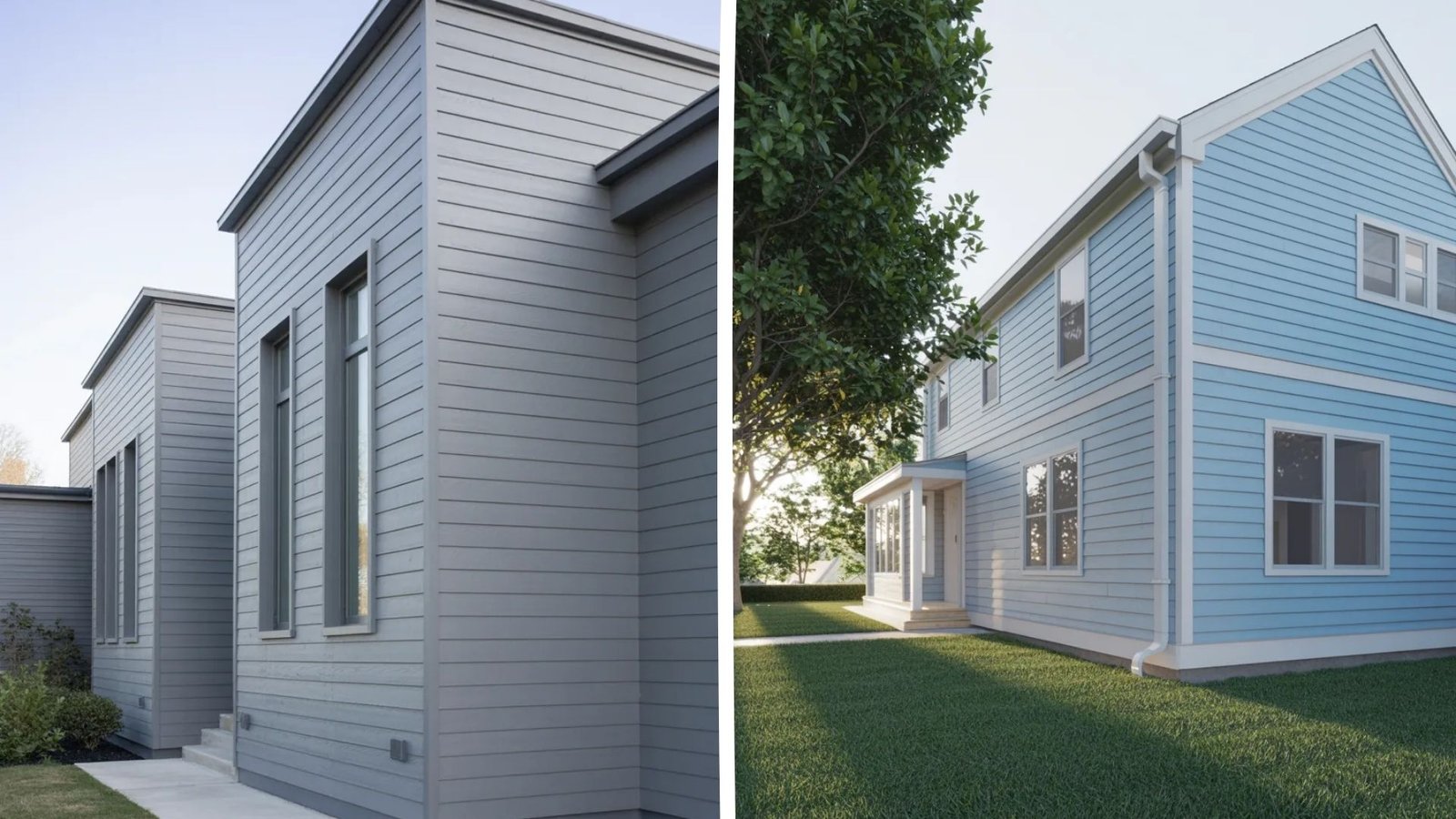
Before comparing prices, it helps to know what these siding materials actually are. Both options protect the outer walls of a home, but they differ in material, strength, and upkeep.
What Is Hardie Board Siding?
Hardie board siding is a type of fiber cement siding made from cement, sand, and cellulose fibers. This mix creates strong and long-lasting panels used on many modern homes.
It has a solid structure that resists fire, pests, and moisture better than many siding materials. The surface can look similar to painted wood planks. With proper care, Hardie board siding usually lasts 30 to 50 years or even longer.
What Is Vinyl Siding?
Vinyl siding is made from PVC plastic and is widely used on residential homes. It comes in long panels that lock together and cover the exterior walls of a house.
Many homeowners choose vinyl because it is lightweight and simple to install. It also needs very little upkeep beyond occasional cleaning. Depending on the quality and climate, vinyl siding generally lasts 20 to 40 years.
Hardie Board vs. Vinyl Siding Cost Comparison
Cost is an important factor when choosing siding. Material price, installation effort, maintenance, and lifespan all affect the total expense over time.
| Cost Factor | Hardie Board (Fiber Cement) | Vinyl Siding |
|---|---|---|
| Material Cost per Sq. Ft. | $4.50 – $15 | $2.90 – $11 |
| Installation Effort | Heavier panels, requires more labor and special tools | Lightweight panels, faster and easier installation |
| Total Cost for 2,000 Sq. Ft. Home | $14,000 – $30,000+ | $6,000 – $16,000 |
| Maintenance Needs | May need repainting every 10–15 years | Mostly occasional cleaning |
| Lifespan | 30-50+ years | 20-40 years |
| Repair Costs | Boards can be replaced but repairs may cost more | Panels easier and cheaper to replace |
| ROI and Resale Value | Often improves resale value due to durability and longer service life | Moderate resale value but lower upfront cost |
This overview helps you quickly see how Hardie board and vinyl siding differ in overall cost factors.
Pros and Cons Related to Cost
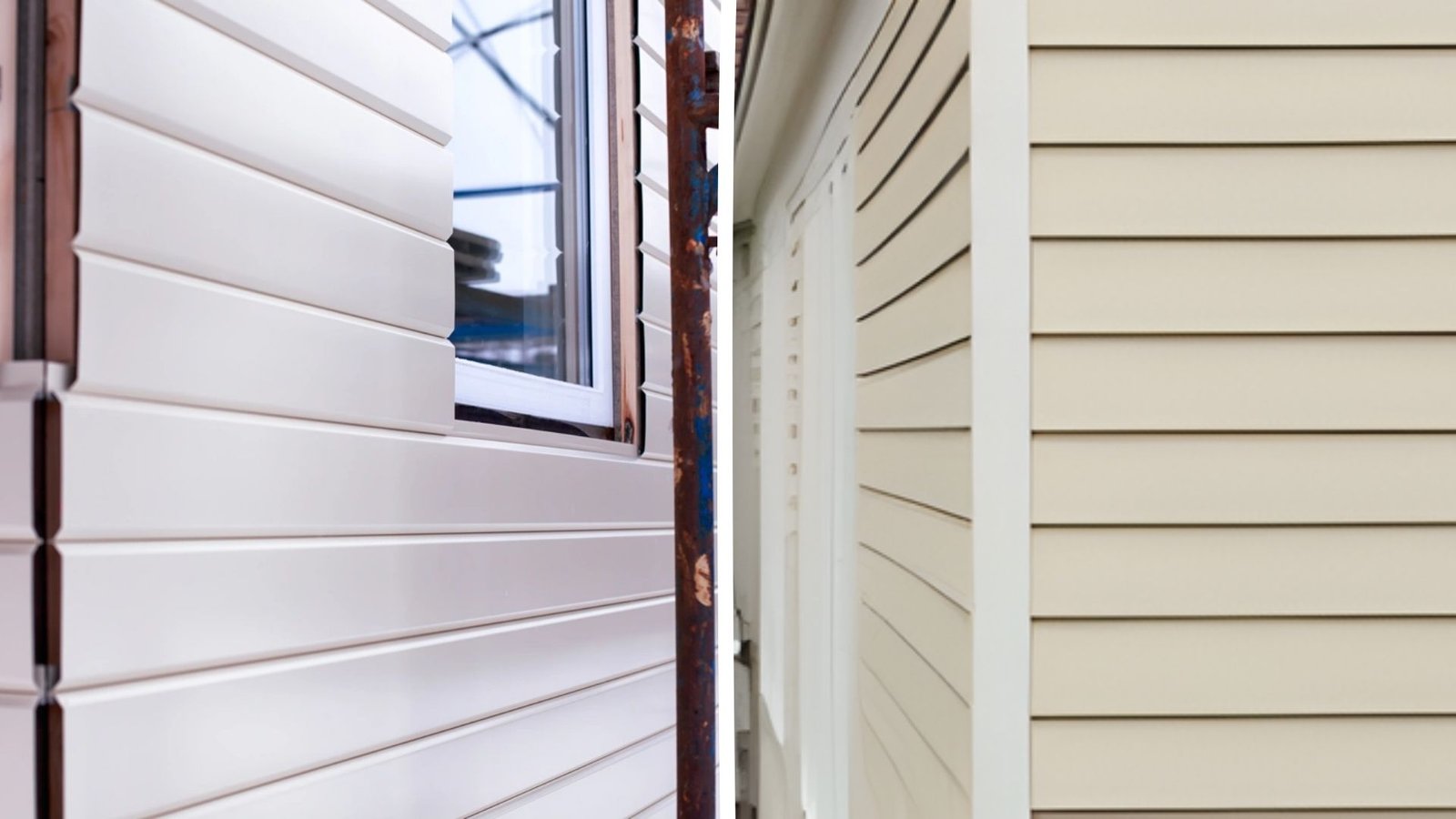
Cost differences often come from installation effort, upkeep, and lifespan. The points below focus only on cost-related benefits and drawbacks.
Hardie Board Pros and Cons
Hardie board siding has a higher upfront price but may balance out over time.
Pros
- Long lifespan of about 30–50+ years may reduce replacement costs.
- Strong resistance to fire, pests, and moisture can lower repair needs.
- May support higher resale value for the home.
Cons
- Higher upfront material cost compared to vinyl siding.
- Installation usually costs more due to heavier panels and labor needs.
- Repainting may be needed every 10–15 years, which adds maintenance cost.
Vinyl Siding Pros and Cons
Vinyl siding is known for its lower initial price and simple upkeep.
Pros
- Lower upfront material cost than fiber cement siding.
- Installation is usually cheaper because panels are lightweight.
- Cleaning is simple and keeps maintenance costs low.
- Damaged panels are usually easier and cheaper to replace.
Cons
- A shorter lifespan of about 20–40 years may lead to earlier replacement.
- Panels can crack or warp in harsh weather, which may require repairs.
- May have less effect on resale value compared to fiber cement siding.
Both options have different cost benefits and limits. Choose based on your budget and long-term needs.
Hardie Board vs. Vinyl Siding: Comparison Beyond Cost
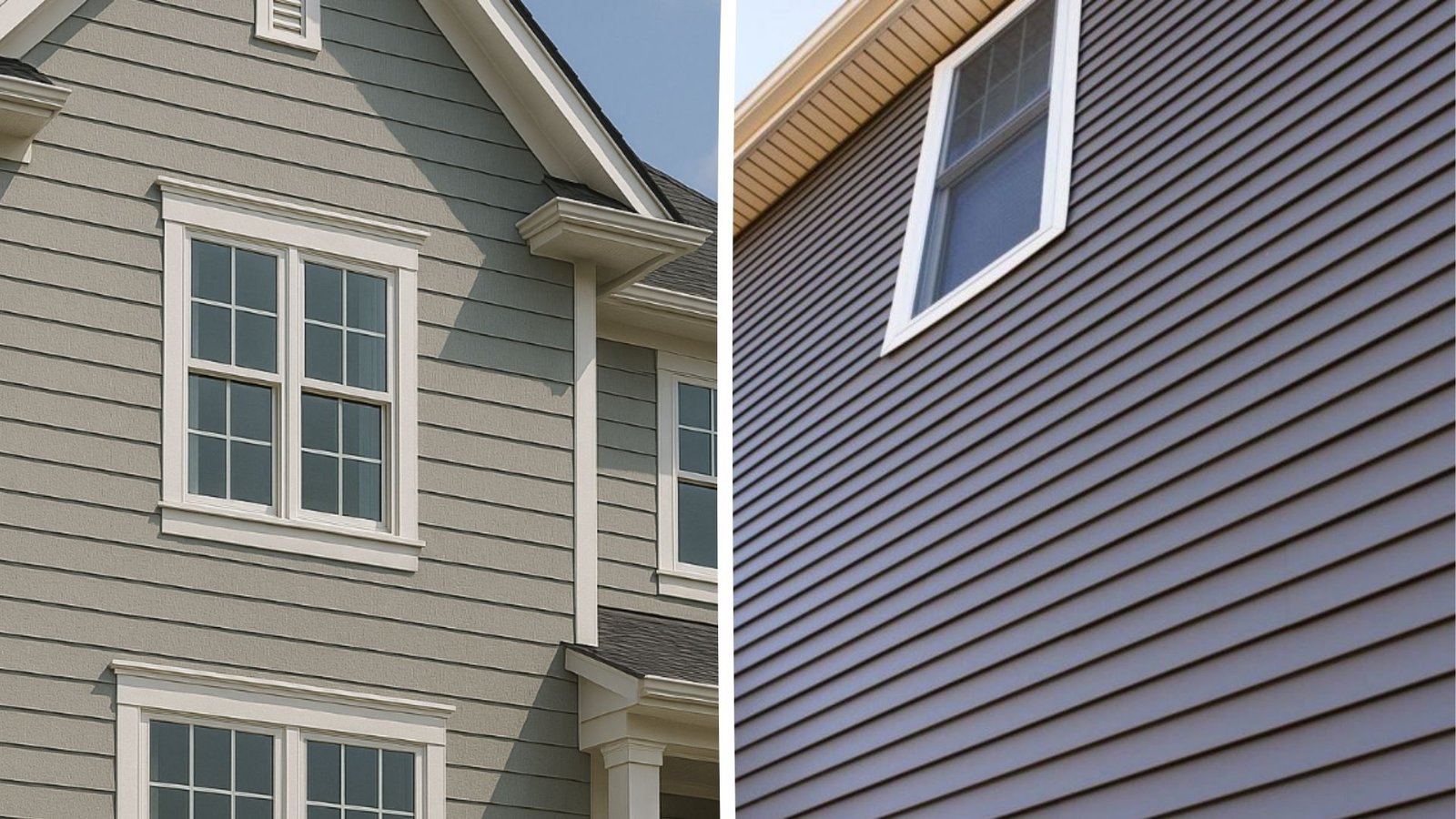
Price matters, but other factors also affect siding performance over time. Durability, lifespan, and maintenance can influence long-term satisfaction.
1. Durability
Hardie board siding is made from fiber cement, which forms a strong exterior surface. It resists fire, pests, rot, and moisture, and performs well in strong winds and hail.
Vinyl siding offers moderate durability for most homes. It works well in normal weather but may crack, warp, or fade after long exposure to heat, cold, or hail.
2. Lifespan
Hardie board siding usually lasts about 30 to 50 years or longer with proper care. The fiber cement structure helps it stay stable through many years of outdoor exposure.
Vinyl siding typically lasts between 20 and 40 years. The exact lifespan depends on panel quality, installation, and the climate around the home.
3. Maintenance Requirements
Hardie board siding requires periodic repainting to maintain protection and color. Most homeowners repaint it every 10 to 15 years and check occasionally for moisture issues.
Vinyl siding requires very little upkeep. Most homeowners simply wash the panels with water to remove dirt or mold.
4. Appearance and Vibe Appeal
Hardie board siding has a textured surface that resembles painted wood. It comes in many styles and colors, which helps match different home designs.
Vinyl siding is available in a wide range of colors and patterns. However, the surface usually looks less like real wood compared to fiber cement boards.
5. Resistance to Weather and Environmental Factors
Hardie board siding performs well in harsh weather conditions. The fiber cement material resists wind, hail, fire, and moisture better than many siding products.
Vinyl siding handles normal weather but reacts more to temperature changes. Panels may expand in heat and contract in cold, which can lead to cracking over time.
6. Ideal Use Cases
Hardie board siding works well for homeowners who want strong and long-lasting exterior protection. It is often chosen for areas with storms, strong winds, or higher fire risk.
Vinyl siding suits homeowners who prefer a lower starting cost and simple upkeep. It works well in moderate climates and for projects that require quick installation.
How to Choose the Most Cost-Effective Option
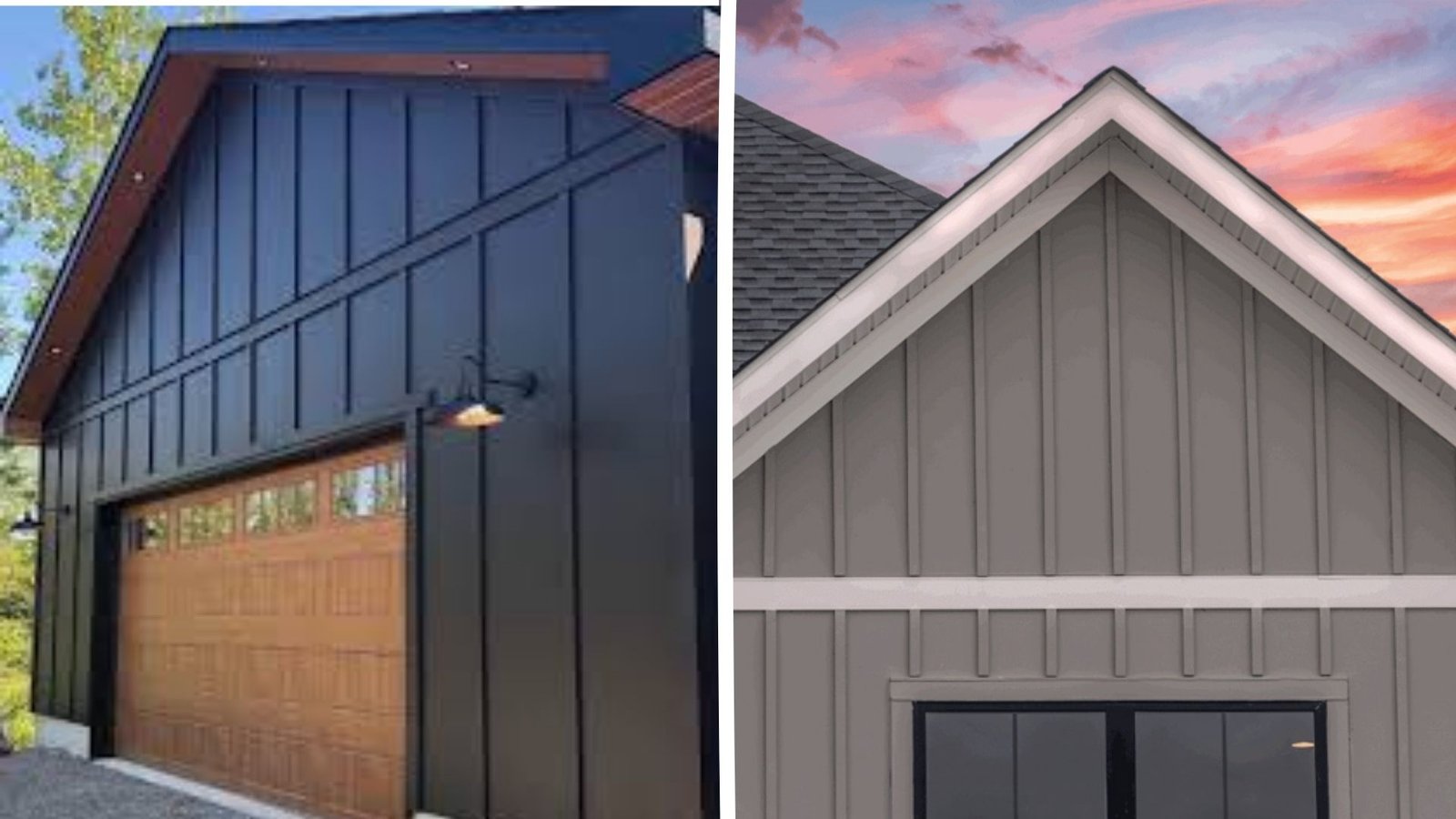
Choosing siding is not only about the lowest price. Budget, climate, and contractor estimates also matter.
Assessing Your Budget: Estimate total costs by including materials, labor, and future upkeep. Compare upfront expenses with long-term costs.
Considering Climate and Home Style: Local weather can affect siding lifespan. In harsh climates, paying more at the start may reduce repair costs later.
Getting Accurate Quotes: Request detailed quotes from several contractors. Ask about materials, labor, warranties, and extra fees to avoid hidden costs.
Comparing these factors helps you make a practical siding choice. A clear budget and accurate quotes can prevent unexpected costs later.
Final Thoughts
Choosing siding is not only about the lowest price. From what I have seen with many homes, long-term value and maintenance often matter just as much as the initial cost.
When comparing Hardie board vs vinyl siding cost, vinyl usually costs less upfront, while Hardie board often lasts longer and handles rough weather better.
Both options protect a home well if installed correctly.
Compare quotes from local installers before deciding. A small price difference today can change long-term home costs!
Frequently Asked Questions
How much more expensive is Hardie board than vinyl?
Hardie board siding usually costs 30–60% more than vinyl siding when material and installation are included. The higher price mainly comes from heavier panels and longer installation time.
Is Hardie board worth the extra cost?
Hardie board can be worth the higher price for homeowners who want a longer lifespan and stronger weather resistance. It may also support better resale value over time.
Can I save money by installing siding myself?
DIY installation can reduce labor costs, but mistakes may lead to moisture issues or warranty problems. Hardie board installation is harder and often requires professional tools.
Can vinyl siding mimic wood?
Yes, many vinyl siding products include wood-grain textures and plank styles. They resemble painted wood, but the surface usually looks less natural than fiber cement.
How do maintenance costs compare over time?
Vinyl siding usually costs less to maintain because it only needs occasional cleaning. Hardie board may require repainting every 10-15 years, which adds maintenance cost.


