
Quartzite countertops are natural stone surfaces formed from sandstone and quartz crystals. They’re incredibly hard and beautiful.
Many homeowners think quartzite is completely maintenance-free. Wrong.
Quartzite can be damaged by the wrong cleaning products. Use acidic cleaners, and you’ll create permanent marks. Skip daily care, and stains will set in.
Most people make the same mistakes over and over. They grab whatever cleaner is handy. They scrub too hard.
Here’s what happens when you get it wrong. Your countertops start looking cloudy. Stains become permanent fixtures. What once sparkled now looks dull and worn. The worst part? Most damage is irreversible without professional help.
But don’t worry. I’ll show you exactly how to clean quartzite properly. You’ll keep your countertops looking new for years. Quartzite is low maintenance, as long as you clean it the right way.
What Makes Quartzite Different?
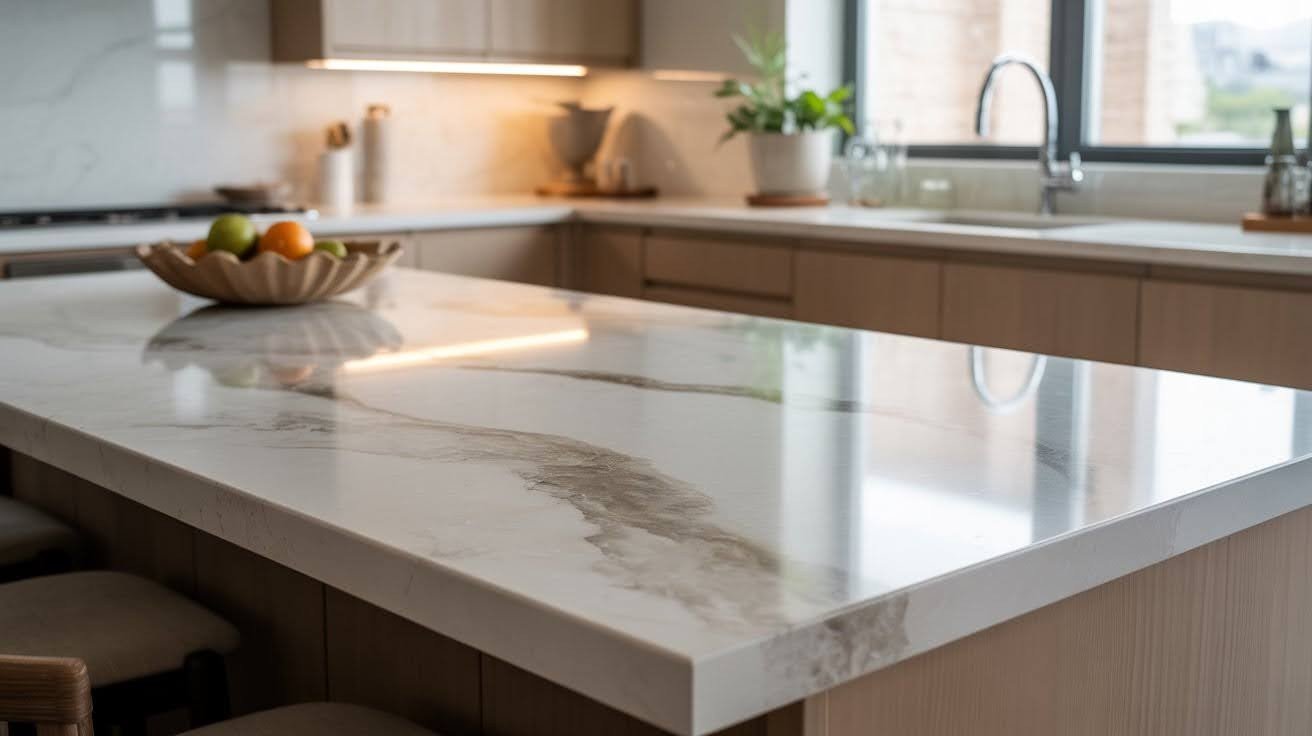
People often confuse quartzite with quartz. They’re not the same thing.
Quartzite is a natural stone. It starts as sandstone, then heat and pressure transform it into quartzite. Quartz countertops are man-made from ground quartz and resin.
Here’s what makes quartzite special:
- Durability: Harder than granite. It can handle hot pans and daily use.
- Porosity: Natural stone means tiny pores. Liquids can seep in if you’re not careful.
- Strength paradox: Super strong against scratches. But vulnerable to acid damage.
This combination means quartzite needs gentle care despite being tough as nails.
Supplies You’ll Need
The right tools make all the difference. Here’s your shopping list:
Safe cleaners: pH-neutral stone cleaner, mild dish soap, warm water, 70% isopropyl alcohol
Tools: Microfiber cloths, soft sponge, plastic scraper
Avoid these: Vinegar, lemon juice, bleach, abrasive scrubbers, and generic all-purpose cleaners
Remember: If it’s acidic or abrasive, keep it away from quartzite.
Daily Cleaning Routine
Daily cleaning is your best defense against stains and damage. It takes just 2 minutes but saves you hours of scrubbing later.
Your quartzite looks solid, but it has microscopic pores. Spills can seep in if you wait too long. Coffee, wine, and oil are the worst offenders. They create permanent stains within hours.
The 4-step daily routine
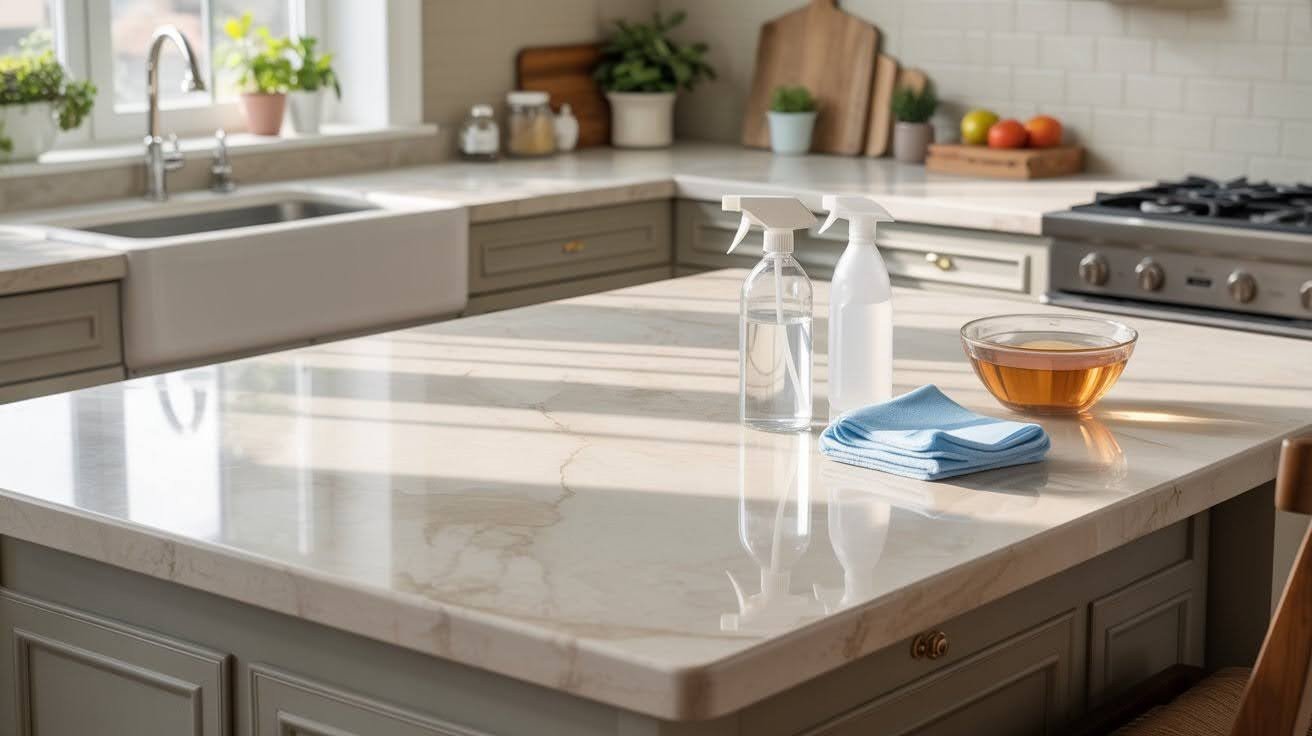
Step 1: Handle spills immediately: Don’t let anything sit on your countertops. Even water can leave mineral deposits if it dries. Use a paper towel or clean cloth to blot spills. Don’t wipe – blot. Wiping spreads the spill.
Step 2: Prepare your cleaning solution: Mix warm water with 2-3 drops of mild dish soap in a spray bottle. Warm water works better than cold. It cuts through grease and grime faster. But don’t use hot water – it can leave streaks.
Step 3: Clean the entire surface: Spray the soapy water across your entire countertop. Don’t just spot-clean. Food particles and bacteria spread. Use a microfiber cloth to wipe the surface. Microfiber traps dirt instead of pushing it around.
Step 4: Dry thoroughly: This step is crucial. Water spots make quartzite look dull and dirty. Use a clean, dry microfiber cloth to remove all moisture. Work in sections so you don’t miss spots.
Pro tips for daily cleaning
- Keep a spray bottle with soapy water ready under the sink
- Use separate clothes for cleaning and drying
- Clean right after cooking while the surfaces are still warm
- Replace microfiber cloths weekly or when they smell
- Clean your sink and faucet at the same time
Common daily cleaning mistakes
- Using the same cloth for everything
- Letting soapy water sit too long
- Skipping the drying step
- Using too much soap
- Cleaning in circular motions
Time-saving tip: Clean as you cook. Wipe spills immediately instead of letting them pile up. Your evening cleanup will be much faster.
Weekly Deep Cleaning
Once a week, give your countertops extra attention.
What you’ll need:
- pH-neutral stone cleaner
- Microfiber cloth
- Warm water for rinsing
The process:
- Clear the countertop completely
- Spray stone cleaner evenly across the surface
- Let it sit for 30 seconds
- Wipe in circular motions with a microfiber cloth
- Pay attention to corners and edges
- Rinse with clean water
- Dry completely with a fresh cloth
Why drying matters: Water spots can make quartzite look dull. Always finish with a dry cloth.
Stain Removal Tips
Stains happen. Here’s how to handle them safely:
For oily stains:
- Make a paste with baking soda and water
- Apply the stain
- Cover with plastic wrap
- Let it sit for 24 hours
- Scrape off gently with a plastic scraper
- Rinse and dry
For food stains:
- Clean immediately with soap and water
- For set-in stains, use the baking soda method
- Be patient – it might take a few tries
Important: Always test any stain removal method on a hidden area first.
How to Disinfect Without Damaging
Sometimes you need to disinfect. Here’s the safe way:
Method 1: Use 70% isopropyl alcohol
- Dilute with equal parts water
- Spray lightly on the surface
- Wipe immediately – don’t let it sit
- Rinse with water and dry
Method 2: Use your pH-neutral stone cleaner
- Many stone cleaners have antimicrobial properties
- Check the label for disinfecting claims
- Follow the same weekly cleaning process
Never use: Bleach, ammonia, or harsh disinfectants. They’ll damage the stone.
What to Avoid on Quartzite Countertops
These common mistakes can ruin your countertops:
Acidic cleaners:
- Vinegar
- Lemon juice
- Citrus-based cleaners
- Toilet bowl cleaners
Abrasive tools:
- Steel wool
- Scouring pads
- Rough sponges
- Abrasive powders
Sealing myths: Many people think quartzite needs frequent sealing. Not true. Most quartzite is dense enough that sealing isn’t necessary. If your countertops were sealed during installation, they might need resealing every 1-2 years. But check with your installer first.
Bonus: Long-Term Care Tips
- Use cutting boards for all food prep
- Place trivets under hot pots and pans
- Use coasters for drinks
- Clean spills immediately
- Avoid placing heavy objects on unsupported areas
- Check for chips or cracks regularly
- Consider professional cleaning annually
Conclusion
Cleaning quartzite countertops isn’t complicated. You just need the right approach. Daily soap and water cleaning prevent most problems. Weekly deep cleaning keeps them looking great.
Remember the key rules: no acids, no abrasives, and always dry thoroughly. Handle stains quickly but gently. When in doubt, stick to pH-neutral stone cleaners.
The biggest mistake people make is overthinking it. They buy expensive specialty products when simple dish soap works perfectly. They scrub aggressively when gentle wiping is more effective. Keep it simple, stay consistent, and your countertops will reward you.
Don’t let fear hold you back from enjoying your beautiful surfaces. Yes, quartzite needs care, but it’s not fragile. Follow these basic steps, and you’ll maintain that showroom look for years. The time you invest in proper cleaning today prevents costly repairs tomorrow.
Frequently Asked Questions
Can I use Windex on quartzite countertops?
No, avoid Windex. It contains ammonia, which can damage natural stone. Stick to pH-neutral stone cleaners or mild dish soap and water.
How often should I seal quartzite countertops?
Most quartzite doesn’t need sealing. If yours were sealed during installation, test annually by dropping water on the surface. If it absorbs quickly, consider resealing.
What should I do if I accidentally used vinegar on my quartzite?
Rinse immediately with lots of water, then clean with pH-neutral stone cleaner. If etching occurred, contact a stone restoration professional.
Can quartzite countertops handle hot pans?
Yes, quartzite is heat-resistant. However, always use trivets to protect the surface and prevent thermal shock that could cause cracks.
How do I remove hard water stains from quartzite?
Use a pH-neutral stone cleaner and scrub gently with a soft sponge. For stubborn stains, make a baking soda paste and let it sit for a few hours before scrubbing.


