

Soot has a way of creeping up on you. One season your fireplace, chimney, or brick wall looks fine.
The next, it’s dark, grimy, and dull. This happens because soot particles are oily. They don’t just sit on the surface. They sink into the pores of the brick and settle deep.
If you’ve been putting off cleaning it, you’re not alone. Most people don’t know where to start.
This guide walks you through safe, proven methods to remove soot without damaging your brick.
What Causes Soot Stains on Brick
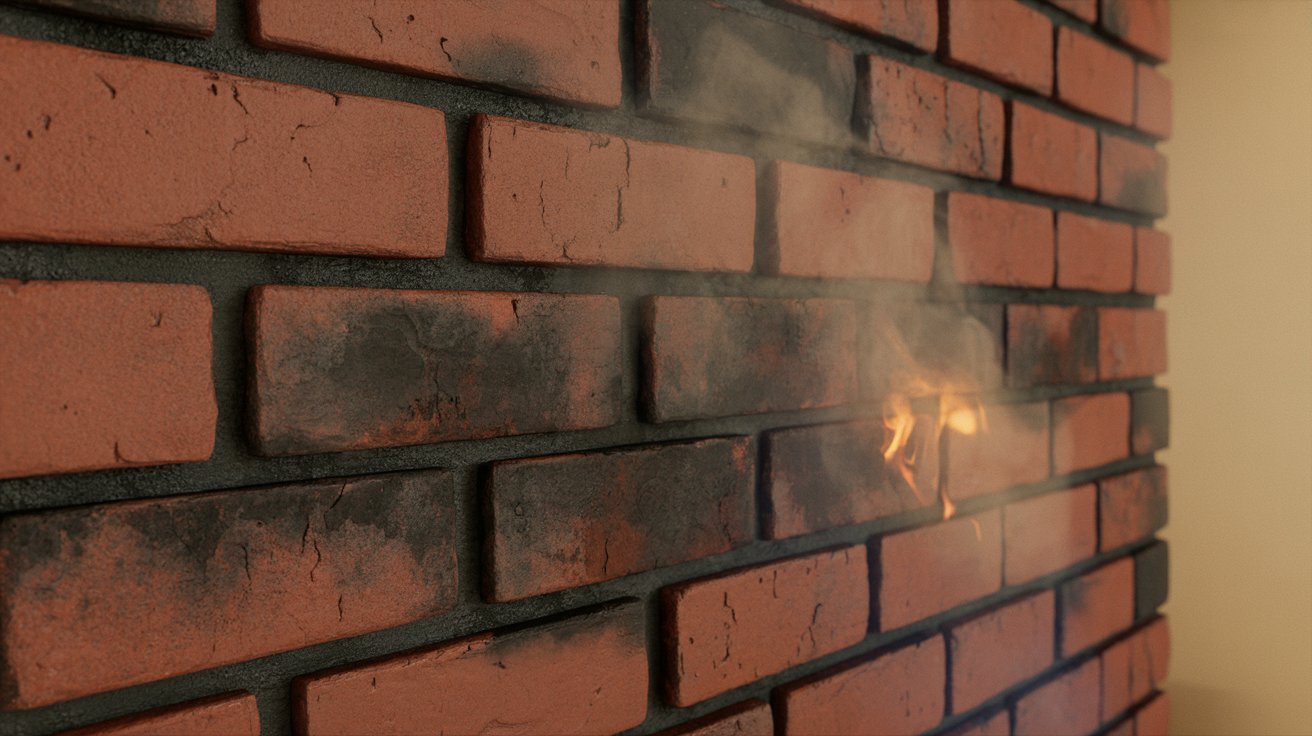
When wood, coal, or other fuel burns, it releases tiny carbon particles mixed with oils and chemicals. These particles rise with smoke and land on nearby brick surfaces.
Brick is naturally porous, meaning it has small gaps and holes that pull in these oily particles like a sponge. Over time, the soot builds up layer by layer.
If left untreated, it weakens the brick surface, causes discoloration that gets harder to remove, and can even speed up structural wear over time.
Tools and Supplies Needed to Clean Soot from Brick
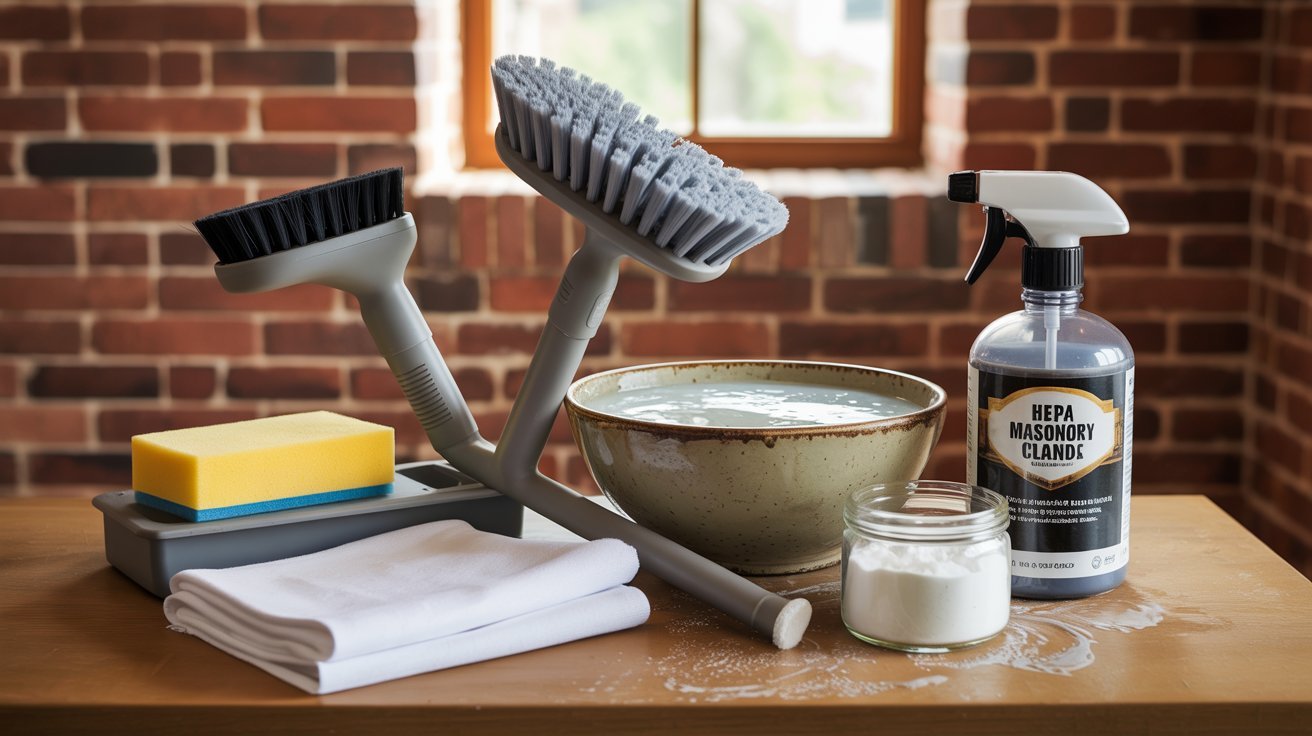
Having the right tools and cleaning solutions on hand makes the whole process faster, safer, and more effective.
Essential Cleaning Tools
- Use a dry cleaning sponge (also called a soot sponge) to lift loose soot without smearing it
- Keep a soft nylon brush handy to scrub soot out of the brick’s surface grooves
- Run a HEPA vacuum over the area first to pull out loose soot particles before wet cleaning
- Have a sponge or microfiber cloth ready for applying and wiping off cleaning solutions
Recommended Cleaning Solutions
- Mild dish soap mixed with warm water works well for light to moderate soot stains
- A thick paste made from baking soda and water is a gentle option for stubborn spots
- A commercial soot cleaner made for masonry surfaces is best for heavy or set-in stains
Step-by-Step Guide on How to Clean Soot Off Brick
Cleaning soot off brick doesn’t have to be complicated. Follow these five simple steps in order and you’ll get your brick looking clean without causing any damage.
Step 1 – Remove Loose Soot and Dust
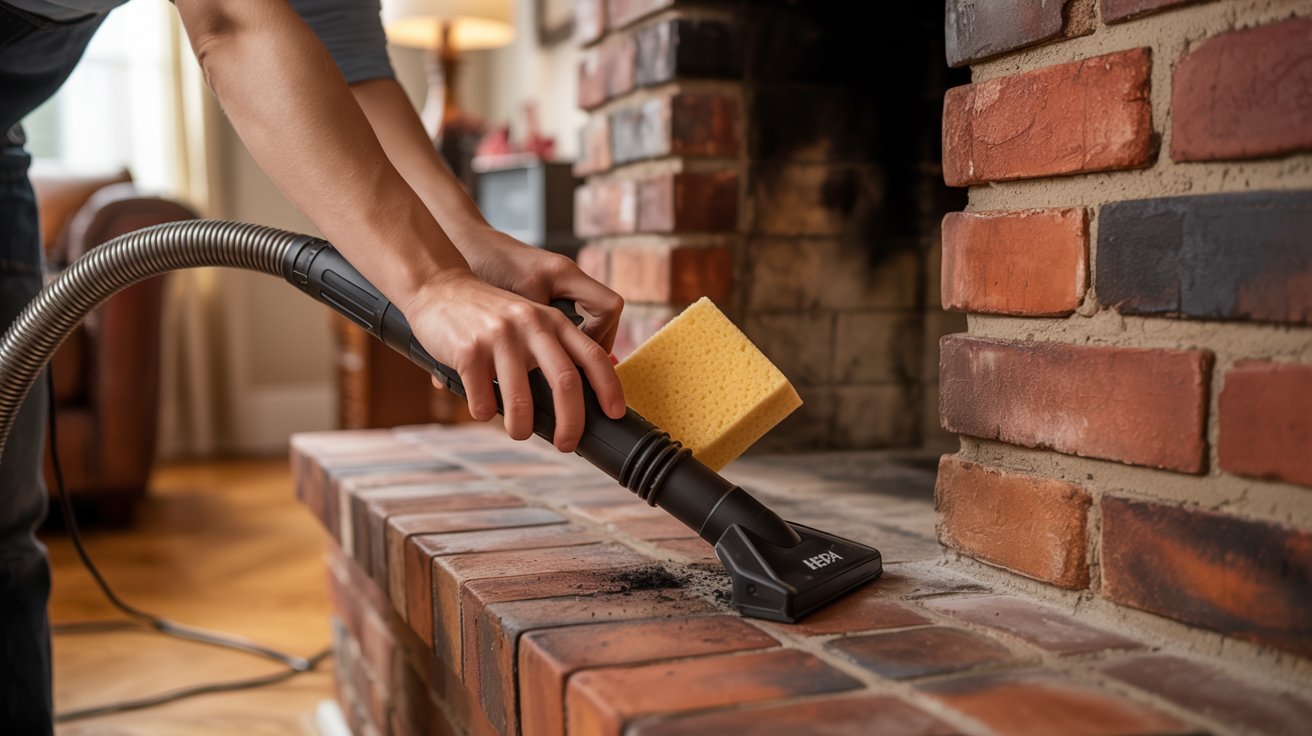
Start with a HEPA filter vacuum to pull loose soot and dust from the brick. Follow up with a dry soot sponge to lift remaining particles.
This prevents soot from getting pushed deeper into the surface before wet cleaning begins.
Step 2 – Prepare the Brick Surface
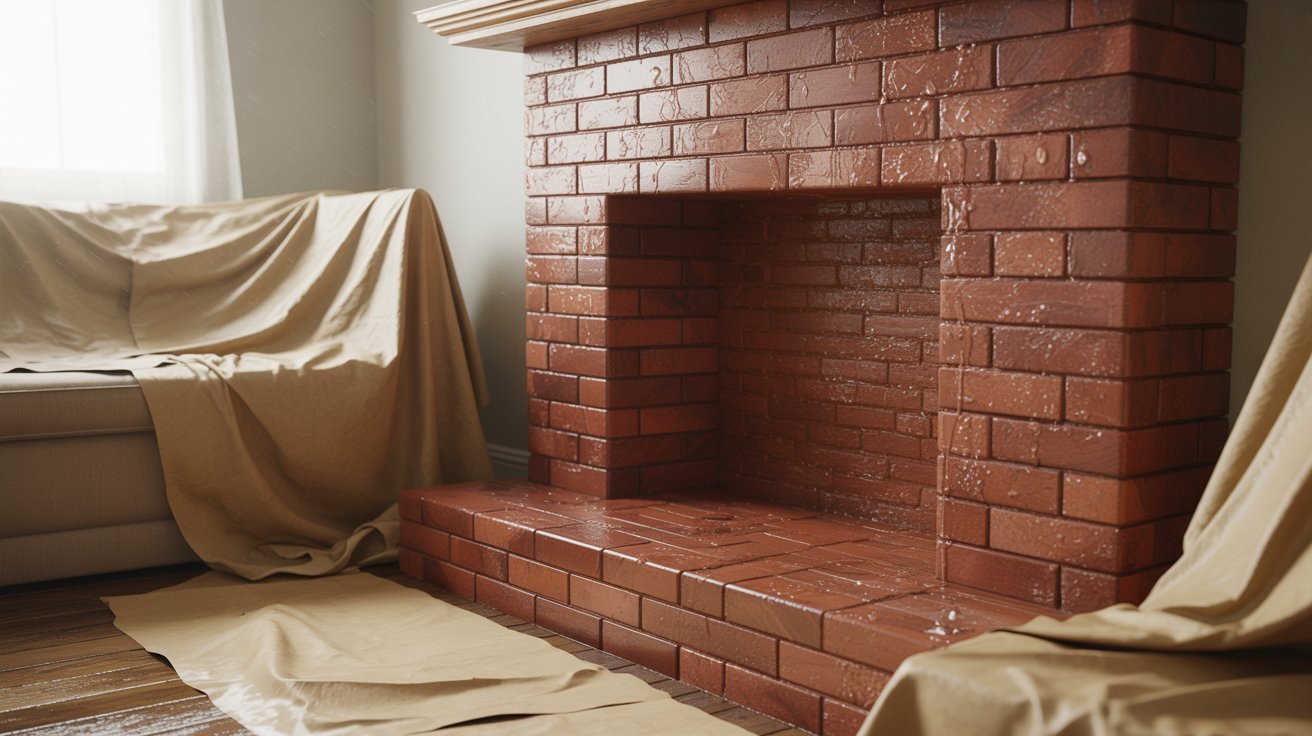
Lay drop cloths over floors and nearby furniture to protect them from drips. Then lightly dampen the brick surface.
This simple step stops soot from spreading further once you apply your cleaning solution and start working on the stained areas.
Step 3 – Apply a Gentle Cleaning Solution
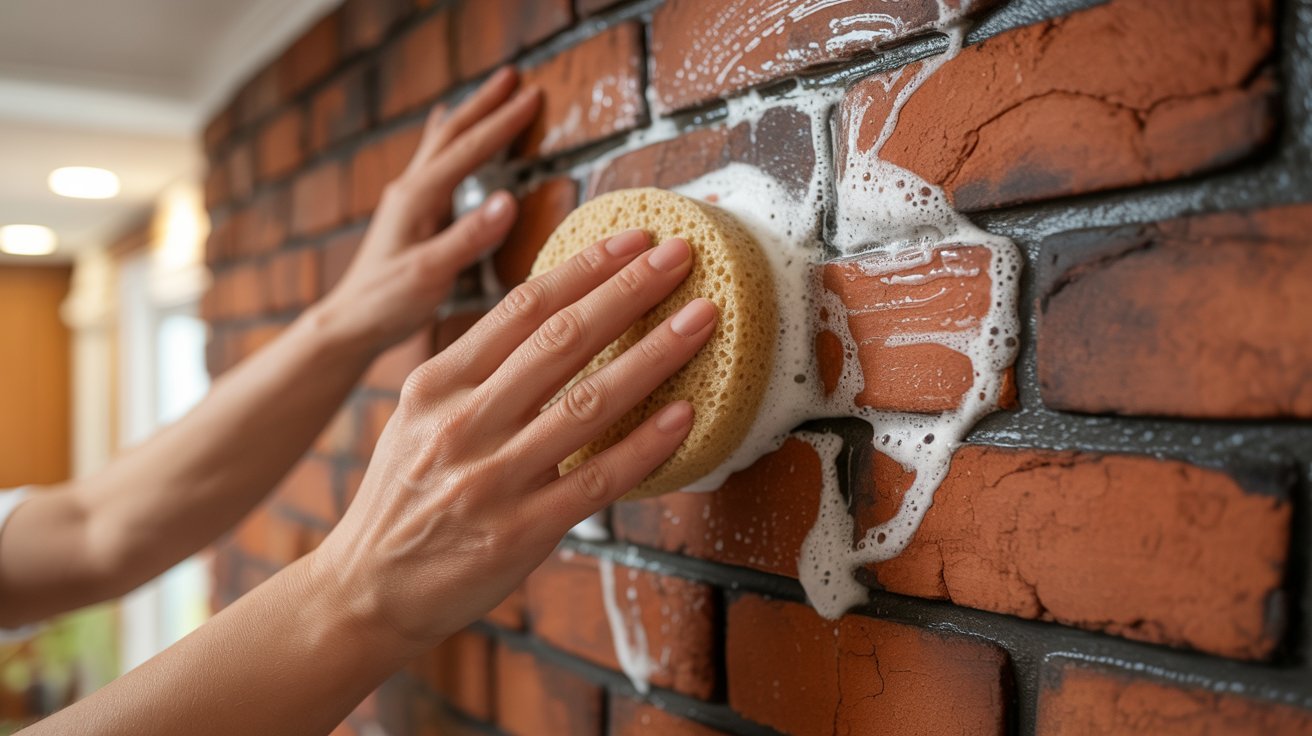
Mix a few drops of dish soap with warm water or use a ready-made soot cleaner for stubborn stains.
Apply it using a sponge or soft cloth. Work on one small section at a time so the solution stays effective and controlled.
Step 4 – Scrub the Brick Carefully
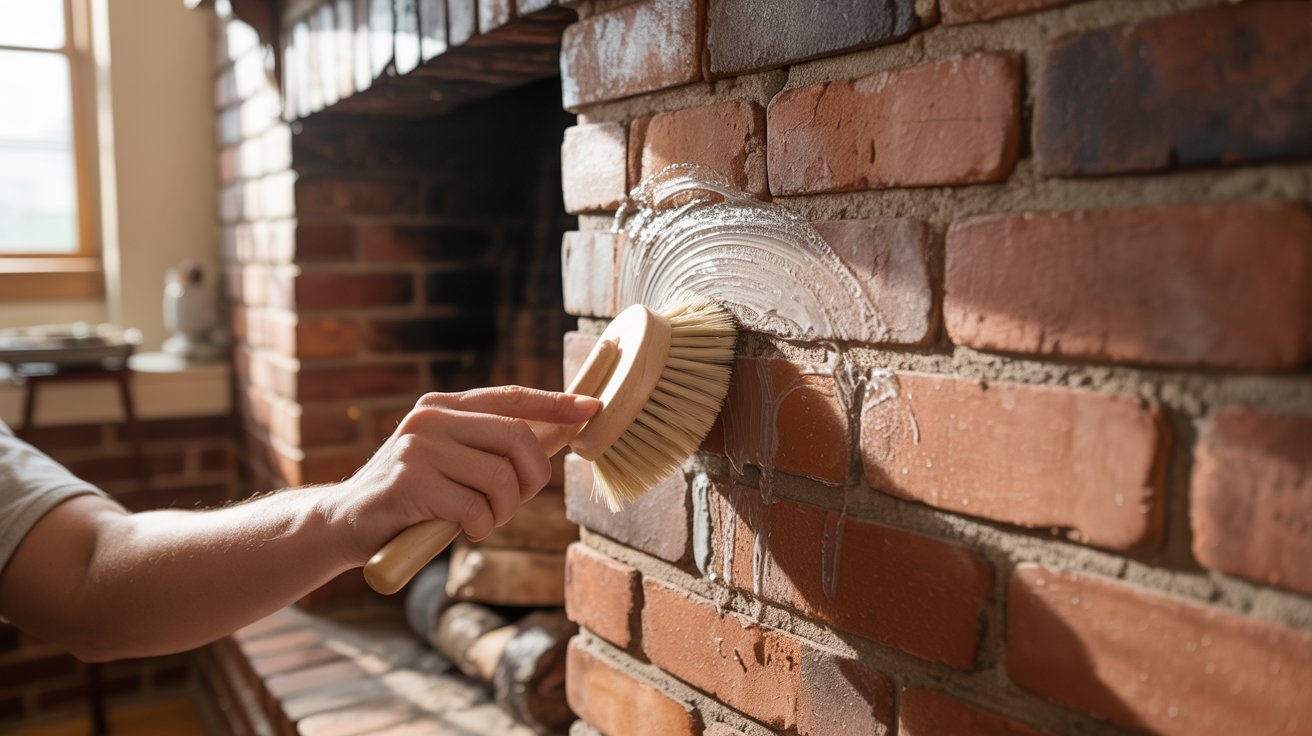
Use a soft nylon brush and scrub in slow circular motions. Keep your pressure light and steady throughout the process.
Scrubbing too hard can scratch the brick surface or loosen the mortar, which leads to bigger problems down the line.
Step 5 – Rinse and Dry the Brick
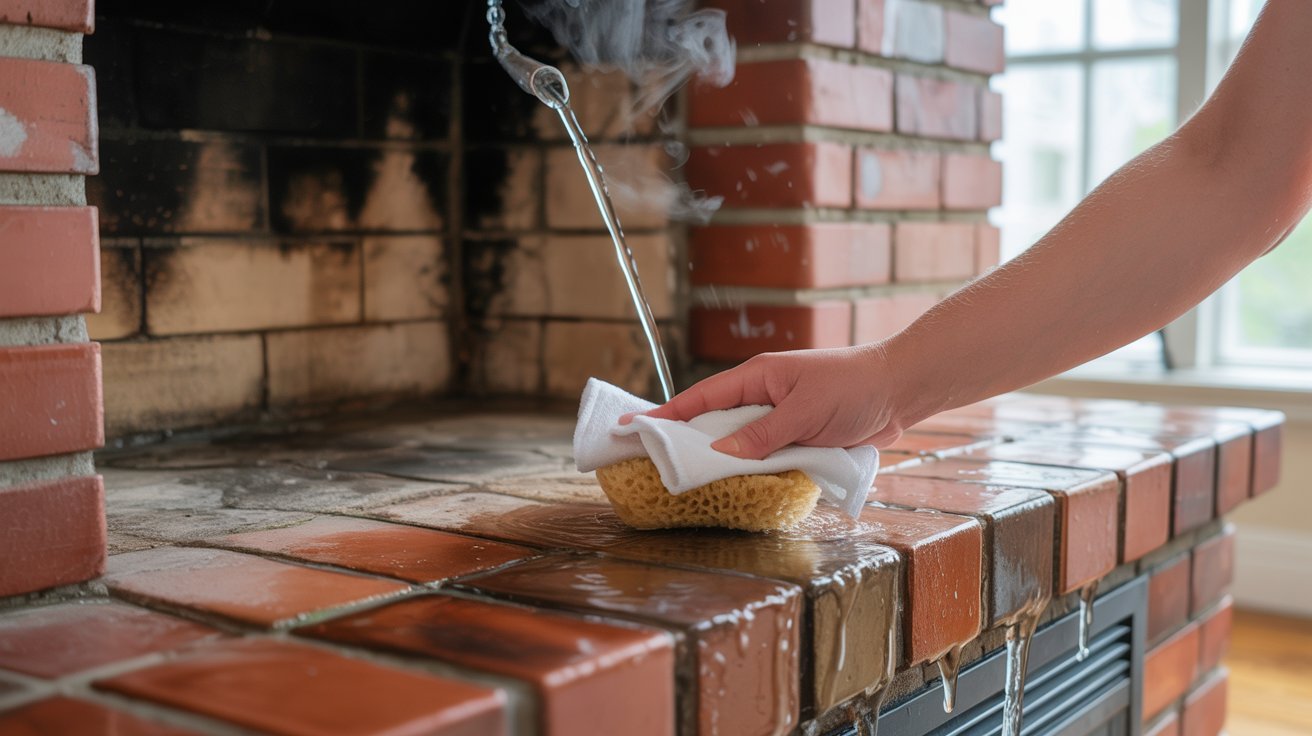
Rinse the cleaned area with warm water to remove all soap and soot residue. Wipe it down with a clean dry cloth.
Keep the space well-ventilated so any leftover moisture and odors can clear out completely before you use the area again.
How to Remove Stubborn Soot Stains from Brick
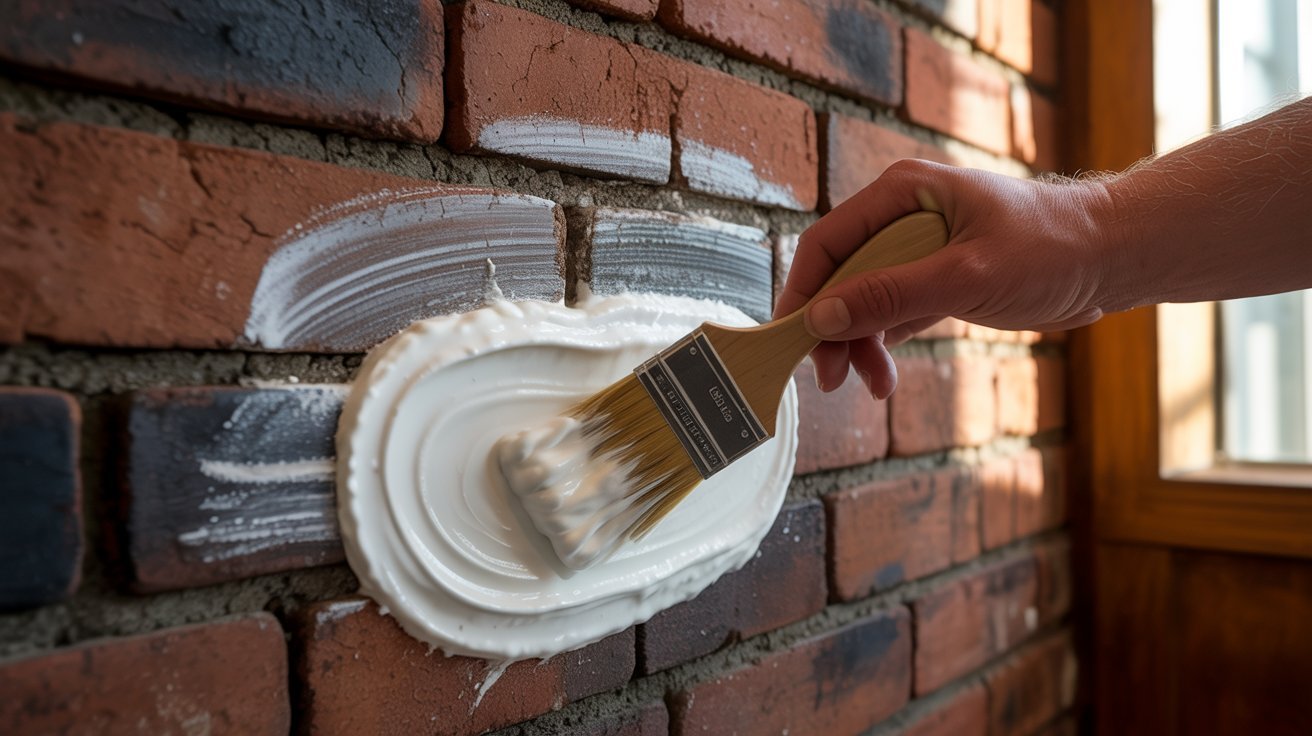
For tough stains, make a thick paste using baking soda and water. Apply it directly to the stain, let it sit for 10 minutes, then scrub gently with a soft brush.
If that doesn’t work, switch to a commercial soot cleaner made for masonry. Follow the product instructions carefully.
For deep, set-in stains, one round of cleaning may not be enough. Repeat the process two or three times, letting the brick dry fully between each attempt.
Tips for Cleaning Soot from Different Brick Surfaces
- Fireplace brick sees the most heat and soot buildup, so always start with a dry soot sponge before applying any liquid cleaning solution to the surface.
- For fireplace brick, use a mild dish soap solution or baking soda paste and scrub gently to avoid damaging the mortar between the bricks.
- Exterior brick walls are exposed to weather, so rinse them thoroughly after cleaning to stop any cleaning solution from drying out and leaving residue behind.
- On exterior walls, a soft nylon brush works best since it removes soot without scratching the brick or stripping its natural protective layer.
- Brick chimneys are harder to reach and often have heavier soot buildup, so consider calling a professional chimney cleaner if the stains are deep or widespread.
Conclusion
Soot left sitting on brick doesn’t just look bad. It gets harder to remove over time and can affect the air quality in your home. The sooner you deal with it, the better.
Always start with the gentlest cleaning method and work your way up only if needed. If the stains are deep or cover a large area, bring in a professional.
Your brick is worth protecting.
Got questions or tips from your own cleaning experience? Drop them in the comments below!
Frequently Asked Questions
Can I clean soot off brick without professional help?
Yes, most soot stains can be handled at home using simple tools and cleaning solutions. Start with a dry soot sponge and mild soap before trying stronger products.
What is the best cleaning solution for soot on brick?
Mild dish soap mixed with warm water works well for light stains. For tougher buildup, a baking soda paste or a commercial masonry soot cleaner gives better results.
How long does it take to clean soot off brick?
A light cleaning session can take one to two hours depending on the size of the area. Deep or set-in stains may require repeated cleaning sessions over a couple of days.
Is soot on brick a health risk?
Yes, soot contains harmful particles and chemicals that can affect air quality and irritate your lungs. Wearing a mask and gloves during cleaning helps reduce your exposure significantly.
When should I call a professional to clean soot off brick?
If the stains cover a large area, sit deep in the brick, or keep coming back after repeated cleaning, it is time to call a professional masonry or chimney cleaning service.


