

Stone fireplaces add warmth and character to any home. But over time, soot, ash, and grease build up on the surface.
This makes your fireplace look dull and can even become a safety risk if left too long.
Regular cleaning keeps the stone looking good and your home safer. The good news? You do not need harsh chemicals or professional help to get it done.
In this guide, we will walk you through simple, effective ways to clean different types of stone fireplaces.
Let’s get started.
Why You Should Clean Your Stone Fireplace Regularly
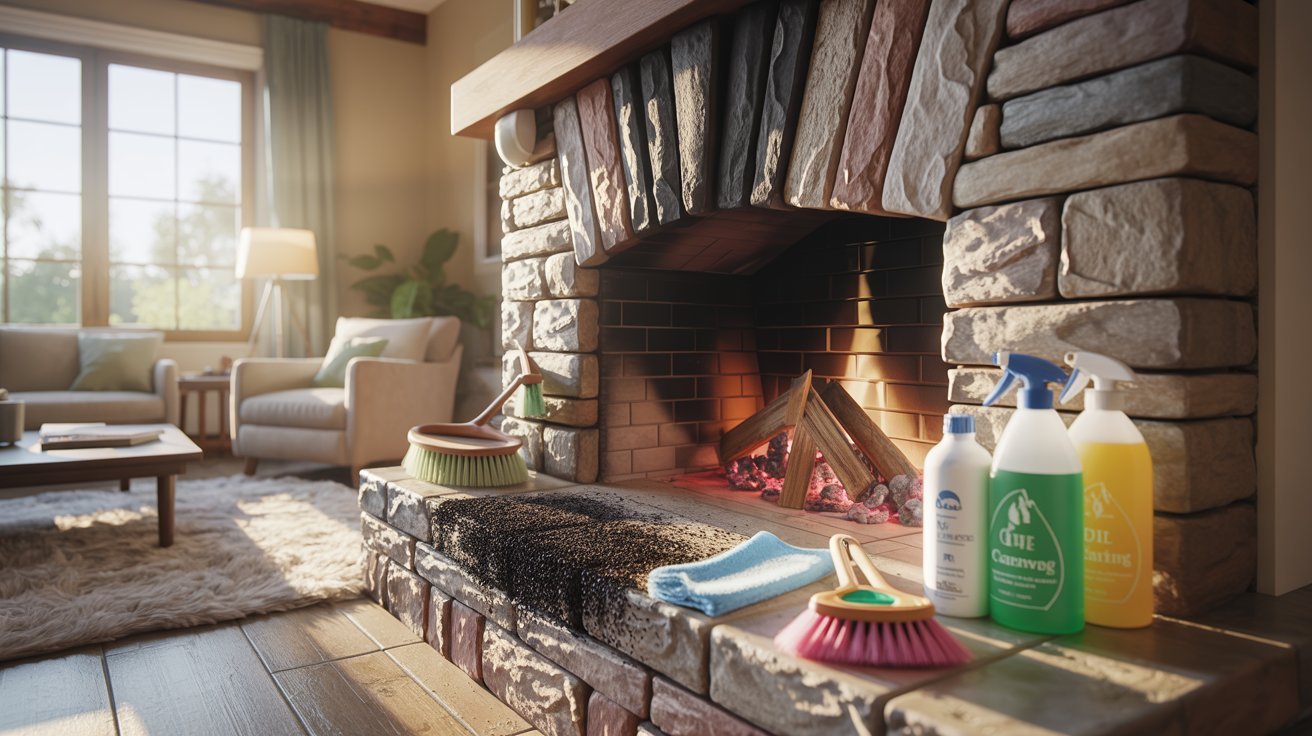
Cleaning your stone fireplace regularly is more important than most people think. Soot and creosote build up over time and can become a fire risk if ignored.
These deposits also eat into the stone surface, causing long-term damage that is hard to fix.
A clean fireplace also means better airflow, which helps the fire burn more efficiently. And let’s be honest, a grimy fireplace pulls down the whole look of your living room.
A little regular care goes a long way in keeping things safe and looking great.
Tools and Supplies You’ll Need
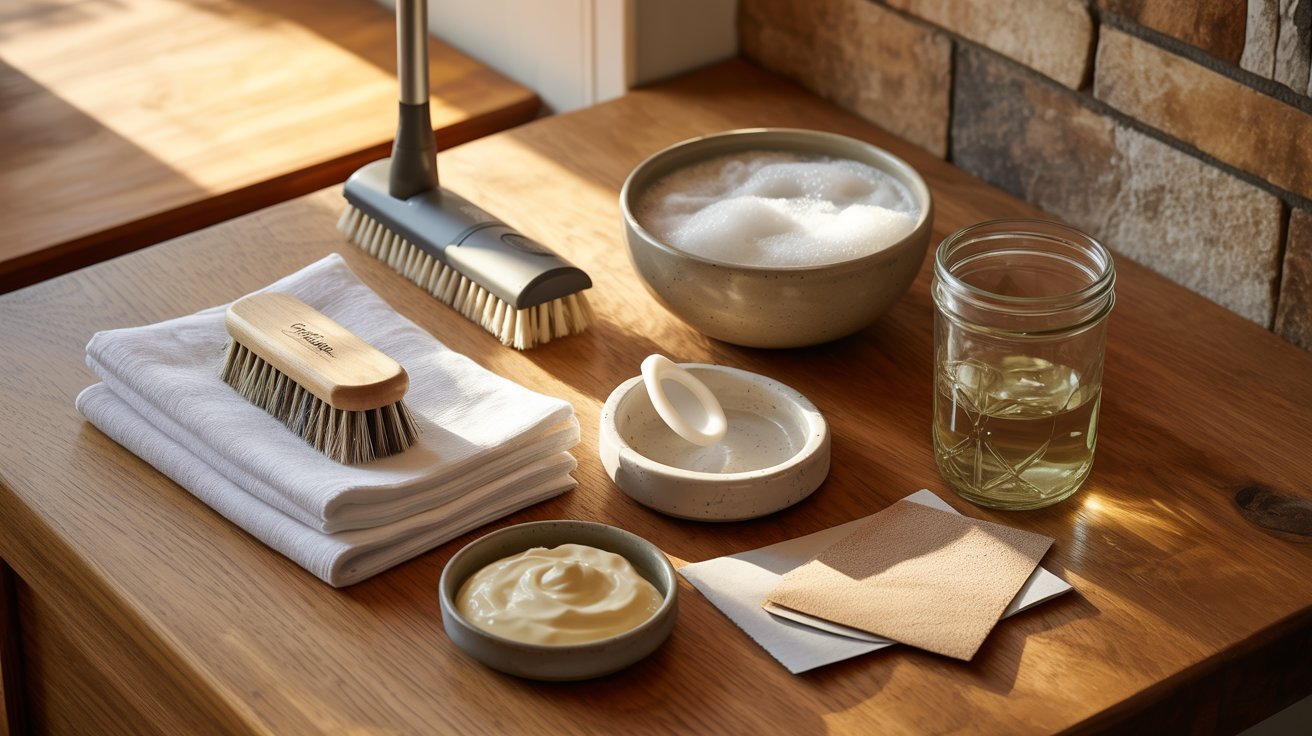
Everything you need to get your stone fireplace clean, from basic tools for regular upkeep to stronger options for tough stains.
Basic Cleaning Supplies
Before you start, gather these items:
- Soft-bristle brush
- Mild dish soap
- Warm water
- Microfiber cloths or rags
- Vacuum with brush attachment
These are enough for routine cleaning and light soot removal.
For Deep Cleaning
If the fireplace has heavy staining or built-up grime, you may also need:
- Baking soda paste
- Vinegar and water solution
- Stone fireplace cleaner
- Fine-grit sandpaper for stubborn stains
Having everything ready before you begin saves time and makes the whole process much smoother.
How to Clean a Stone Fireplace (Step-by-Step)
Cleaning a stone fireplace is easier than it looks. Follow these six simple steps to remove soot, clear stains, and keep your fireplace looking its best.
Step 1: Let the Fireplace Cool Completely
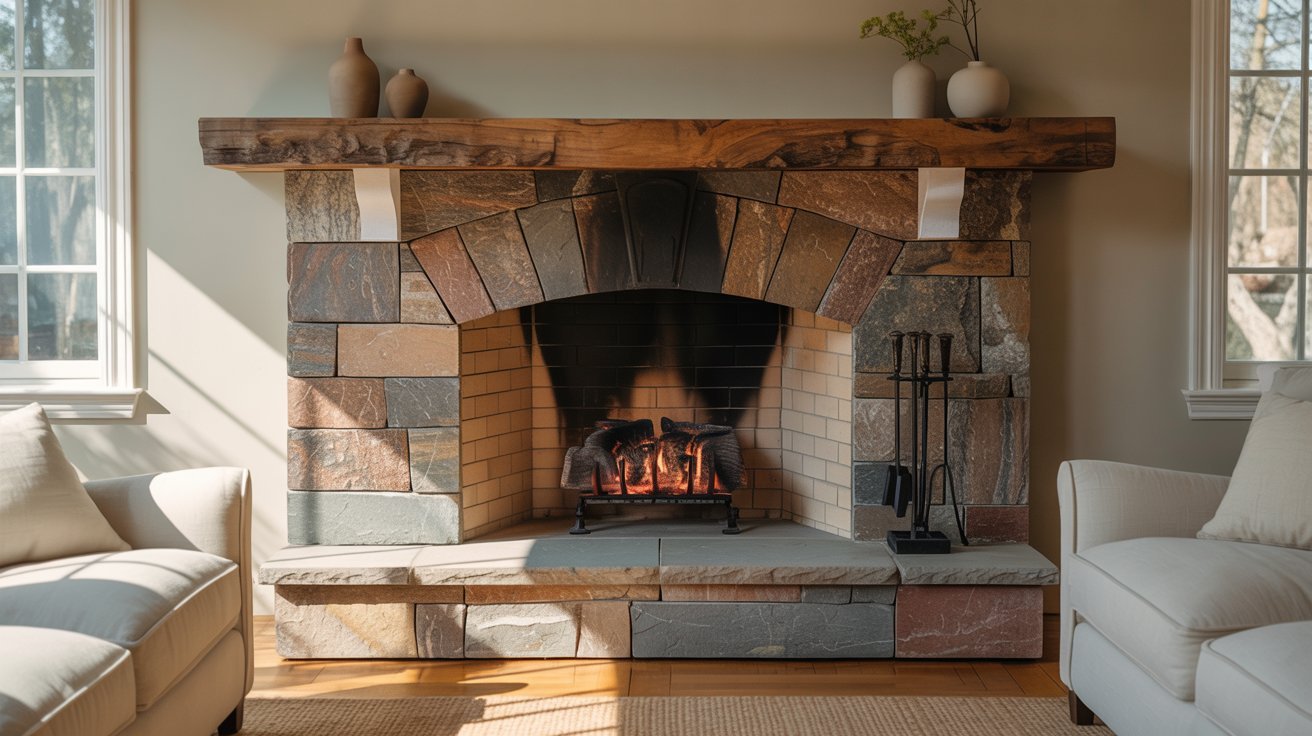
Never clean a fireplace that is still warm. Heat can cause cleaning solutions to evaporate too quickly and may even crack the stone.
Always wait at least 12 hours after the last fire. This keeps you safe and gives better cleaning results.
Step 2: Remove Ashes and Loose Debris
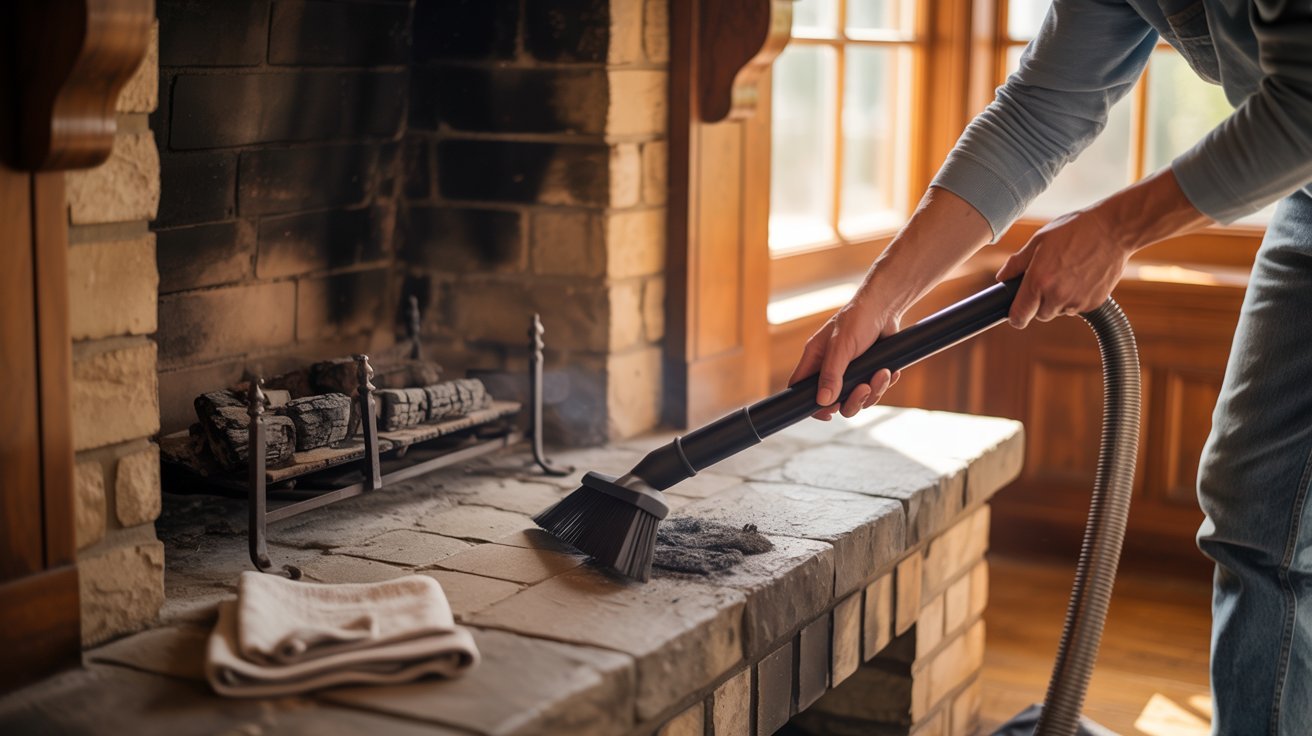
Start by sweeping or vacuuming out all the ash from the firebox. Use damp coffee grounds or a wet cloth to stop fine ash dust from spreading across the room.
Getting rid of loose debris first makes the next steps much easier and cleaner.
Step 3: Apply a Gentle Cleaning Solution
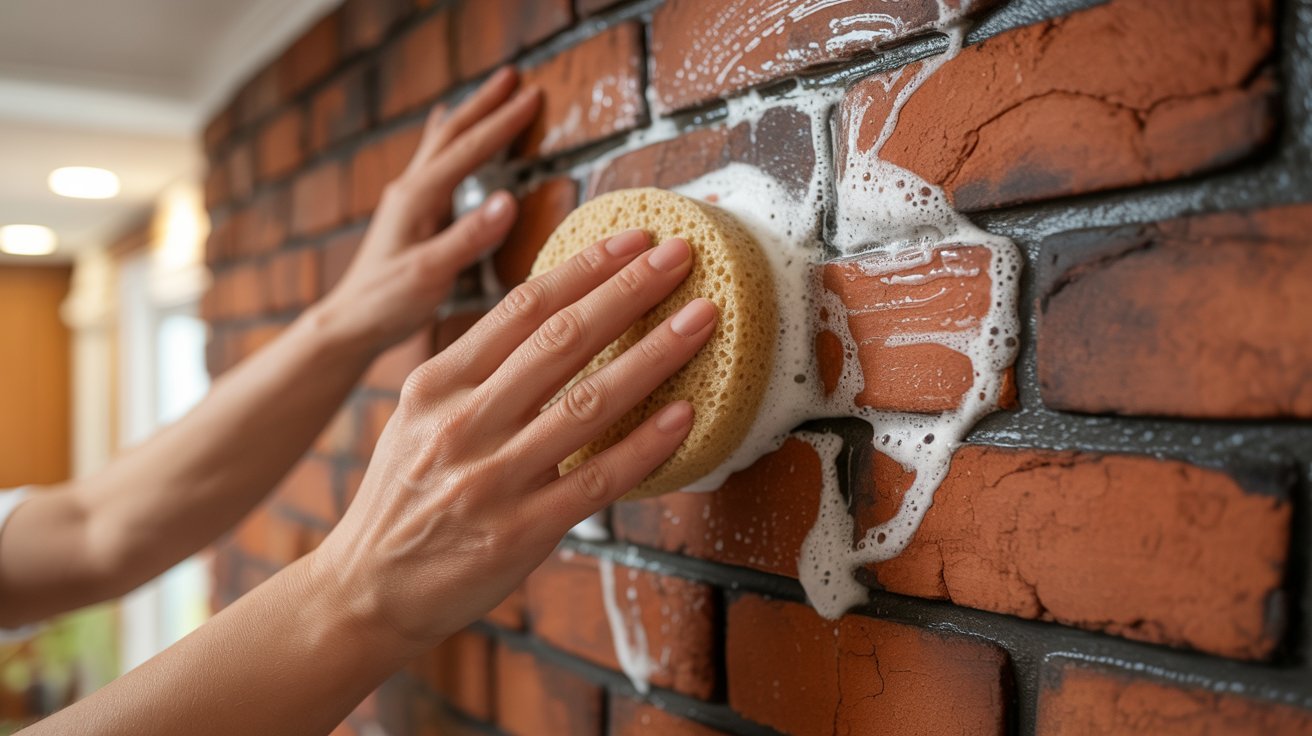
Mix warm water with a small amount of mild dish soap. Apply it directly onto the stone using a cloth or sponge.
This simple solution works well for routine dirt and light soot. Avoid harsh chemicals as they can damage the natural stone surface over time.
Step 4: Scrub the Stone Surface
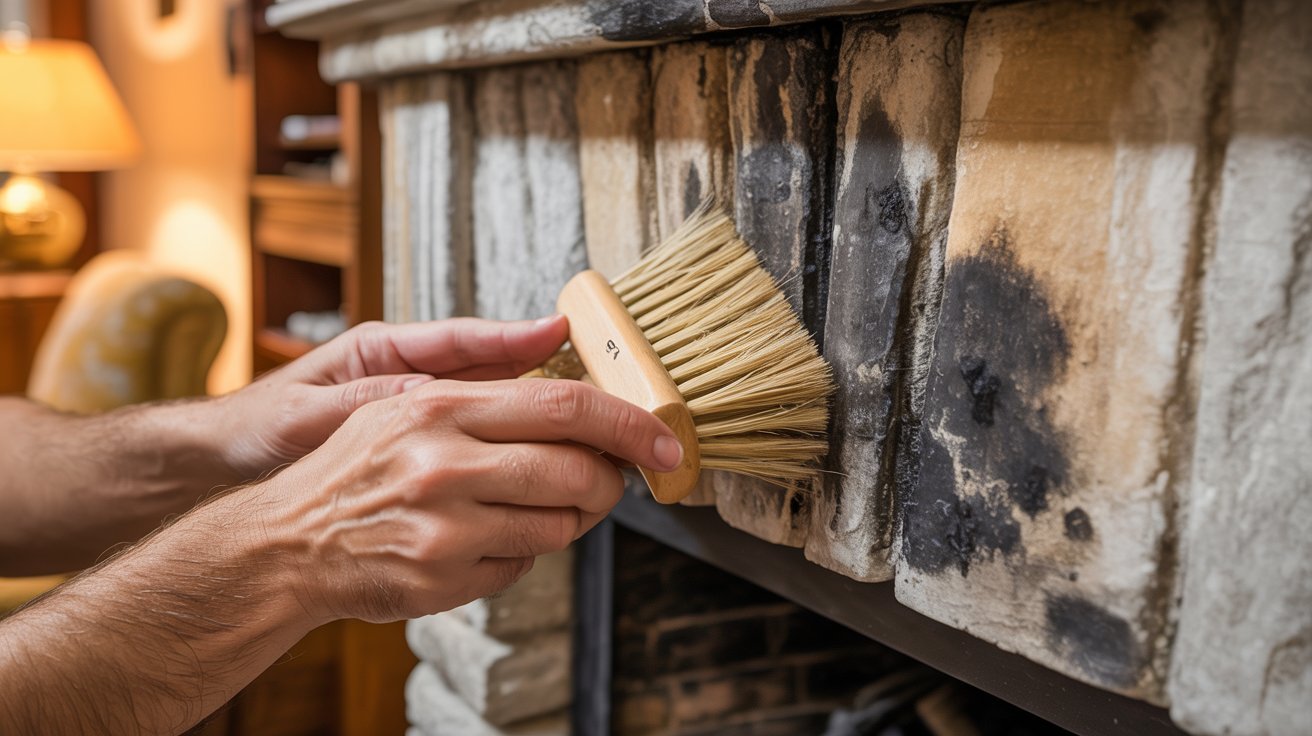
Use a soft-bristle brush or sponge to gently scrub the stone. Do not press too hard.
Focus on darker areas where smoke and soot tend to build up the most. Work in small sections so you can cover every part of the surface properly.
Step 5: Treat Stubborn Stains
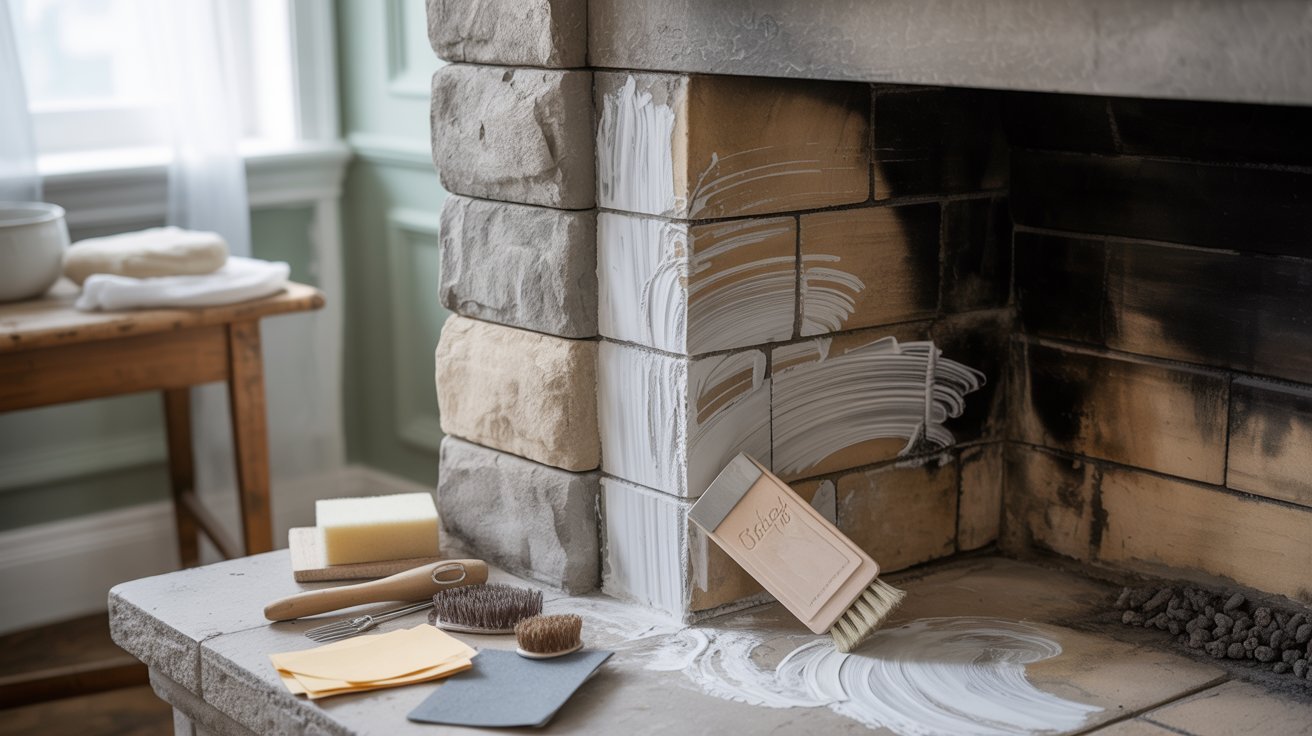
For tough soot stains, apply a thick baking soda paste and let it sit for a few minutes before scrubbing.
For deeper stains that won’t budge, light sanding with fine-grit sandpaper can help. Always test any method on a small hidden area first.
Step 6: Rinse and Dry the Stone
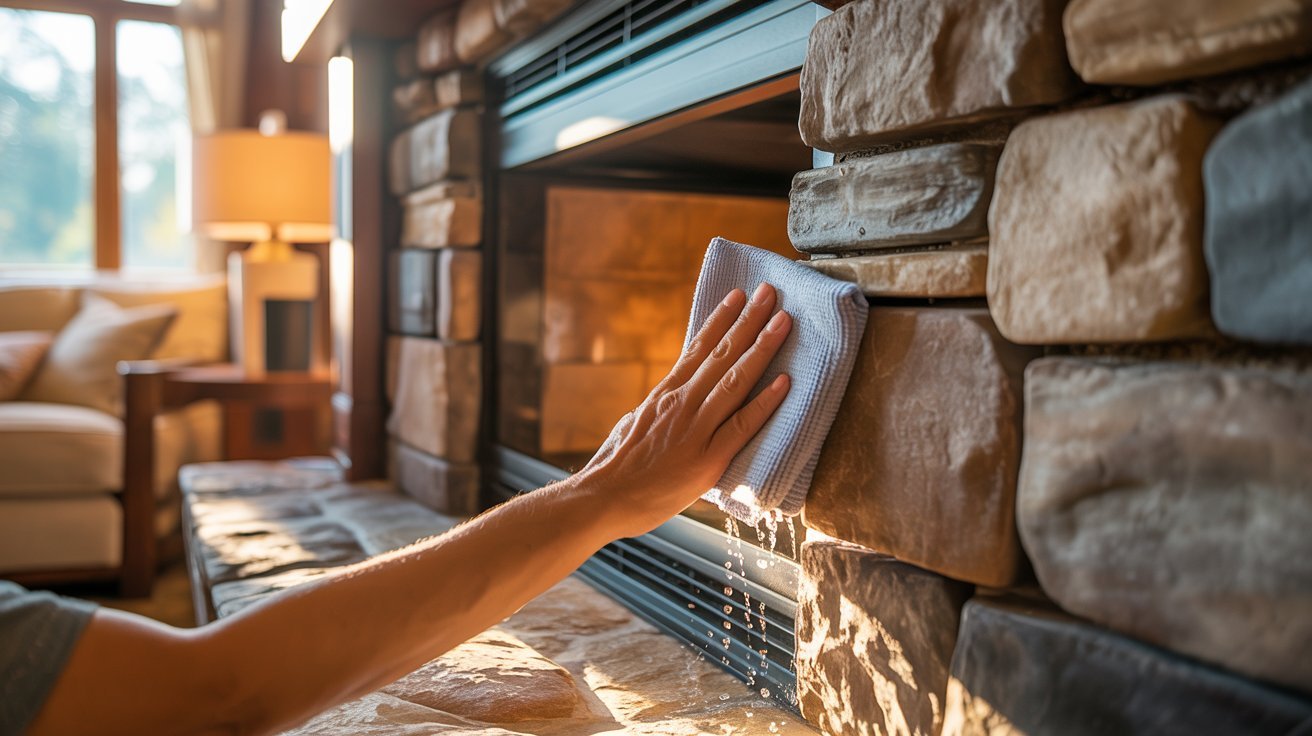
Once scrubbing is done, wipe the entire surface with clean water to remove all soap and residue.
Then dry it thoroughly using microfiber cloths. Drying properly stops watermarks from forming and keeps the stone looking clean and fresh after every wash.
How to Clean Different Types of Stone Fireplaces
Not all stone fireplaces clean the same way. Granite and other hard natural stones are more resistant, so a mild soap and water solution works well without causing damage.
Porous stones like limestone or sandstone need extra care. They absorb liquids quickly, so avoid soaking them.
Use a damp cloth and dry the surface right away. Dark or black stone fireplaces show dust and watermarks more easily.
Wipe them down with a dry microfiber cloth first, then use a gentle cleaner. Always avoid acidic solutions on any stone type as they can strip the surface and cause permanent damage.
Stone Fireplace Maintenance Tips
- Remove ashes from the firebox at least once a week during fireplace season. This stops buildup from hardening and makes deep cleaning much easier later.
- Deep clean the entire stone surface once a month. Regular deep cleaning prevents soot and grime from settling into the stone permanently.
- Check the chimney regularly for creosote buildup. Heavy creosote deposits are a fire risk and should be removed by a professional if needed.
- Always keep the stone surface dry after cleaning. Moisture left on porous stone can lead to staining, mold, and long-term surface damage.
- Use a fireplace screen to block ash and sparks from landing on the stone. This reduces how often you need to clean the surrounding surface.
- Seal porous stone once a year to protect it from stains and moisture. A good stone sealer adds a layer of protection that keeps the surface looking clean longer.
Conclusion
A clean stone fireplace does more than just look good. It keeps your home safer and helps the stone last much longer.
Gentle cleaning methods and simple weekly habits make a big difference over time.
You do not need expensive products or professional help for most of the work. A little consistent care is all it takes.
Start with one small step today and your fireplace will stay in great shape for years to come.
Got questions? Drop them in the comments below. Share this guide with someone who needs it!
Frequently Asked Questions
How often should I clean my stone fireplace?
Remove ashes weekly during fireplace season and do a full surface clean once a month. Consistent upkeep stops grime from building up over time.
What is the best cleaner for a stone fireplace?
A simple mix of warm water and mild dish soap works well for most stone types. Baking soda paste is a good option for tougher stains.
Can I use vinegar to clean my stone fireplace?
Vinegar works on hard stones like granite but should be avoided on porous stones like limestone. Acidic solutions can damage softer stone surfaces over time.
How do I remove black soot stains from stone?
Apply a baking soda paste onto the stain, let it sit for a few minutes, then scrub gently. Repeat if the stain is deep or old.
Do I need to seal my stone fireplace after cleaning?
Sealing is recommended for porous stones once a year. It protects the surface from moisture and stains and keeps the stone in better condition longer.


