
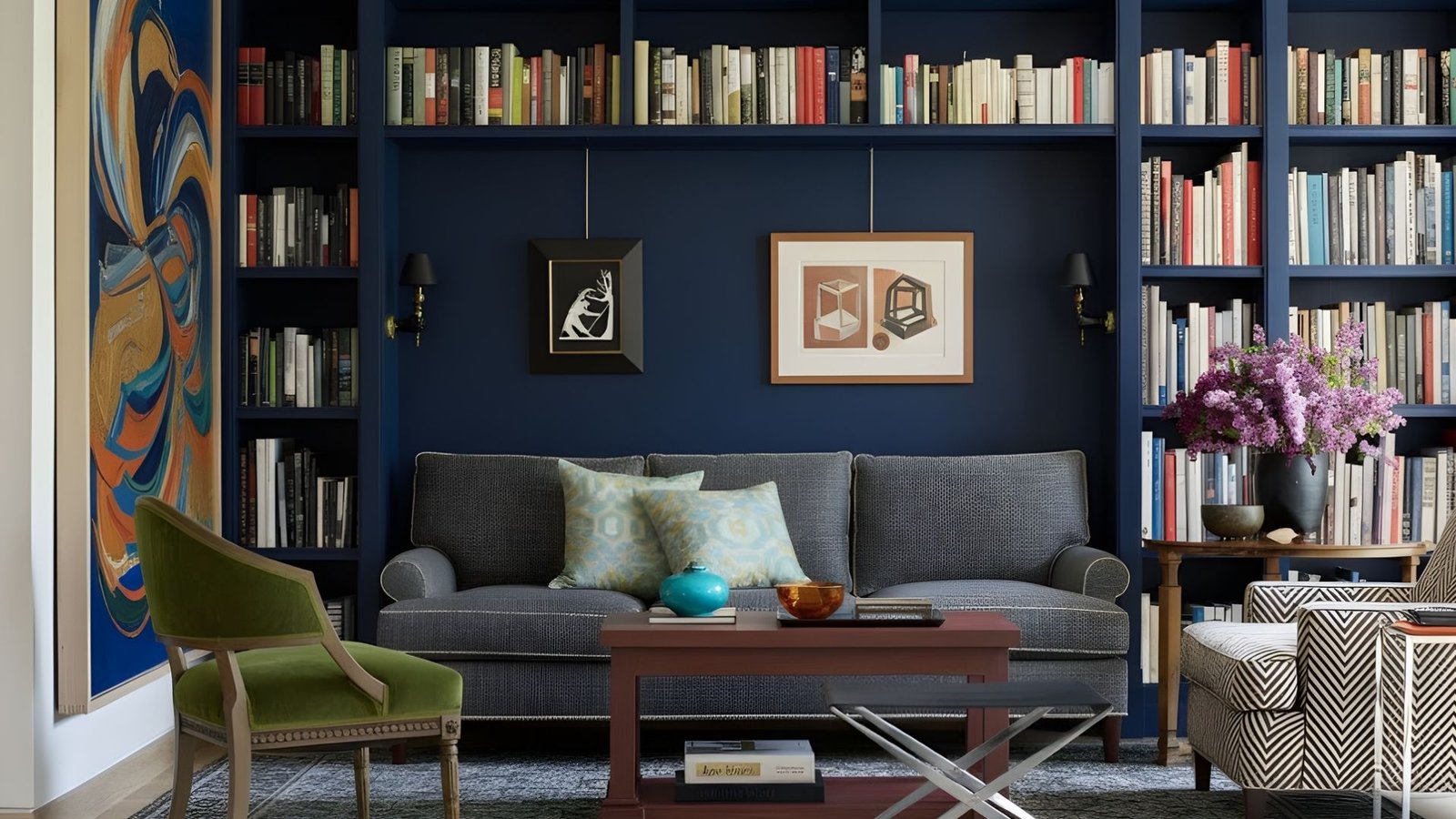
Have you ever looked at your bookshelves and felt they should look better, but you are not sure where to start?
I have been there too, standing in front of shelves that felt cluttered one day and empty the next. Bookshelves are more than storage.
They reflect how you live and what matters in your home. Learning how to decorate bookshelves is not about copying styled photos.
It is about balance, purpose, and daily use. Some shelves hold everyday books, while others add warmth and character.
In this guide, I will share clear steps, core rules, and practical ideas to help you style shelves that feel personal and lived in.
Let’s get started.
Basics of Bookshelf Styling
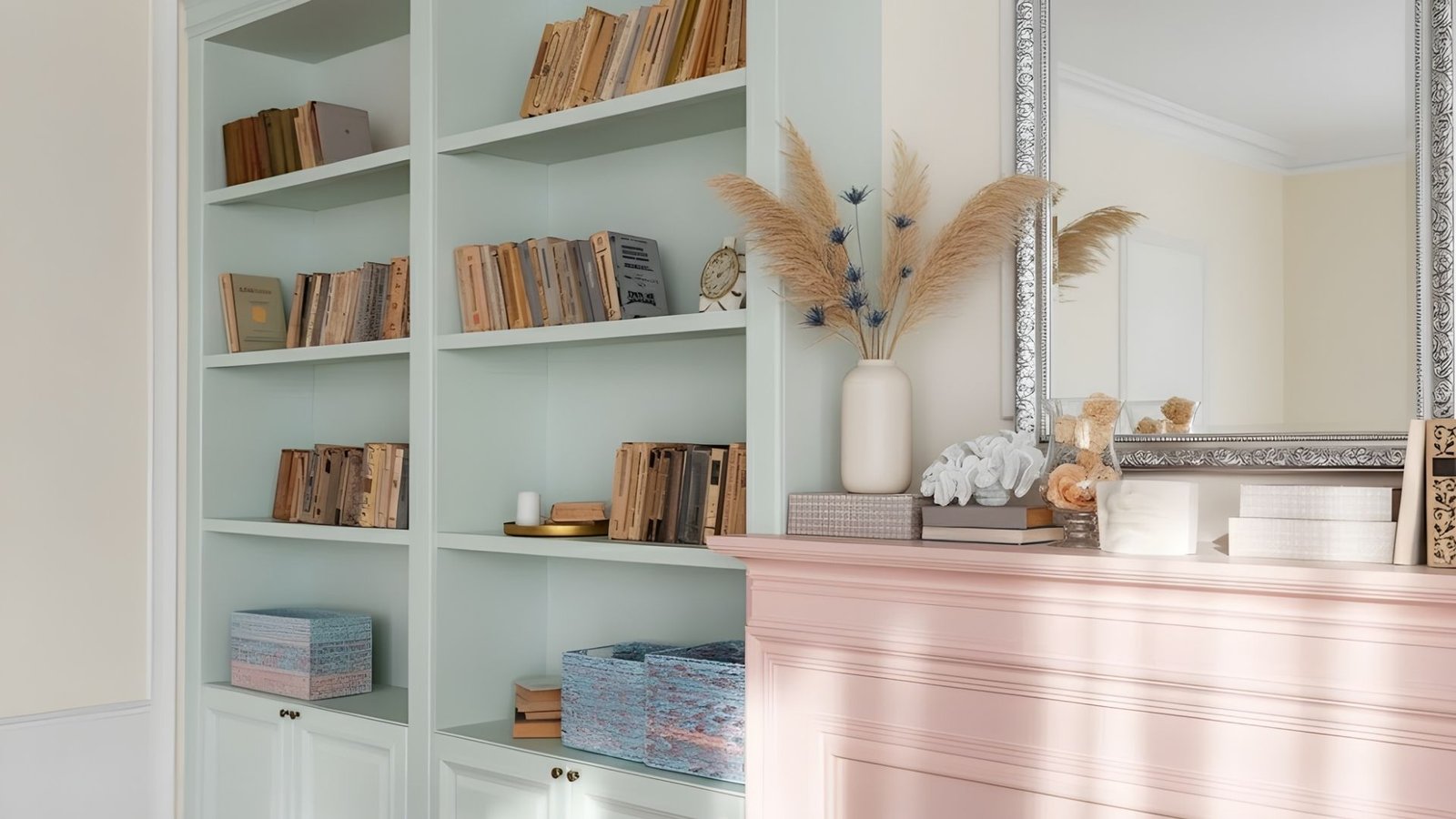
Styling bookshelves starts with understanding their purpose. Some shelves are mainly decorative and focus on visual appeal.
Others are functional and designed to hold books and daily items. Many shelves are mixed-use, combining books and decor in a balanced way.
Your bookshelf should match your home’s interior style. Modern spaces look best with clean lines and simple colors.
Minimalist homes rely on open space and a few meaningful pieces. Rustic interiors suit natural materials like wood and pottery.
Eclectic styles allow a mix of textures and personal items, while traditional spaces feel more polished with symmetry and classic decor.
Before decorating, edit your shelves carefully. Remove items you no longer need or love. Leaving empty space helps the shelves look organized, calm, and visually appealing.
The Core Rules of Decorating Bookshelves
A few simple design rules can help shelves look clean and well styled. These guidelines prevent clutter and improve visual balance.
The Rule of Three for Shelves:
Odd-numbered groupings look more natural and relaxed. Styling decor in groups of three helps avoid stiff arrangements.
Varying heights and textures within the group keeps shelves visually interesting without feeling busy.
The Zigzag Rule for Visual Flow:
Shelves look better when items are staggered.
Placing taller objects on alternating shelves and avoiding straight vertical lines creates a smooth visual flow and prevents repetitive layouts.
The Bookshelf Balance Rule:
Balanced shelves mix different sizes and shapes. Pair heavier pieces with lighter decor and spread bold items across shelves.
This creates a stable look that feels complete without overcrowding.
How to Decorate Bookshelves Step by Step
Decorating bookshelves feels easier when you follow a clear sequence. These steps help you style shelves in a way that feels personal, balanced, and intentional.
Step 1: Start With the Largest Anchor Pieces
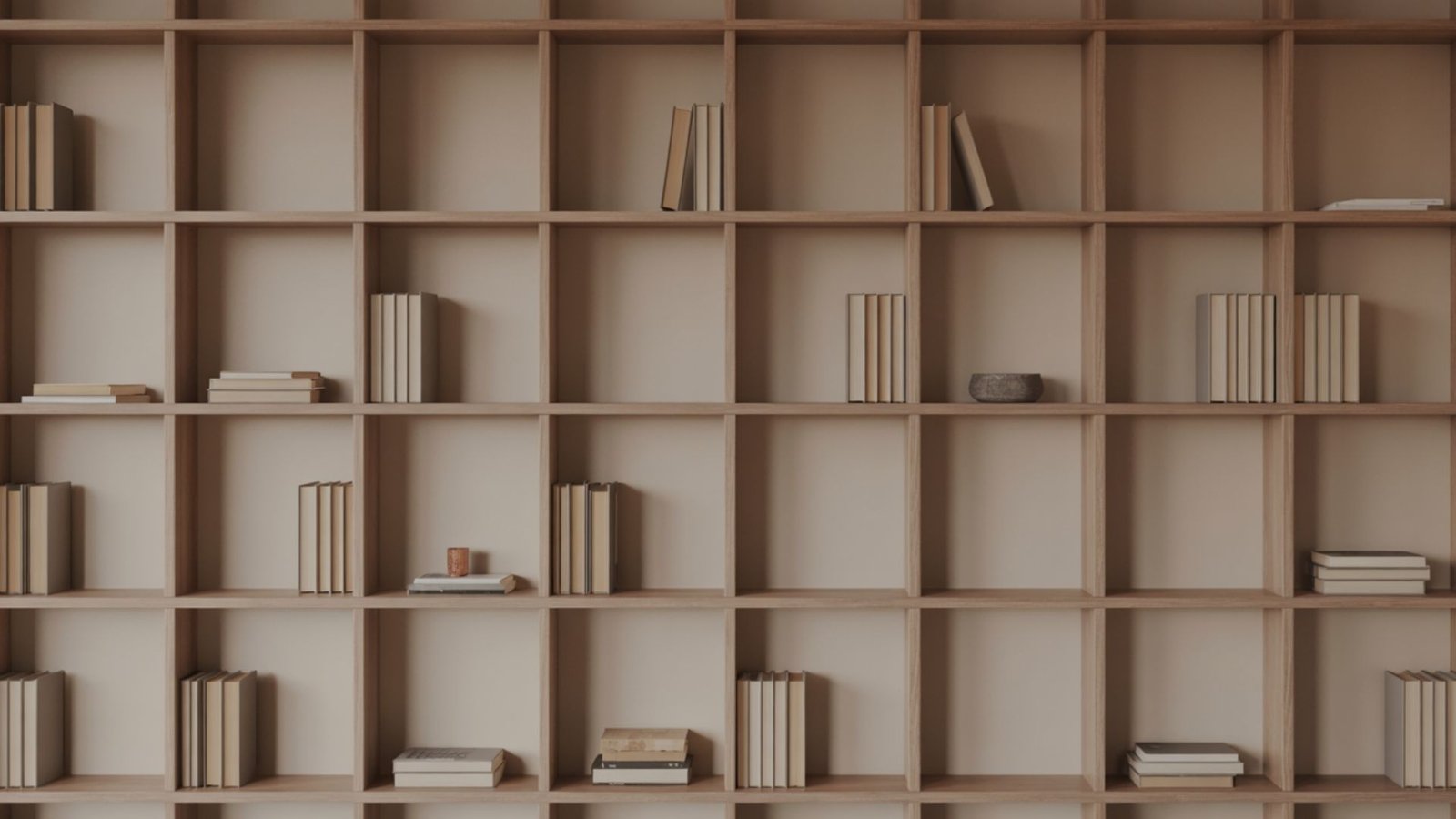
Begin with large items such as artwork, tall vases, baskets, or framed prints. These pieces create structure and set the tone for the entire shelf.
Place them on eye level or center shelves first, since these areas naturally draw attention.
Step 2: Arrange Books Vertically and Horizontally

Mix upright books with small horizontal stacks to avoid a stiff look. Vertical books keep shelves organized, while horizontal stacks add visual interest.
Limit stacks to two or three books. Turn book spines inward when colors feel distracting or when you want a calmer appearance.
Step 3: Layer Decor for Depth
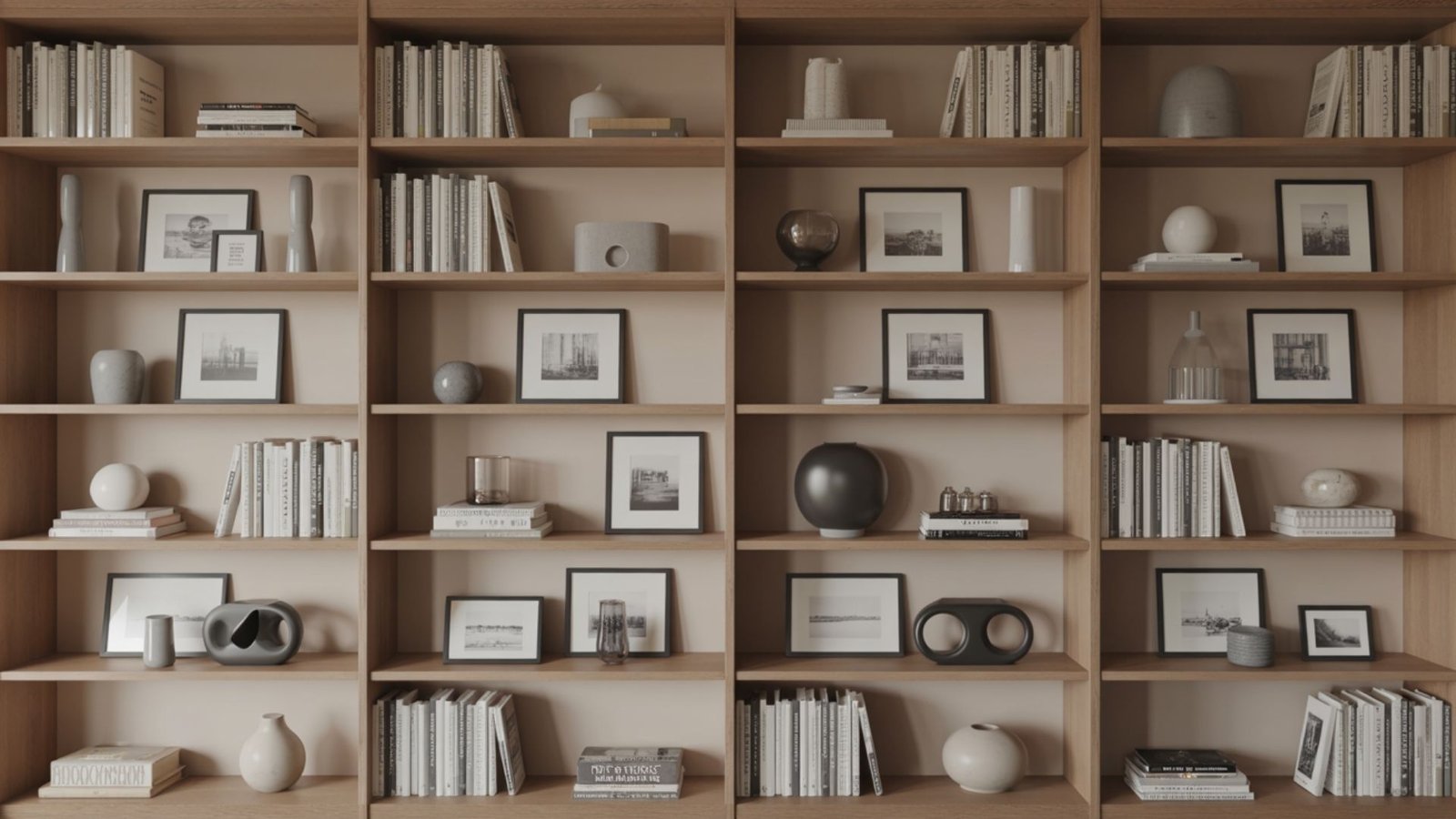
Layer items from back to front to add dimension. Place artwork or framed prints toward the back, then position smaller objects in front.
Light overlap helps shelves feel collected rather than flat.
Step 4: Add Decorative Accents
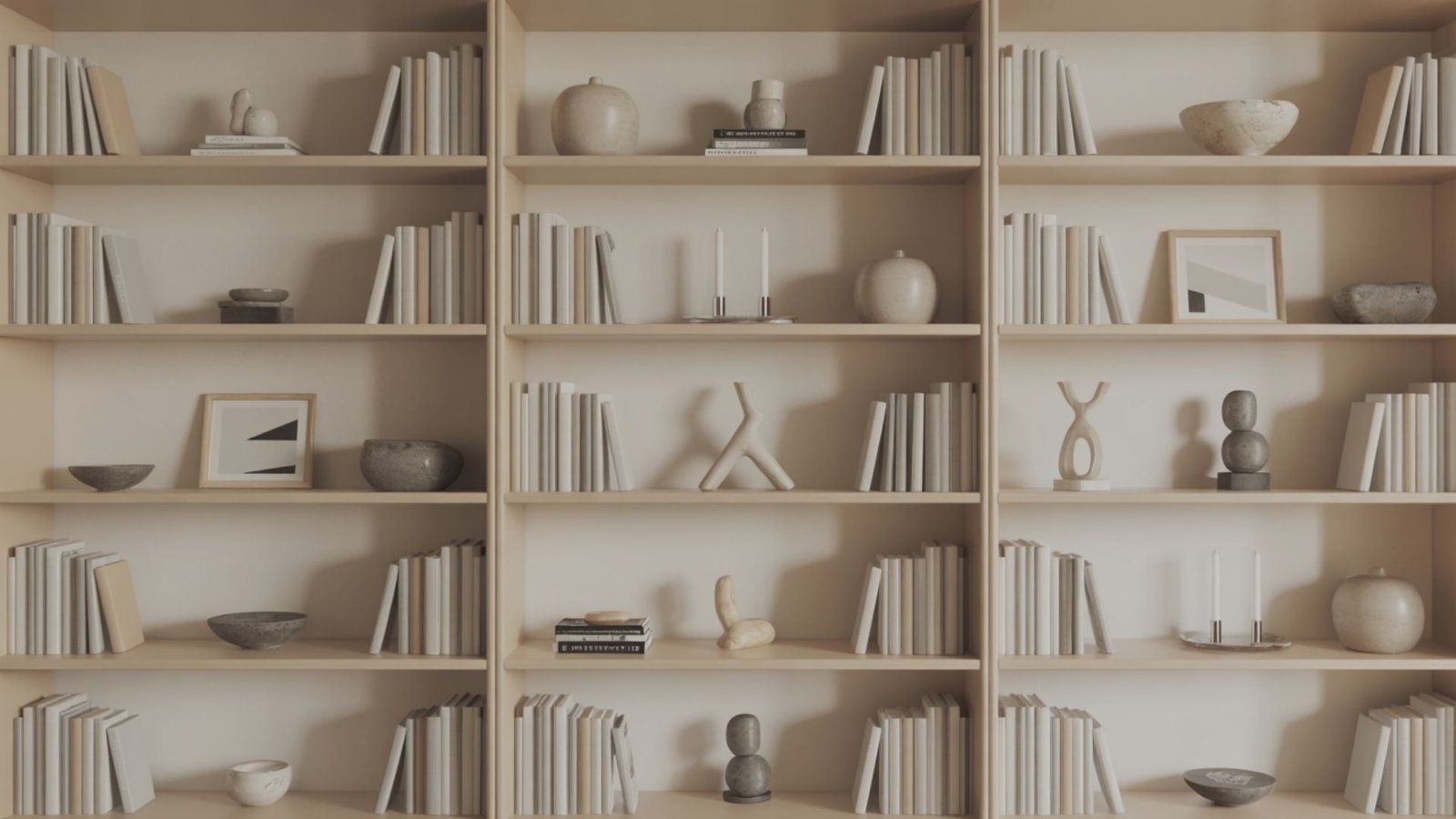
Introduce smaller decor pieces such as bowls, candles, sculptures, or personal items. Spread them across shelves instead of grouping everything in one area.
Arrange pieces to form gentle visual triangles.
Step 5: Include Greenery or Natural Elements
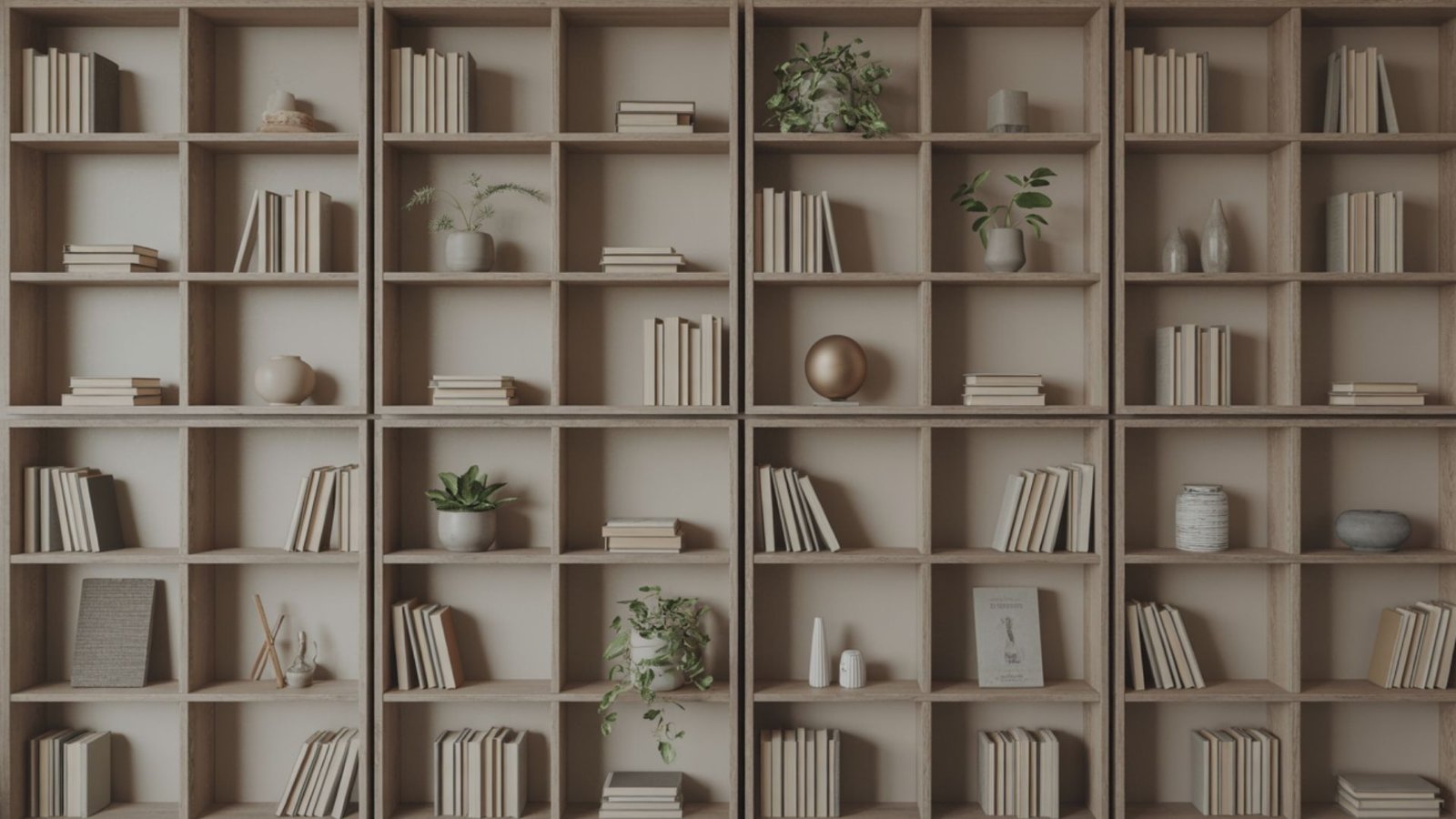
Add small plants or natural textures to soften the display.
Greenery balances books and decor while bringing life to the shelves.
Step 6: Edit and Adjust
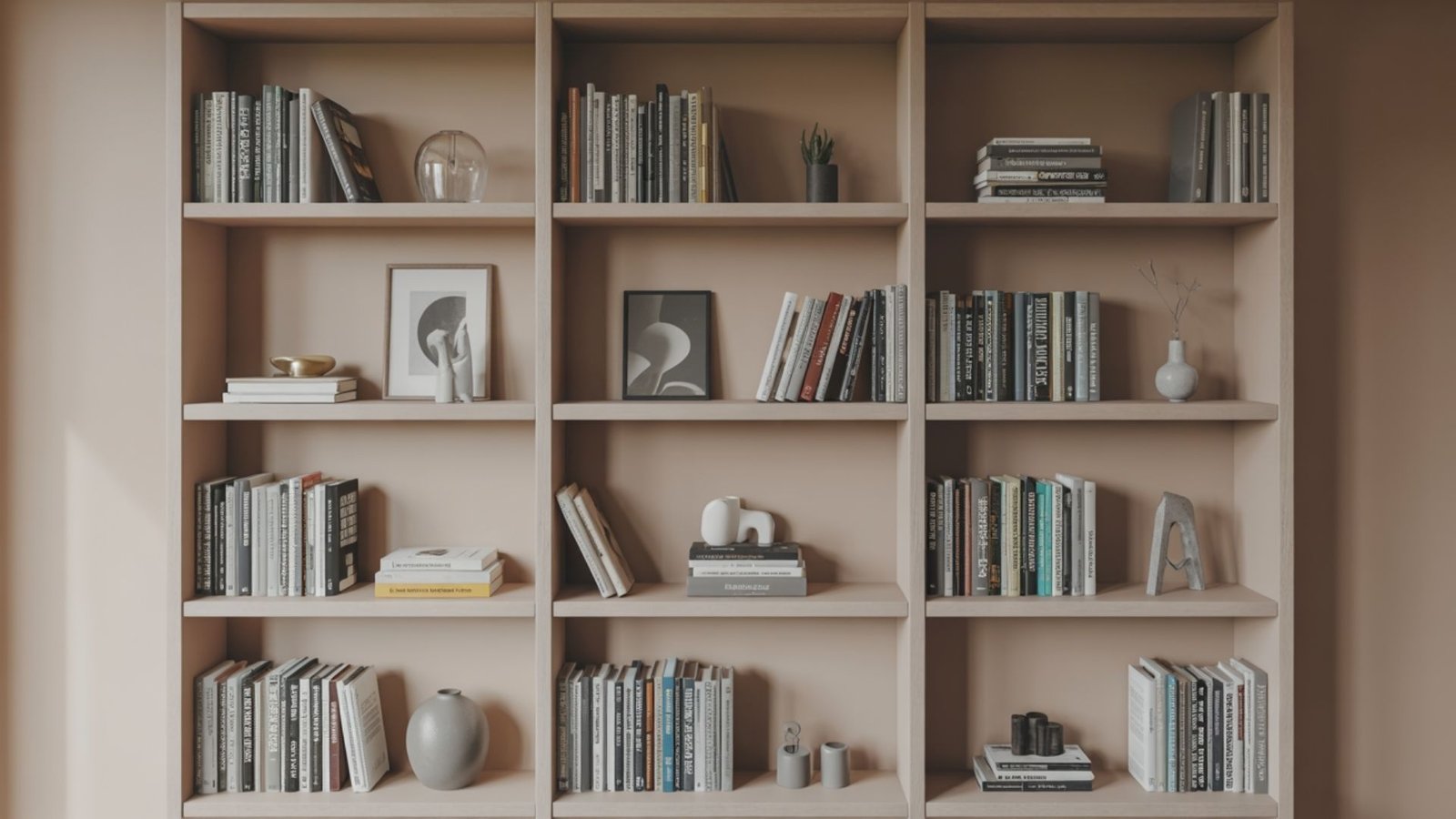
Step back and review the shelves once everything is placed. Remove items that feel crowded and adjust spacing so each piece has room to stand out.
Step back and view your shelves as a whole once everything is placed. Small adjustments and thoughtful spacing help turn styled shelves into a space that feels finished and personal.
How to Decorate Bookshelves with Creative & Practical Ideas
Once your shelves are styled, thoughtful details can take them to the next level. These ideas help refine your bookshelf decor and make each shelf feel intentional and visually engaging.
- Organize books by color: Color-coding books creates a smooth visual flow and works especially well on open shelves and in modern interiors. It gives shelves a clean, gallery-style look. If full color coding feels impractical, apply it to just one shelf while keeping others functional.
- Style books by size: Arranging books from tallest to shortest creates a calm, editorial look that feels intentional. This method works well in minimalist or professional spaces where visual order matters. It reduces clutter and helps shelves feel structured without relying on decorative accessories.
- Mix books with decorative objects: Breaking up long rows of books with decor prevents shelves from looking heavy or monotonous. Use vases, bowls, sculptures, or meaningful keepsakes between book sections. This balance keeps shelves visually interesting while still allowing books to remain the main focus.
- Use decorative bookends: Bookends add both function and personality to shelves. Sculptural, stone, wood, or metal bookends keep stacks upright while acting as decor. They help define book groupings without making shelves feel stiff or overly symmetrical.
- Add plants to shelves: Plants bring softness, color, and movement to bookshelf styling. Trailing ivy, pothos, or snake plants work especially well. For low-light shelves, faux greenery is a practical option that still adds warmth without the need for maintenance.
- Create small curated collections: Grouping similar items makes shelves feel thoughtful rather than random. Collections can be based on material, theme, or story, such as ceramics or travel souvenirs. Keeping collections small helps them feel intentional and prevents shelves from becoming cluttered.
- Mix vertical and horizontal book stacks: Vertical books add structure, while horizontal stacks introduce rhythm and variation. This combination keeps shelves dynamic and easy to style. Horizontal stacks also create natural platforms for small decor pieces without needing extra accessories.
- Use lighting to highlight displays: Soft lighting draws attention to shelf styling and adds depth. LED strips or puck lights work well for built-ins or darker shelves. Lighting enhances texture and mood, making shelves feel more finished and visually layered.
- Display artwork on shelves: Leaning framed art against the back of shelves creates a relaxed, gallery-style look. Layering art behind objects adds depth without crowding. This approach works especially well when wall space is limited or when you want a collected feel.
- Use wallpaper or shelf backing: Adding wallpaper or a contrasting backing introduces visual interest without adding objects. It works well for neutral shelves that need depth. Peel-and-stick wallpaper is an easy option that allows you to experiment without permanent commitment.
- Use texture to add warmth: Mixing materials like wood, stone, ceramic, metal, and glass keeps shelves from feeling flat. Texture adds richness even within a neutral color palette. It creates visual depth and makes shelves feel more inviting and layered.
- Leave intentional empty space: Open space is just as important as decor. Leaving areas empty helps prevent visual overwhelm and allows key pieces to stand out. This approach is essential for modern and minimalist styling and makes shelves feel calm and breathable.
- Experiment with shelf arrangements: Changing layouts can dramatically alter the look of shelves. Symmetry works well for built-ins and formal spaces, while asymmetry suits relaxed interiors. Styling items in odd-number groupings often feels more natural and visually appealing.
Use these ideas to adjust, refine, and personalize your shelves until they reflect your space and style perfectly.
Seasonal and Holiday Bookshelf Decorating Ideas
Updating bookshelves by season helps your home feel fresh and intentional. You can reflect holidays and changing seasons with small, thoughtful adjustments.
How to decorate bookshelves for Christmas: Add greenery, candles, and a few festive accents in a limited color palette to create a warm, seasonal look without overcrowding the shelves.
Fall, spring, and everyday refreshes: Use warm textures for fall, light colors and florals for spring, and rotate books or small decor pieces to refresh shelves year-round.
Easy seasonal swaps without redecorating everything: Change greenery, candles, or a few decorative items to reflect the season while keeping the main shelf layout intact.
Common Bookshelf Decorating Mistakes to Avoid
Bookshelves can look cluttered or unfinished when common styling mistakes are overlooked. Avoiding these issues helps shelves feel balanced, intentional, and easy on the eyes.
- Overfilling shelves with too many items, which creates visual clutter and makes shelves hard to read
- Leaving no empty space, causing books and decor to blend together instead of standing out
- Using objects that are all the same size or height, resulting in a flat and unbalanced look
- Pushing all items to the back of the shelf, which removes depth and dimension
- Ignoring the room’s interior style, making shelves feel disconnected from the space
- Skipping the editing step before styling, leading to crowded and unfocused shelves
How to Make Your Bookshelves Reflect Your Personality
Bookshelves feel most authentic when they show who you are. Simple, intentional choices keep them personal without looking cluttered.
Mixing personal objects with decor: Combine books with photos, travel pieces, or meaningful objects. Balance them with simple decor so personal items stay visible and clear.
Styling shelves to feel lived-in, not staged: Avoid perfect symmetry. Mix textures, ages, and heights to create a relaxed and natural arrangement.
Making shelves evolve with time: Rotate books and decor as your interests change. This keeps shelves current and connected to your life.
Conclusion
Bookshelf styling is not about perfection. It is about balance, purpose, and making space for the things you enjoy most.
Over time, I have learned that simple edits, thoughtful spacing, and personal touches make the biggest difference.
When you understand how to decorate bookshelves with intention, they become easier to refresh and live with.
Start small, adjust as you go, and trust your eyes. Take one shelf today and restyle it your way!
Frequently Asked Questions
How do you make a bookshelf look good?
Balance books, decor, and empty space. Mix book orientations, vary heights, and remove clutter so shelves look intentional and organized.
What is the rule of thumb for decorating shelves?
Focus on balance. Use different sizes and textures, avoid filling every shelf, and group items in odd numbers.
How many decor items should be on a bookshelf?
There is no set number. Use only enough items to support the books and leave space between objects.
Should bookshelves be symmetrical or asymmetrical?
Both work. Symmetry suits formal spaces, while asymmetry feels more relaxed. Visual balance matters more than matching.
Should every shelf have decor on it?
No. Leaving some shelves simple or partially empty prevents clutter and improves overall balance.


