

Cabinet door style plays a crucial role in defining the overall look and functionality of your kitchen and bathroom spaces.
Among the most important decisions you’ll make is choosing between inset and overlay cabinetry, two distinct construction methods that create dramatically different aesthetic results.
Inset cabinets feature doors and drawers that sit flush within the cabinet frame, while overlay cabinets have doors that rest on top of the frame.
Each approach offers unique advantages and considerations that can significantly impact your renovation project.
In this comprehensive comparison, you’ll learn about the pros and cons of each style, cost differences, design aesthetics, and installation requirements.
We’ll help you determine which cabinet construction method best suits your home’s architecture, your budget, and your personal preferences for both form and function.
Side-by-Side Comparison Table
| Feature | Inset Cabinets | Overlay Cabinets |
| Design Style | Classic, high-end | Modern to transitional |
| Door Fit | Sits flush inside frame | Sits on top of frame |
| Storage | Slightly less | Maximized |
| Cost | Higher | More affordable |
| Maintenance | More alignment care needed | Lower maintenance |
| Best For | Quality-focused, timeless interiors | Flexible budgets, modern appeal |
This comparison highlights the key differences between inset and overlay cabinet construction, helping homeowners evaluate which option best suits their project requirements and preferences.
Understanding the Basics
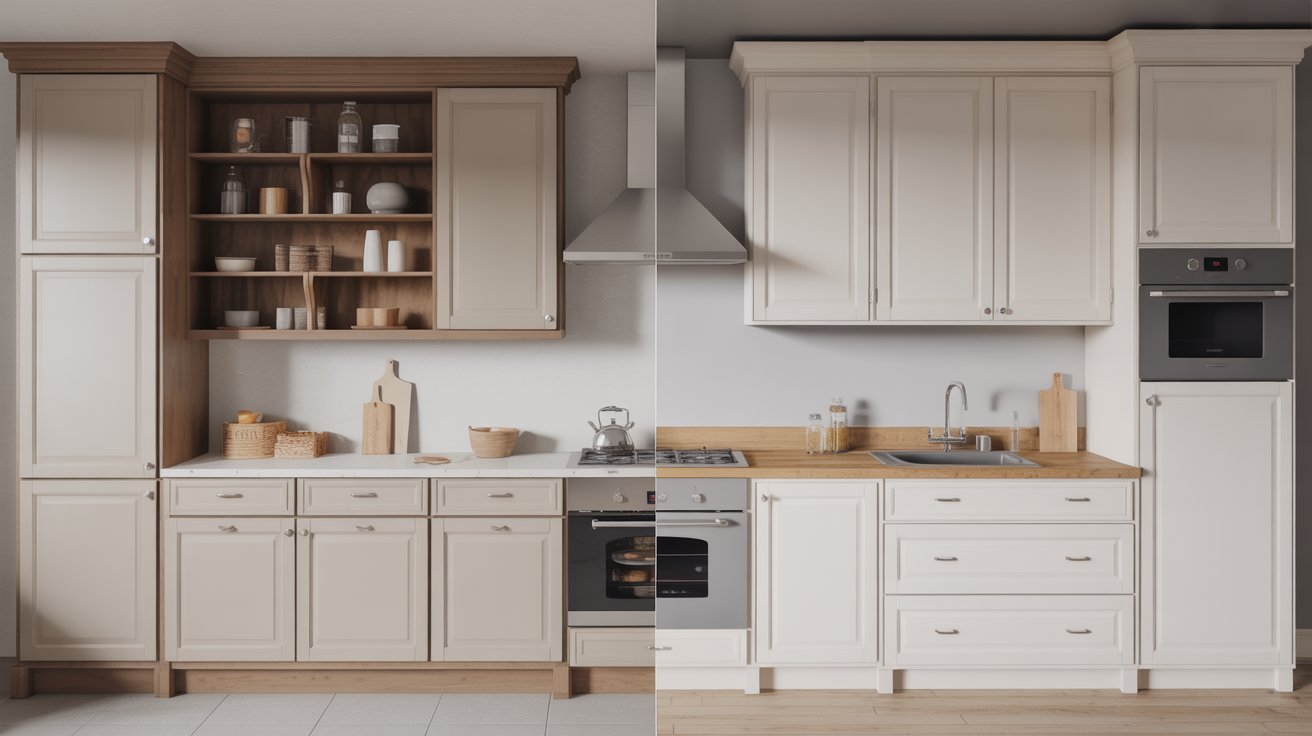
Before comparing these two cabinet styles, it’s important to understand the fundamental differences in their construction and appearance.
What Are Inset Cabinets?
Inset cabinets feature doors and drawers that sit inside the cabinet frame, creating a flush, clean-lined appearance where all surfaces align perfectly.
This construction method produces a seamless look that resembles fine furniture craftsmanship.
Inset cabinets are commonly found in traditional, transitional, and high-end custom kitchens where homeowners value precision and quality construction details.
What Are Overlay Cabinets?
Overlay cabinets have doors and drawers that sit on top of the cabinet frame rather than within it.
This style is available in partial overlay and full overlay configurations, with partial overlay showing more of the frame and full overlay covering most of the frame surface.
Overlay construction offers more flexibility in cost and design options, making it the most popular choice for residential cabinetry installations across various price points and style preferences.
Design & Stylish Comparison
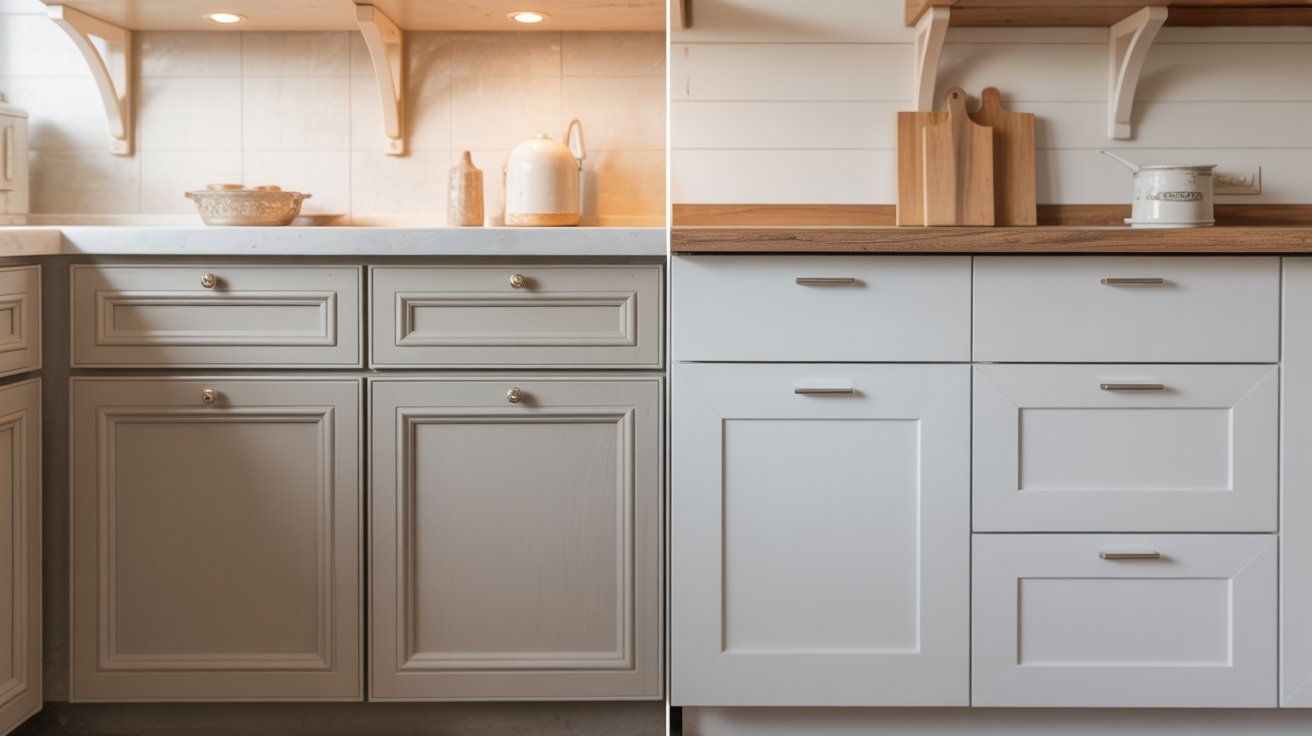
The visual impact of your cabinet choice extends far beyond basic functionality, influencing the entire character of your kitchen or bathroom space.
Inset: Classic & Refined
Inset cabinets create seamless face frame visibility that showcases the cabinet’s architectural structure.
This construction method produces a furniture-like appearance that feels substantial and well-crafted.
The style offers sophisticated detailing options including beaded, square, and flush styles that can complement various design preferences while maintaining that signature refined aesthetic.
Overlay: Sleek & Versatile
Overlay cabinets feature minimal gaps between doors and drawers, creating a modern look that emphasizes clean lines and uninterrupted surfaces.
This construction method works exceptionally well with slab, shaker, and panel door styles, providing flexibility across design themes.
Overlay cabinets prove ideal for both traditional and contemporary settings, adapting easily to changing style preferences and offering homeowners greater design versatility throughout different renovation phases.
Functionality & Installation
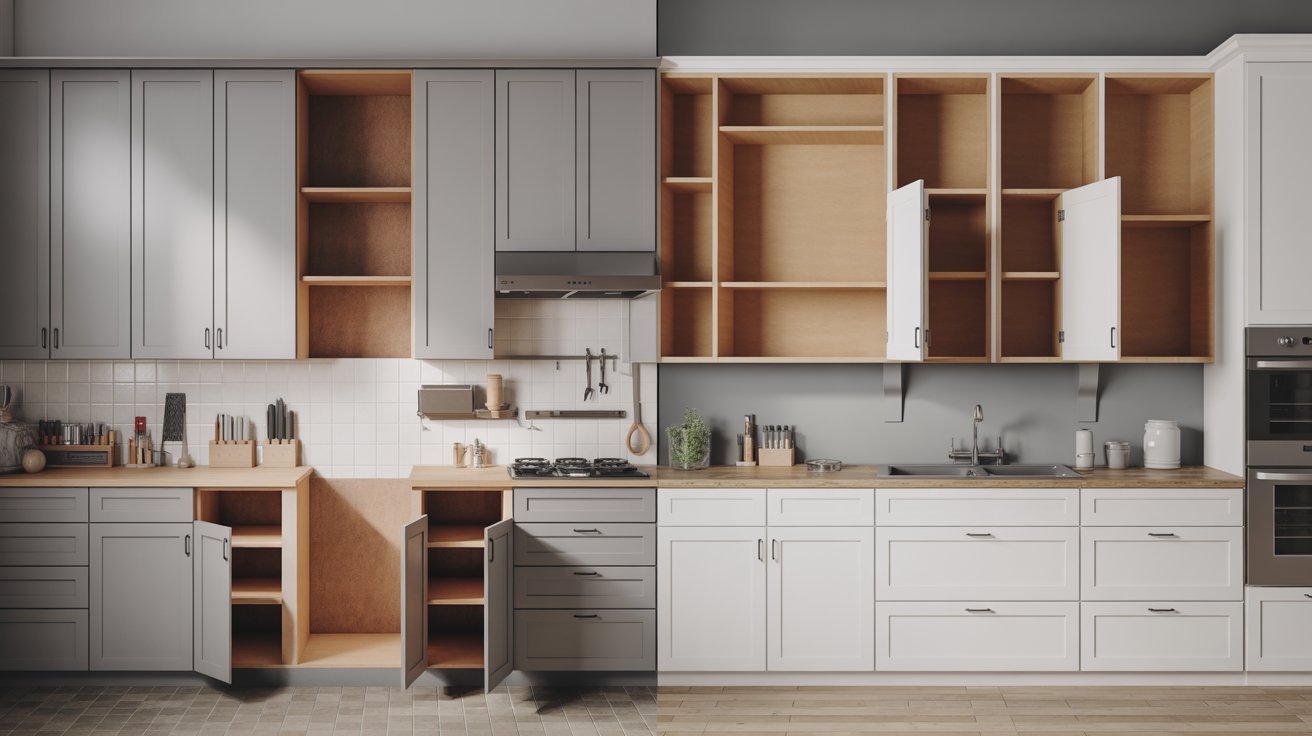
The practical aspects of cabinet construction significantly impact both the installation process and long-term performance of your cabinetry investment.
Inset Cabinets
- Requires precise craftsmanship during both manufacturing and installation, as doors and drawers must fit exactly within their frame openings.
- Provides slightly less storage space due to frame placement, since the frame takes up interior room that could otherwise accommodate larger drawer boxes.
- Hinges can be visible or hidden depending on your aesthetic preferences.
- May need occasional alignment adjustments over time as wood naturally expands and contracts with seasonal changes.
Overlay Cabinets
- Easier to install with less margin for error, making them more forgiving during the installation process.
- Maximizes available storage space since doors and drawers don’t need to fit within frame constraints.
- The installation process is typically faster and more straightforward, reducing labor costs and potential complications.
Cost Comparison
Understanding the financial implications of each cabinet style helps you make informed decisions that align with your renovation budget and long-term value expectations.
Why Inset Costs More
Inset cabinets require custom fit and alignment that demands skilled craftspeople and additional time during both manufacturing and installation phases.
The higher labor intensity increases overall project costs, as precise measurements and adjustments require experienced professionals who can achieve the exacting tolerances necessary for proper function.
These cabinets are often made with premium materials and hardware that meet the demanding standards required for the precise fit and smooth operation that defines quality inset construction.
Why Overlay Saves Budget
Overlay cabinets benefit from standard sizing and easier production methods that reduce manufacturing costs and allow for more efficient mass production techniques.
This construction style offers more affordable hardware and finish options due to the forgiving nature of overlay construction tolerances, which don’t require the same level of precision as inset installations.
Overlay cabinets prove ideal for budget-conscious remodels where homeowners want attractive, functional cabinetry without the premium costs associated with custom precision work and specialized craftsmanship requirements.
Durability & Maintenance
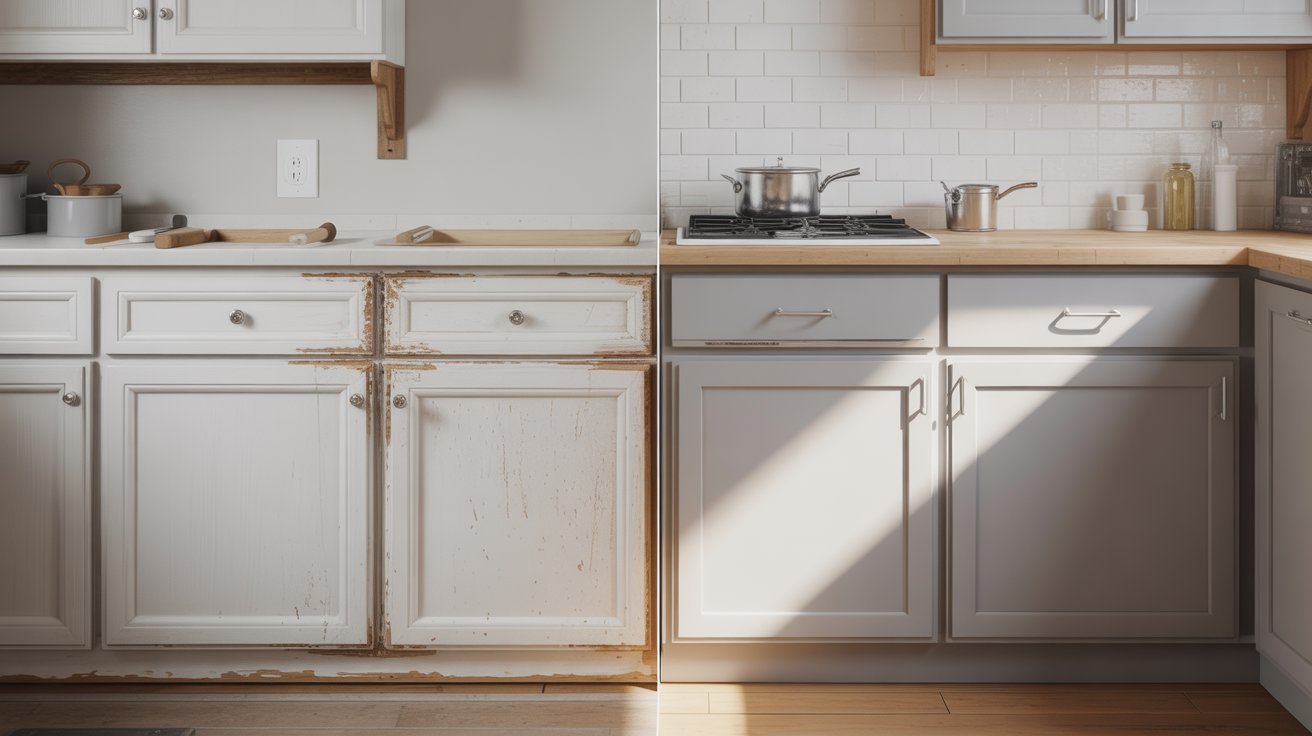
The long-term performance and upkeep requirements of each cabinet style vary significantly based on their construction methods and exposure patterns.
Inset Cabinets
- More prone to friction at frame edges where doors and drawers make contact during regular use.
- Small misalignments become visible over time as the wood naturally moves with seasonal changes, potentially affecting both appearance and function.
- Requires a skilled installer to reduce potential issues, as proper initial installation significantly impacts long-term performance and minimizes maintenance needs.
Overlay Cabinets
- Doors protrude slightly from the frame, making them more susceptible to dents or chips from daily kitchen activities and impacts.
- Frame edges remain less exposed to wear and damage compared to inset construction.
- Easier to replace or refinish when damage occurs, as the forgiving construction tolerances allow for simpler repairs and adjustments without requiring precision.
Conclusion
Choosing between inset and overlay cabinets ultimately depends on your priorities, budget, and design vision for your space.
Inset cabinets offer timeless appeal and furniture-quality craftsmanship but come with higher costs and maintenance requirements.
Overlay cabinets provide practical functionality, budget-friendly options, and versatile design possibilities that work across various style preferences.
Consider your long-term plans, available budget, and how much maintenance you’re willing to handle when making this decision.
Both styles can create beautiful, functional kitchens when properly installed and maintained.
Take time to evaluate samples, speak with experienced contractors, and consider how each option aligns with your home’s architecture and your family’s daily needs.
The right choice will serve you well for years to come while adding value to your home.
Frequently Asked Questions
What is the main difference between inset and overlay cabinets?
Inset cabinets have doors and drawers that sit flush inside the cabinet frame, while overlay cabinets have doors that rest on top of the frame. This creates different visual appearances, with inset offering a furniture-like look and overlay providing a more streamlined appearance.
Which cabinet style costs more and why?
Inset cabinets typically cost 15-30% more than overlay cabinets due to the precision craftsmanship required for proper fit and alignment. The higher labor intensity and premium materials needed for inset construction increase overall project expenses.
Do inset cabinets provide less storage space than overlay cabinets?
Yes, inset cabinets offer slightly less storage capacity because the frame takes up interior space that could otherwise accommodate larger drawer boxes. Overlay cabinets maximize storage since doors don’t need to fit within frame constraints.
Which cabinet style is easier to install and maintain?
Overlay cabinets are easier to install with more forgiving tolerances and require less ongoing maintenance. Inset cabinets need precise installation and may require occasional alignment adjustments as wood naturally expands and contracts over time.
Which cabinet style works better for modern kitchen designs?
Both styles can work in modern kitchens, but overlay cabinets offer more versatility across design themes. Overlay construction adapts well to contemporary, traditional, and transitional settings, while inset cabinets lean more toward classic and refined aesthetics.
