
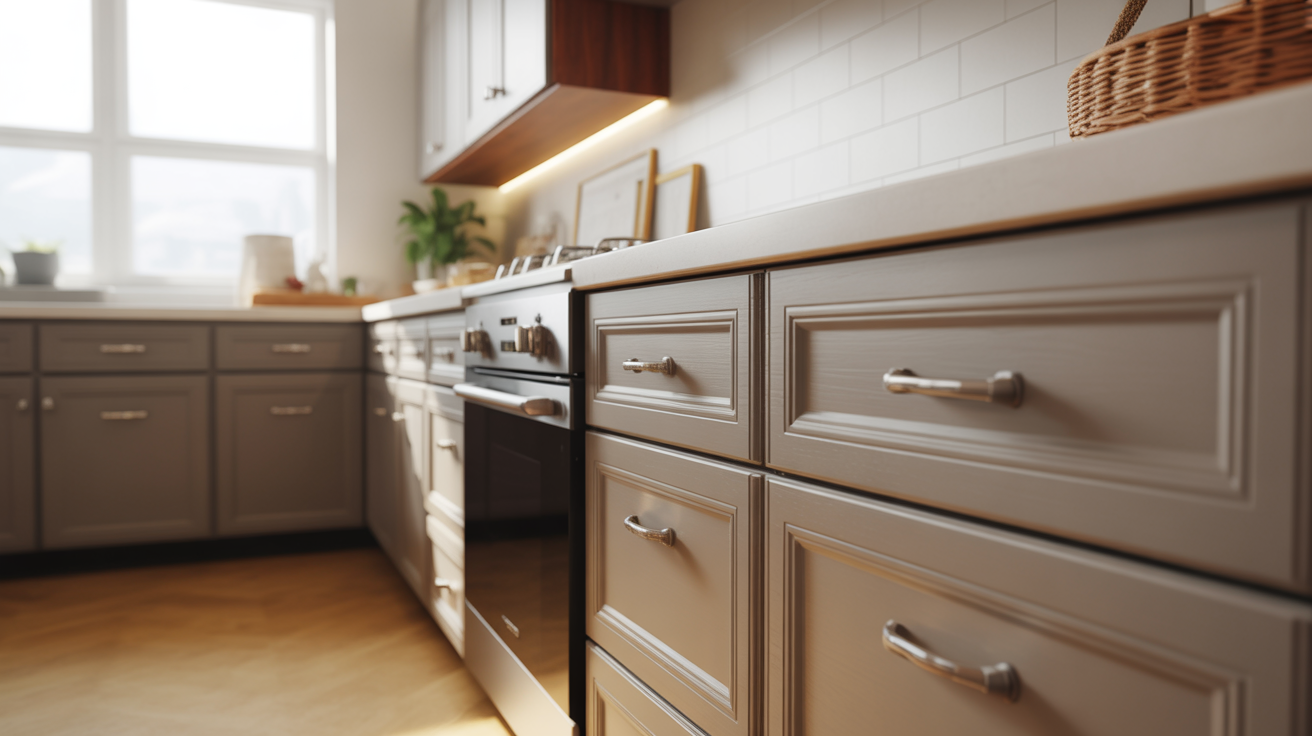
I’ve spent countless hours helping homeowners pick the right cabinet hardware for their kitchens.
It’s one of those decisions that seems small but makes a huge impact on how your kitchen looks and functions every single day.
The debate between knobs vs pulls in kitchen design comes down to more than just appearance.
You need hardware that feels comfortable in your hand, matches your style, and works with your cabinet layout.
I’ll walk you through everything you need to know about both options.
By the end, you’ll know exactly which hardware fits your kitchen best.
The Main Differences Between Knobs and Pulls
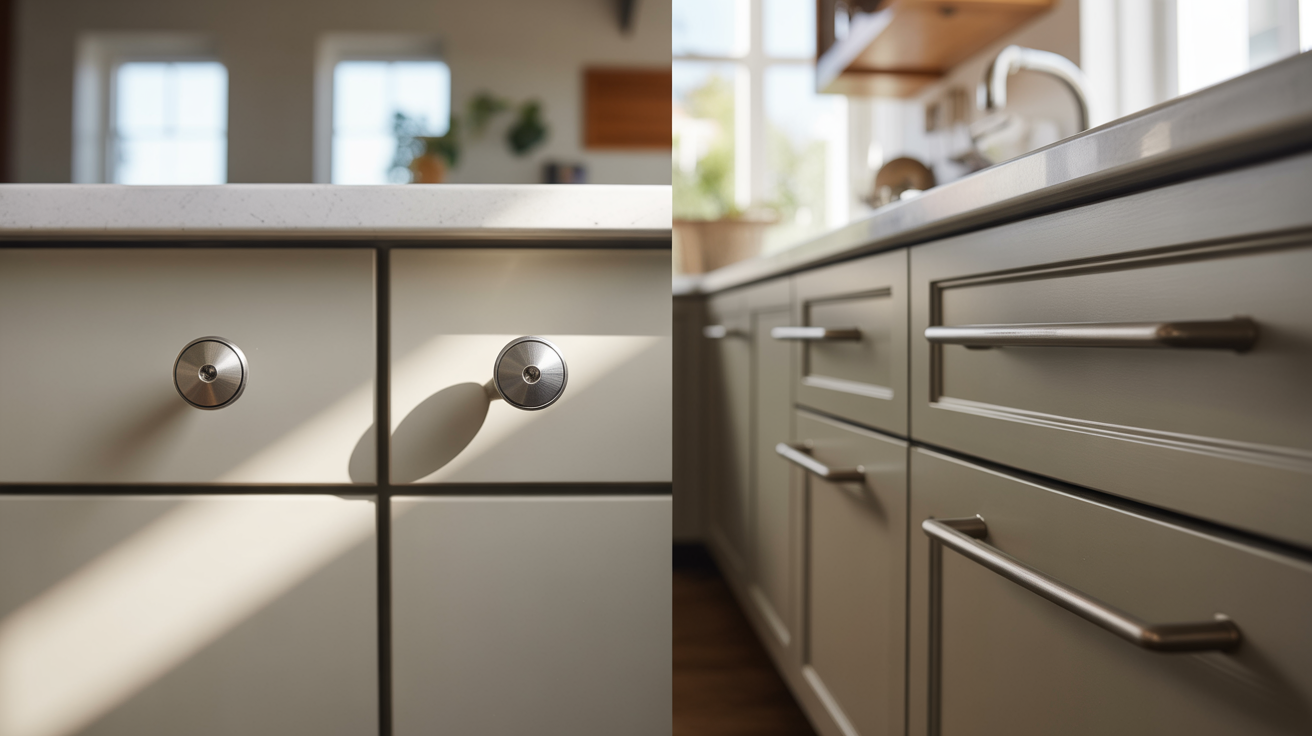
Let me break down what sets these two hardware types apart. The main difference is pretty simple, but it affects everything from installation to daily use.
Knobs attach with a single screw while pulls use two mounting points. This changes how you grip them, install them, and how they look on your cabinets.
|
Feature |
Knobs |
Pulls |
|
Mounting |
Single screw |
Two screws |
|
Grip Style |
Fingertip pinch |
Full-hand wrap |
|
Size |
Compact (1″ typical) |
Longer (3-6″ typical) |
|
Installation |
Simple, one hole |
More complex, two holes |
|
Visual Impact |
Minimal |
More prominent |
|
Best For |
Upper cabinets, small doors |
Lower cabinets, drawers |
What Are Kitchen Cabinet Knobs?
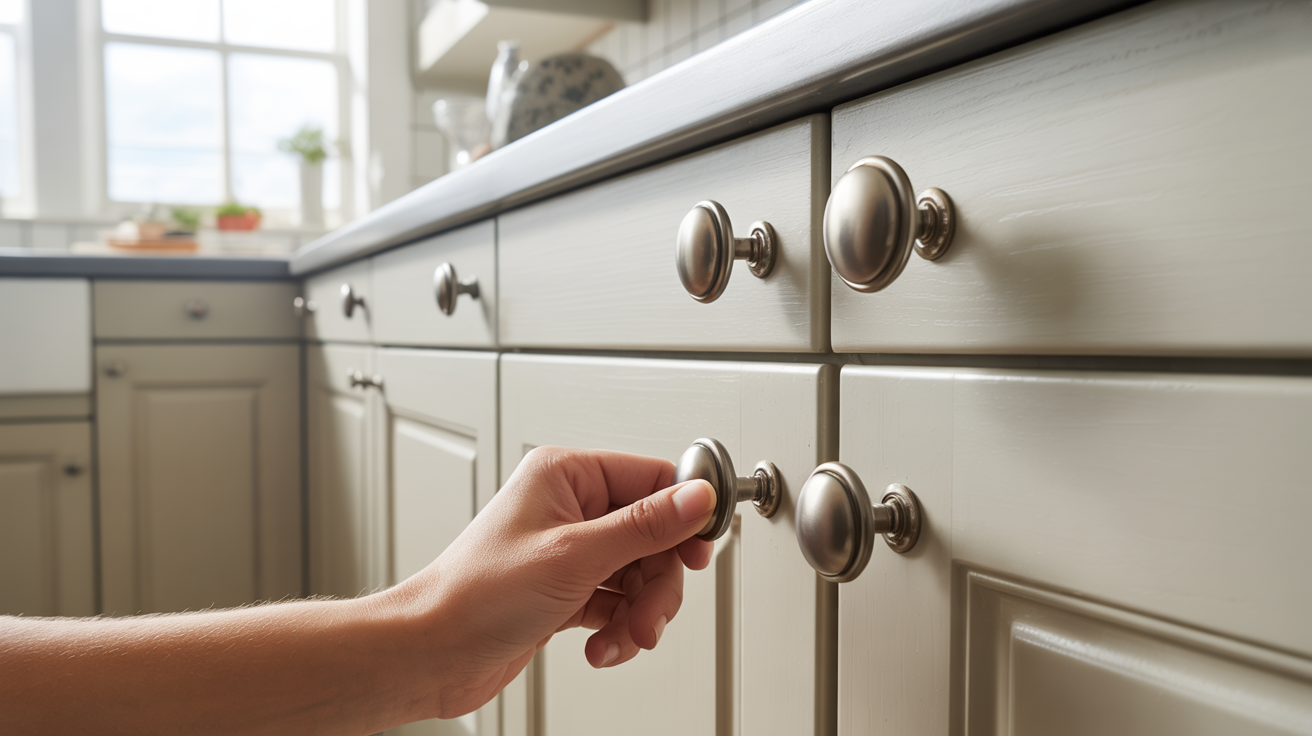
Knobs attach to your cabinet with a single screw. They’re usually round, though you can find square and decorative shapes too. Most measure about 1 inch across.
You grip them with your fingertips when opening doors and drawers. The single mounting point makes installation straightforward since you only need to drill one hole per knob.
Knobs have been a kitchen staple for decades. They work great in many situations, creating a compact, minimal look on your cabinet fronts.
Pros of Kitchen Cabinet Knobs
Kitchen cabinet knobs offer several practical benefits that make them popular with homeowners. I’ve installed knobs in dozens of kitchens, and they consistently deliver value.
- They cost less than pulls, saving you money on a full kitchen renovation
- Installation takes minutes with just one screw hole per piece
- They work perfectly on upper cabinets where you don’t need heavy lifting
- Classic designs fit almost any kitchen style
- Small size means they don’t overwhelm your cabinet fronts
- They’re ideal for kitchens with limited space where pulls might look too bulky
- More forgiving if you’re doing DIY installation
Cons of Kitchen Cabinet Knobs
Knobs aren’t the right choice for every situation in your kitchen. I’ve had clients switch to pulls after struggling with certain cabinets.
- Gripping them can be tough, especially with wet or greasy hands
- Your clothing might catch on them as you move around the kitchen
- Opening heavy drawers requires more effort and an awkward grip
- People with arthritis or grip issues often struggle with knobs
- They can slip out of your fingers when you’re in a hurry
- The pinching motion concentrates pulling force on fingertips
- Not ergonomic for lower cabinets or heavy pot-and-pan drawers
What Are Kitchen Cabinet Pulls?
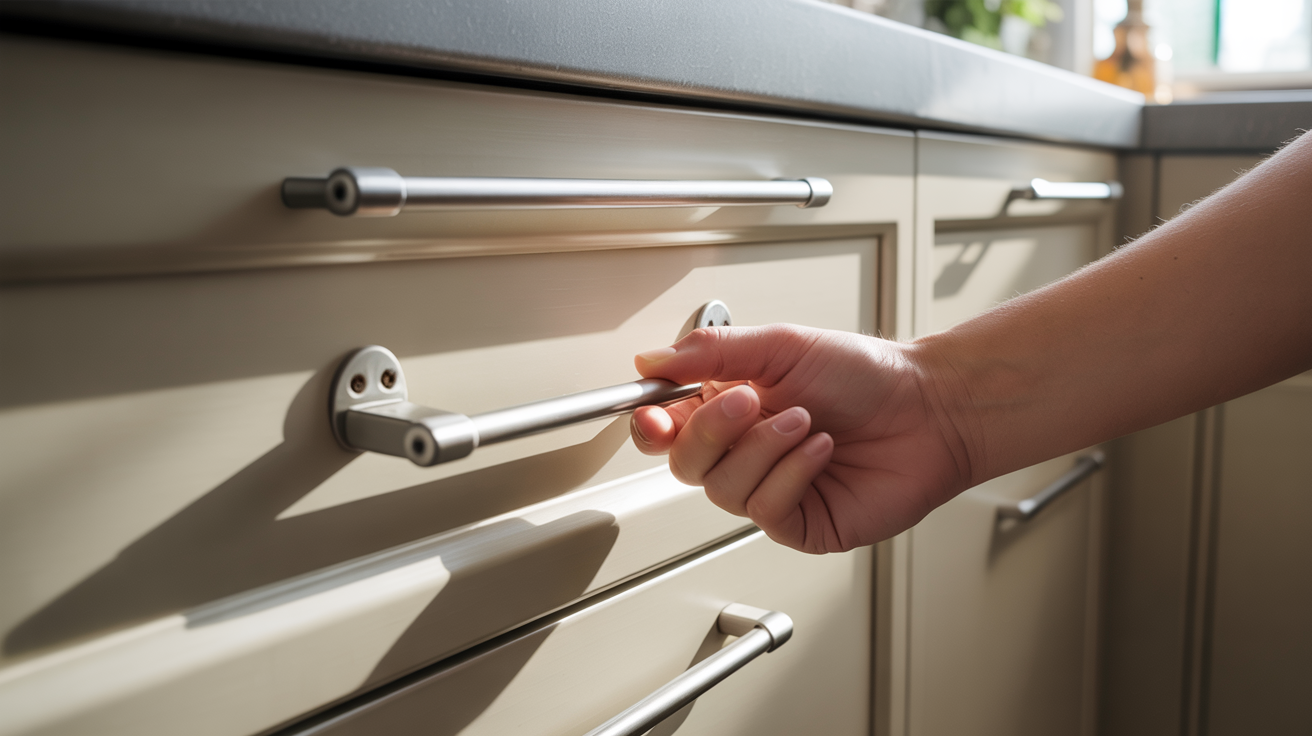
Pulls work differently than knobs. They have two mounting points and come in bar or arch shapes.
The space between these points gives you room to wrap your fingers around the hardware.
Most pulls measure 3 to 6 inches long, though you can find sizes up to 12 inches for wide drawers. This creates a more secure grip than knobs provide.
Installation requires drilling two precisely spaced holes. The extra planning pays off with improved functionality, especially on drawers and lower cabinets.
Pros of Kitchen Cabinet Pulls
Cabinet pulls come with functional advantages that make kitchen tasks easier. The difference becomes obvious the first time you open a heavy drawer full of dishes.
- You can wrap multiple fingers around them for a secure grip
- Heavy pots-and-pans drawers open smoothly without strain
- Much easier to use for kids, elderly family members, and anyone with hand mobility issues
- The pulling force spreads across the hardware instead of concentrating on one point
- Modern designs create clean, horizontal lines that look polished
- You can grab them quickly without precise aim
- Better ergonomics for lower cabinets and frequently used drawers
- More accessible for people with arthritis or grip limitations
Cons of Kitchen Cabinet Pulls
Pulls have some trade-offs that might affect your decision. They require more planning and a bigger budget than knobs.
- They cost more per piece, sometimes double what knobs cost
- Installation requires drilling two precisely spaced holes
- They take up more visual space on your cabinet fronts
- Small cabinet doors can look odd with pulls that are too large
- Getting the sizing right takes more planning
- Higher labor costs if hiring professional installation
- Mistakes in hole placement are harder to fix
- Can overwhelm the look of compact kitchens
Conclusion
Both knobs and pulls have clear strengths in kitchen design. Knobs save money, install quickly, and look great on upper cabinets.
Pulls give you a better grip, work perfectly on drawers, and make lower cabinets easier to use.
The right hardware choice makes your kitchen more comfortable and better looking.
Take your time with this decision since you’ll be grabbing these handles dozens of times every day for years to come.
Frequently Asked Questions
Can You Mix Knobs and Pulls on Kitchen Cabinets?
Yes, mixing both is actually recommended for most kitchens. Use knobs on upper cabinets and pulls on lower cabinets and drawers. This combines the visual appeal of knobs with the functionality of pulls where you need grip strength.
Which Hardware Is Better for Heavy Drawers?
Pulls work much better for heavy drawers. They give you a full-hand grip that distributes pulling force evenly. Knobs can slip or strain your fingers when opening drawers loaded with pots, pans, or dishes.
Are Knobs or Pulls Easier to Install?
Knobs install faster and more simply since they need just one screw hole. Pulls require two precisely spaced holes, which takes more time and careful measurement. If you’re doing it yourself, knobs are more forgiving of small mistakes.
Do Cabinet Hardware Finishes Need to Match Faucets?
No, they don’t have to match exactly. Coordinating finishes looks more polished than matching perfectly. If your faucet is chrome, cabinet hardware in brushed nickel or stainless steel works fine. Just keep the tone similar.
What Size Pull Should I Use for My Cabinet Drawers?
Choose pulls that are about one-third the width of your drawer front. A 15-inch wide drawer looks balanced with a 5-inch pull. Smaller pulls get lost on wide drawers, while oversized pulls overwhelm narrow ones.


