
Small kitchens don’t have to sacrifice style or function. I’ve seen countless homeowners change cramped cooking spaces into efficient, beautiful areas that work hard for their families.
The L-shaped layout has become popular in limited spaces. It makes smart use of corner areas while keeping everything within arm’s reach.
Many people think small means boring. That’s simply not true. Some of the most impressive kitchens I’ve designed were under 100 square feet. The secret lies in smart planning and creative solutions.
You don’t need a massive budget to make big improvements. Simple changes like better lighting or clever storage can completely change how your kitchen feels. The key is knowing which upgrades give you the most bang for your buck.
You’re probably wondering how to make the most of your compact kitchen. This post will give you practical design ideas.
Why L-Shaped Layouts Work Well in Small Kitchens
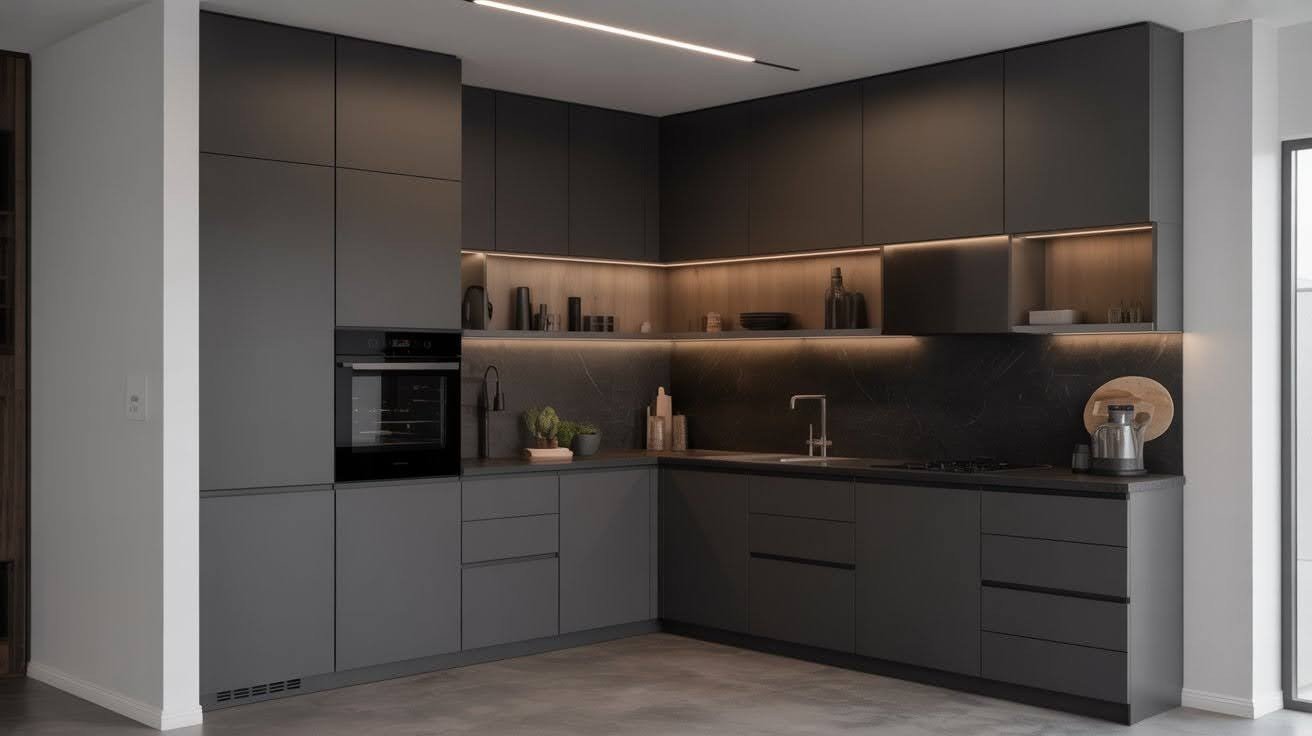
L-shaped kitchens create an efficient workflow that professional chefs call the “work triangle.” Your sink, stove, and refrigerator form three points of a triangle. This setup minimizes steps between tasks.
The design fits snugly into corners. You maximize wall usage without wasting precious floor space. Every inch counts in a small kitchen.
Here’s what makes L-shaped layouts special:
- Natural flow between cooking zones
- Corner placement leaves floor space open
- Creates room for a small dining nook or island
- Allows multiple people to work without bumping into each other
The open floor plan feeling is key. You avoid the cramped hallway effect that galley kitchens often create. Your space feels larger even when it’s not.
Space-Saving Design Tips for L-Shaped Kitchens
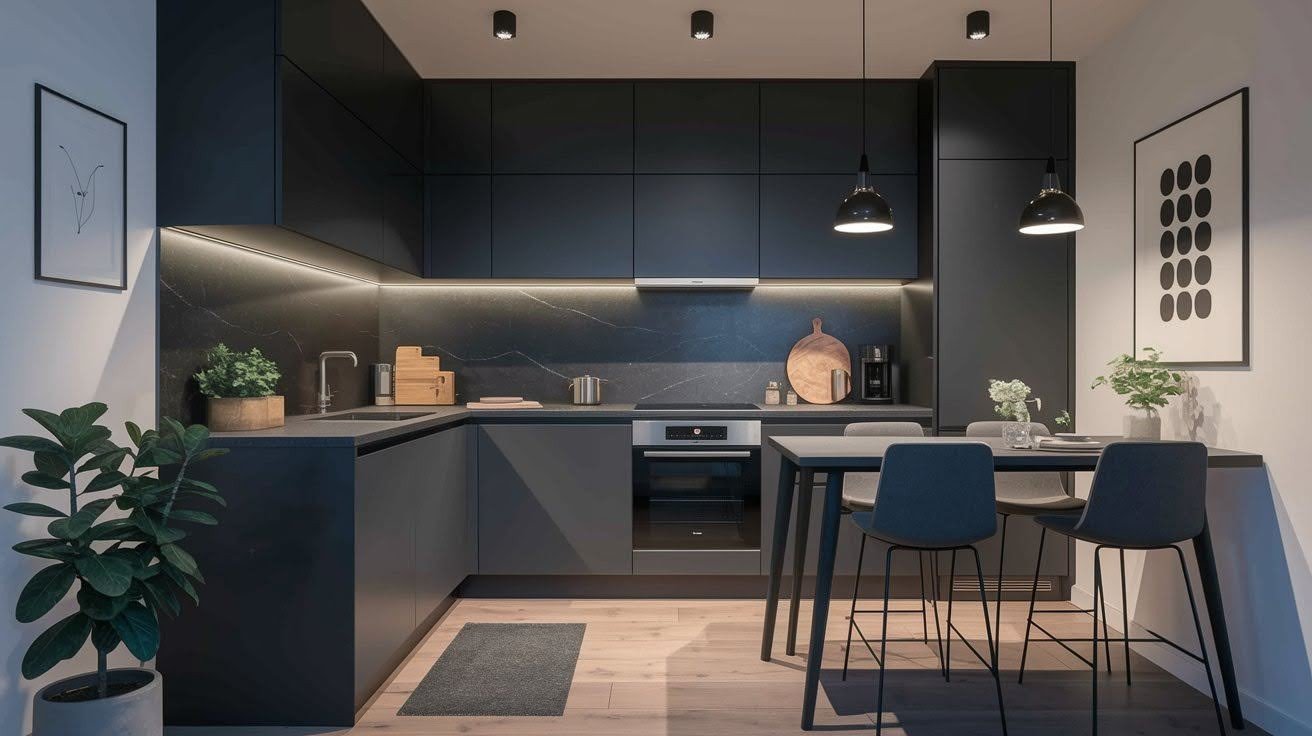
Vertical storage is your best friend. Think beyond base cabinets. Install upper cabinets that reach the ceiling. Use the space above your refrigerator for items you don’t need daily.
Open shelving adds storage without visual weight. Display your prettiest dishes and glassware. This trick makes your kitchen feel more spacious than closed cabinets.
Smart appliance choices matter:
- Slim dishwashers
- Counter-depth refrigerators
- Combination microwave-convection ovens
- Induction cooktops that double as prep space
Corner cabinets often become black holes. Install lazy Susans or pull-out trays. These solutions bring items from the back to the front easily.
Hanging racks work wonders. Mount them under cabinets for mugs or above islands for pots and pans. They free up cabinet space for other items.
Smart Style Choices That Enhance Small L-Shaped Kitchens
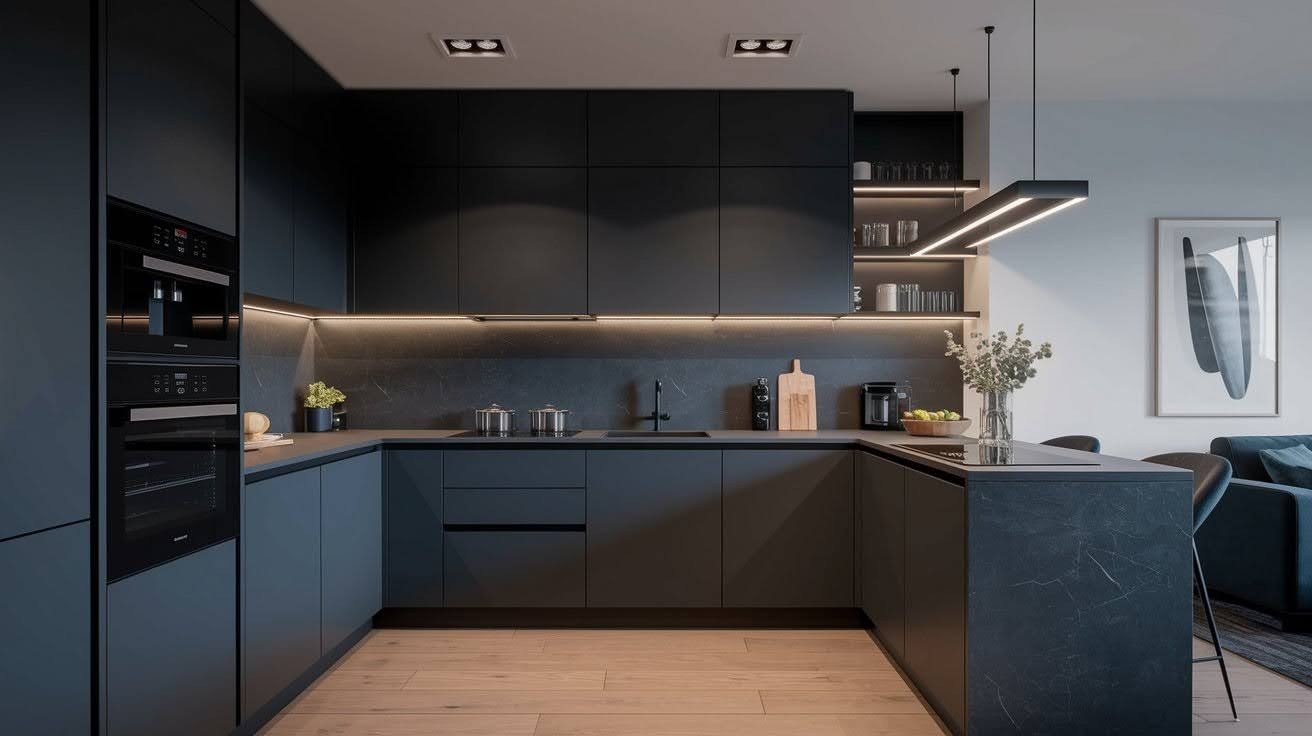
Light colors make spaces feel larger. Choose white, cream, or pale gray for cabinets. These shades reflect light and create an airy feeling.
Reflective surfaces amplify light. Consider:
- Glass cabinet doors on upper units
- Glossy cabinet finishes
- Stainless steel appliances
- Metallic backsplashes
Strategic lighting changes small spaces. Layer your lighting for best results.
Under-cabinet LEDs eliminate shadows on countertops. They make food prep easier and safer. Pendant lights over a breakfast bar add style and task lighting.
Keep window treatments simple. Heavy curtains make windows look smaller. Use light-filtering blinds or cafe curtains instead.
Mirror tiles as backsplash create depth. They reflect light and make walls appear to recede. Just keep them clean for maximum impact.
Layout Ideas for Specific Small Spaces
Studio Apartments
Create visual flow between kitchen and living areas. Use the same flooring throughout. Choose an open design where the kitchen counter serves as a room divider.
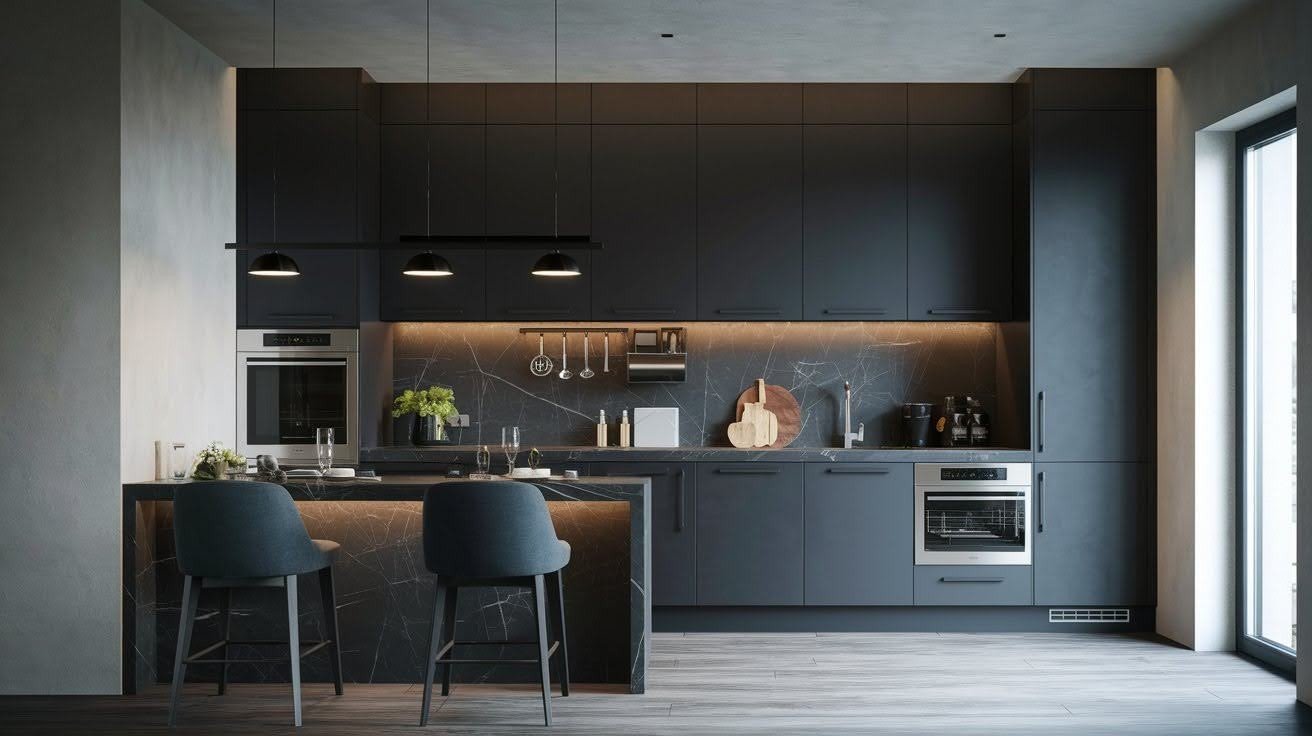
A breakfast bar extends your counter space. It provides casual seating and extra prep area. Hide bar stools under the counter when not in use.
Tiny Homes
Foldable elements are essential. Install a drop-down table attached to your kitchen island. Use flip-up counter extensions for extra workspace.
Consider a moveable island on wheels. Roll it out when cooking, tuck it away when done. This flexibility is crucial in tiny spaces.
Urban Flats
Modern minimalism works well here. Choose flat-front cabinets with hidden handles. Keep countertops clear except for daily essentials.
Built-in appliances create a streamlined look. Panel-ready dishwashers and refrigerators blend with cabinetry. This approach makes your kitchen look larger and more expensive.
Common Mistakes to Avoid
- Overcrowding countertops with appliances and decor
- Skipping corner storage solutions completely
- Poor lighting choices that shrink the room visually
- Choosing dark colors that absorb light
- Installing upper cabinets that don’t reach the ceiling
- Forgetting about the space above the refrigerator
- Using bulky furniture that blocks traffic flow
- Ignoring the importance of proper ventilation
- Selecting hardware that’s too large for the space
- Not planning for adequate electrical outlets
Quick DIY Upgrades for Big Impact
- Peel-and-stick backsplash tiles change your kitchen in hours. Choose light colors or subway patterns. Clean the wall thoroughly before application. Press firmly to avoid bubbles.
- Cabinet hardware swaps update your look instantly. Choose brushed nickel or matte black for modern appeal. Measure existing holes to avoid drilling new ones.
- Paint or wrap cabinet doors for a fresh appearance. Light colors work best in small spaces. Remove doors and hardware first. Use primer on glossy surfaces. Apply thin, even coats.
- Add interior cabinet lighting with battery-operated LED strips. They highlight your dishes and make cabinets feel more spacious. Motion sensors turn lights on automatically.
Before and After Inspiration
Real changes show what’s possible. I’ve seen 60-square-foot kitchens become functional cooking spaces through smart design.
One client removed upper cabinets on one wall. They installed open shelving instead. The space felt twice as large immediately.
Another homeowner painted dark cabinets white. They added under-cabinet lighting and a tile backsplash. The result looked like a completely different kitchen.
Small changes create big impacts. New cabinet pulls, fresh paint, and better lighting can modify your space without major renovation costs.
Conclusion
Smart L-shaped kitchen design maximizes every square inch of your small space. The layout creates efficient workflow while keeping your kitchen feeling open and functional.
You now have practical tips for vertical storage, lighting, and style choices. These ideas work regardless of your budget or skill level.
Start with one or two changes. Maybe install under-cabinet lighting or swap your cabinet hardware. Small improvements build momentum for bigger projects.
Your small kitchen has potential. With thoughtful planning and smart design choices, you can create a space that works beautifully for your lifestyle. The key is focusing on function first, then adding style elements that make the space feel larger and more inviting.
Frequently Asked Questions
What’s the minimum size for an L-shaped kitchen?
You need at least 8 feet on each wall for a functional L-shaped layout. This provides enough space for appliances and storage while maintaining workflow efficiency.
How do I maximize corner storage in my L-shaped kitchen?
Install lazy Susans, pull-out drawers, or corner cabinet organizers. These solutions make corner spaces accessible and prevent items from getting lost in the back.
Should I choose open shelving or closed cabinets in a small L-shaped kitchen?
Mix both for best results. Use open shelving for items you use daily and want to display. Choose closed cabinets for storage of less attractive items and to reduce visual clutter.
What’s the best color scheme for a small L-shaped kitchen?
Light colors work best – white, cream, or pale gray. These shades reflect light and make spaces feel larger. Add personality with colorful accessories you can change easily.
How can I add a dining area to my small L-shaped kitchen?
Install a breakfast bar on the open side of your L-shape. Use bar stools that tuck completely under the counter. Consider a small round table in the corner if space allows.


