

If you’re renovating a mid century modern home, the roof matters more than you think. I’ve seen many homeowners focus on interiors and forget the roofline.
That’s a mistake. The mid century modern roof is one of the first things people notice.
This guide covers roof styles and pitches, best materials and colors, and replacement tips and costs.
You’ll leave with clear answers and a solid plan. I’ll help you make smart choices that respect the original design while using materials built for today.
What Defines a Mid Century Modern Roof
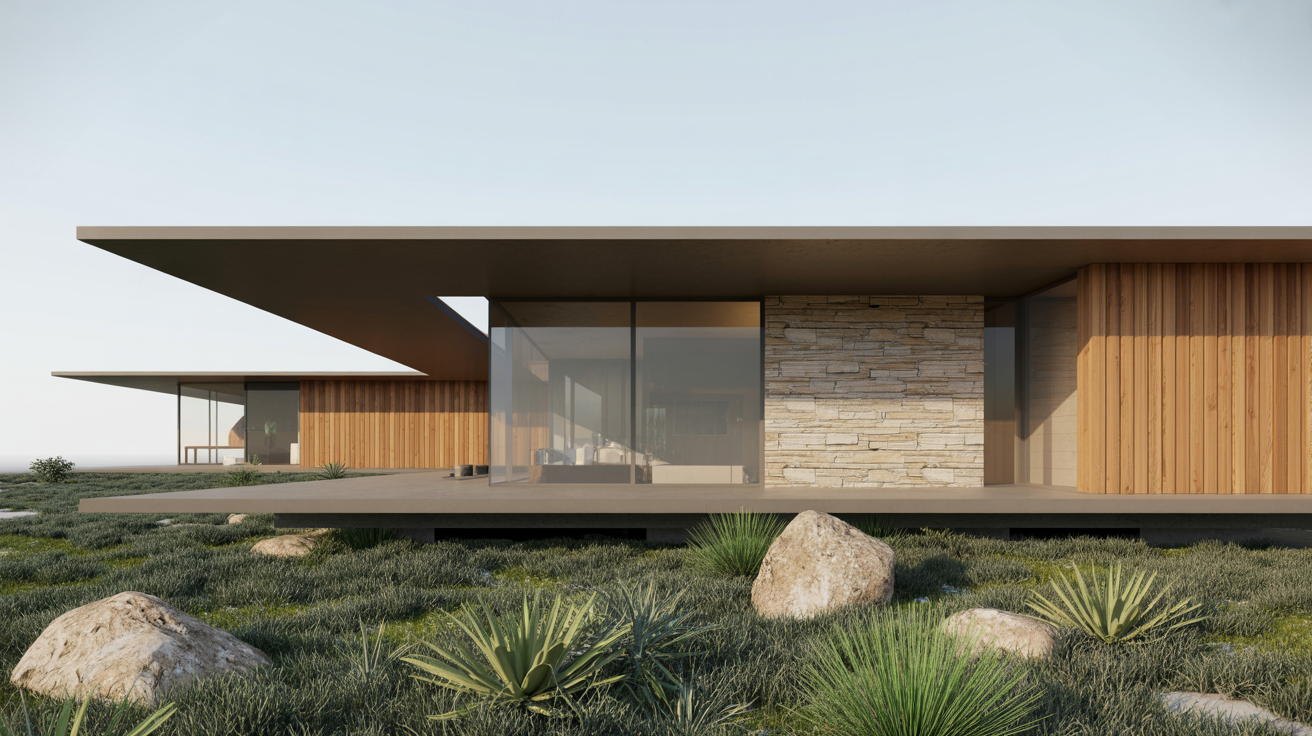
A mid century modern roof avoids heavy ornamentation. It uses straight edges, open overhangs, and minimal fuss.
The design is intentional. Every angle serves a purpose. You won’t find steep peaks or complex patterns here.
Low profiles and wide overhangs create shade and frame views. These details make the home feel grounded. The roof does not compete with the landscape. It works with it.
Flat planes, extended eaves, and large glass sections define the look.
Clerestory windows sit just below the roofline to let in natural light. Overhangs protect walls from rain and sun. The lines stay horizontal. This gives the home a calm, open feel.
Understanding Mid Century Modern Roof Pitch
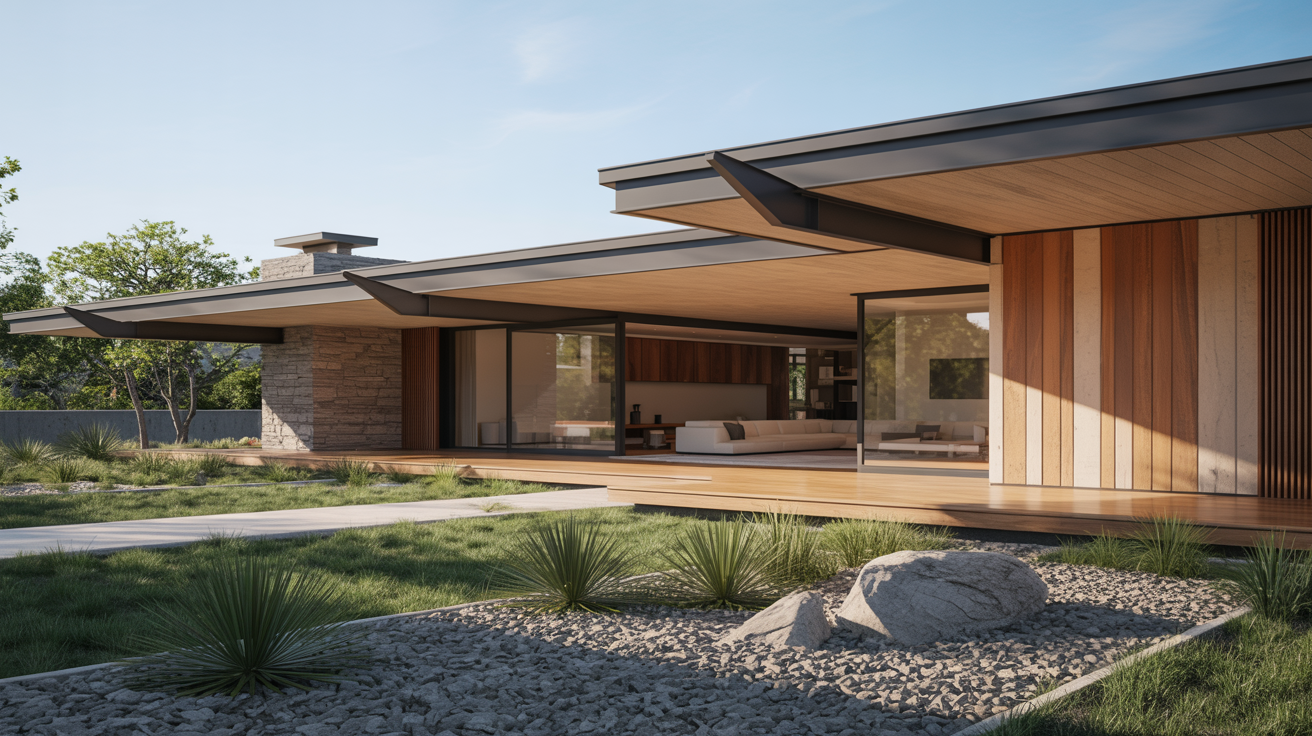
Roof pitch affects how water drains, how the home looks, and how long your roof lasts.
What Is a Typical Mid Century Modern Roof Pitch
Most mid century modern roofs use a very low pitch, often between 1:12 and 4:12.
This means the roof rises only one to four inches for every twelve inches of horizontal length. It is nearly flat but not quite. This pitch is part of what gives these homes their low, horizontal look.
How Roof Pitch Affects Drainage and Durability
Low pitches drain slowly, which means water can pool if the roof is not built correctly.
Good waterproofing and proper drainage systems are critical. Without them, low-slope roofs fail faster. Using the right materials makes a big difference here.
Best Roof Pitch Options for Renovating Mid Century Homes
For renovation, staying close to the original pitch is best.
If drainage has been a problem, a slight increase in pitch can help. You don’t need to go steep. Even a small adjustment improves performance without changing the look of the home.
Best Mid Century Modern Roof Materials
The right material keeps your roof looking good and performing well for decades.
Metal Roofing for Mid Century Homes
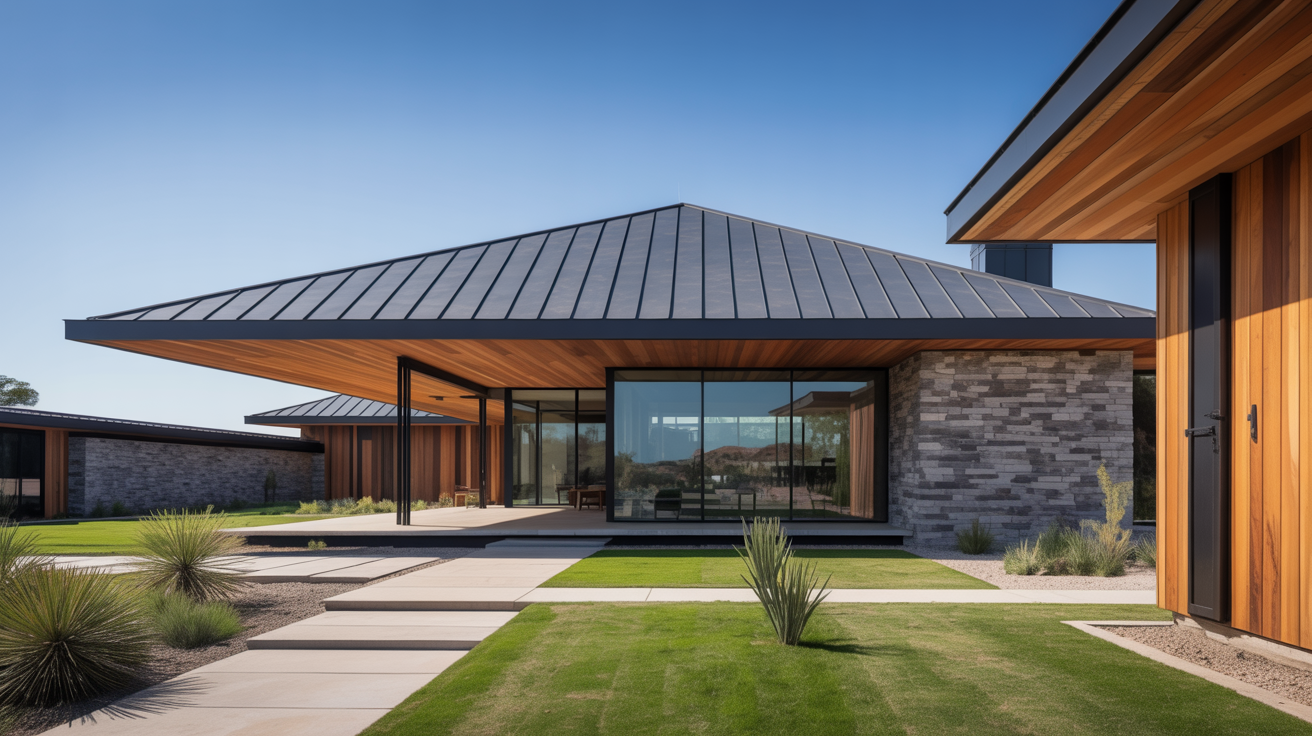
Metal roofing is a strong match for mid century modern design.
It comes in flat panels or standing seam profiles. Both work well with low-pitched roofs. Metal lasts 40 to 70 years and requires little maintenance. It handles rain and heat well.
Clay and Concrete Tile Roofing
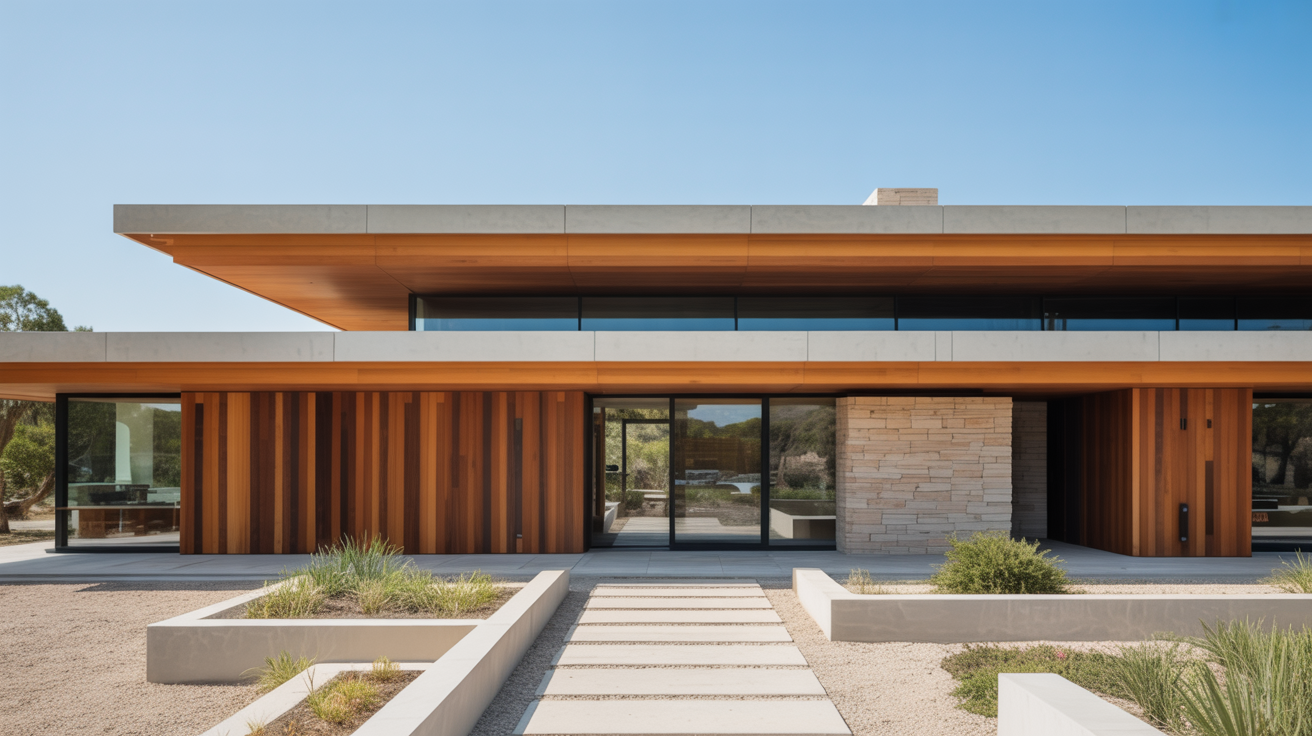
Clay and concrete tiles are durable and hold their color over time.
They add weight to the structure, so the framing must support them. These tiles work best on slightly pitched roofs. They are a good choice in warm, sunny climates.
Membrane Roofing for Flat Roofs
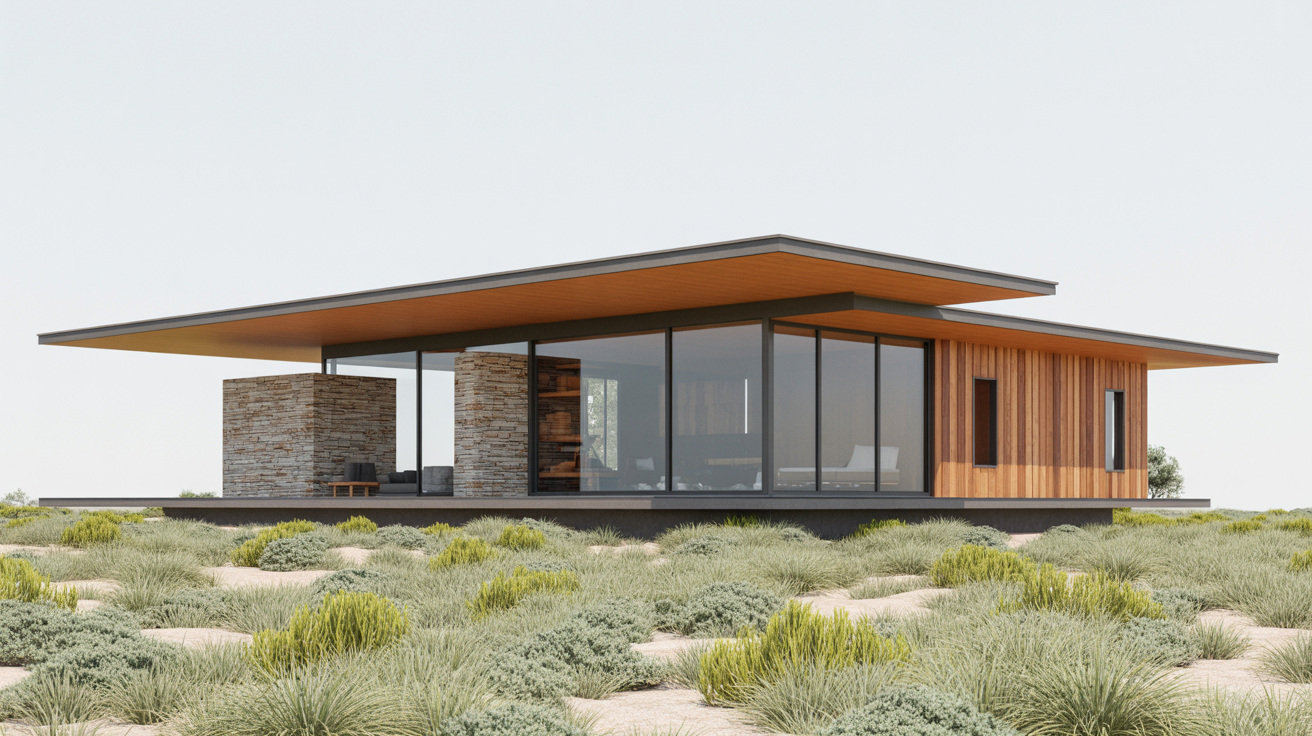
Membrane roofing is designed for flat or very low-slope roofs.
TPO and EPDM are the most common types. They create a watertight seal across the entire surface. They are lightweight and relatively affordable. A good membrane roof lasts 20 to 30 years.
Spray Foam Roofing Systems
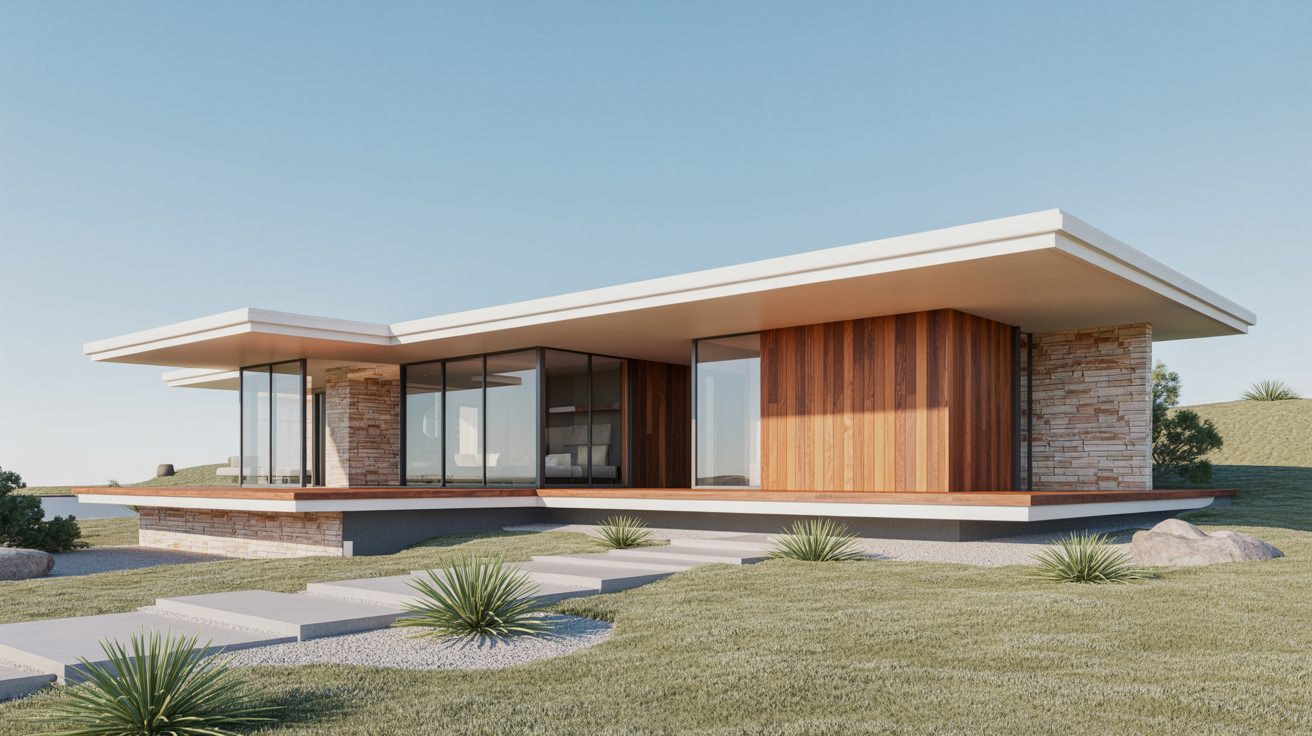
Spray polyurethane foam fills cracks and bonds directly to the deck.
It adds insulation while waterproofing at the same time. It works well on flat roofs where drainage is minimal. Reapplication of the protective coating is needed every 10 to 15 years.
Asphalt Shingles: Traditional but Controversial
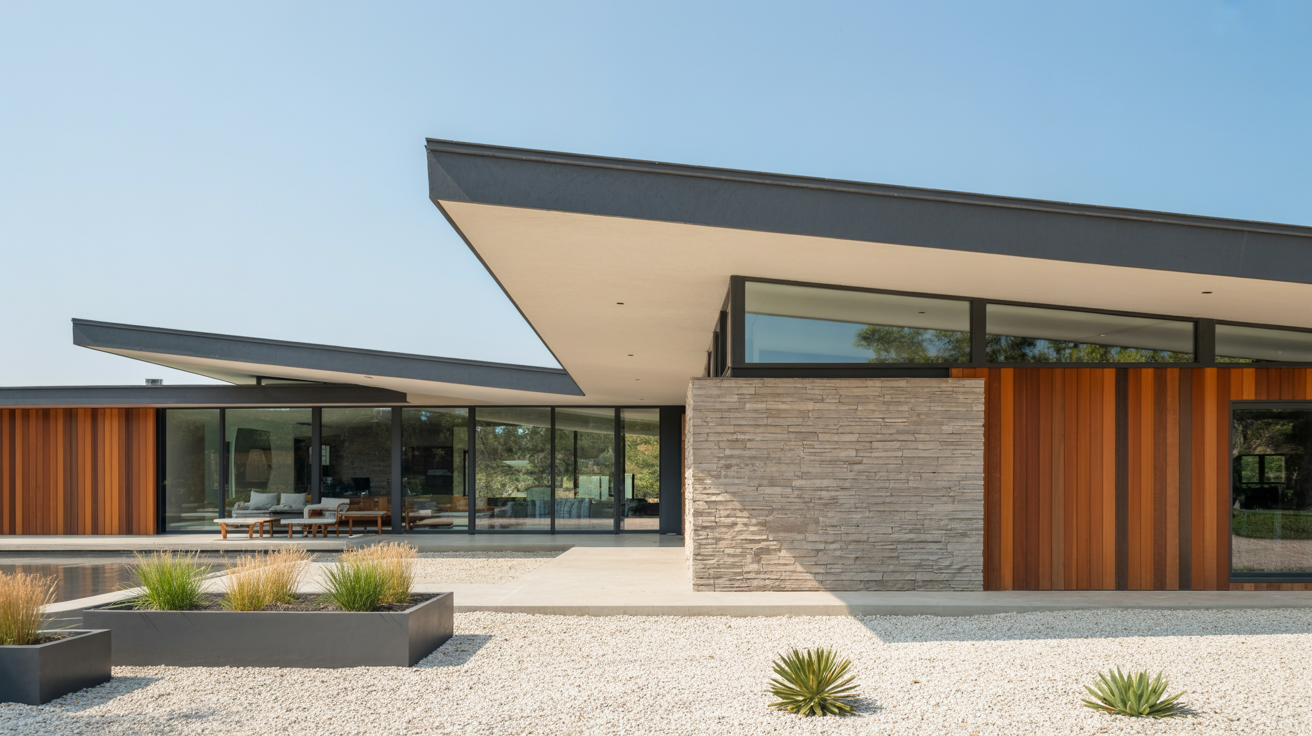
Asphalt shingles are affordable but divide opinion among mid century enthusiasts.
They don’t match the clean lines of the style as well as metal or membrane options. However, architectural asphalt shingles with a low profile can work on slightly pitched roofs. They cost less and are easy to find and install.
Choosing the Right Mid Century Modern Roof Shingles
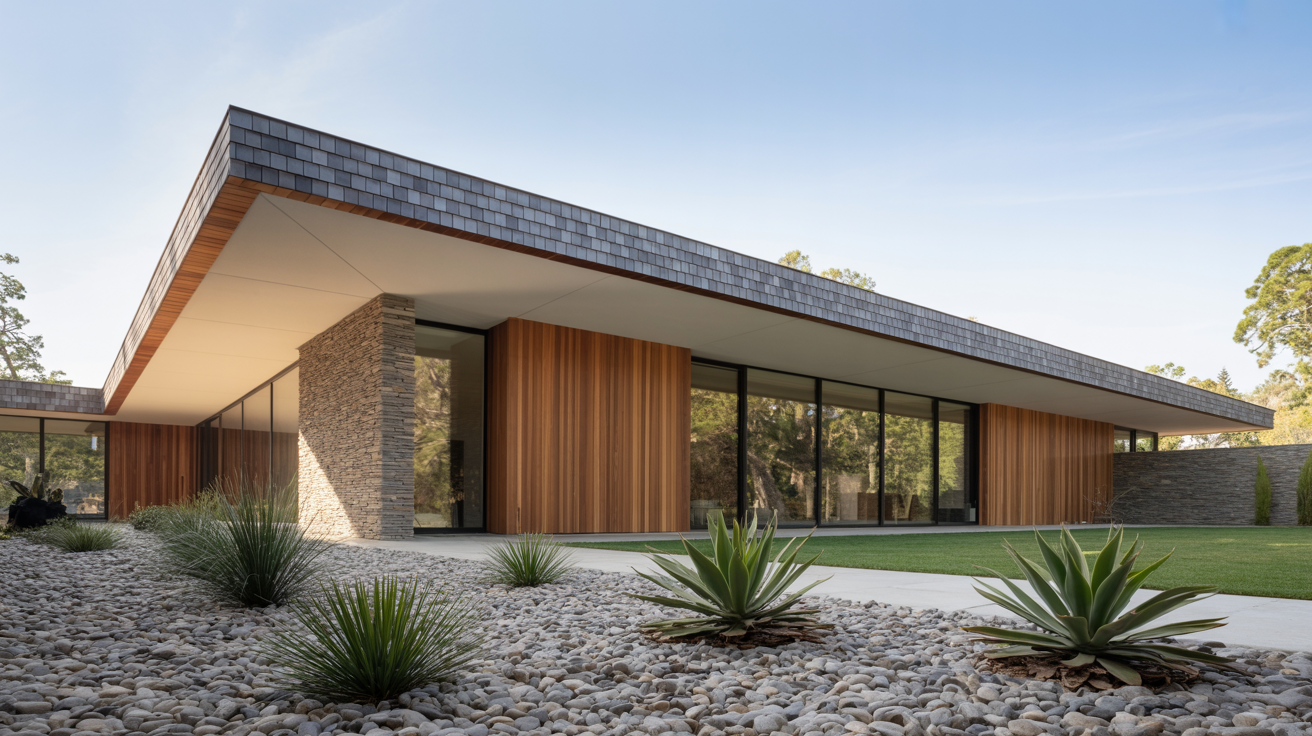
If you go with shingles, choosing the right type makes all the difference in how the roof looks and performs.
Architectural Asphalt Shingles
Architectural shingles have a layered look that is more visually appealing than basic three-tab shingles.
They hold up better in the wind and last longer. For mid century homes, choose low-profile options in solid, muted colors.
Metal Shingle Roofing
Metal shingles look like traditional shingles but perform like metal roofing.
They are lighter than clay tiles and more durable than asphalt. They come in flat, clean profiles that suit mid century homes well. The cost is higher but the lifespan is much longer.
Energy-Efficient Cool Roof Shingles
Cool roof shingles reflect sunlight instead of absorbing it.
This reduces heat buildup in the home and lowers cooling costs. They come in light and medium tones that work with mid century color palettes. They are a smart pick for homes in hot climates.
Durable Shingle Options for Long-Term Renovations
For a long-lasting renovation, impact-resistant shingles are worth considering.
They hold up against hail, wind, and debris. Some carry Class 4 impact ratings, which may lower your insurance premium. Pairing durability with the right visual profile makes for a smart investment.
Mid Century Modern Roof Types for Different Home Structures
The right roof type depends on the shape and structure of your specific home.
Roof Options for Ranch-Style Mid Century Homes
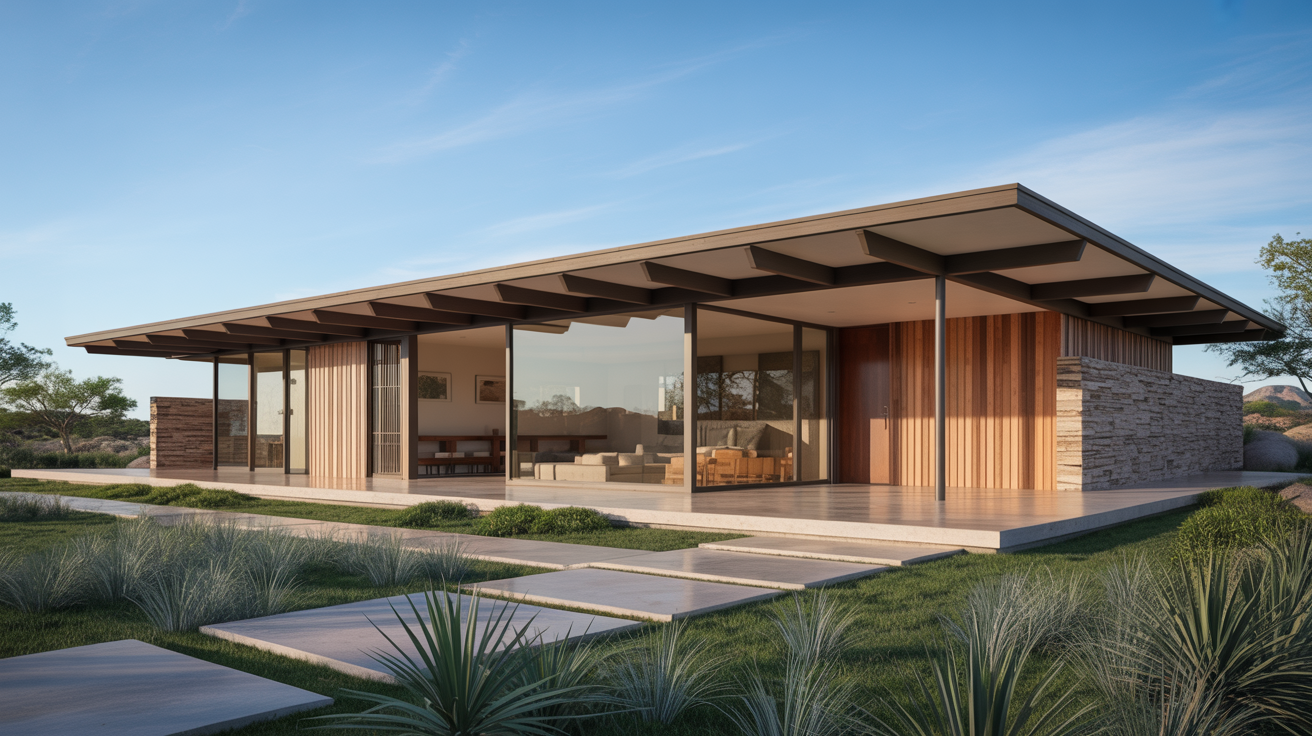
Ranch homes call for low-pitched or nearly flat roofs that follow the horizontal layout.
Gable roofs with gentle slopes also work. Wide overhangs are common and add to the classic look. The goal is to keep the profile low and the lines clean.
Roofing Solutions for Low-Slope Houses
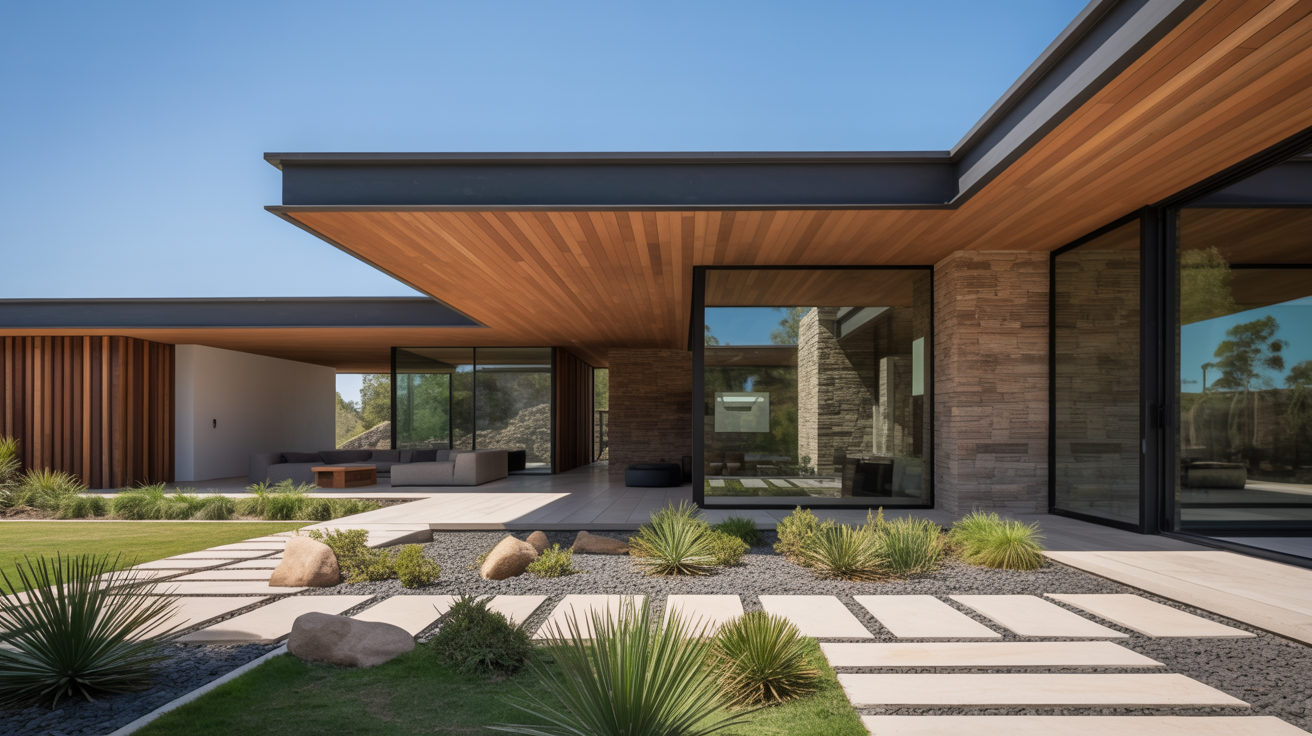
Low-slope houses need materials that handle slow drainage well.
Membrane roofing and spray foam are top choices. Make sure gutters and downspouts are positioned correctly. Ponding water on a low-slope roof will cause damage over time if left unaddressed.
Roof Types for Flat Roof Mid Century Designs
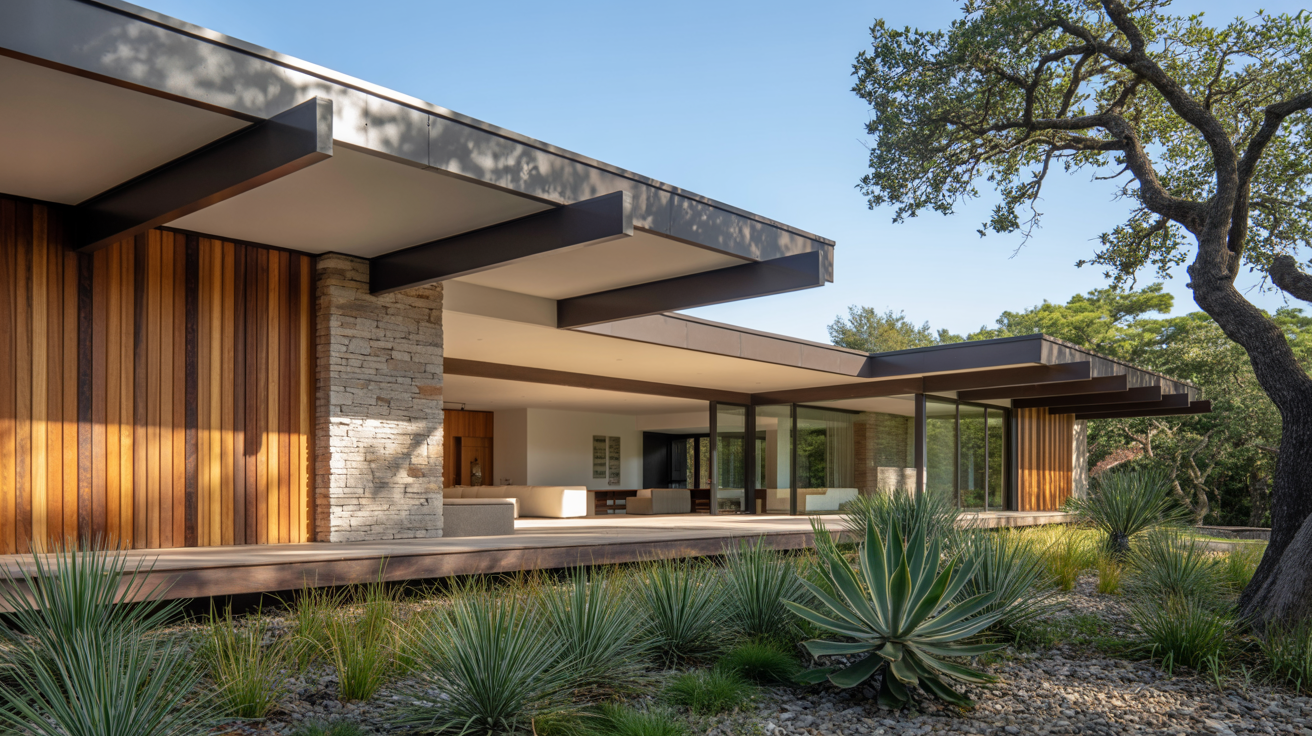
True flat roofs need specialized roofing systems.
Built-up roofing, modified bitumen, and membrane systems all work here. The key is professional installation and regular inspection. Even a small gap or crack can let water in and cause serious damage.
Smart Renovation Tips for Mid Century Modern Roof Projects
A few smart moves during your renovation can save you time and money in the long run.
- Consider adding or upgrading insulation while the roof deck is exposed. It’s much cheaper to do it during replacement than later.
- Plan for skylights or solar tubes before the new roof goes on. Cutting into a new roof after installation adds cost and risk.
- Review your drainage setup. Cleaning up downspouts and adding rain chains or collection barrels during renovation is a practical step.
- Choose materials with long warranties and low maintenance needs. You don’t want to repeat this project in ten years.
- Ask about cool roof coatings or reflective finishes. They can be applied on top of most materials and improve energy performance.
Conclusion
Choosing the right roof for your mid century modern home is one of the most rewarding parts of the renovation.
I remember standing in front of a classic ranch-style home with a new low-slope metal roof and just thinking, “yes, that’s it.” The right roofline changes everything.
Now it’s your turn. Take what you’ve learned here and apply it to your own project. Have questions or want to share what worked for you?
Leave a comment below. I’d love to hear how your renovation turns out.
Frequently Asked Questions
What is the best roof for a mid century modern house?
Metal roofing and membrane systems are top choices for mid century modern homes. They suit low slopes, require little maintenance, and hold up well over time.
What roof pitch is common in mid century modern homes?
Most mid century modern roofs have a pitch between 1:12 and 4:12. This low angle gives the home its signature flat, horizontal look.
Which materials work best for mid century modern roof replacement?
Standing seam metal, TPO membrane, and cool-roof shingles all work well. The best choice depends on your roof’s slope and your local climate.
What colors are popular for mid century modern roofs?
Neutral grays, warm tans, earthy terracottas, and light whites are all common. These tones complement the natural materials often used on mid century exteriors.
How do I know if my mid century modern roof needs to be replaced?
Look for water stains, cracked or bubbling surfaces, curling shingles, and sagging areas. If your roof is over 20 years old and showing these signs, replacement is likely the right move.


