

I used to think mixing metals in a bathroom was a mistake. Turns out, I was wrong.
Bathrooms have moved way beyond basic white tiles and matching chrome fixtures.
People are putting real thought into how their bathrooms look and feel. Mixing metal finishes like brass, matte black, and gold is one of the biggest shifts in bathroom design right now.
But it has to be done with intention. Get it wrong and it looks like a mistake.
This guide shows you how to get it right.
Can You Mix Metals in a Bathroom?

Yes, you absolutely can. In fact, most interior designers actively recommend it. A bathroom with everything matching can feel flat and overdone.
Mixing metal finishes adds depth and gives the space a more lived-in, intentional feel. It creates visual interest without making things look busy.
It also brings out personality in a way that perfectly matched fixtures simply cannot. The key is knowing which metals work together and how to use them in the right balance.
That is exactly what we will cover.
Common Metal Finishes Used in Bathrooms
Not all metals look the same or work the same way. Here are the most common finishes you will find in bathroom design today.
1. Matte Black

Matte black gives a bathroom a modern, bold look without being too loud. It works well with warm metals like brass and gold. It is a strong choice for faucets, showerheads, and cabinet handles.
2. Brass

Brass brings warmth and a classic feel to any bathroom. It pairs well with both dark and light finishes. It works great on faucets, towel bars, and light fixtures.
3. Gold

Gold works best as an accent finish. It adds a sense of luxury when used in the right spots. Use it on smaller fixtures like handles, hooks, and mirror frames for the best effect.
4. Brushed Nickel
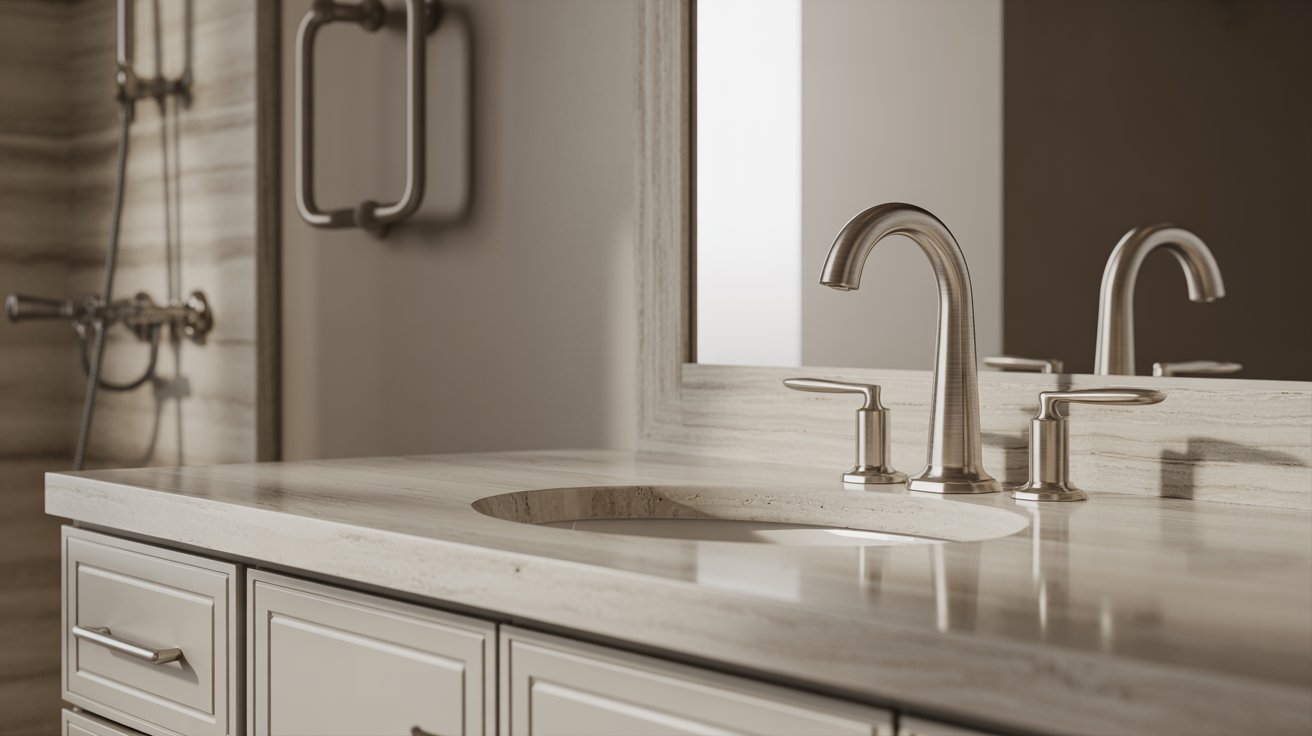
Brushed nickel is soft and versatile. It pairs easily with almost any other finish in the bathroom. It is a safe but stylish choice for faucets, towel rings, and shower fixtures.
5. Chrome
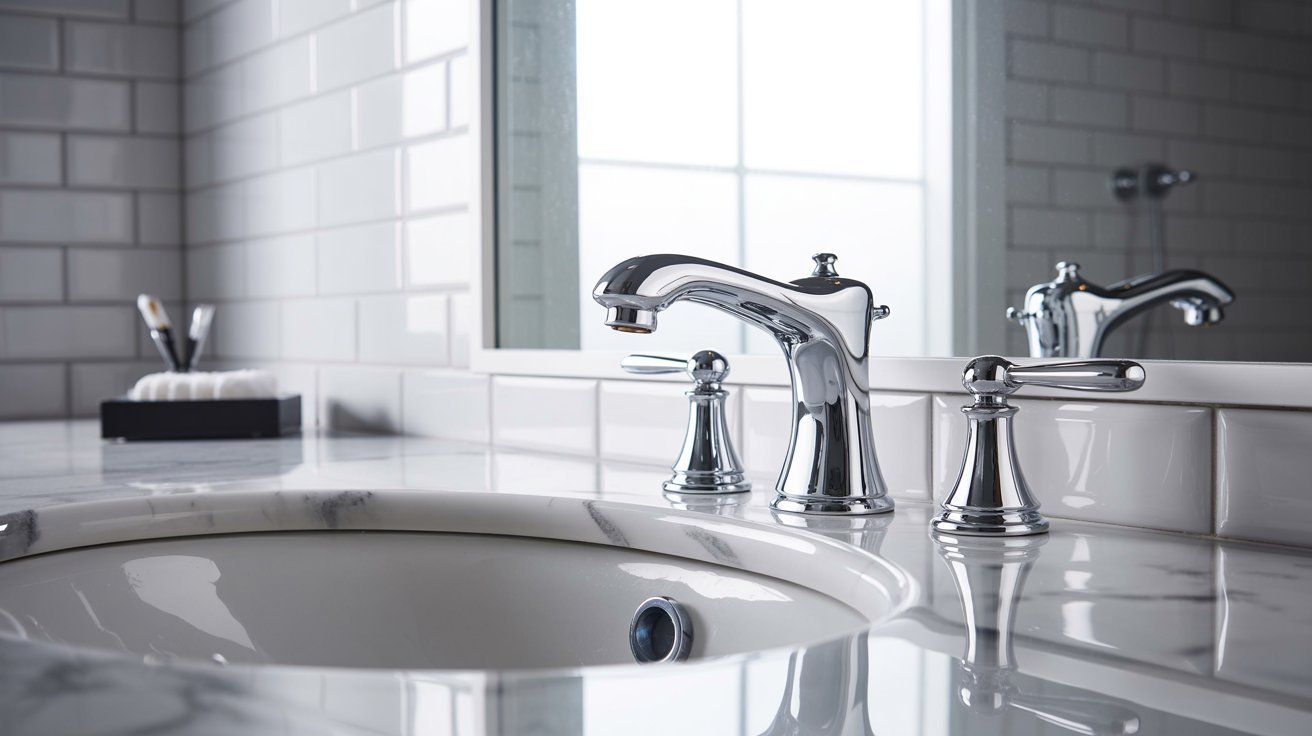
Chrome is clean and reflective. It gives a sharp, modern look that suits a wide range of bathroom styles. It works best when paired with matte or softer finishes to avoid looking too cold.
6. Oil-Rubbed Bronze

Oil-rubbed bronze has a rich, traditional appearance. It adds real character to classic or rustic bathrooms. It pairs well with warm tones like brass and wood accents for a grounded, natural feel.
Key Rules for Mixing Metals in Bathroom Design

Mixing metals is not random. There are a few simple rules that keep everything looking intentional and well put together.
Choose One Dominant Metal Finish
Start with one metal that takes the lead. Use it on the biggest fixtures like faucets, showerheads, and main hardware.
This gives the bathroom a clear visual anchor. Everything else you add should support this main finish, not compete with it.
Balance Warm and Cool Metal Tones
Warm and cool metals can work together beautifully when balanced well. Brass paired with chrome is a great example.
So is matte black with gold. The trick is to make sure one tone does not completely overpower the other. A good mix feels intentional, not accidental.
Limit the Number of Finishes
More is not always better. Stick to two or three metal finishes at most. Going beyond that makes the space feel cluttered and hard to look at.
Two metals give a clean look. Three can add interest without overwhelming the overall feel of the room.
Repeat Metals Throughout the Space
Do not use a metal finish in just one spot. Repeat it in different areas of the bathroom to create a sense of balance.
If you use brass on the faucet, bring it back on the towel bar or mirror frame. Repetition makes the mix feel planned.
Mix Textures and Sheens
Combining different textures adds depth to the space. Try pairing a brushed finish with a polished one.
For example, brushed nickel with chrome works well because the contrast in sheen creates visual interest without clashing in tone or color.
Where to Mix Metal Finishes in a Bathroom

The best places to mix metals are the ones people notice most. Faucets and shower fixtures are a good starting point since they set the tone for everything else.
Cabinet hardware and drawer pulls are small but impactful. Lighting fixtures and wall sconces are great spots to bring in a second finish.
Mirror frames tie the whole look together. Towel bars and accessories let you repeat a finish and bring balance to the full space.
Tips to Create a Cohesive Mixed-Metal Bathroom
- Pick one metal as the focal point and build everything else around it. This stops the space from looking too busy or all over the place.
- Spread your metal finishes evenly across the room. Avoid grouping all of one finish in a single area as it throws off the balance.
- Match your metals with the tones in your tiles and cabinetry. Warm metals work better with wood and beige tones while cool metals suit grey and white palettes.
- Always test your chosen finishes under your actual bathroom lighting. Natural light and artificial light can make the same metal look very different.
- Keep a consistent visual thread running through the space. When each finish shows up more than once, the whole room feels pulled together rather than mismatched.
Conclusion
Mixing metals in a bathroom is more manageable than most people think. I have seen how the right combination of finishes can completely change how a space feels.
The key is balance, contrast, and repeating your chosen finishes across the room. Stick to two or three metals, keep one as the lead, and let the others support it.
Get that right and you will have a bathroom that looks stylish and holds up over time.
Ready to redo your bathroom? Share your ideas in the comments or reach out for design advice.
Frequently Asked Questions
Can I mix more than two metals in my bathroom?
Yes, but keep it to three at most. Going beyond that makes the space look unplanned and messy.
Which metal finishes work best together in a bathroom?
Brass and matte black is a popular combination. Chrome and brushed nickel also work well together because they share similar cool tones.
Should my faucet and shower fixtures match?
Not necessarily. You can use different finishes as long as they complement each other and follow a clear color tone direction.
Does mixing metals affect the resale value of my bathroom?
When done well, it can actually add appeal. A thoughtfully designed bathroom with mixed metals often stands out to potential buyers in a good way.
How do I know if my metal combinations are working?
Step back and look at the full room. If one finish feels out of place or dominates too much, adjust the balance by redistributing or swapping out a fixture.


