

I stood in my dining room one afternoon staring at plain white walls and thought, there has to be a better way to make this space feel like something.
That is how I got into moody dining rooms, and I have not looked back since.
This article covers color schemes, furniture, lighting, textures, and styling tips to help you pull it all together.
Everything here is practical, clear, and drawn from real design experience. If you want a moody dining room that actually works, you are in the right place.
What Makes a Moody Dining Room Work
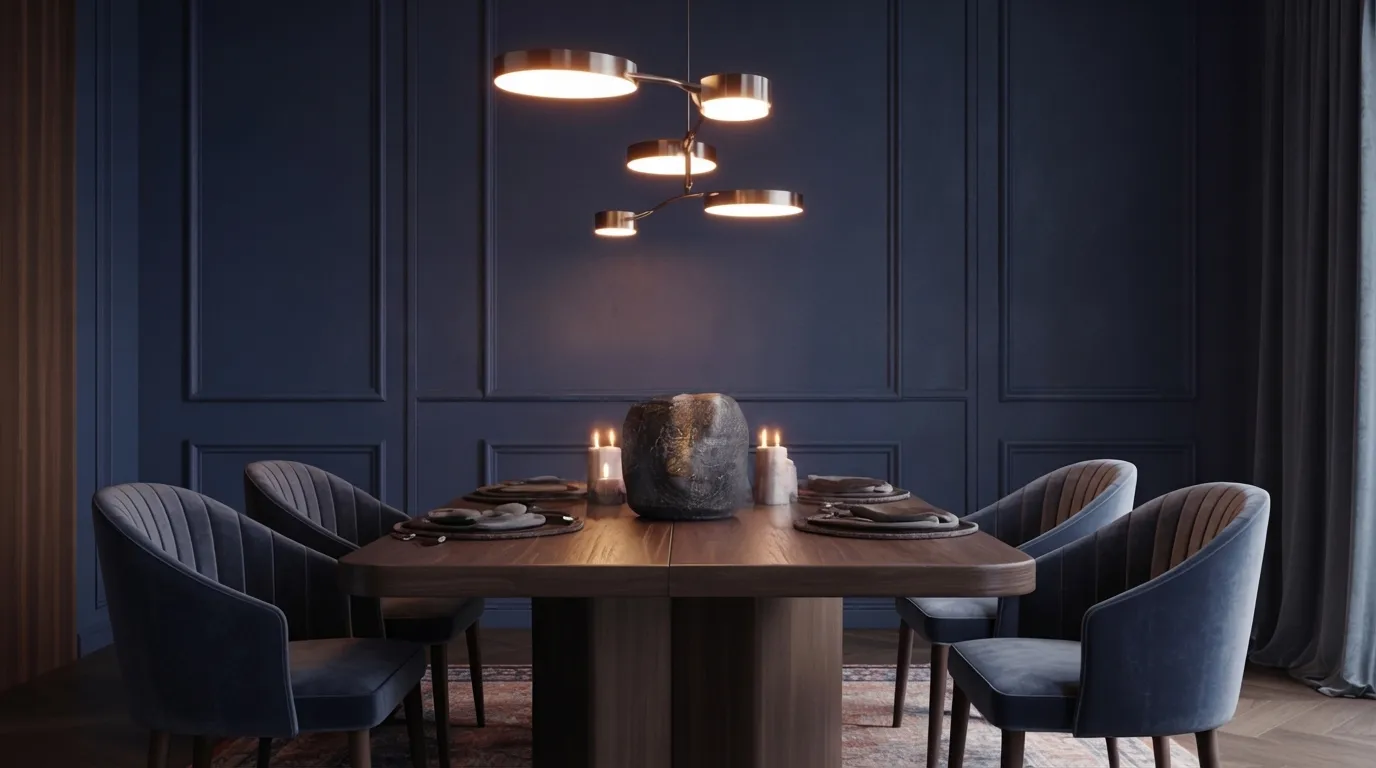
A moody dining room does something most rooms never manage. It makes people want to sit down and stay.
Dark, rich tones create warmth that lighter rooms simply do not have. Dinner feels more intentional. Conversations feel closer.
You do not need a big budget or a designer to get there. You need the right colors, the right light, and a clear plan.
Start with one change and build from there. The results speak for themselves.
Choosing the Perfect Color Scheme
The right color sets the tone for everything else in the room.Get it wrong and even the best furniture will not save the space.
Popular Moody Colors
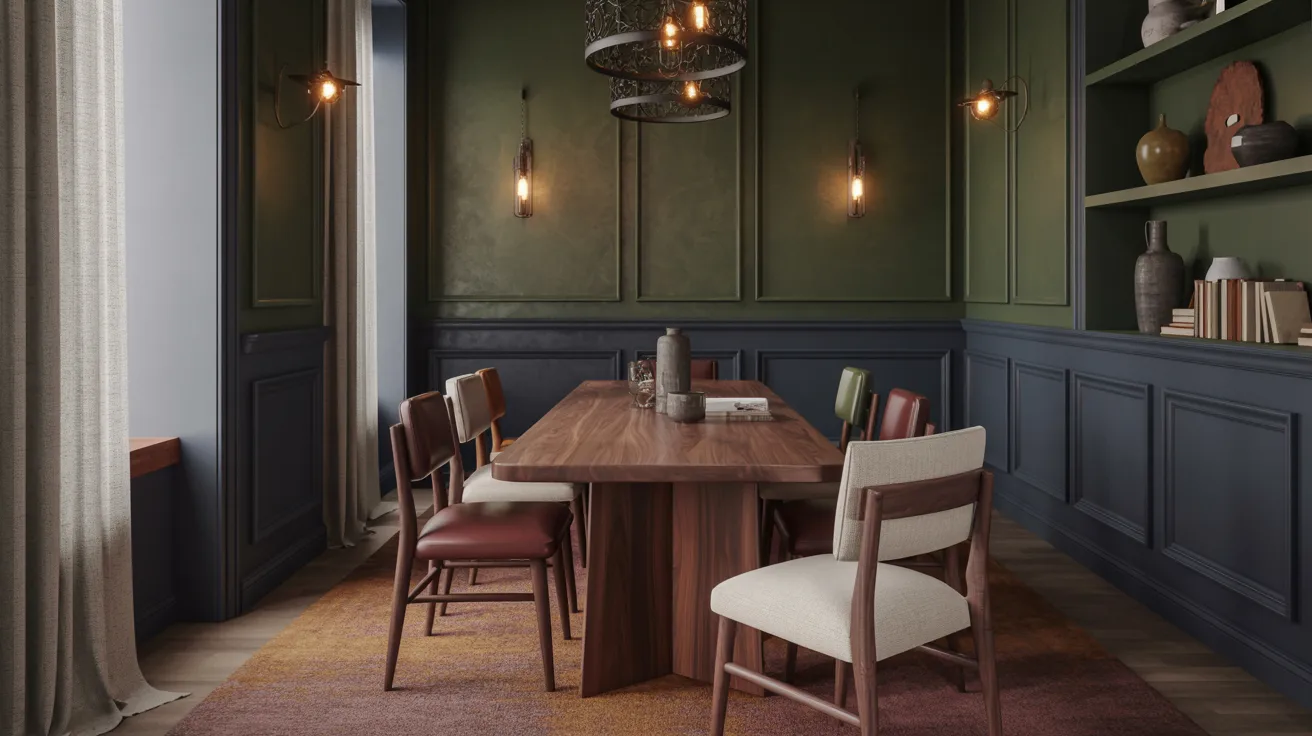
Deep greens, navy blues, charcoal grays, burgundy, and earthy browns are the most popular choices.
Pair dark walls with lighter accents like cream trim, natural wood, or soft linen to keep the room balanced and avoid a closed-in feeling.
Color-Drenching Techniques

Color drenching means painting the walls, trim, and ceiling all in the same shade for a wraparound effect.
Wallpaper with moody patterns works well too. Combine dark colors with contrasting textures like velvet or raw wood for added depth.
Accent Colors and Finishing Touches

Accent colors stop a moody room from feeling flat. Gold, brass, and warm copper work well against deep greens and navy.
Cream and off-white soften the look without losing the dark base. One bold accent in your soft furnishings is enough to add contrast without breaking the mood.
Furniture and Layout Ideas
Good furniture choices make a moody room feel intentional, not heavy.
Choosing the Right Dining Table

Traditional tables suit a classic moody look. Modern tables with clean lines work better in a contemporary space. Round tables encourage conversation in smaller rooms.
Rectangular tables suit longer spaces and larger gatherings.A dark walnut or espresso finish grounds the room and ties in with deep wall colors naturally.
Extendable tables are worth considering if you host regularly but do not want a large table taking over the space daily.
Seating Options

Upholstered or velvet chairs add comfort and richness. Mixing materials, like a wood bench paired with fabric chairs, creates contrast and keeps the space from looking flat.
Deep jewel tones like forest green, navy, or burgundy work especially well for upholstered dining chairs in a moody room.
Mismatched chairs in complementary colors or materials add a collected, lived-in feel that looks intentional rather than accidental.
Storage and Sideboards
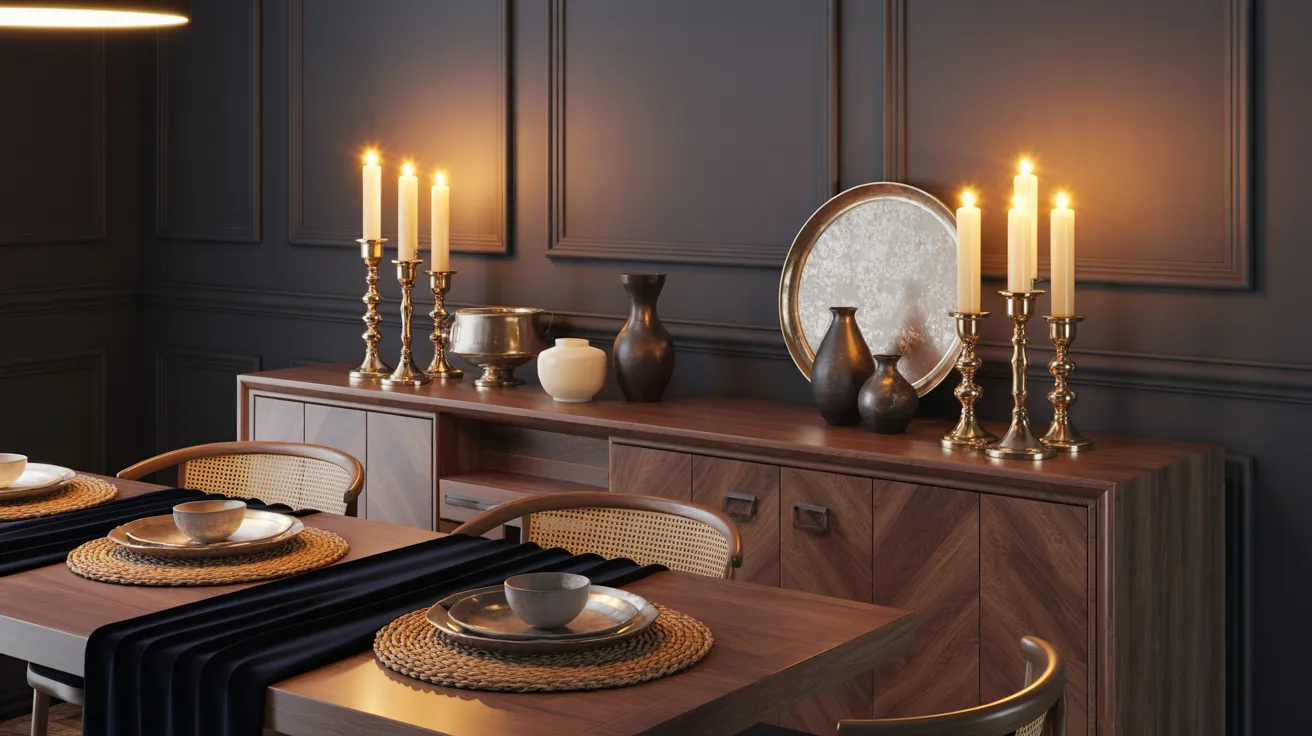
A dark wood or painted sideboard adds both function and style. Layer it with candles, trays, and small decor pieces to build visual interest without cluttering the room.
Lighting for Mood and Ambiance
The right lighting does not just brighten a room, it sets the entire feeling of the space.
Statement Chandeliers

Brass, gold, or smoked glass chandeliers work beautifully here. Scale matters: aim for one that fills the space above the table without overwhelming the room.
Look for designs with exposed bulbs or candle-style fittings for a more dramatic effect. Antique brass finishes age well and complement deep wall colors better than chrome or silver.
Dimmer switches paired with a statement chandelier give you full control over the mood at any hour.
Candles and Accent Lighting
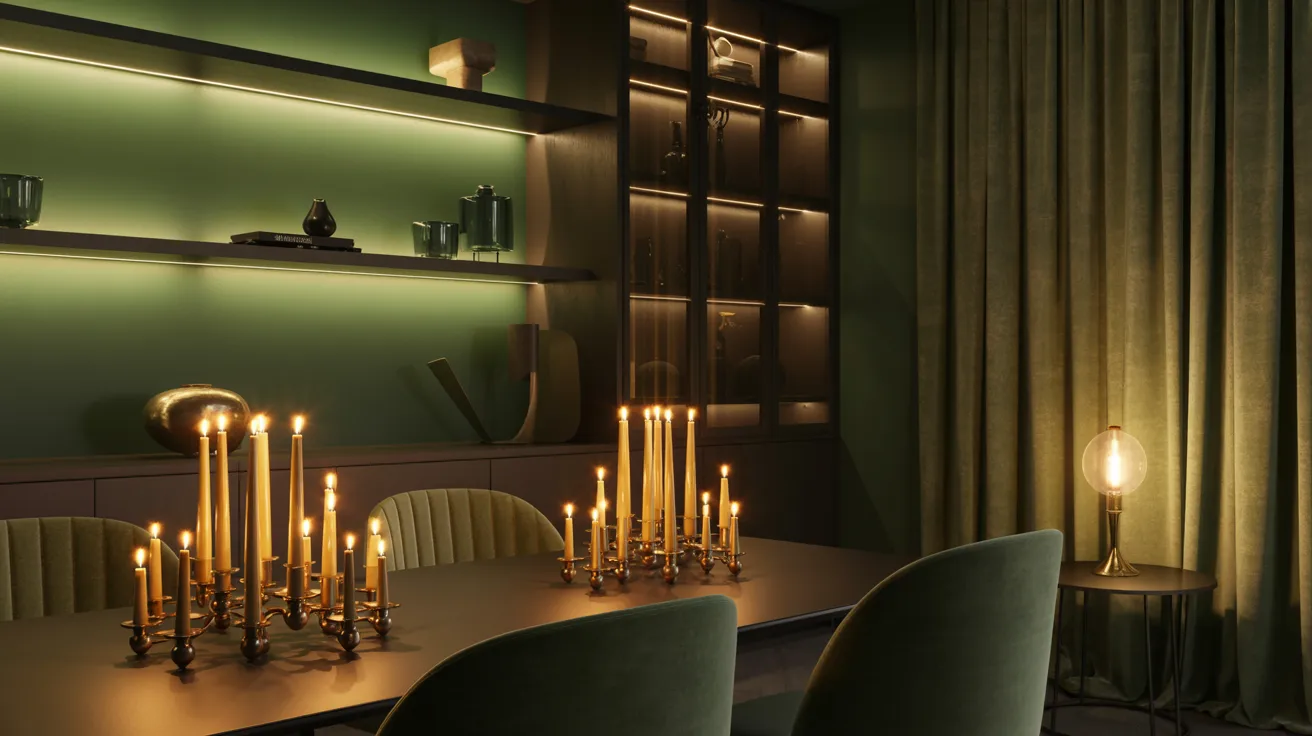
Candles bring a warmth that electric lighting rarely matches. Cluster them on a sideboard, mantle, or dining table for an immediate mood shift.
Battery-powered candles work just as well if open flames are not practical. Taper candles in dark or metallic holders suit a moody room especially well.
Accent lighting under shelves or inside display cabinets adds depth and draws attention to your favorite pieces.
Layered Lighting

One overhead light is never enough. Add buffet lamps, sconces, and dimmers. Layered lighting lets you shift the mood from bright and lively to soft and intimate in seconds.
Wall sconces on either side of a mirror or artwork add both function and visual interest.
Candles on the dining table or sideboard add a final layer of softness that no electric light can fully replace.
Textures and Decorative Elements
Texture is what separates a flat, forgettable room from one that feels rich, layered, and full of personality.
Rugs and Flooring
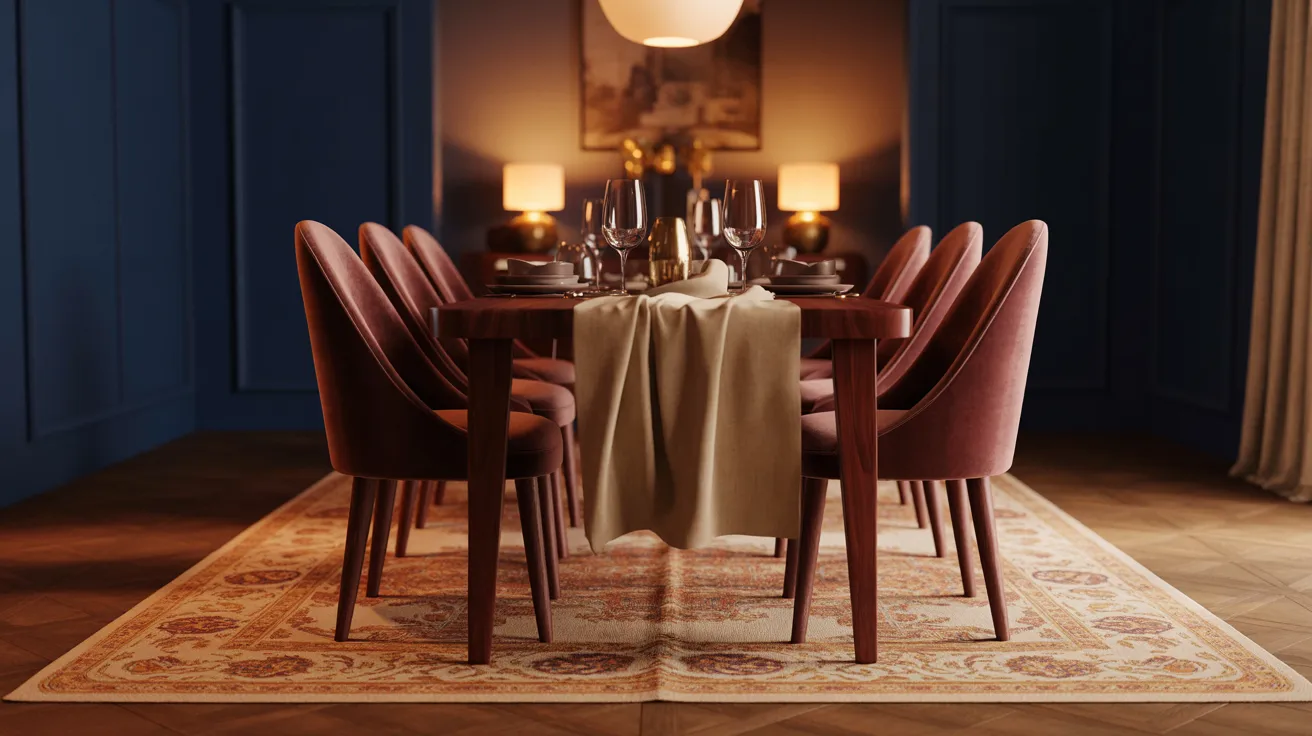
A patterned rug anchors the dining table and adds warmth underfoot. Wool rugs are durable and hold up well under chairs.
Vintage-inspired patterns suit a moody room especially well.Look for rugs with deep jewel tones like burgundy, navy, or forest green.
Layering two rugs of different sizes adds extra depth to the floor. A darker rug also hides dirt and wears far better than a light one.
Wall Art and Mirrors
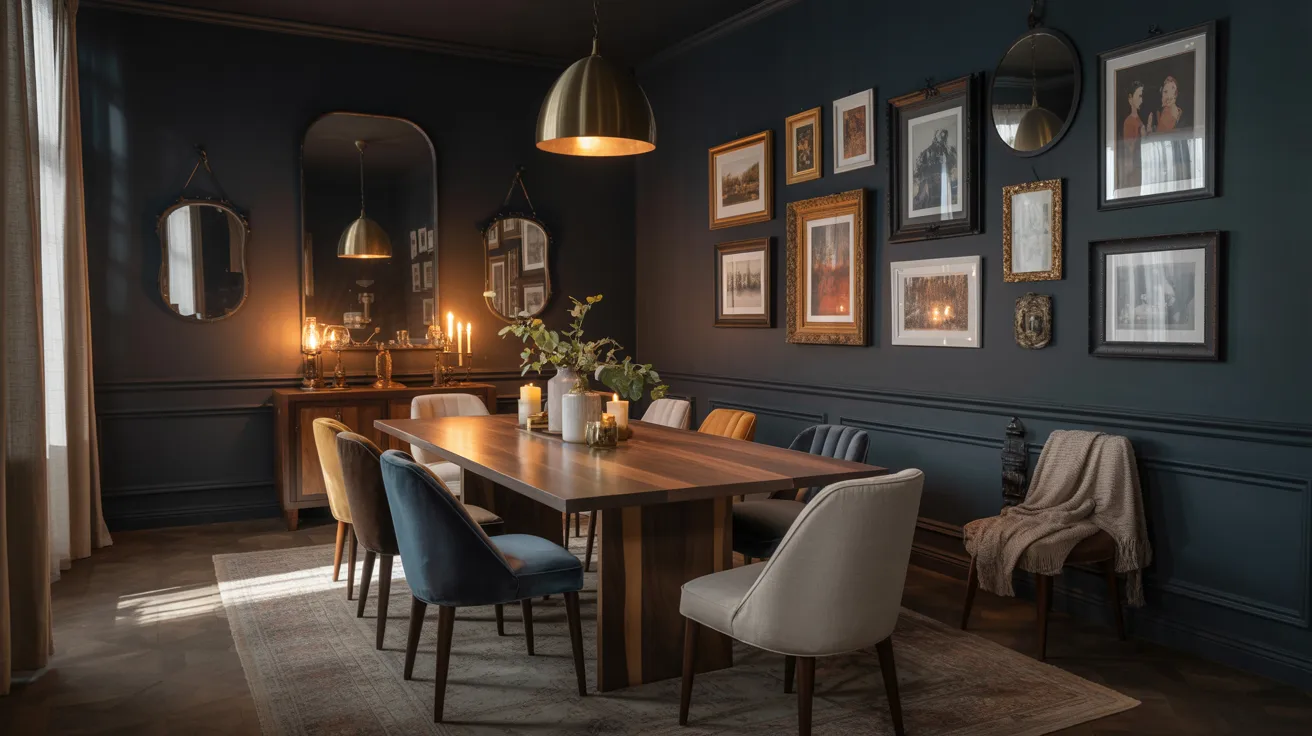
Framed artwork in dark tones adds personality. A gallery wall with mixed frame sizes feels layered and intentional.
Mirrors reflect light and make the space feel larger without changing the color scheme.Choose frames in black, antique gold, or dark wood for a cohesive look.
Botanical prints, abstract art, and portrait paintings all work well in moody spaces. Hang a large mirror opposite a window to pull in as much natural light as possible.
Natural Elements

Wood, rattan, seagrass, and plants bring life into a dark room. A few potted plants or a simple branch in a vase softens the heaviness of dark walls and heavy fabrics.
Snake plants, pothos, and ferns all thrive in low-light conditions. A woven rattan chair or a wooden side table adds warmth without breaking the mood.
Even a small cluster of dried botanicals on a shelf makes the space feel more lived in.
Styling Tips for a Moody Dining Room
Small details make a big difference in how the room reads overall.
- Table runner: swap it for a seasonal color to change the mood fast.
- Centerpiece: add dried botanicals or seasonal stems for a fresh look.
- Candles: change colors and holders to match the time of year.
- Chair throw: layer one on a spare chair for colder months.
- Sideboard: switch out small decor pieces to reflect the season.
The best moody dining rooms shift just enough to stay interesting.
Conclusion
One paint color. That is all it took to change how my dining room felt completely.
Now it is your turn.
Pick a color. Hang a chandelier. Layer the light. Add a rug. Swap the chairs. Do not wait for the perfect moment. Start with one thing and build from there.
The room will do the rest.
Share this with someone planning a dining room update. Leave a comment below with the first change you are making. I read every single one.
Frequently Asked Questions
What colors work best for a moody dining room?
Deep greens, navy, charcoal, burgundy, and earthy browns all work well.
Do moody dining rooms work in small spaces?
Yes, dark colors with good lighting make small rooms feel cozy and intentional.
What type of lighting works best in a moody dining room?
A statement chandelier with layered lamps and dimmers works best.
How do I keep a moody dining room from feeling too dark?
Add mirrors, natural textures, and lighter accents to open the space up.
Can I create a moody dining room on a small budget?
Yes, start with paint, a rug, and a few candles.


