

Most homeowners add a second space to their kitchen without knowing exactly what to call it or how to use it well.
A scullery and a butler’s pantry look similar on the surface, but they do very different jobs in a home.
Mixing them up leads to a layout that works against you, not for you.
If you are planning a kitchen upgrade or building from scratch, knowing the difference between these two spaces can save you time, money, and a lot of redesigning later.
Let’s get started.
Why Sculleries and Butler’s Pantries Are Becoming Popular
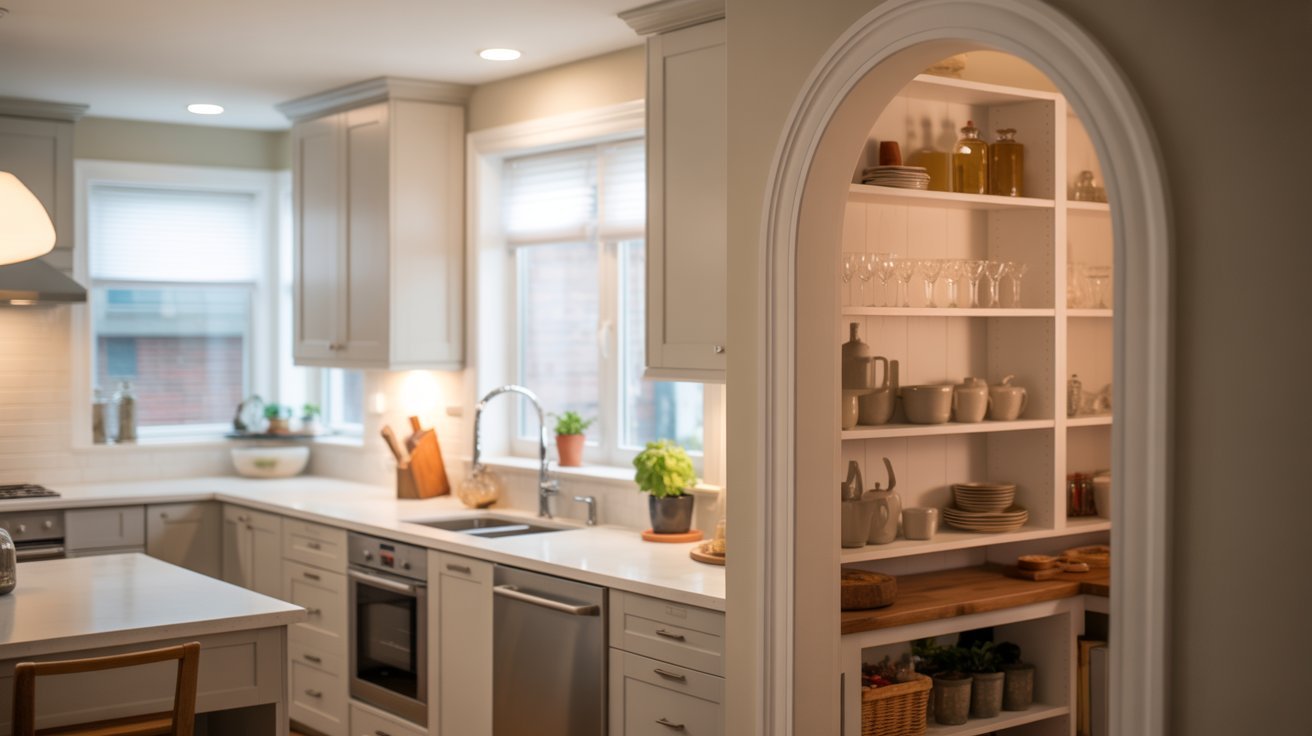
Open-concept kitchens look great, but they come with a problem. Every dish, every mess, and every cluttered counter is on full display.
That is why more homeowners are adding secondary spaces behind the scenes.
These areas handle the prep work, extra storage, and post-meal cleanup without affecting the main kitchen’s appearance.
Families with busy routines and people who love hosting find these spaces especially useful. They keep things running smoothly without the chaos showing up where guests can see it.
What Is a Scullery?
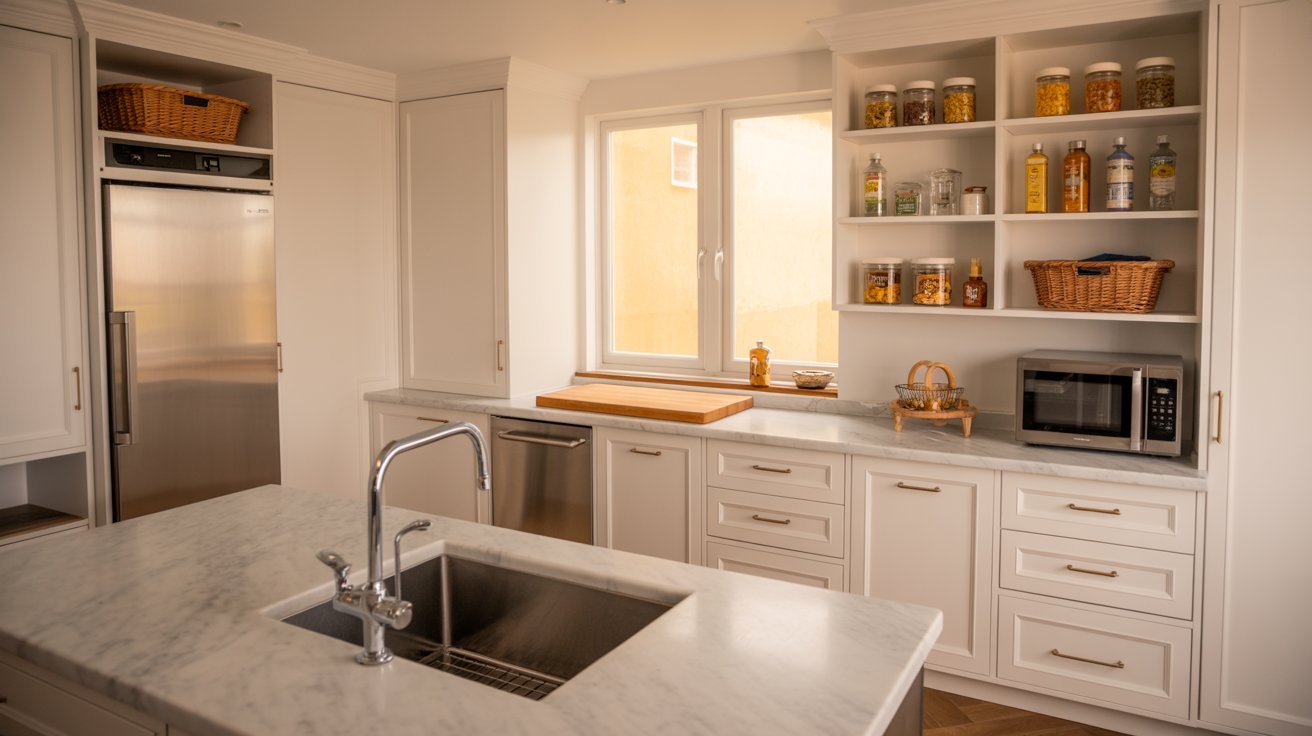
A scullery is a secondary kitchen space built for behind-the-scenes work. It sits just off the main kitchen and handles the tasks that create the most mess.
Washing up, food preparation, storing bulk groceries, and keeping large appliances out of the way are all part of what a scullery does.
It gives you a dedicated area to work without making the main kitchen look chaotic.
Common Features of a Scullery
- Extra sink
- Additional dishwasher
- Storage cabinets
- Space for appliances that would otherwise crowd the main kitchen
Main Purpose of a Scullery
The main job of a scullery is simple. It keeps the mess out of sight.
When you are cooking a big meal or having guests over, the main kitchen stays clean while the scullery takes on all the hard work.
What Is a Butler’s Pantry?
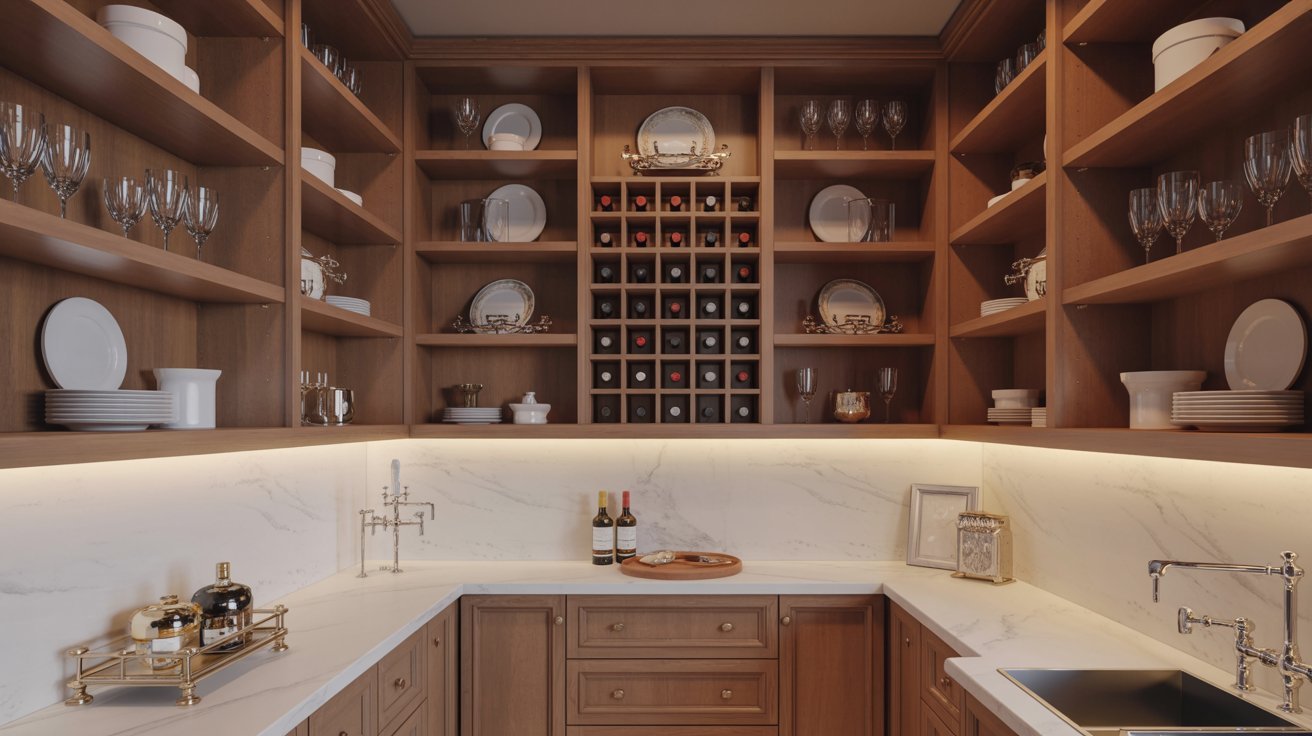
A butler’s pantry is a small service area that sits between the kitchen and the dining room. It was originally used by household staff to prepare and stage meals before serving.
Today, it works the same way for homeowners who want a dedicated spot to plate dishes, store dining essentials, and keep everything organised before guests sit down.
It is less about heavy-duty cleaning and more about making the serving process smooth and presentable.
Common Features of a Butler’s Pantry
- Counter space for staging and plating meals
- Storage for dishes, glassware, and serving pieces
- Beverage fridge or wine storage
- Prep sink or small appliances
Main Purpose of a Butler’s Pantry
A butler’s pantry supports the serving side of your kitchen. It keeps dining essentials close to the table and gives you a quiet space to plate and present food without doing it in front of guests.
It also adds practical storage near the dining area, so everything you need for a meal is within easy reach.
Scullery vs Butler’s Pantry: Key Differences
Both spaces serve your kitchen in different ways, but knowing what each one does helps you choose the right fit for your home.
|
Feature |
Scullery |
Butler’s Pantry |
|
Primary Function |
Prep and cleaning |
Serving and storage |
|
Size |
Larger |
Smaller |
|
Appliances |
Multiple appliances |
Usually minimal |
|
Location |
Hidden behind kitchen |
Between kitchen and dining |
|
Cost |
Higher due to appliances |
More budget-friendly |
Pros and Cons of Each Option
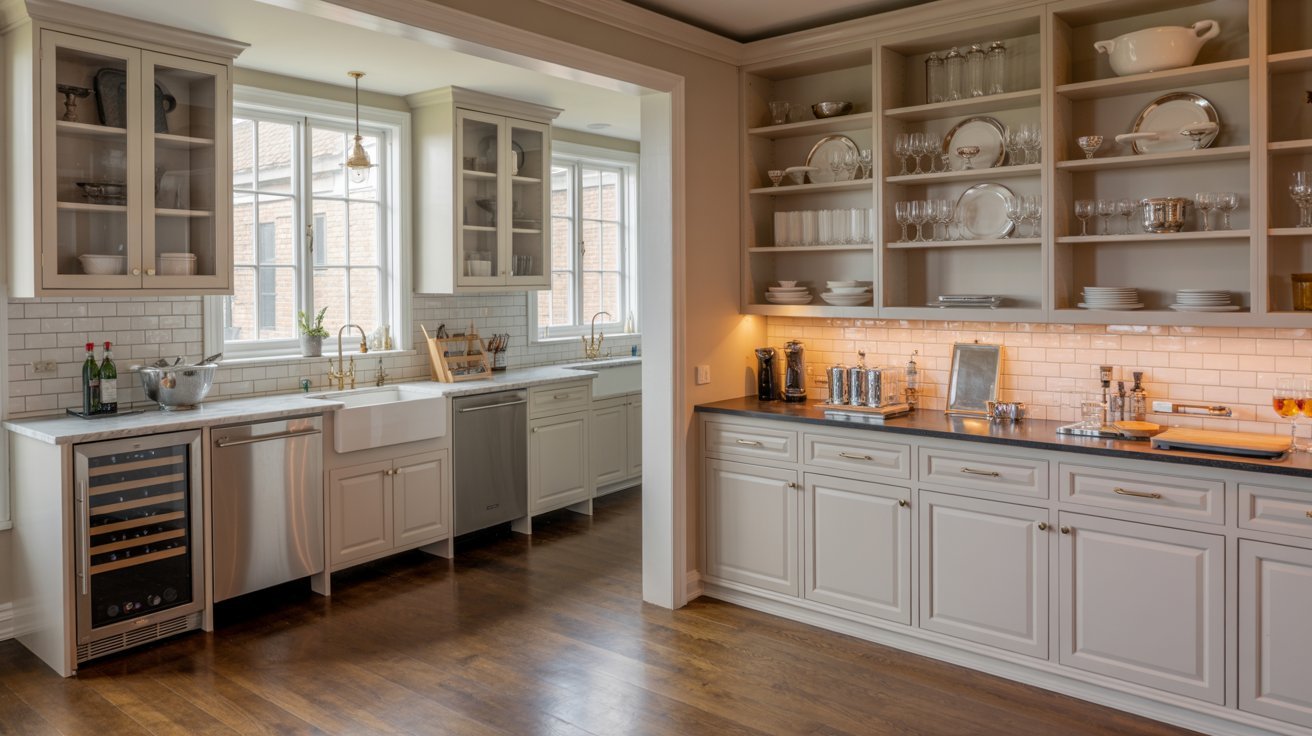
Every option has its strengths and limitations, so here is a straightforward look at what each space brings to the table.
Advantages of a Scullery
- Keeps the main kitchen spotless even during heavy cooking
- Provides extra workspace and room for additional appliances
- Works really well for large meals and hosting gatherings
Advantages of a Butler’s Pantry
- Creates a convenient area for serving and plating meals
- Offers extra storage for dishes, glassware, and dining essentials
- Takes up less space and costs less to build than a scullery
Potential Drawbacks
Both options come with a few things to think about before committing. A scullery needs a good amount of floor space, which not every home has.
A butler’s pantry, while smaller, still requires a dedicated area between the kitchen and dining room.
On top of that, both spaces add to your overall construction budget.
A scullery costs more due to the appliances and plumbing involved, while a butler’s pantry is lighter on the budget but still an added expense.
How to Choose Between a Scullery and a Butler’s Pantry
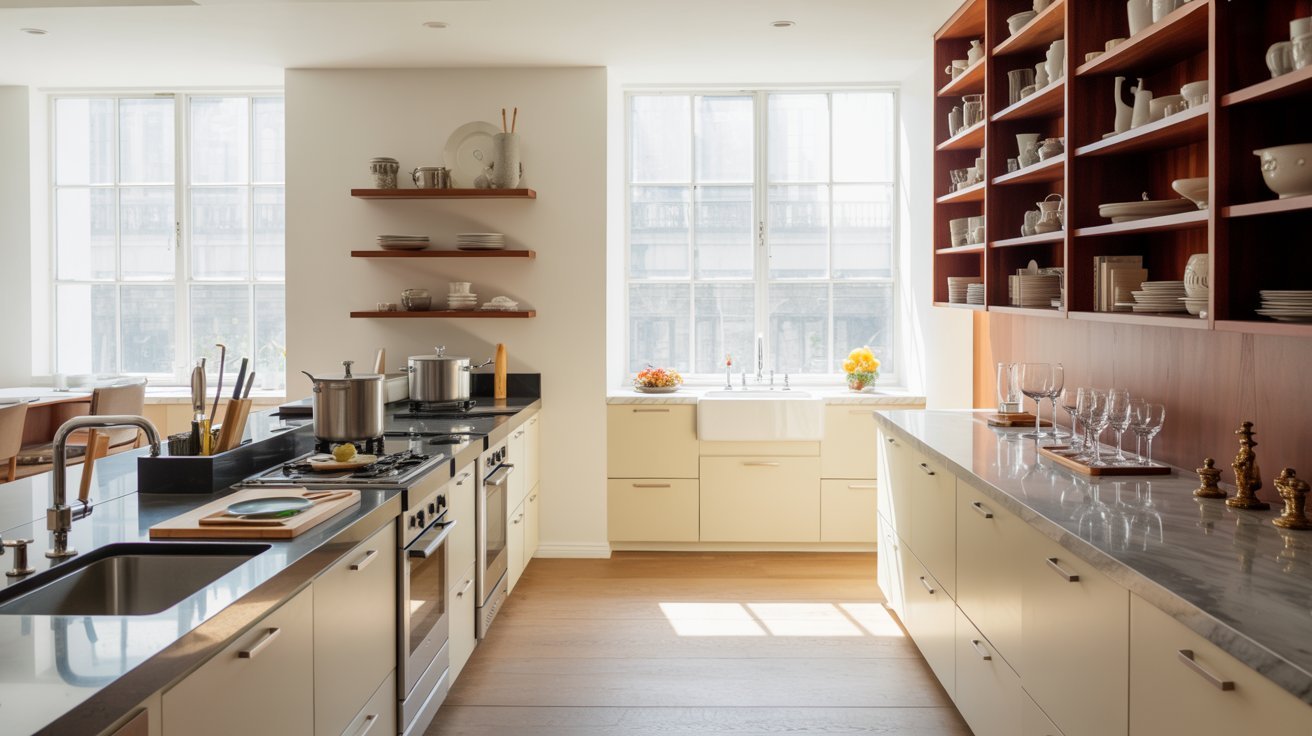
Choosing between the two comes down to how you actually use your kitchen.
If you cook large meals often and want the mess completely out of sight, a scullery makes more sense. If you host dinners and need a smooth serving setup, a butler’s pantry fits better.
Look at the space you have available and what your budget allows. A scullery costs more and needs more room. A butler’s pantry is a practical choice for smaller homes or tighter budgets.
Design Tips for Adding a Scullery or Butler’s Pantry
- Plan the layout so the secondary space connects directly to the main kitchen, making it easy to move between the two without extra steps.
- Include enough storage from the start. Think about shelving, cabinets, and drawers that match the volume of items you plan to store there.
- Keep the access point wide and clear so carrying dishes, groceries, or appliances in and out does not become a daily inconvenience.
- Match the cabinetry, materials, and finishes to the main kitchen so both spaces feel like part of the same home rather than two separate rooms.
- Leave room for future needs. A space that works for two people today should still function well when the household grows or routines change.
Conclusion
Both a scullery and a butler’s pantry make your kitchen more organised and functional.
The difference is in what they do. A scullery handles the prep and cleanup, while a butler’s pantry focuses on serving and storage.
The right choice comes down to your space, your daily routine, and what you want your kitchen to achieve.
Still unsure which one suits your home?
Browse our kitchen design guides or speak to one of our specialists today. We are here to help you build a space that actually works for you.
Frequently Asked Questions
What is the main difference between a scullery and a butler’s pantry?
A scullery is built for prep work and cleaning, while a butler’s pantry focuses on serving and storing dining essentials. They support the kitchen in different ways.
Can I have both a scullery and a butler’s pantry in my home?
Yes, if your floor plan allows it. Many larger homes include both spaces to handle cooking, cleaning, and serving without any overlap.
Which one is better for a small home?
A butler’s pantry is the more practical option for smaller homes. It takes up less space and costs less to build while still adding useful storage and serving areas.
Do sculleries and butlers’ pantries add value to a home?
Yes, both spaces are seen as desirable features by buyers. They signal a well-thought-out kitchen layout and add functional value to the overall home.
Is a scullery the same as a second kitchen?
Not exactly. A scullery supports the main kitchen by handling mess and prep, but is not fully equipped to function as a standalone kitchen.


