

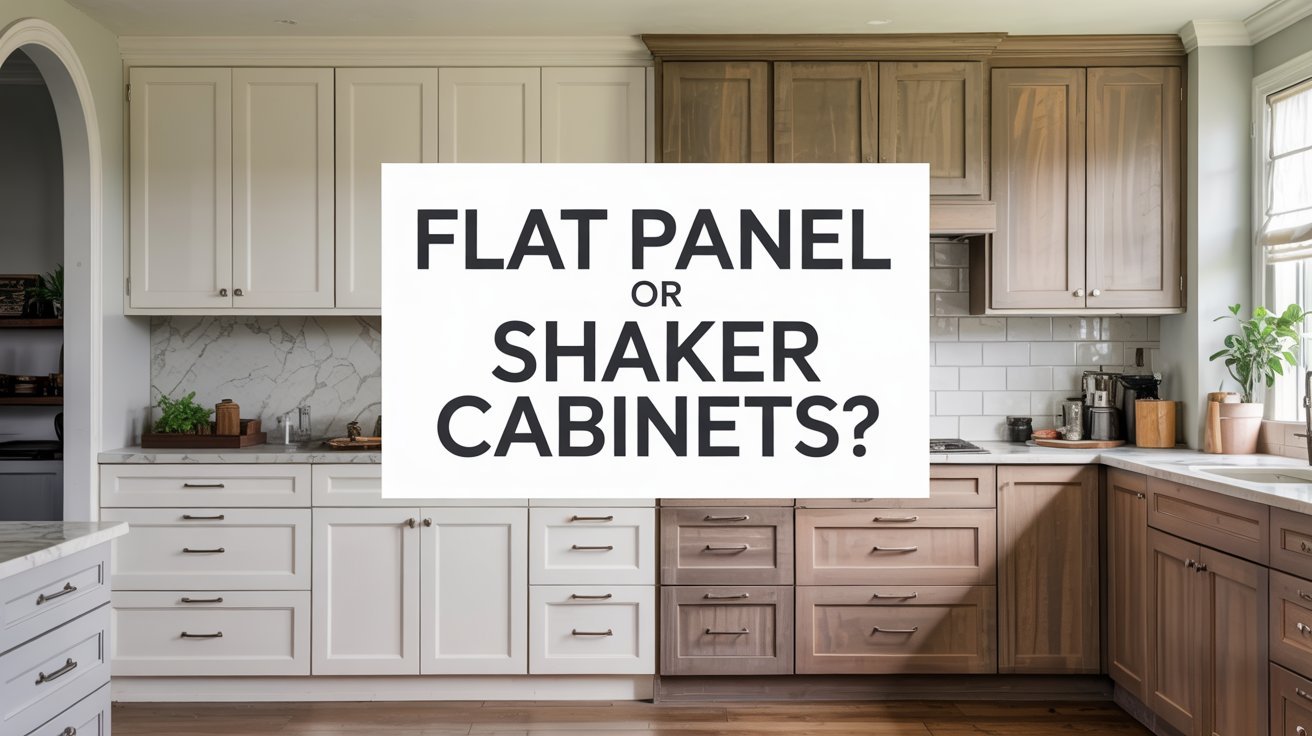
Choosing cabinet styles can make or break your kitchen design. The wrong choice? You’ll regret it every morning when you make coffee.
Flat panel and shaker cabinets dominate today’s market. They’re popular for good reasons. Each offers distinct benefits that appeal to different homeowners.
But here’s the thing – what works in your neighbor’s kitchen might clash with your home’s style. The key is understanding how each option fits your lifestyle, budget, and design goals.
Most homeowners feel overwhelmed by cabinet choices. Showrooms display hundreds of options. Sales reps push their favorites. Online reviews contradict each other. The result? Analysis paralysis.
I’ve helped dozens of homeowners through this exact decision. The secret isn’t finding the “perfect” cabinet. It’s finding the right cabinet for your specific situation. Your lifestyle matters more than trending styles.
What Are Shaker Cabinets?
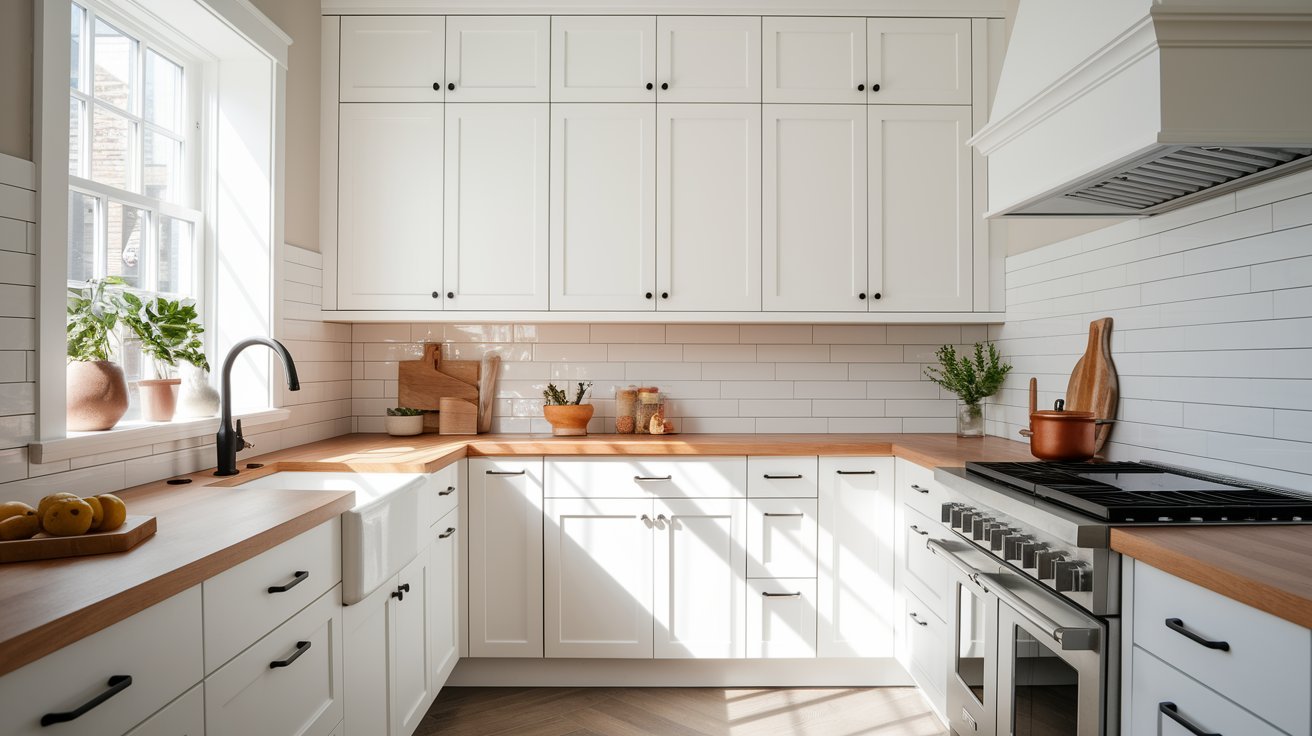
Shaker cabinets trace back to the 1800s Shaker religious community. These craftsmen valued simplicity and function over fancy details.
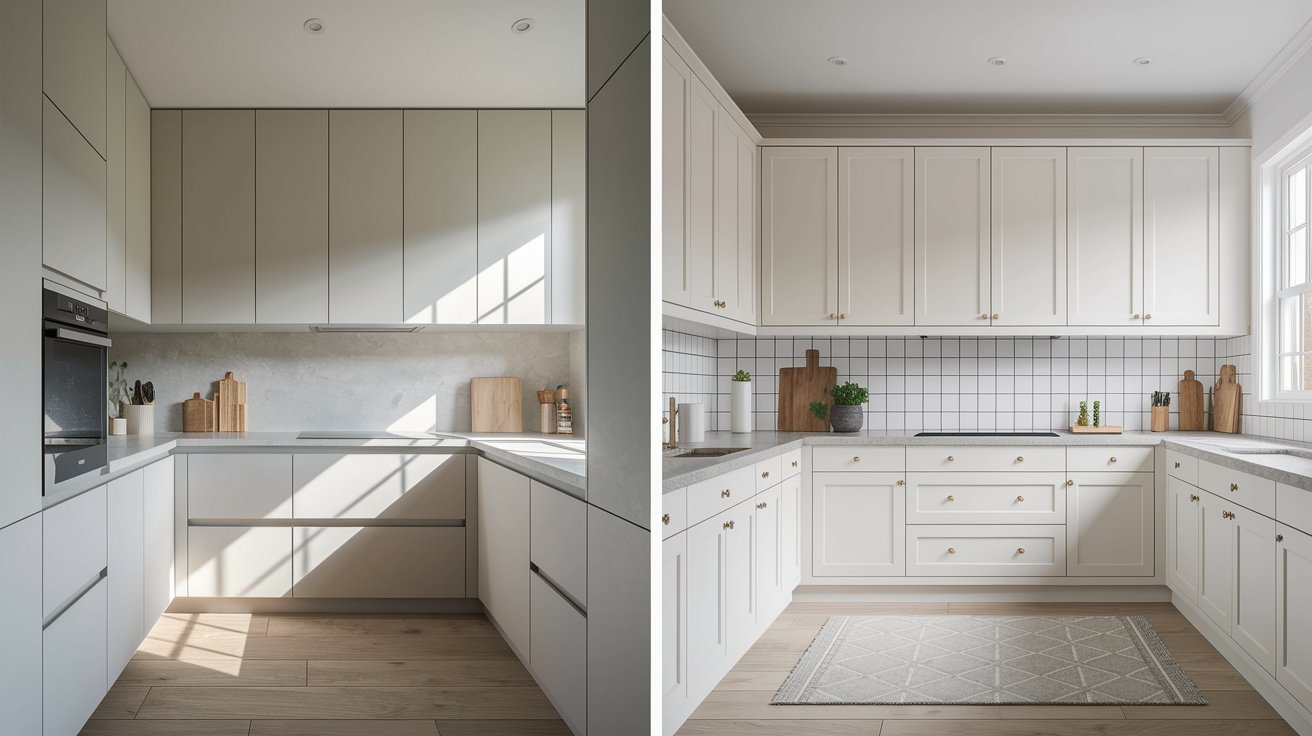
The defining feature? A recessed center panel surrounded by a flat frame. This creates subtle depth without overwhelming the space.
Key characteristics include:
- Five-piece door construction
- Clean, straight lines
- Minimal ornamentation
- Timeless appeal
Common materials range from solid wood to MDF. Popular finishes include white, gray, and natural wood tones. The versatility makes them work in various design styles.
Think of shaker cabinets as the little black dress of kitchen design. They’re classic, reliable, and rarely go out of style.
What Are Flat Panel Cabinets?
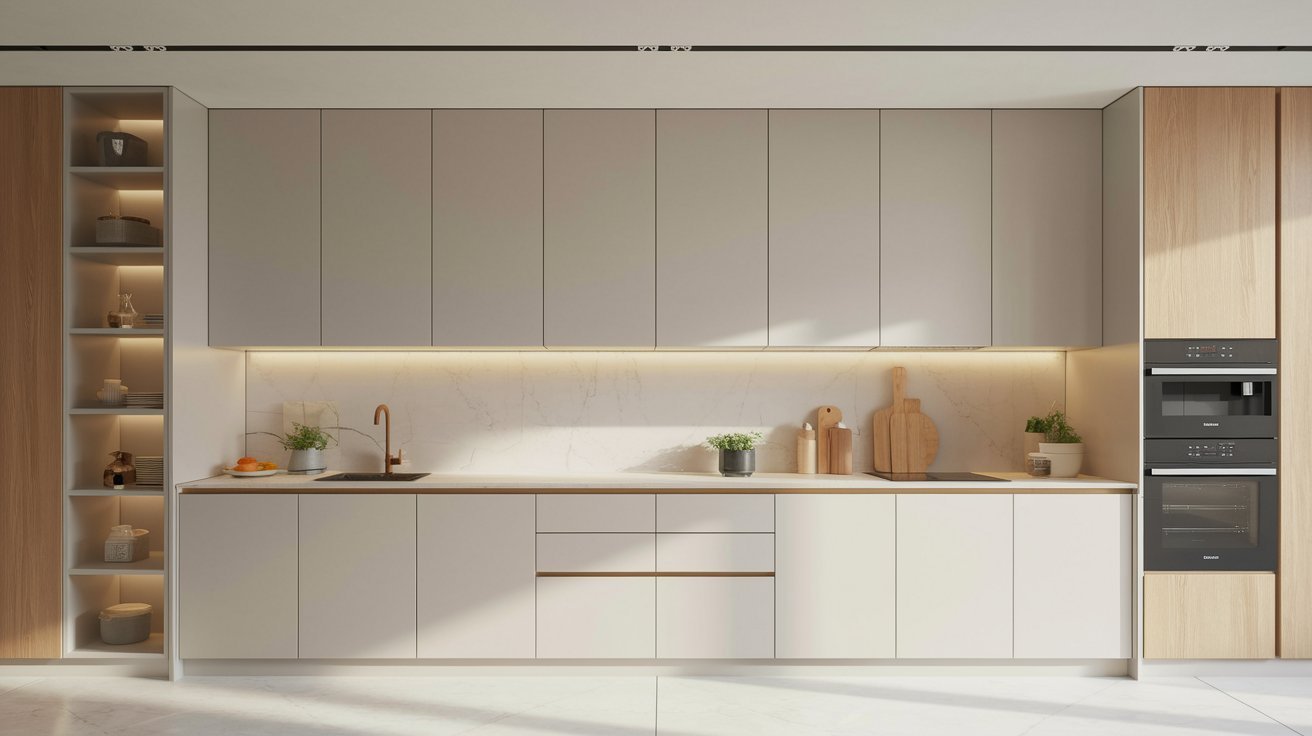
Flat panel cabinets (also called slab doors) feature completely smooth surfaces. No raised or recessed areas break up the door face.
This streamlined design creates a sleek, contemporary look. The smooth surface reflects light evenly, making kitchens appear larger and brighter.
Key features:
- Single-piece door construction
- Completely flat surface
- Bold, geometric appearance
- Focus on hardware and color
These cabinets work best in modern, industrial, or Scandinavian-style kitchens. They complement stainless steel appliances and quartz countertops perfectly.
Materials include laminate, wood veneer, or painted MDF. High-gloss finishes are popular for their reflective properties.
Design Aesthetics: Traditional vs Modern
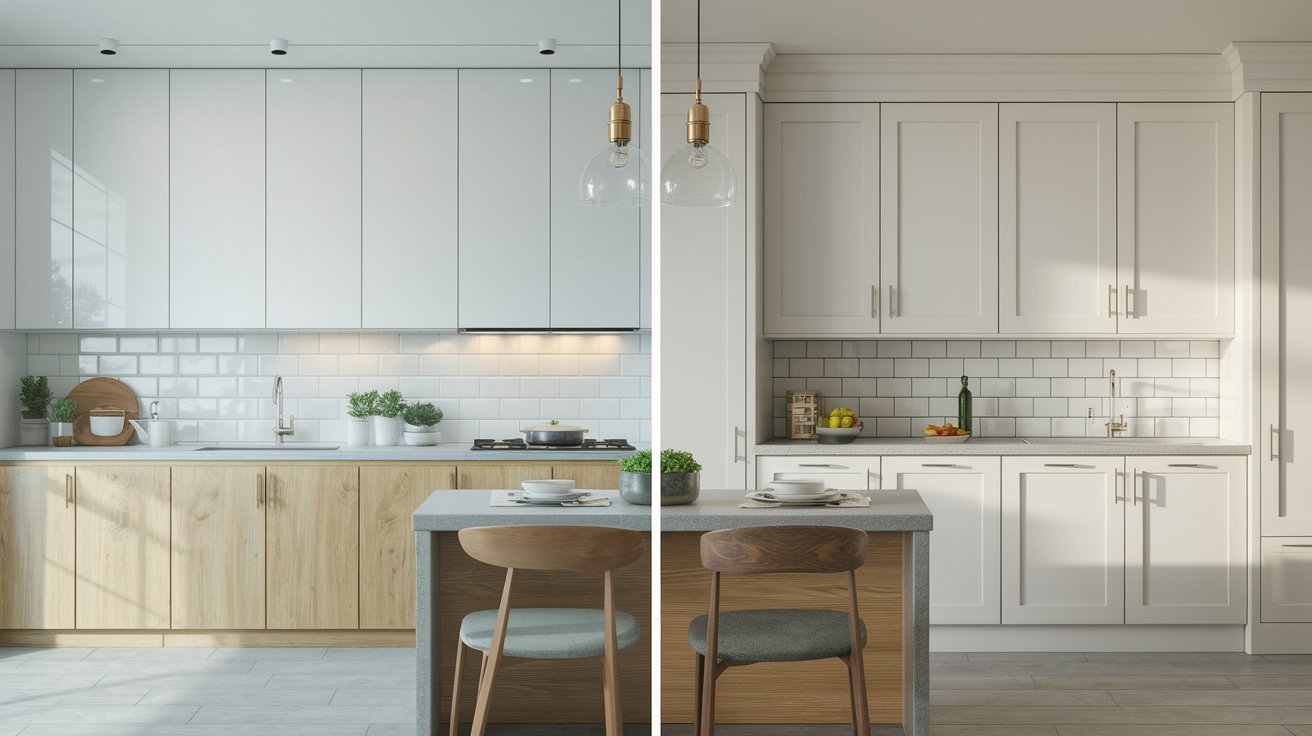
Shaker Style Compatibility:
- Farmhouse kitchens
- Transitional designs
- Classic American homes
- Cottage-style spaces
Shaker cabinets provide visual interest without being flashy. They work with both traditional and updated hardware styles.
Flat Panel Best Fits:
- Modern loft apartments
- Industrial-style homes
- Scandinavian minimalism
- Contemporary spaces
Here’s what’s interesting – flat panels make bold statements through simplicity. They let other elements like backsplashes or islands take center stage.
Mixed Approach: Some homeowners combine both styles. Use a shaker for perimeter cabinets and flat panels for the island. This creates visual contrast while maintaining cohesion.
Cost Comparison
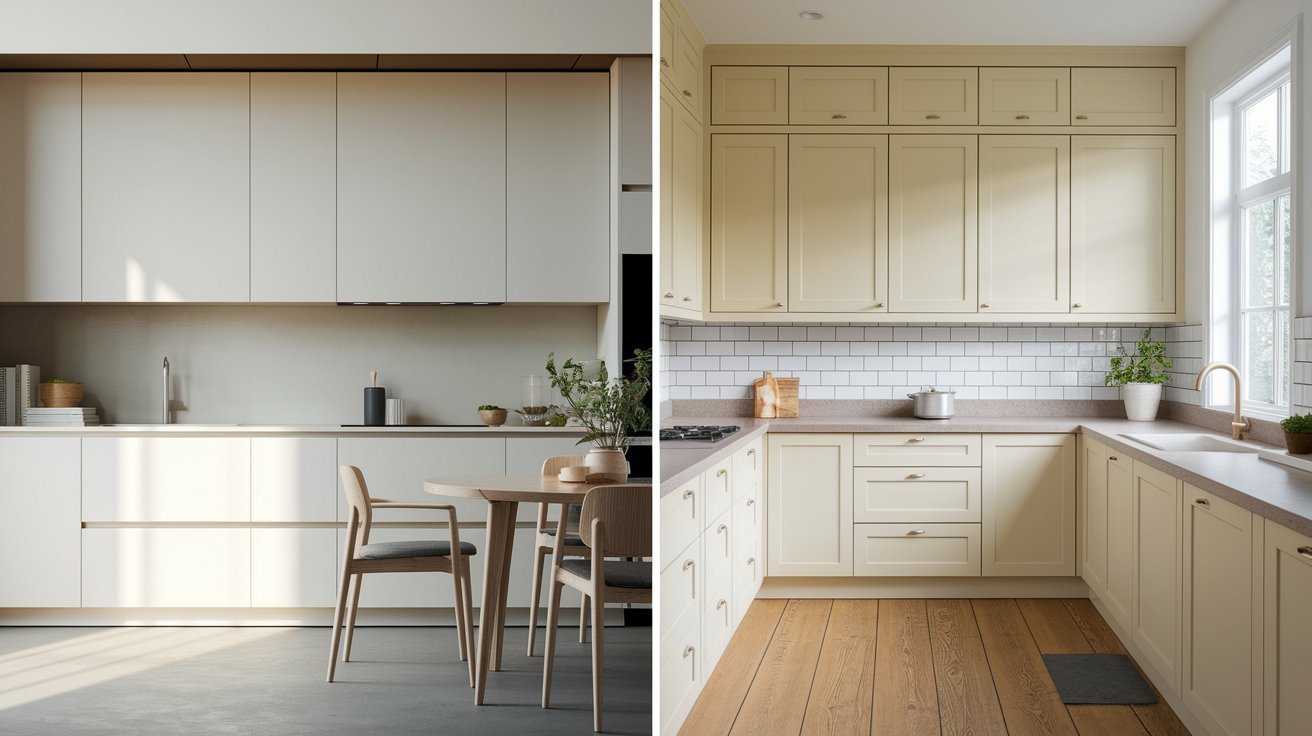
Average Price Ranges:
- Shaker cabinets: $3,000-$8,000 (full kitchen)
- Flat panel cabinets: $2,500-$7,500 (full kitchen)
Flat panels typically cost less due to simpler construction. However, high-end materials can flip this equation.
Cost Factors:
- Material quality (laminate vs solid wood)
- Finish complexity
- Brand reputation
- Custom vs stock options
Value Consideration: Shaker cabinets often provide better long-term value. Their timeless appeal reduces the need for future updates. Flat panels might require refreshing sooner as design trends change.
Budget Tip: Choose quality construction over fancy finishes. Good bones last longer than trendy colors.
Maintenance and Cleaning
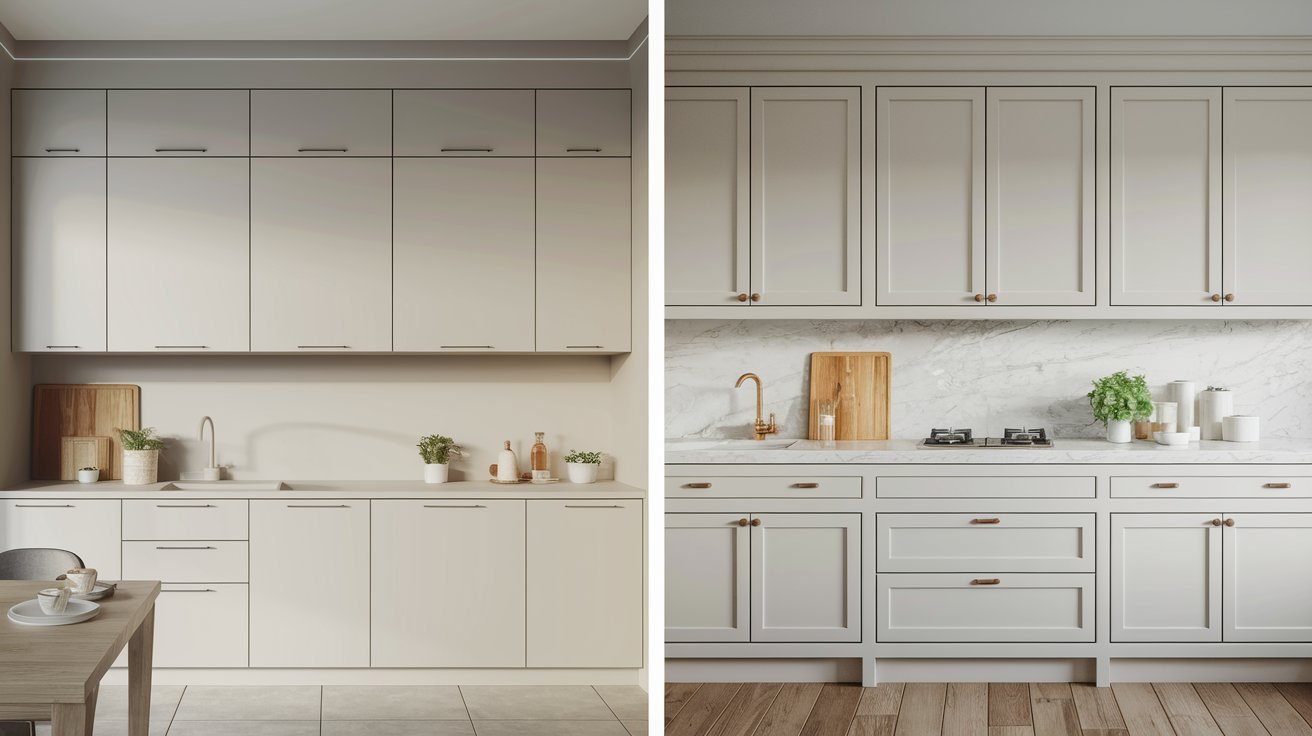
Flat Panel Advantage: Cleaning is straightforward. Wipe down with a damp cloth and you’re done. No grooves trap grease or dust.
Shaker Challenges: The recessed panel creates corners where debris accumulates. You’ll need to clean these areas regularly with a brush or cloth.
Daily Maintenance:
- Flat panels: 5 minutes for full kitchen
- Shakers: 8-10 minutes for thorough cleaning
Deep Cleaning: Both styles need periodic deep cleaning. However, flat panels require less scrubbing in detailed areas.
Finish Matters: High-gloss finishes show fingerprints easily. Matte finishes hide smudges better but may be harder to clean.
Durability and Material Options
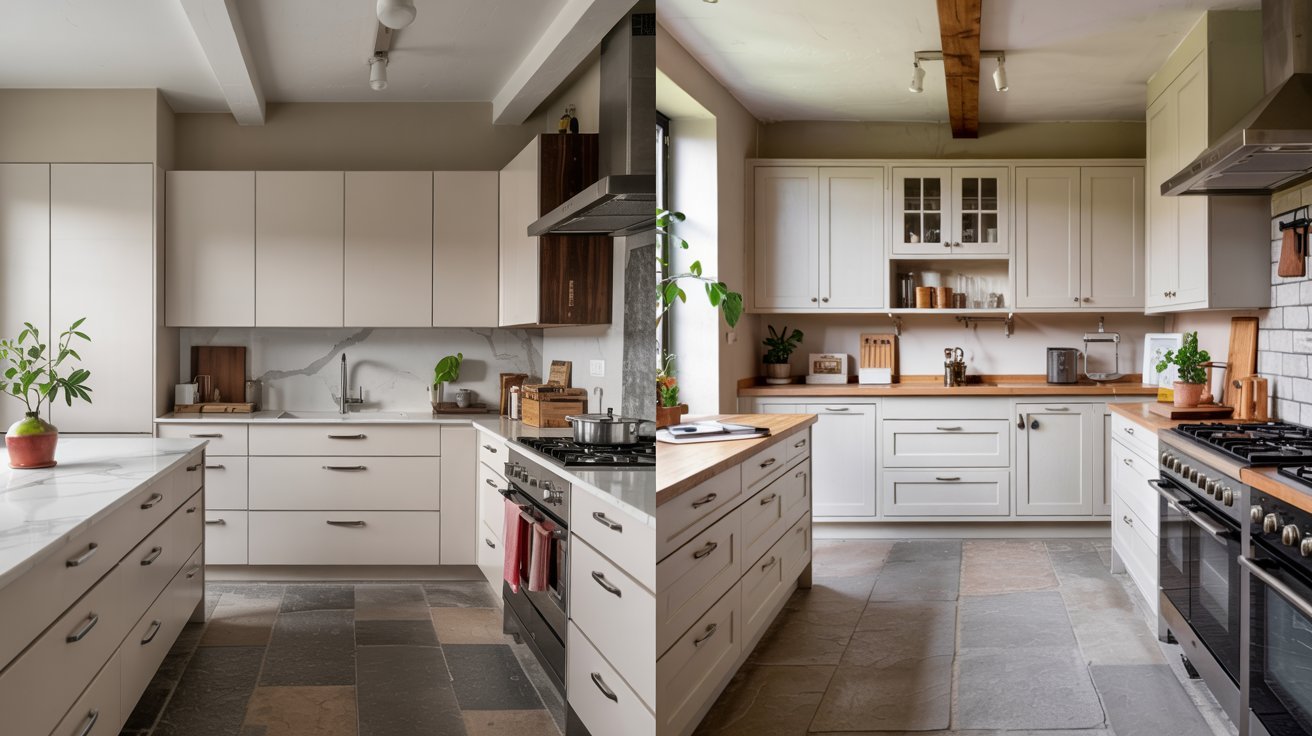
Construction Quality: Both styles can be equally durable when built properly. The difference lies in wear patterns over time.
Material Versatility:
- Solid wood: Both styles available
- MDF: Works well for both
- Plywood: Excellent for both options
- Laminate: Better suited for flat panels
Longevity Factors: Shaker cabinets hide minor dings better due to their recessed panels. Flat panels show every scratch on their smooth surface.
Finish Durability:
- Painted finishes: Both styles perform similarly
- Stained wood: Shakers show character better with age
- Laminate: Flat panels offer more design options
Repair Considerations: Shaker doors are easier to repair if damaged. Flat panels often require complete replacement.
Installation and Customization
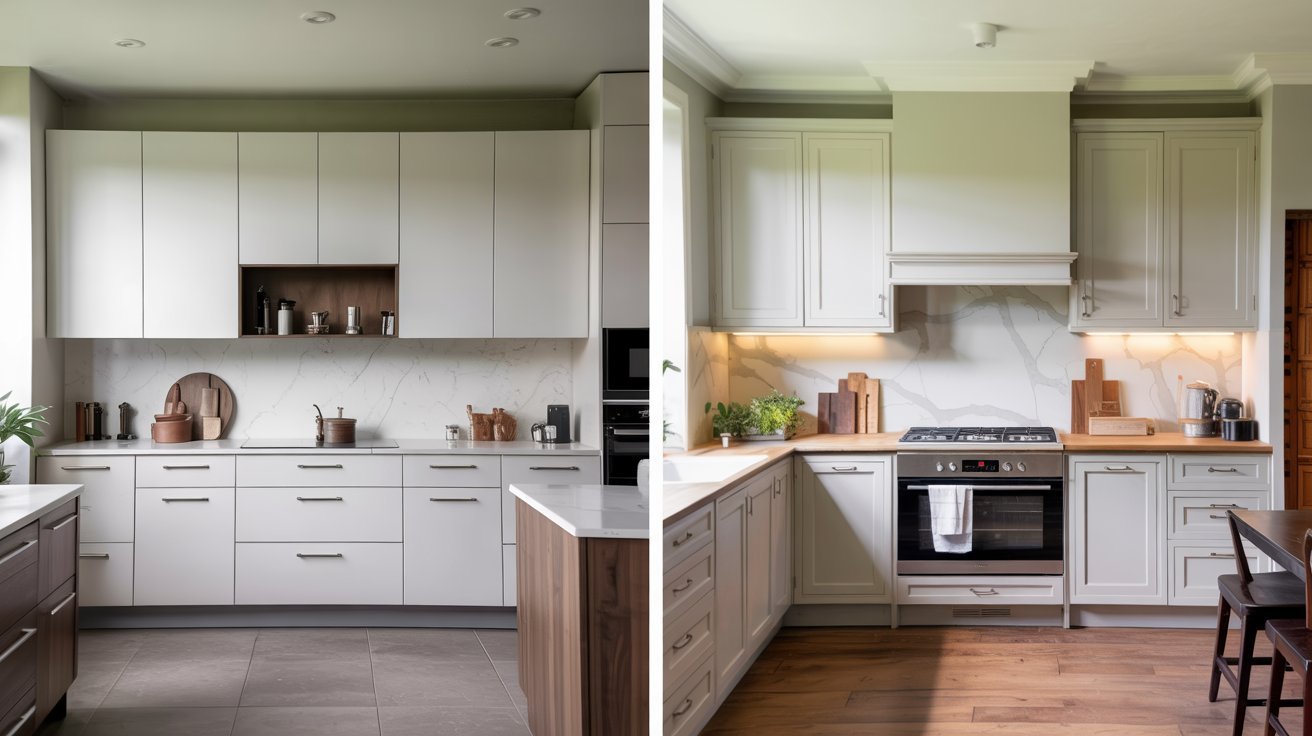
Installation Complexity: Both styles install similarly. The door style doesn’t significantly affect installation time or difficulty.
RTA Options:
- Shaker: Widely available in ready-to-assemble
- Flat panel: Growing RTA selection
Custom Potential: Flat panels offer more dramatic customization through bold colors and unique materials. Shakers customize through hardware and finish choices.
Hardware Compatibility:
- Shaker: Works with traditional and modern hardware
- Flat panel: Best with sleek, minimal hardware
Layout Flexibility: Both styles adapt to various kitchen layouts. The choice depends on your overall design vision.
Resale Value and Market Trends
Current Market Preferences: Shaker cabinets dominate real estate listings. They appeal to broader buyer demographics.
Resale Value Data:
- Shaker cabinets: 85% of buyers approve
- Flat panels: 65% of buyers approve
Regional Variations: Urban areas favor flat panels more than suburban markets. Know your local preferences.
Trend Predictions: Shaker cabinets show staying power. Flat panels fluctuate with design trends.
Investment Perspective: Choose shakers for maximum broad appeal. Pick flat panels if you plan to stay long-term.
Pros and Cons Summary Table
Here’s a quick comparison to help you decide:
|
Aspect |
Shaker Cabinets |
Flat Panel Cabinets |
|
Style |
Timeless, classic design |
Modern, contemporary look |
|
Maintenance |
More cleaning required (grooves trap dust) |
Easy wipe-down cleaning |
|
Cost |
$3,000-$8,000 average |
$2,500-$7,500 average |
|
Durability |
Hides minor damage well |
Shows scratches easily |
|
Market Appeal |
85% buyer approval |
65% buyer approval |
|
Best For |
Traditional, transitional homes |
Modern, minimalist spaces |
|
Hardware Options |
Works with any style |
Best with sleek, minimal options |
|
Customization |
Through finishes and hardware |
Bold colors and materials |
|
Repair |
Easier to fix if damaged |
Often requires full replacement |
|
Trend Longevity |
Stays current longer |
May date faster |
Quick Decision Guide:
- Choose shakers for broad appeal and timeless style
- Pick flat panels for modern looks and easy maintenance
- Consider your home’s architecture and your lifestyle needs
Conclusion
Your cabinet choice depends on lifestyle, budget, and design goals. Both styles offer solid options for different situations.
Consider shaker cabinets if you want broad appeal and timeless style. They work in most homes and satisfy future buyers. The extra cleaning time is worth the versatility.
Choose flat panels for modern homes where sleek design matters most. They’re perfect if you prioritize easy maintenance and contemporary looks.
Budget plays a role too. Flat panels offer good value for cost-conscious buyers. Shakers provide better long-term investment potential.
Remember, cabinets are a major investment that you’ll live with for years. Take time to visit showrooms and see both styles in person. Feel the door construction.
Don’t overthink this decision. Both styles create beautiful kitchens when executed well. Focus on quality construction and finishes that fit your home’s character.
Frequently Asked Questions
Can I mix shaker and flat panel cabinets in the same kitchen?
Yes, many designers use flat panels for islands and shakers for perimeter cabinets. This creates visual interest while maintaining cohesion.
Which style works better in small kitchens?
Flat panels often make small spaces feel larger due to their clean lines and light reflection. However, light-colored shakers also work well.
Do flat panel cabinets go out of style faster?
They can, especially bold colors or unique materials. Neutral flat panels in quality materials tend to age better than trendy finishes.
Which is better for families with young children?
Flat panels are easier to clean, but shakers hide fingerprints and minor damage better. Consider your priorities between maintenance and durability.
Can I change my cabinet doors later without replacing the entire cabinet?
Yes, door and drawer front replacement is possible with both styles. This allows style updates without full cabinet replacement.
