

Cabinet depth affects how your home functions. Too shallow? You lose storage space. Too deep? You can’t reach items easily.
I see homeowners struggle with this daily. They buy cabinets without considering depth. Then they face problems during installation.
Most people focus on cabinet style and color. They forget about the most important measurement. Depth determines if your appliances fit. It controls how much you can store.
Standard depths exist for good reasons. They work with common appliances. Countertops align properly. Installation becomes smoother and faster.
Your kitchen needs different depths than your bathroom. Storage rooms have their own requirements. Each space serves different purposes.
This guide covers standard depths for every room. You’ll learn when to stick with standards and when to go custom. I’ll show you how to measure correctly.
What Does “Standard Cabinet Depth” Mean?
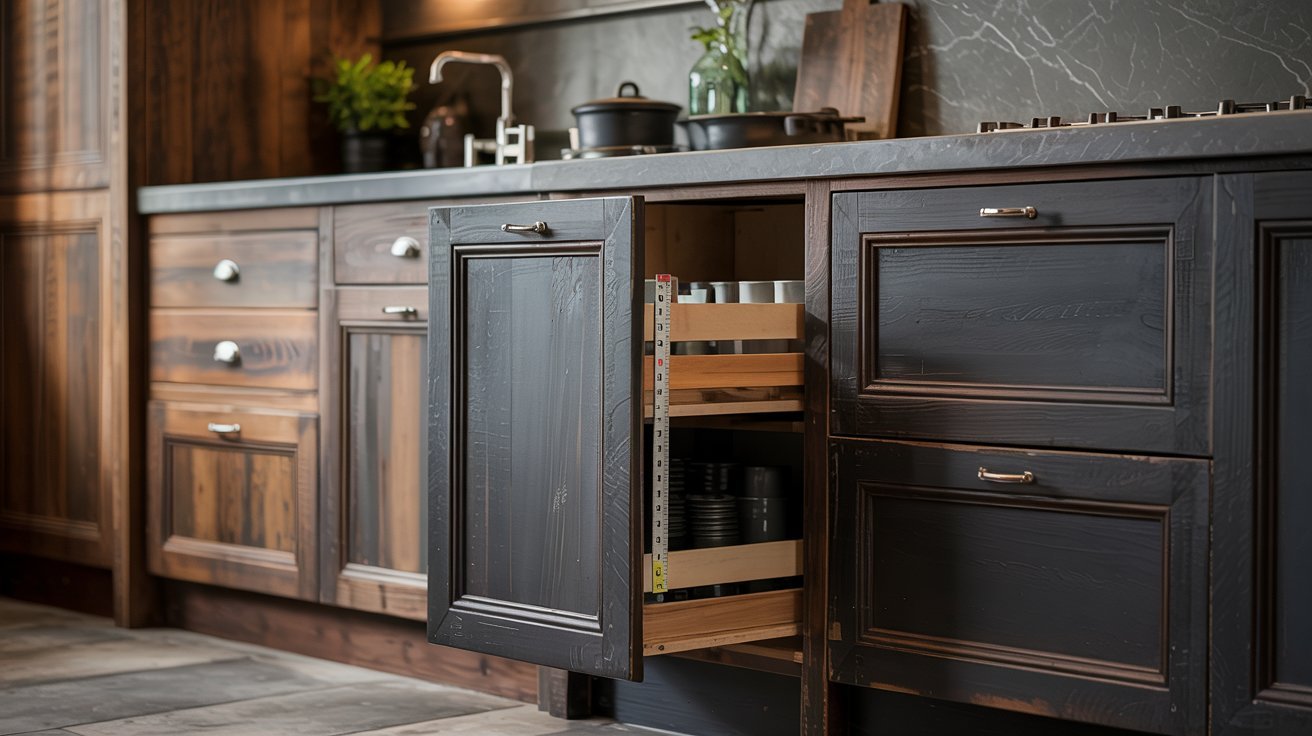
Cabinet depth measures from the front edge to the back wall. It’s the distance that extends into your room.
Think of it this way: width goes left to right, height goes up and down, depth goes front to back.
Standards exist for good reasons. They match appliance sizes. Countertops fit properly. Installation becomes easier.
Most manufacturers follow these standards. This keeps costs down. It also means parts are interchangeable.
But standards aren’t laws. You can choose different depths. Just know the consequences first.
Standard Kitchen Cabinet Depths
Base Cabinets: 24 Inches Deep
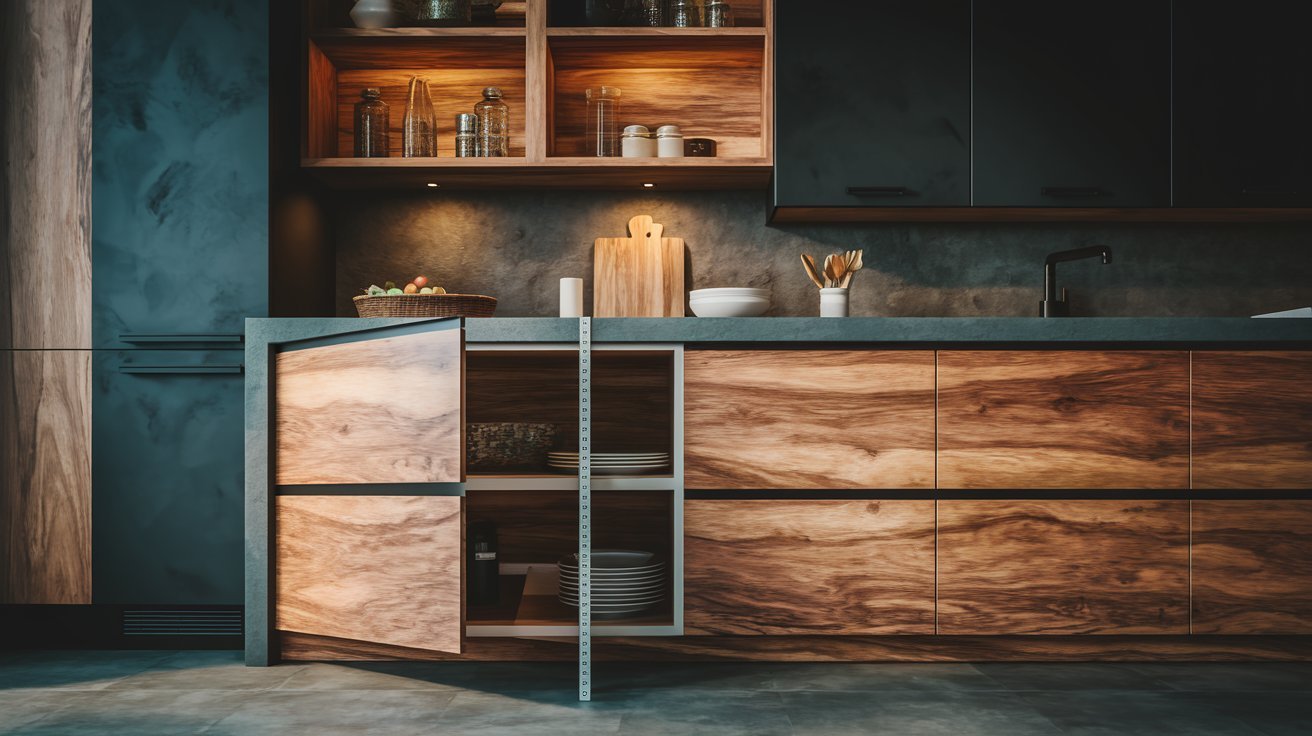
Base cabinets sit on the floor. They support your countertops. The standard depth is 24 inches.
This size works with most appliances. Dishwashers fit underneath. Refrigerators align properly.
Counter depth becomes 25-26 inches with the door thickness. This gives you good work space.
Wall Cabinets: 12 to 15 Inches Deep
Wall cabinets hang above your counters. They’re shallower than base cabinets.
12 inches is most common. This prevents hitting your head while working.
15 inches gives more storage. Use this depth over islands or where clearance isn’t an issue.
Tall Pantry Cabinets
Pantry cabinets come in three standard depths:
- 12 inches for narrow spaces
- 24 inches to match base cabinets
- 36 inches for maximum storage
Choose based on your room size and storage needs.
Custom vs. Standard Cabinet Depths
When to Choose Custom Depths
Sometimes standard sizes don’t work. Your space might be unusual. You might have specific needs.
Custom depths help in these situations:
- Narrow galley kitchens
- Sloped ceilings
- Accessibility requirements
- Unique appliance sizes
Pros and Cons of Custom Cabinetry
Pros:
- Perfect fit for your space
- Exactly what you need
- Unique design possibilities
Cons:
- Higher cost
- Longer lead times
- Fewer hardware options
- Potential resale issues
Custom cabinets cost 20-40% more than standard ones. Installation takes longer too.
Factors That Influence Cabinet Depth Choice
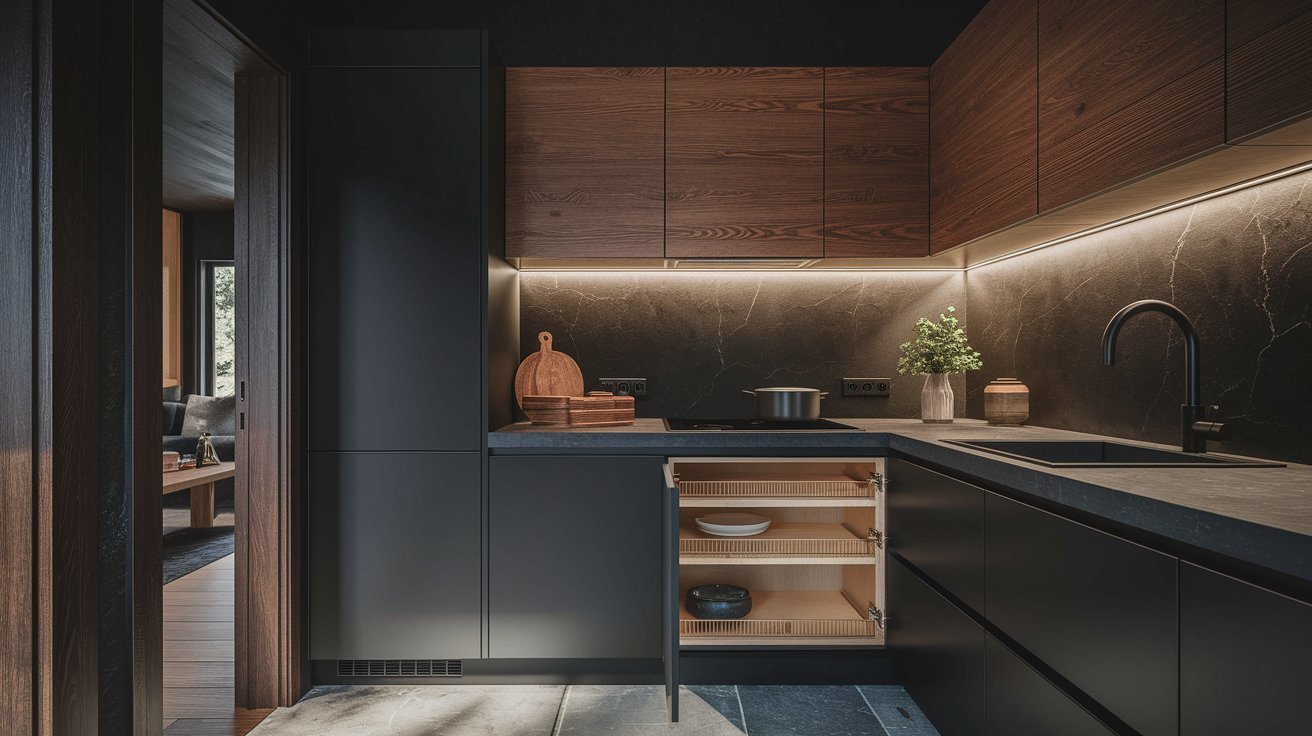
Available Floor Space
Measure your room carefully. Cabinets that stick out too far block traffic flow.
In kitchens, you need at least 36 inches between cabinets. This allows two people to work comfortably.
Appliance Size and Placement
Your appliances affect cabinet depth. Refrigerators need clearance. Dishwashers have specific dimensions.
Standard appliances work with standard cabinets. Custom appliances might need custom cabinets.
Storage Needs and Accessibility
Think about what you’ll store. Deep cabinets hold more but make reaching difficult.
Consider who uses the space. Children and elderly people need different depths.
Visual Balance and Overall Design
Deep cabinets can make rooms feel smaller. Shallow cabinets might look out of proportion.
Balance function with appearance. Your home should work well and look good.
Measuring Tips for Homeowners
Follow these steps to measure cabinet depth accurately,
- Use a tape measure, not a ruler
- Measure from the wall to where the cabinet front will be
- Account for baseboards and trim
- Check multiple spots along the wall
- Write down all measurements
- Double-check before ordering
Common Mistakes to Avoid
- Forgetting about door thickness
- Not accounting for plumbing or electrical
- Assuming walls are perfectly straight
- Mixing up depth with width
- Not considering appliance clearances
Tips for Retrofitting or Replacing Cabinets
Existing cabinets might not be standard sizes. Measure the actual cabinets, not just the opening.
Consider keeping the same depth if possible. This avoids floor and wall repairs.
Cabinet Depth and Ergonomics
The right depth makes cabinets comfortable to use. Too deep, and you can’t reach items. Too shallow, and nothing fits.
Standard depths work for most people. They’re based on average arm reach and body proportions.
Consider your family’s needs. Tall people can handle deeper cabinets. Shorter people might prefer shallower ones.
For accessibility, 18-inch depth often works better than 24 inches. It reduces reaching and stretching.
Conclusion
Cabinet depth isn’t just a number. It determines how well your home works.
Standard depths exist for good reasons. They fit appliances, match countertops, and feel comfortable for most people.
Kitchen base cabinets at 24 inches deep work perfectly. Wall cabinets at 12-15 inches prevent head bumps. Bathroom vanities at 18-21 inches fit most spaces.
Custom depths solve special problems. But they cost more and take longer.
Measure carefully before you buy. Consider your space, appliances, and family needs. Think about both function and looks.
The right cabinet depth makes your home better. Take time to choose wisely. Your future self will thank you.
Frequently Asked Questions
Can I mix different cabinet depths in the same kitchen?
Yes, you can mix depths. Use 24-inch base cabinets in most areas and 18-inch cabinets in tight spots. Just make sure the design looks intentional.
Do I need to match my existing cabinet depth when adding new ones?
Not necessarily. If you’re adding cabinets in a different area, you can use different depths. For additions in the same space, matching usually looks better.
How much does custom cabinet depth cost compared to standard?
Custom depth typically adds 20-40% to cabinet costs. The exact amount depends on how far you deviate from standard sizes.
What’s the minimum cabinet depth that’s still functional?
For base cabinets, 18 inches is usually the minimum. For wall cabinets, 10 inches can work. Anything shallower becomes hard to use effectively.
Do European-style cabinets have different standard depths?
European cabinets often use metric measurements. Common depths are 600mm (23.6 inches) for base cabinets and 300mm (11.8 inches) for wall cabinets. These are close to American standards.
