

I replaced my bathroom countertop twice before I finally got it right, and both times the mistake came down to not doing enough research upfront.
If you’re looking at types of bathroom countertops and feeling overwhelmed by all the options, I’ve been exactly where you are.
In this guide, I’ll cover the most popular materials, how they compare on durability, cost, and upkeep, and how to pick the right one for your space.
I’ve spent years covering home improvement topics, and I’ll give you a straight, honest breakdown.
Why the Wrong Countertop Can Cost You More Down the Road
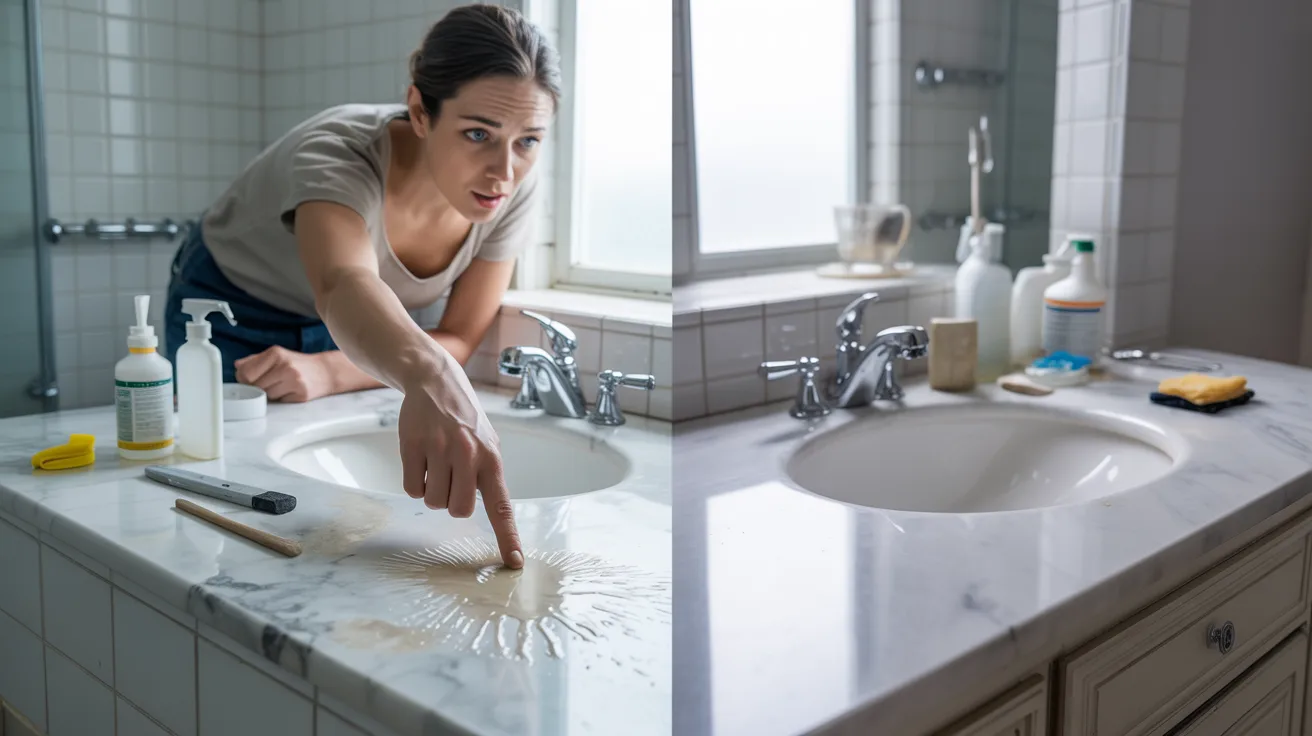
A lot of homeowners pick a bathroom countertop based on looks alone. That decision often leads to regret within a year or two.
Some materials stain easily. Others chip, crack, or need constant sealing to stay in good shape.
The wrong pick doesn’t just look bad over time, it costs you money in repairs and replacements.
Knowing what to look for before you commit helps you avoid the most common and costly mistakes homeowners make with bathroom countertops.
List of 9 Popular Bathroom Countertop Materials
There are more countertop materials available today than ever before, and each one comes with its own strengths and trade-offs.
1. Quartz Countertops
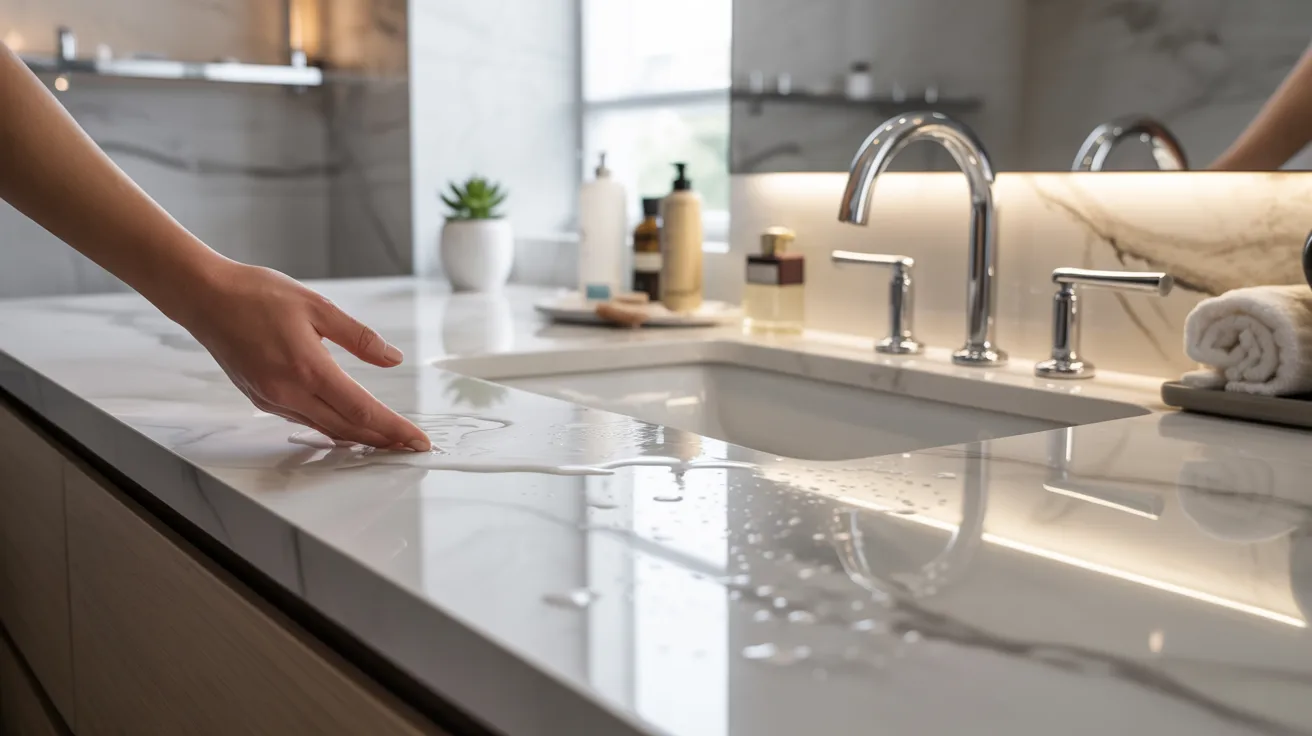
Quartz is one of the most popular bathroom countertop choices for good reason. It is non-porous, so it resists stains without needing regular sealing.
It comes in a wide range of colors and patterns to suit most design styles. The main trade-offs are a higher price point and lower heat resistance compared to natural stone.
It works best in busy bathrooms and modern designs where low maintenance is a priority.
2. Ultra Compact Quartz Countertops
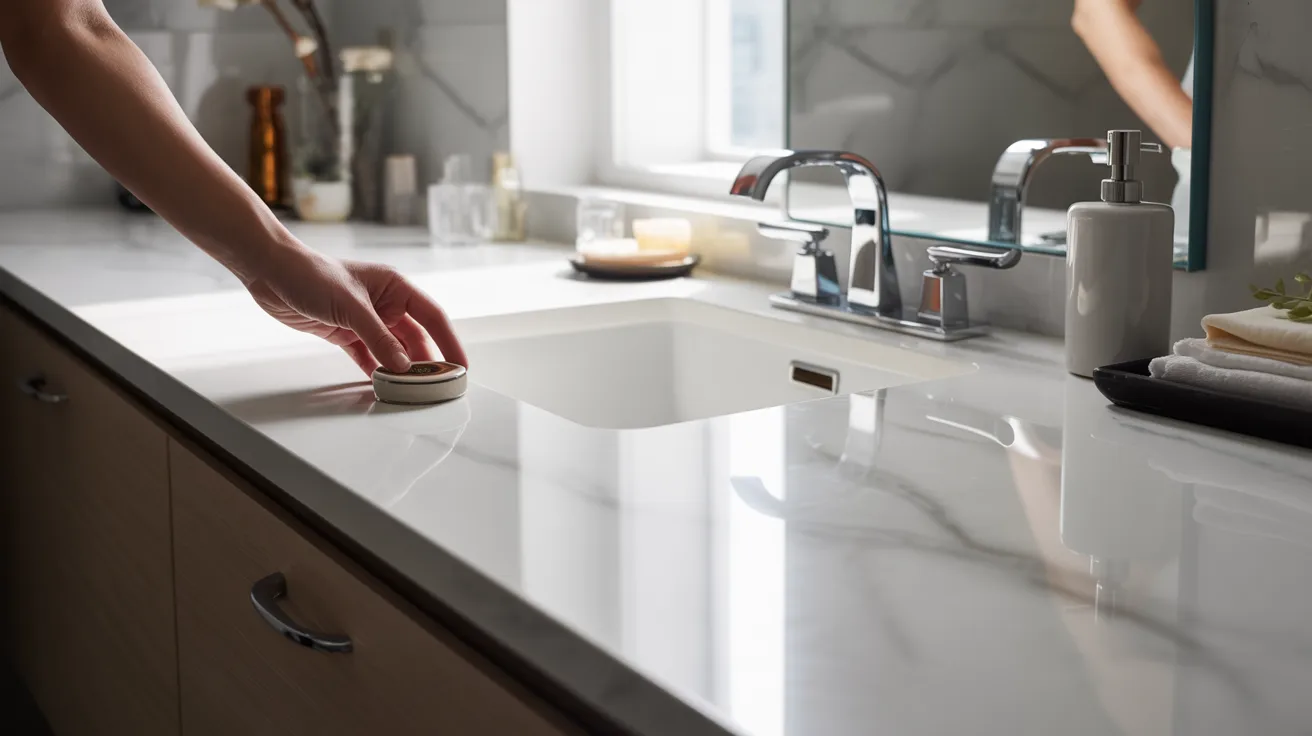
Ultra compact quartz is a step above standard quartz in terms of performance. It is extremely hard, scratch-resistant, and highly hygienic, making it a strong pick for high-end remodels.
It handles daily wear with ease and holds up well over the long term. The trade-offs are a premium price and more limited availability compared to standard quartz.
It suits homeowners who want a long-term investment and are willing to pay for it.
3. Granite Countertops
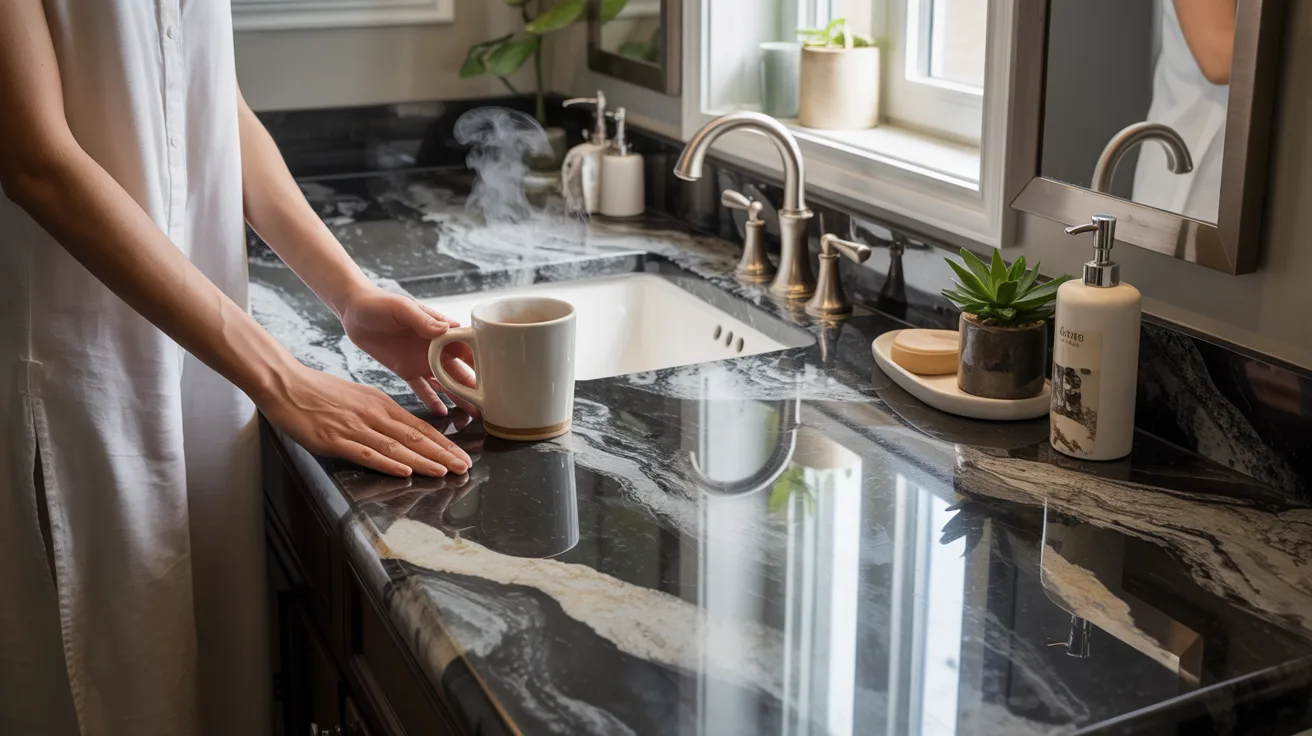
Granite brings natural beauty and real durability to any bathroom. It handles heat and scratches well and adds lasting value to the home.
Every slab has its own natural pattern, which gives each installation a one-of-a-kind look. It does require periodic sealing to stay protected, and the upfront cost runs higher than many other materials.
Granite works best in master bathrooms and powder rooms where a premium look is the goal.
4. Marble Countertops
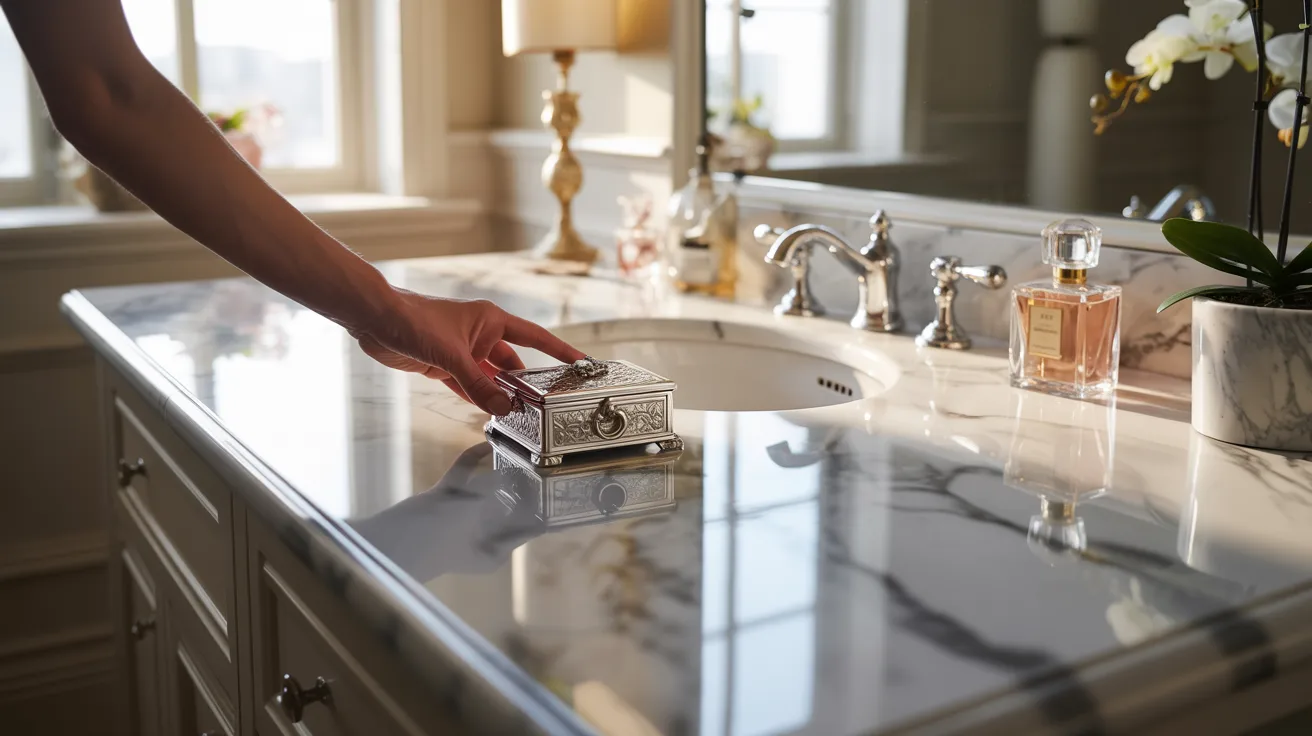
Marble has a rich, timeless look that is hard to match with any other material. It handles heat well and has been used in high-end homes for centuries.
The trade-offs are real though. Marble is prone to staining and scratching, needs regular sealing, and carries a high price tag.
It works best in classic bathroom designs where the focus is on appearance and the homeowner is prepared to put in the upkeep.
5. Cultured Marble Countertops
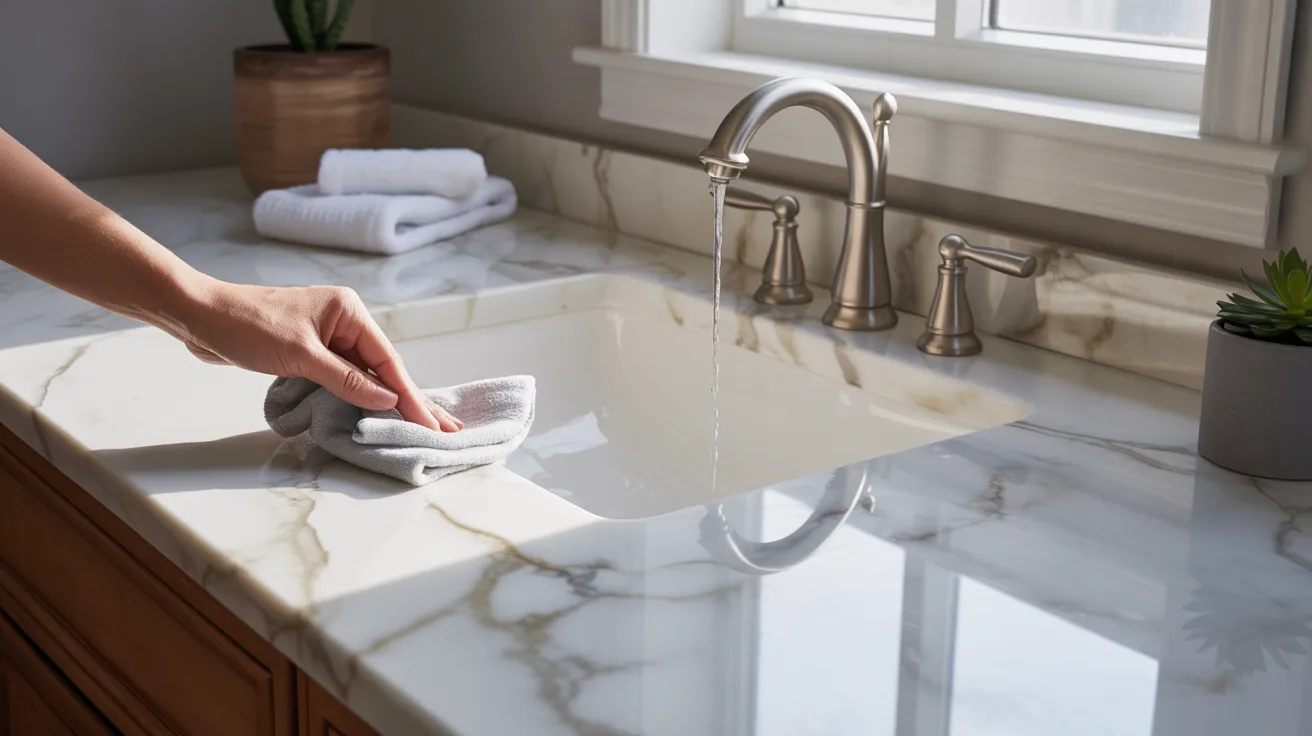
Cultured marble gives you the look of natural marble at a much lower price point.
It is stain-resistant and easy to maintain, which makes it a practical pick for budget-conscious remodels.
The trade-offs are fewer color and pattern options and lower heat resistance compared to natural stone.
It suits homeowners who want a polished, marble-like look without the high cost or high-maintenance care routine that comes with real marble.
6. Solid Surface Countertops
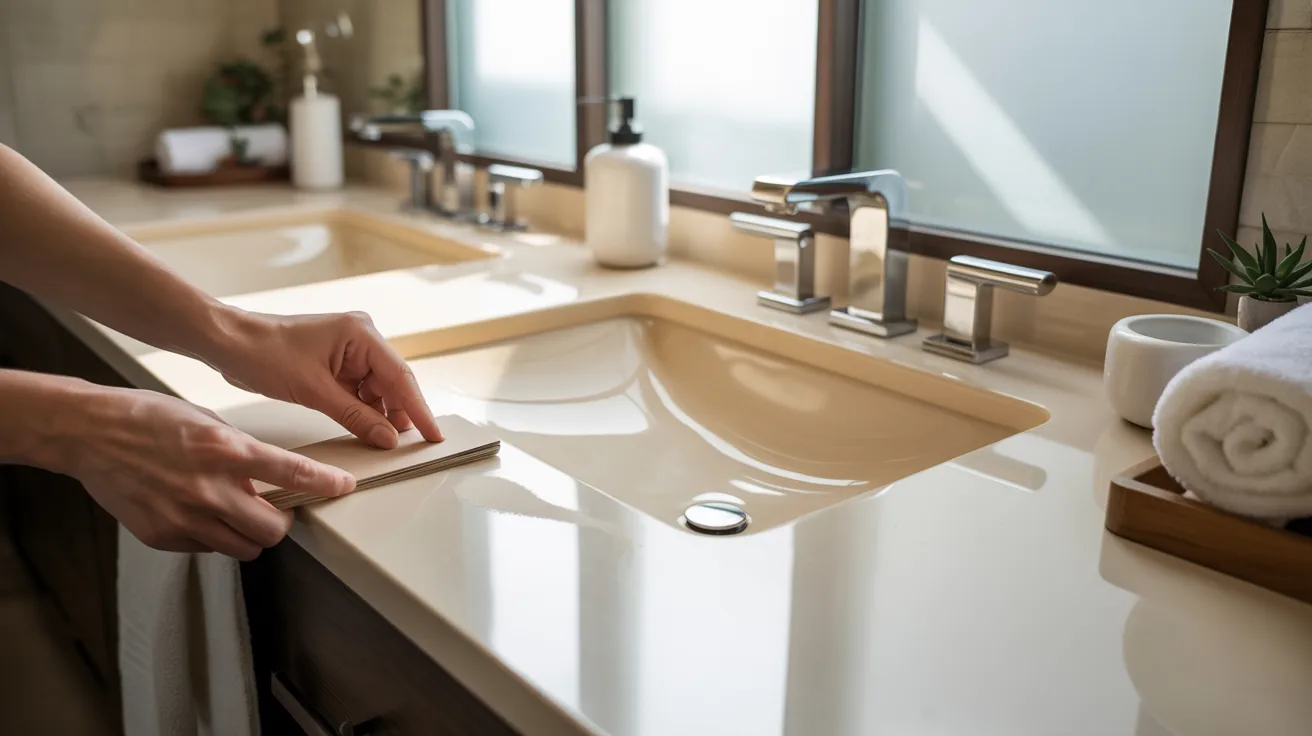
Solid surface countertops offer a clean, seamless look that works well in contemporary bathrooms.
Scratches and minor damage can often be sanded out, which makes repairs straightforward compared to most other materials.
They are fully customizable in terms of shape, color, and edge profile. The main drawbacks are lower heat resistance and a tendency to scratch or dent under heavy use.
They work well for family bathrooms where easy repair matters.
7. Laminate Countertops
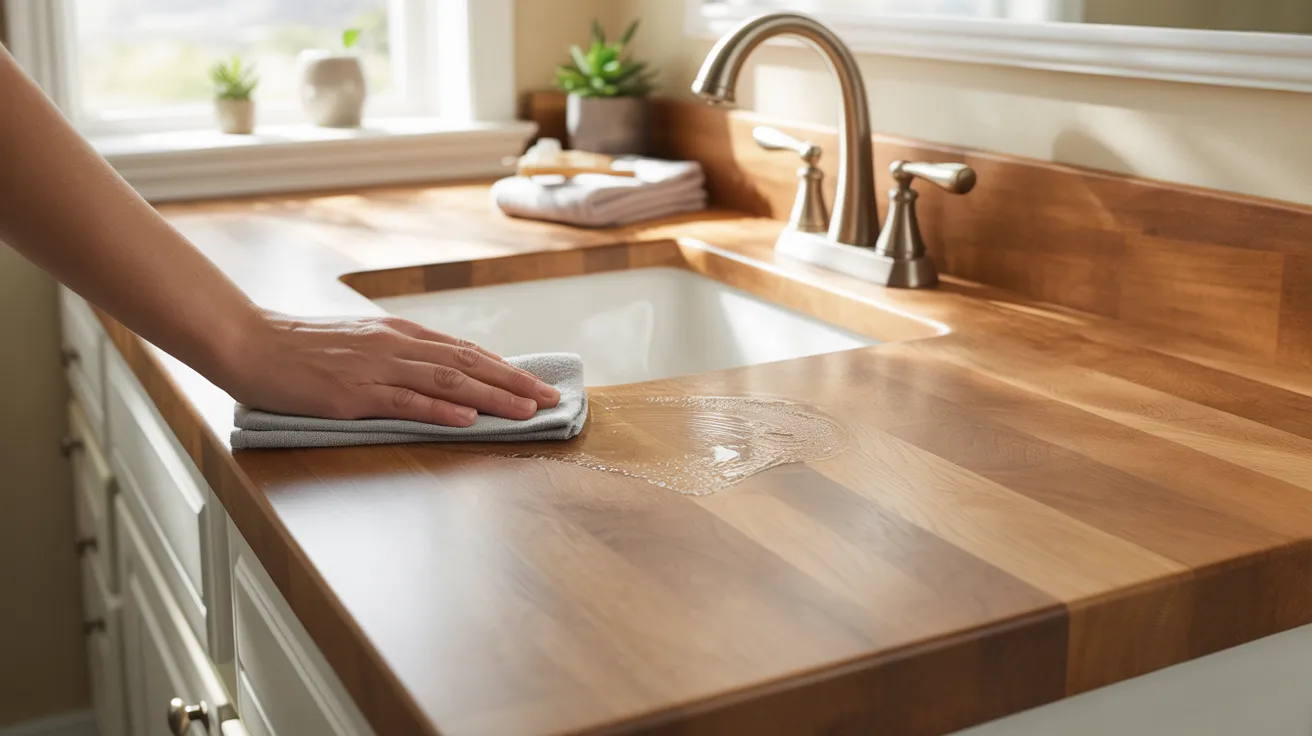
Laminate is the most budget-friendly option on this list by a clear margin.
It comes in a wide range of colors and patterns, including options that mimic the look of stone or wood at a fraction of the cost.
It is easy to clean and simple to install. The trade-offs are lower durability and vulnerability to heat and moisture damage over time.
It suits guest bathrooms or short-term upgrades where cost is the main concern.
8. Concrete Countertops
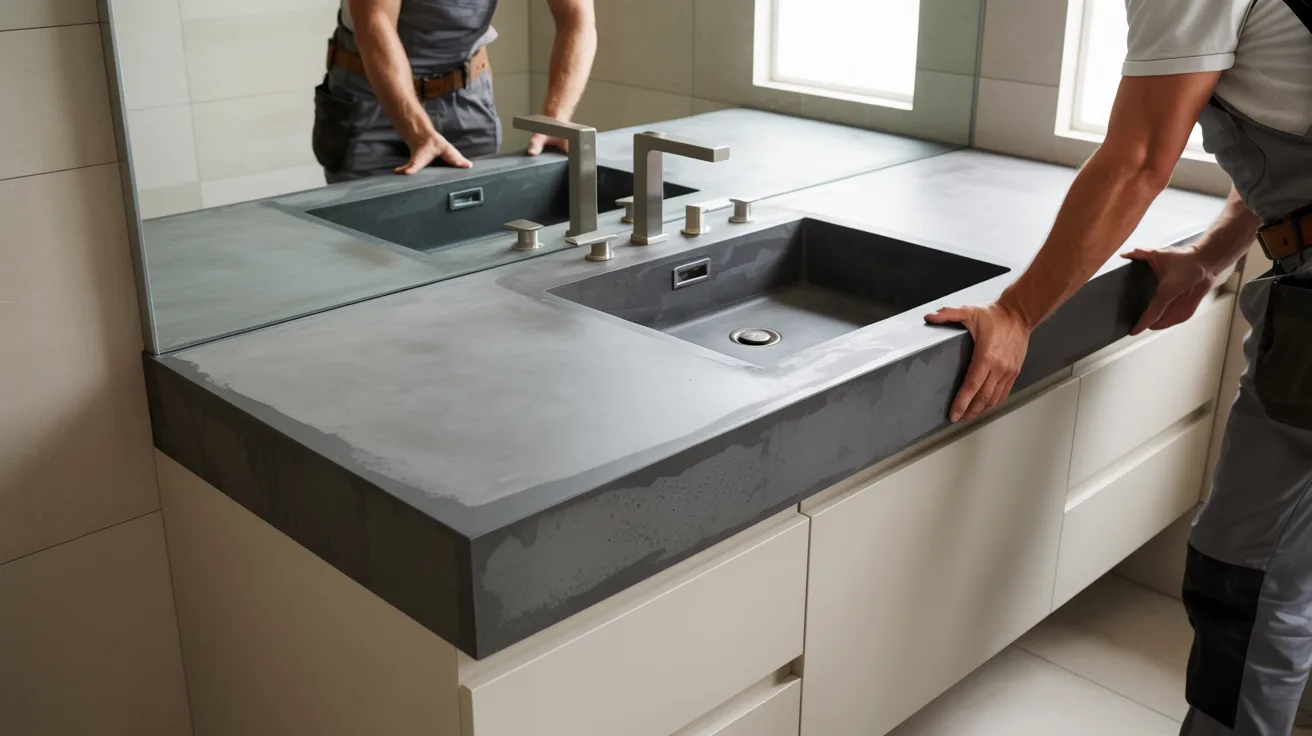
Concrete countertops have a bold, industrial look that suits modern and contemporary bathroom designs.They are heat-resistant and fully customizable in terms of shape, color, and finish.
The trade-offs are significant weight, a tendency to chip or crack over time, and the need for professional installation.
They work best when the design calls for something out of the ordinary and the homeowner is prepared for the higher installation complexity.
9. Wood Countertops
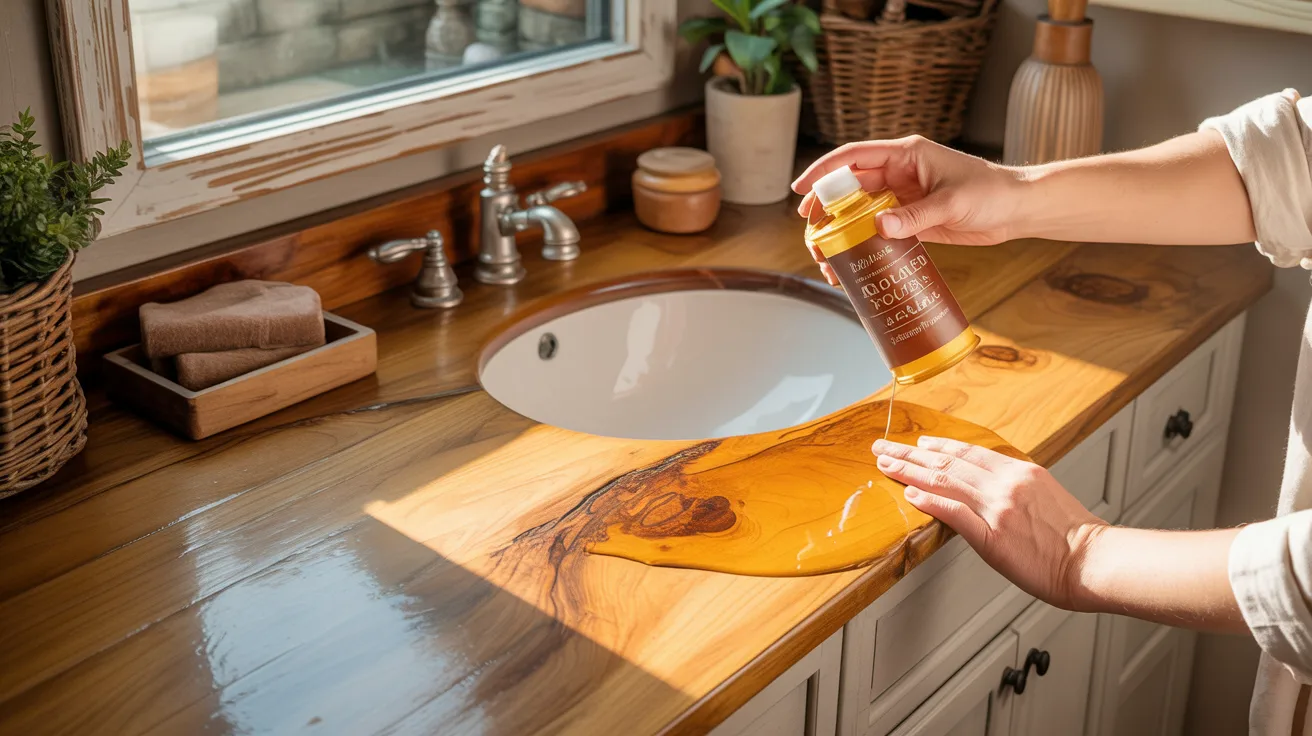
Wood countertops bring warmth and a natural feel that no other material quite matches. They suit rustic, farmhouse, and eco-conscious bathroom designs well.
The trade-offs are real: wood is vulnerable to water damage and needs regular sealing and oiling to stay in good condition.
It is not the most practical choice for a wet bathroom environment, but in the right setting with proper care, it can hold up and look great for years.
Here is a clean comparison table you can add:
Bathroom Countertop Materials Comparison
A quick side-by-side look at durability, maintenance, cost, and best uses for the most popular bathroom countertop materials.
| Countertop Material | Durability | Maintenance | Cost Level | Best For |
|---|---|---|---|---|
| Quartz | Very high | Very low | High | Busy bathrooms, modern styles |
| Ultra Compact Quartz | Extremely high | Very low | Very high | High-end remodels |
| Granite | Very high | Medium (needs sealing) | High | Luxury master bathrooms |
| Marble | Medium | High (regular sealing) | High | Elegant, classic designs |
| Cultured Marble | Medium | Low | Medium | Budget-friendly marble look |
| Solid Surface | Medium | Low | Medium | Family bathrooms, seamless design |
| Laminate | Low | Very low | Low | Guest bathrooms, quick upgrades |
| Concrete | High | Medium (needs sealing) | High | Industrial or custom designs |
| Wood | Low–Medium | High (needs sealing/oiling) | Medium | Rustic or farmhouse style |
How to Compare Bathroom Countertop Materials
Knowing the options is only half the job. Comparing them on the right factors helps you make a confident final call.
Durability and Resistance to Stains and Scratches
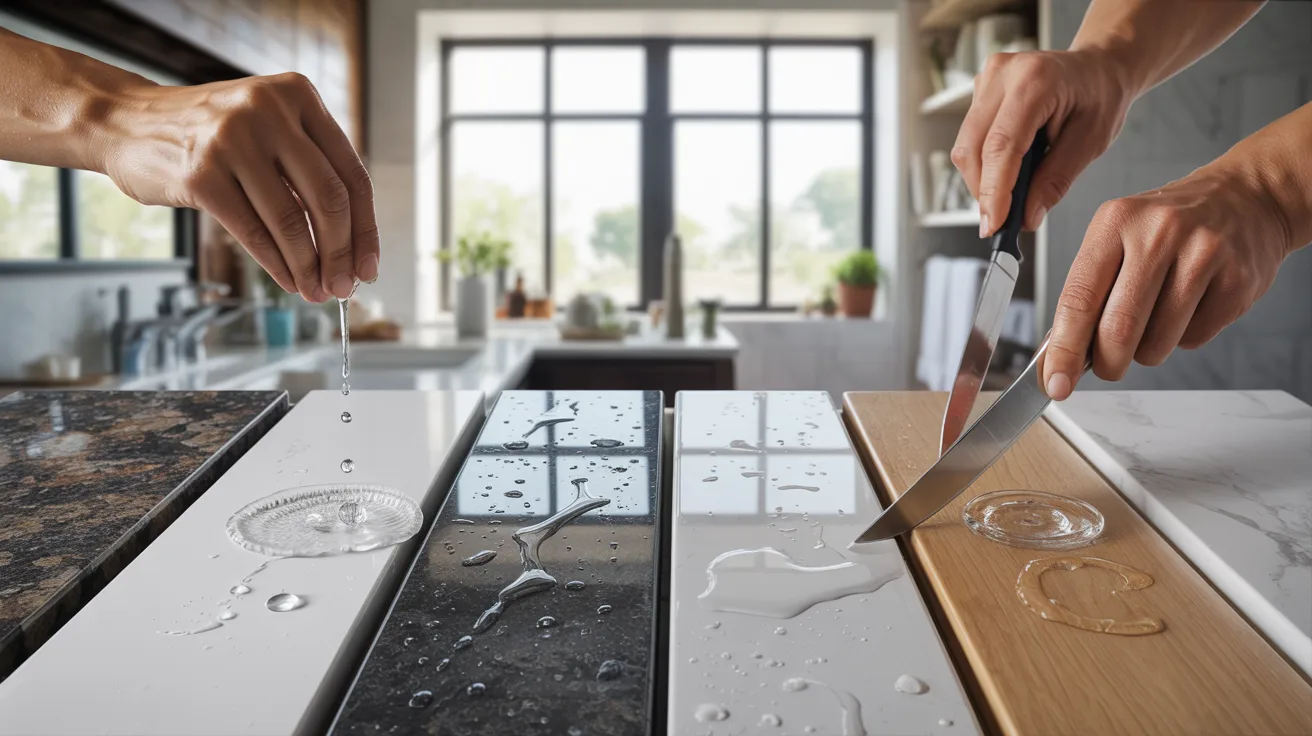
Durability varies widely across countertop materials, and it should be one of your first filters when narrowing down options.
Quartz, granite, and ultra compact surfaces handle daily wear the best. Marble and wood sit at the more vulnerable end of the scale.
If your bathroom sees heavy use every day, prioritize materials that resist staining and scratching without requiring constant attention to stay in good shape.
Maintenance and Cleaning Needs
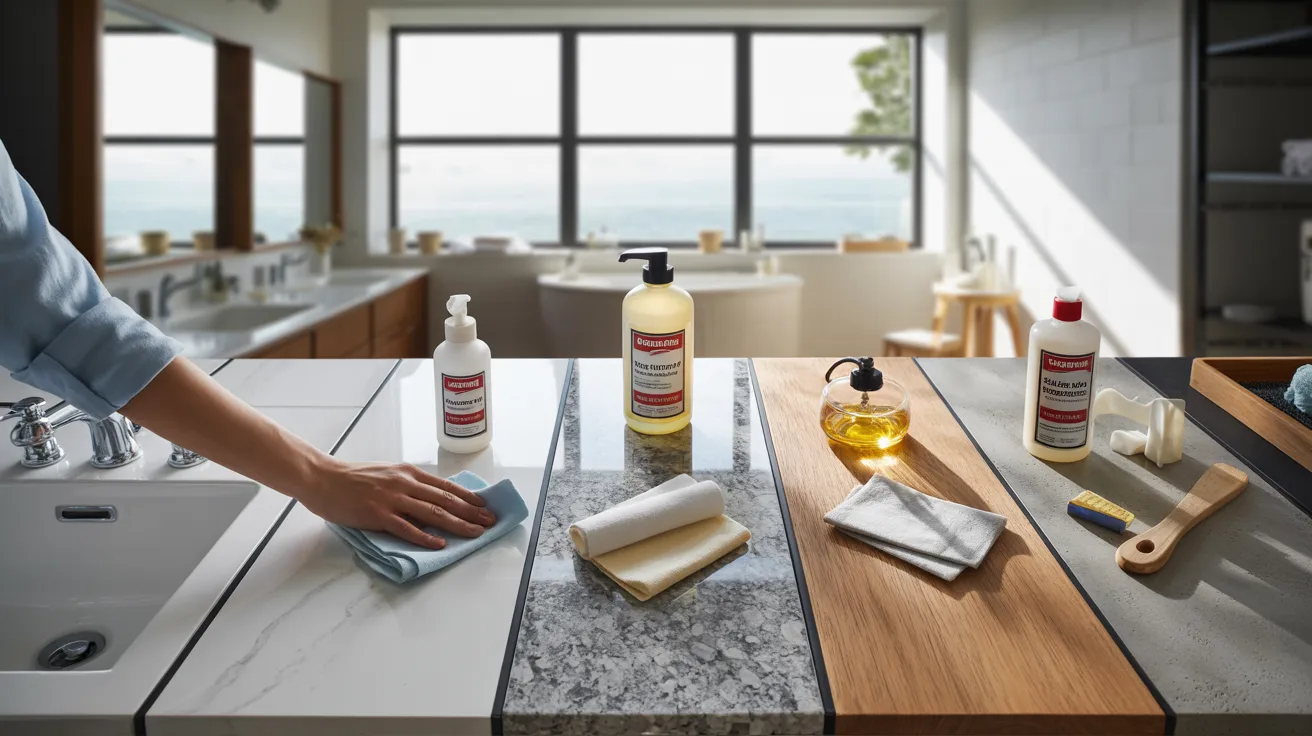
Some materials need very little upkeep. Others need regular sealing, oiling, or special cleaning products to stay in good condition.
Quartz and laminate are among the easiest to maintain. Marble, granite, wood, and concrete all require more consistent care.
Before picking a material, be honest with yourself about how much time and effort you are realistically willing to put into upkeep over the years.
Cost and Budget Considerations
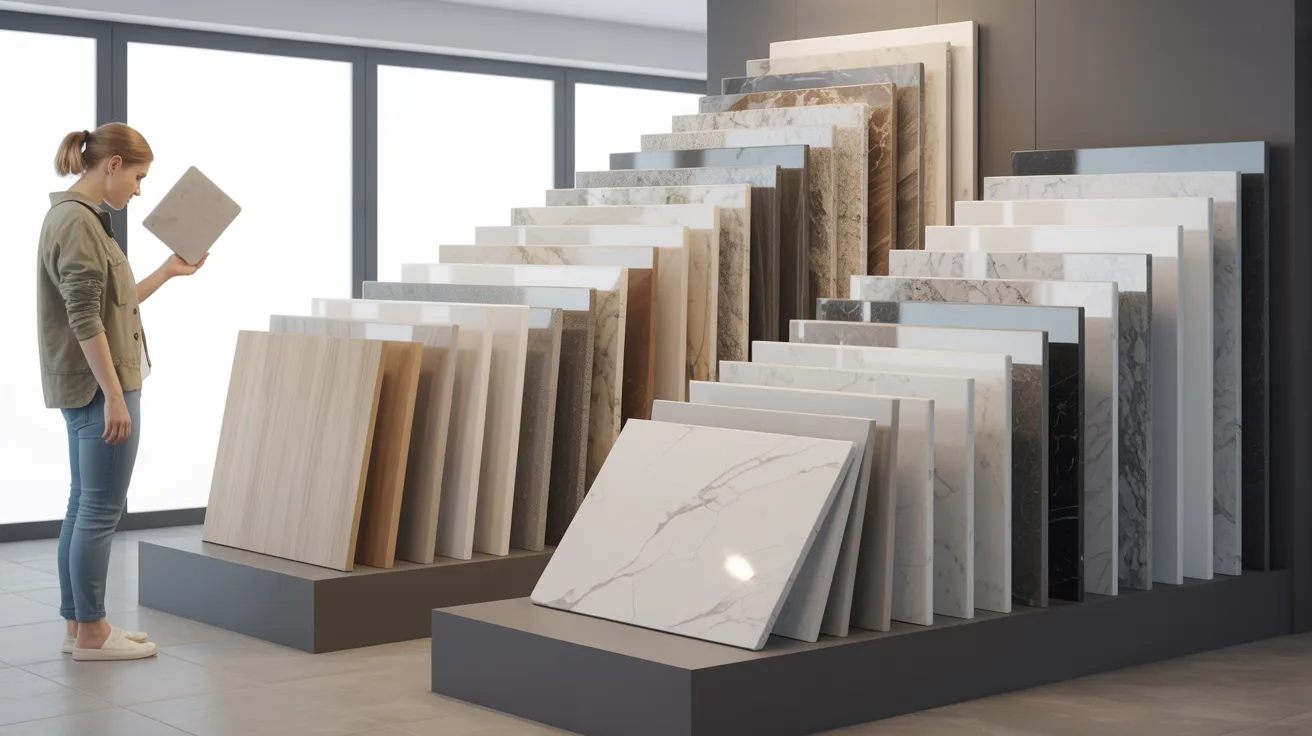
Countertop costs vary from very affordable to very expensive depending on the material and installation complexity. Laminate sits at the lowest price point.
Cultured marble and solid surface fall in the mid range. Granite, quartz, marble, and ultra compact surfaces run the highest.
Factor in both the upfront cost and the long-term cost of sealing, repairs, or replacements when setting your budget for this project.
Style, Color, and Design Options
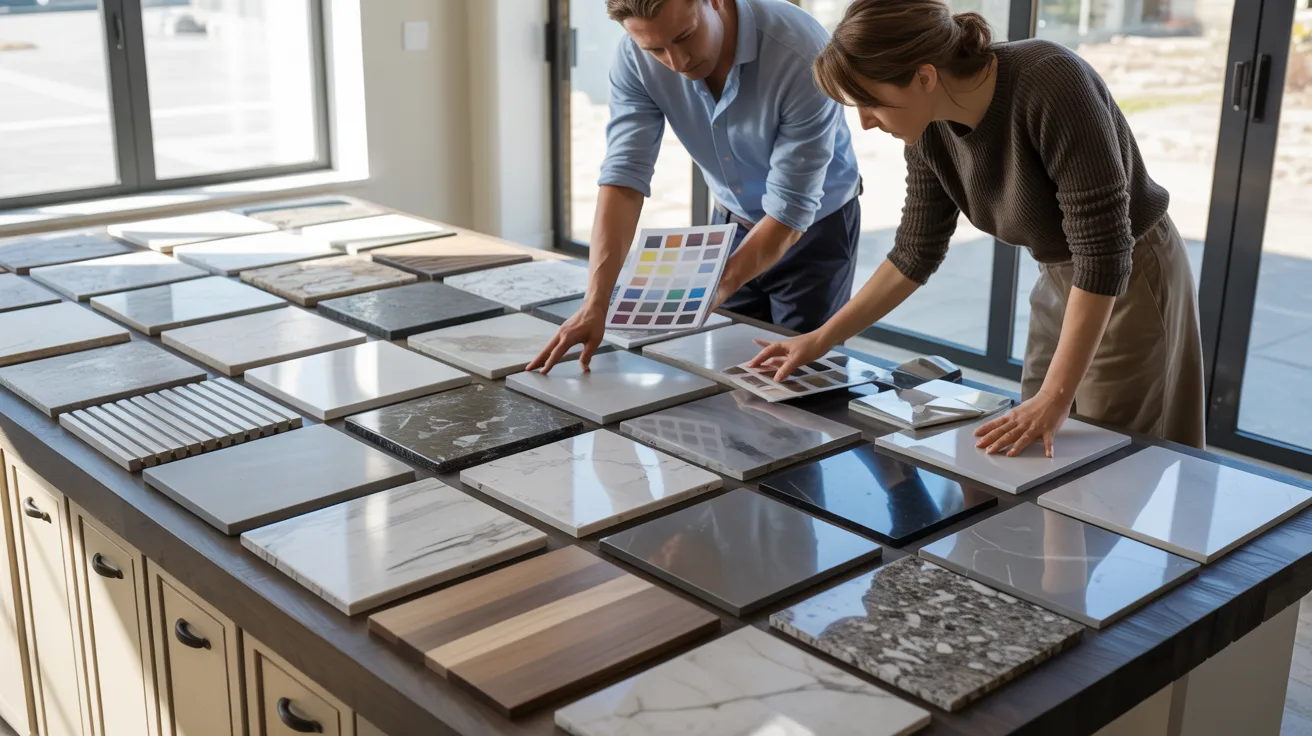
Every material brings a different look and feel to the bathroom. Natural stone like granite and marble offers organic patterns that vary from slab to slab.
Quartz and laminate give you a wider, more consistent range of colors and patterns to pick from. Concrete and glass suit bold, modern designs.
Wood and cultured marble work well in warmer, more traditional spaces. Match the material to the overall style you are going for in the room.
DIY vs Professional Installation

Not all countertop materials can be installed by a confident DIYer. Laminate and solid surface are among the more manageable options for home installation.
Granite, marble, concrete, and ultra compact surfaces are heavy, difficult to cut, and almost always require professional installation to get right.
Factor in the cost of professional labor when budgeting, and don’t underestimate how much installation complexity can add to the total project cost.
Tips for Choosing the Right Countertop for Your Bathroom
These tips will help you pick the right countertop before you spend a single dollar.
- Think about who uses the bathroom and how often before picking a material.
- Match the material to the room’s style, natural stone for classic, quartz for modern.
- Set a budget that covers both material and installation, not just the surface itself.
- Be honest about upkeep. Some materials need yearly sealing, others just a quick wipe.
- Think long-term. A durable material now saves you money on repairs later.
The right countertop is the one that fits your bathroom, your lifestyle, and your budget.
Conclusion
Bathroom countertop types vary more than most people expect, and the right pick comes down to your lifestyle, budget, and how much upkeep you are willing to handle.
I learned that the hard way on my first remodel. Take your time, because a good countertop can last decades when you choose wisely.
Drop a comment below telling me which material you are leaning toward, and share this guide with anyone planning a bathroom update.
Frequently Asked Questions
What is the most durable bathroom countertop material?
Quartz and ultra compact surfaces resist stains, scratches, and daily wear best.
Which bathroom countertop material is the easiest to maintain?
Quartz. Non-porous and needs no sealing.
What is the most affordable bathroom countertop option?
Laminate offers the most variety at the lowest cost.
Does granite need to be sealed in a bathroom?
Yes, periodic sealing protects it from moisture and stains.
Can I install a bathroom countertop myself?
Laminate is DIY-friendly. Granite, marble, and concrete need a professional.


