

Choosing the right carpet for your home is not always simple. Wool carpet has been around for centuries, and for good reason.
It feels soft, lasts long, and is better for the environment than most synthetic options. But it also costs more and needs regular upkeep.
So is it really worth your money?
In this blog, we break down the real pros and cons of wool carpet so you can make a confident, informed choice for your home.
Let’s get started.
What Is Wool Carpet?
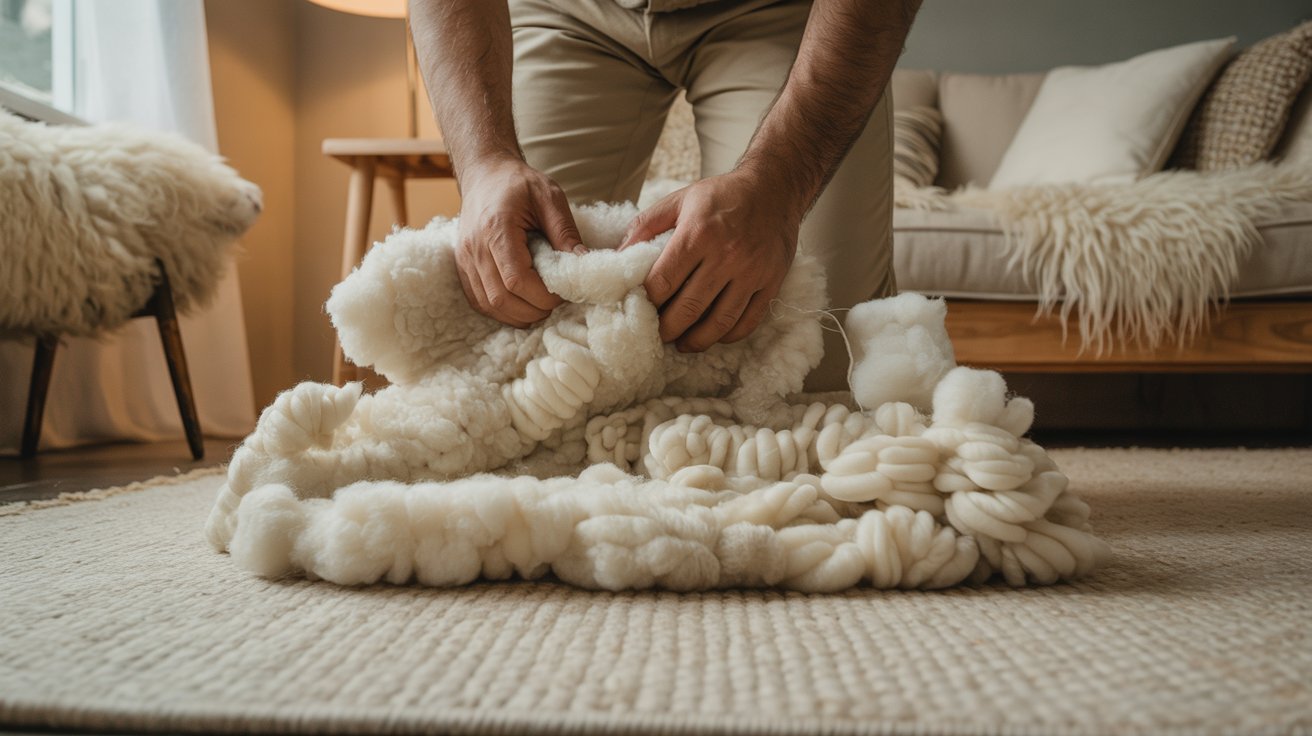
Wool carpet comes from the fleece of sheep, making it one of the oldest and most trusted flooring materials in the world.
The wool fibers are cleaned, spun into yarn, and then woven or tufted into carpet. The result is a dense, soft surface that feels great underfoot.
People choose wool because it is natural, durable, and biodegradable. It regulates temperature, resists dirt naturally, and holds dye well, giving you rich, long-lasting color.
For anyone who wants a high-quality floor covering, wool remains a strong option.
Pros of Wool Carpet
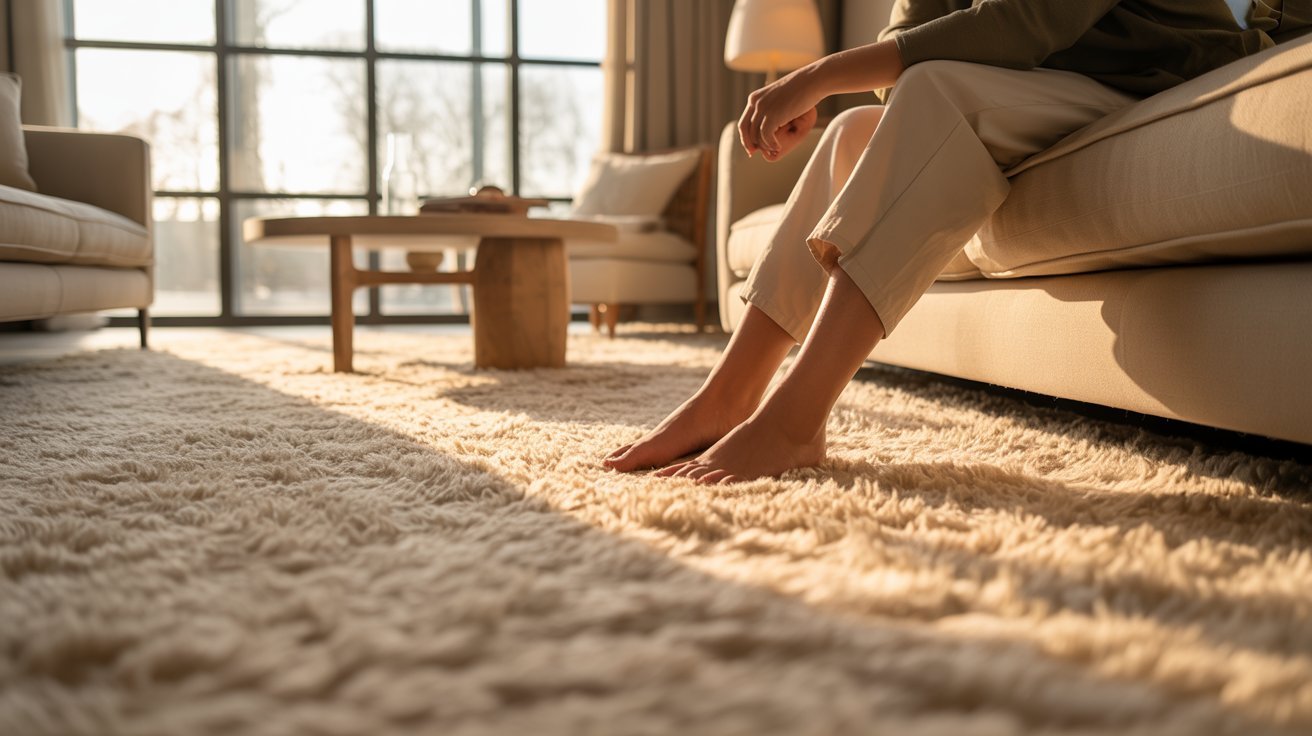
Wool carpets are soft, durable, and natural. But they come with a cost. Here is what you need to know before buying.
Luxurious and Comfortable Feel
Wool carpet has a soft, plush texture that feels good under your feet. It adds warmth and coziness to any room. Bedrooms and living rooms benefit the most from this kind of comfort.
Walking on wool carpet feels noticeably different from synthetic options. It has a natural springiness that makes it feel rich and full.
Natural Insulation
Wool is a natural insulator. It traps air within its fibers, helping your home stay warm during winter and cool during summer.
This means your heating and cooling systems do not have to work as hard. Over time, this can lead to lower energy bills. It also makes the room feel more comfortable throughout the year.
Durable and Long-Lasting
Wool fibers are naturally resilient. They bounce back after being compressed, which means the carpet holds its shape even in high-traffic areas.
A well-maintained wool carpet can last 20 to 30 years. That kind of lifespan makes it a cost-effective investment in the long run. Synthetic carpets rarely match this level of durability.
Natural Stain Resistance
Wool contains lanolin, a natural oil found in sheep fleece. This oil coats the fibers and helps repel liquid spills before they soak in.
Wool also has anti-static properties, which means dust and dirt are less likely to cling to the surface. Regular vacuuming is usually enough to keep it looking clean and fresh.
Eco-Friendly Flooring Option
Wool comes from sheep and grows back after shearing, making it a fully renewable resource. At the end of its life, wool breaks down naturally without releasing harmful chemicals.
Unlike synthetic carpets made from plastic-based materials, wool does not contribute to microplastic pollution. For anyone who cares about the environment, wool is one of the better flooring choices available.
Cons of Wool Carpet
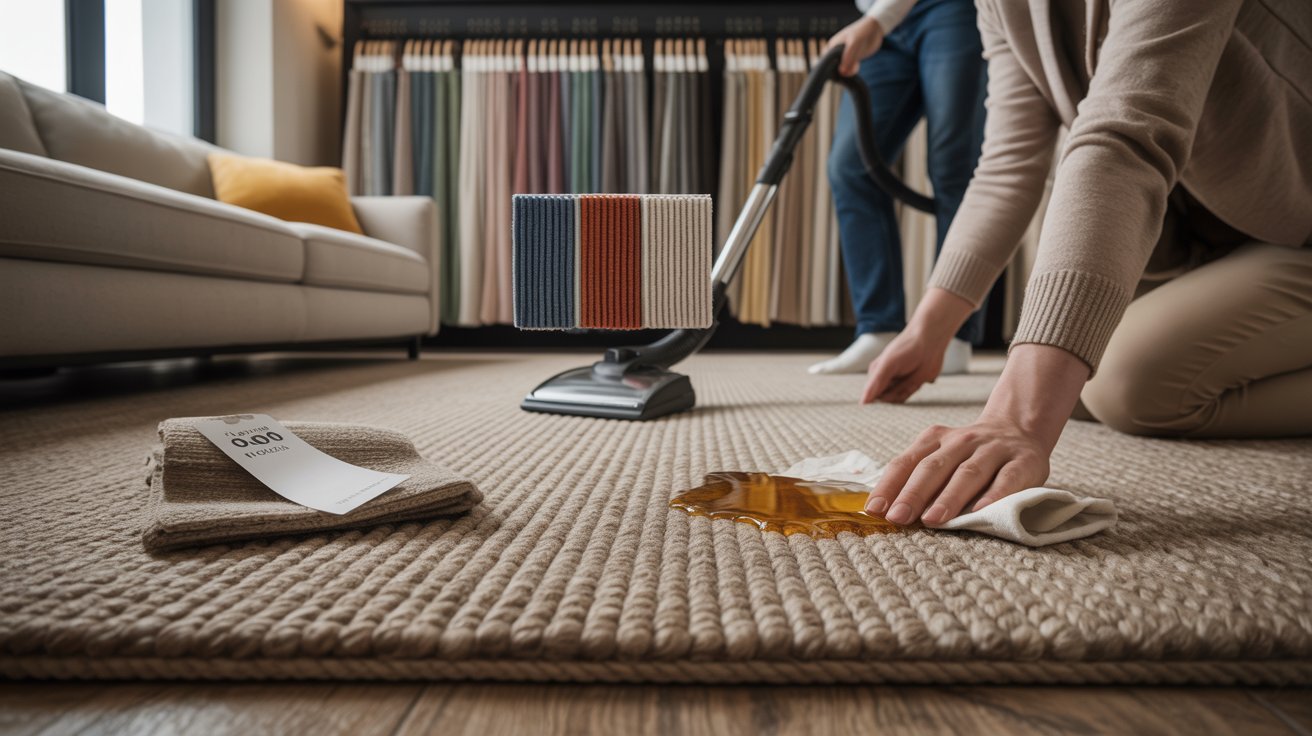
Wool carpets have some downsides too. Here are the key cons to consider before making your final decision.
Higher Cost
Wool carpet costs more than nylon or polyester options. It is considered a premium flooring choice, so the price tag reflects that.
The initial investment is higher, but the long lifespan can make it worth the spend over time. If you are working with a tight budget, this is something to think about before buying.
Requires Regular Maintenance
Wool carpet needs frequent vacuuming to stay in good shape. Dirt and debris can work their way into the fibers if left too long.
Professional cleaning is recommended every 12 to 18 months to keep the carpet looking its best. Skipping this can shorten the life of the carpet and affect its appearance.
Allergy Concerns
Wool can trap dust mites and allergens within its fibers over time. This can be a problem for people with allergies or breathing sensitivities.
However, regular vacuuming and proper cleaning can reduce this risk significantly. Keeping up with maintenance is the key to managing this issue.
Sensitive to Moisture
Wool absorbs water easily, which can lead to mold or mildew if the carpet stays damp. This makes it a poor fit for kitchens, bathrooms, or any area prone to moisture. Spills should be cleaned up quickly to prevent the fibers from soaking through.
Limited Color Customization
Wool carpet is available in a good range of colors, but it still offers fewer options than synthetic carpets. If you have a very specific color in mind, you may find the choices a bit limiting compared to man-made alternatives.
Where Wool Carpet Works Best in a Home
Wool carpet is not a one-size-fits-all solution. Some rooms are a better match than others. Knowing where to use it helps you get the most out of your investment.
1. Bedrooms
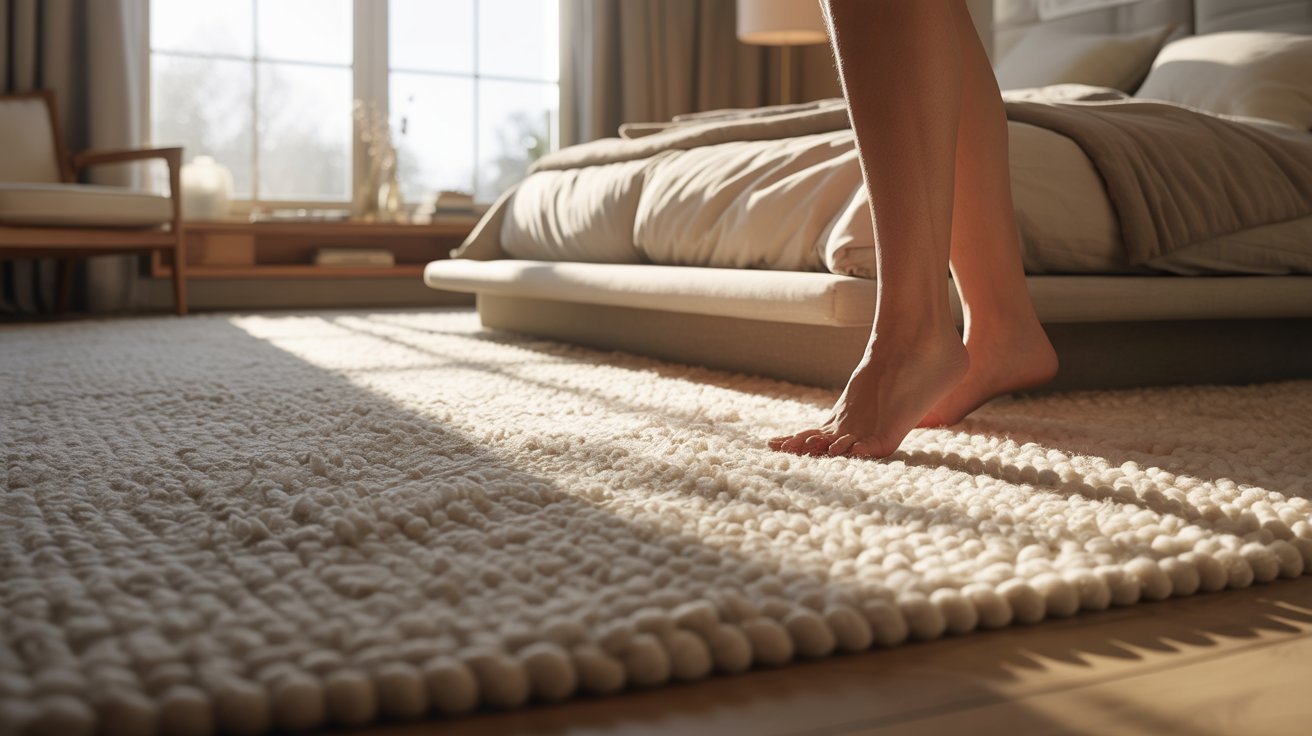
Wool carpet is a great fit for bedrooms. The soft texture makes it comfortable to walk on first thing in the morning.
It also helps with sound absorption, keeping the room quieter. The natural insulation properties make the space feel warm and cozy throughout the year.
2. Living Rooms

Living rooms see a lot of daily use, and wool handles that well. Its natural resilience means it holds up under regular foot traffic without losing its shape.
It also adds a warm, inviting feel to the space that synthetic carpets often lack.
3. Low-Moisture Areas
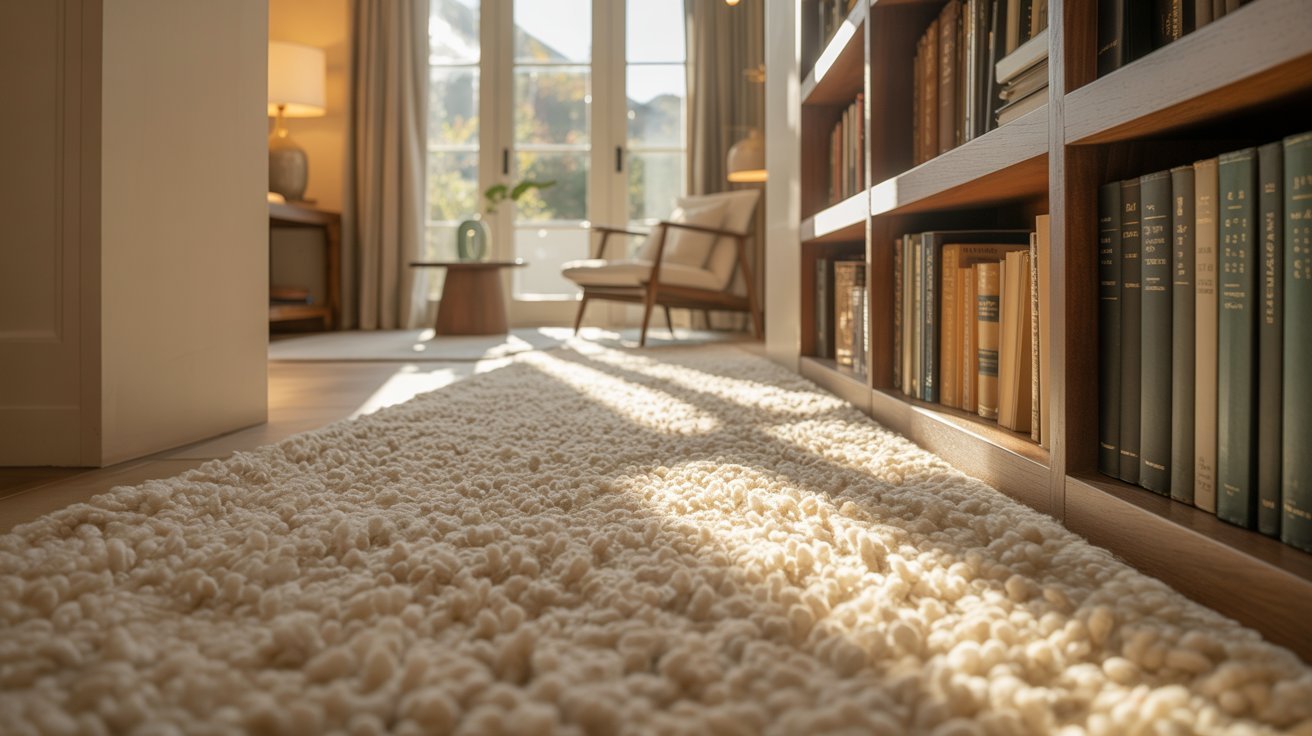
Wool works best in dry areas of the home. Hallways, studies, and dining rooms are all good options.
Since wool absorbs moisture easily, it is best to keep it away from kitchens, bathrooms, and basements. Sticking to dry, well-ventilated spaces will help the carpet last longer and stay in better condition.
Is Wool Carpet Worth It?
Wool carpet is a solid choice for homeowners who want quality, durability, and a natural product underfoot.
Yes, the upfront cost is higher than synthetic options. But what you get in return is a carpet that lasts for decades, feels great, and is better for the environment.
If comfort, longevity, and sustainability matter to you, wool is worth the investment. However, if budget is your main concern, it may not be the right fit right now.
Conclusion
Wool carpet brings together comfort, insulation, and durability in a way that few flooring options can match. It feels great underfoot, lasts for years, and is kind to the environment.
But it is not the right fit for every home or every budget.
Before making a decision, think about how much you are willing to spend, how much upkeep you can manage, and which rooms you are planning to carpet.
The right choice depends on your lifestyle and your home. Wool is worth it when chosen wisely.
Frequently Asked Questions
Is wool carpet good for everyday use?
Yes, wool carpet holds up well with daily use. Its natural fibers are resilient and resistant to crushing, making it a reliable choice for busy households.
How long does a wool carpet last?
A well-maintained wool carpet can last anywhere from 20 to 30 years. Regular vacuuming and professional cleaning every 12 to 18 months can help it reach that lifespan.
Is wool carpet safe for people with allergies?
Wool can trap dust mites if not cleaned regularly. However, keeping up with vacuuming and professional cleaning can significantly reduce allergens and keep the carpet safe for most people.
Can wool carpet get damaged by water?
Yes, wool absorbs moisture easily. Spills should be cleaned up quickly, and wool carpet should not be used in kitchens, bathrooms, or any damp areas of the home.
Is wool carpet worth the higher price?
For homeowners who want durability, comfort, and a natural product, wool carpet is a worthwhile investment. The higher upfront cost is offset by its long lifespan and low environmental impact.


